
BuddhistCatholicContemplativeEvangelicalGeneral ChristianHinduJewishLatter-day SaintMuslimNew VisionsProgressive Christian
Beliefs
- Buddhist
- Catholic
- Contemplative
- Evangelical
- General Christian
- Hindu
- Jewish
- Latter-day Saint
- More Voices
- Muslim
- New Visions
- Pagan
- Progressive Christian
Topics
- Religion News
- Food and Religion
- Sports and Religion
- Religious Art
- Religious Music and Entertainment
- Religious Events
- History and Religion
- Style and Religion
- Politics and Religion
- Women in Religion
- Recreation Outdoors and Religion
- Business Finance and Religion
- Careers Workplace and Religion
- Education and Religion
- Family Parenting and Religion
- Health Fitness and Religion
- Home and Religion
- Relationships and Religion
- Technology and Religion
- Travel and Religion
Columnists
- Buddhist Columnists
- Business Finance and Religion Columnists
- Careers Workplace and Religion Columnists
- Catholic Columnists
- Contemplative Columnists
- Education and Religion Columnists
- Evangelists Columnists
- Family Parenting and Religion Columnists
- General Christian Columnists
- Health Fitness and Religion Columnists
- Hindu Columnists
- History and Religion Columnists
- Home and Religion Columnists
- Jewish Columnists
- More Voices Columnists
- Latter Day Columnists
- Muslim Columnists
- New Visions Columnists
- Nonreligious Columnists
- Pagan Columnists
- Politics and Religion Columnists
- Progressive Columnists
- Recreation Outdoors and Religion Columnists
- Relationships and Religion Columnists
- Religion News Columnists
- Religious Art Columnists
- Religious Events Columnists
- Religious Music and Entertainment Columnists
- Sports and Religion Columnists
- Style and Religion Columnists
- Technology and Religion Columnists
- Travel and Religion Columnists
- Women in Religion Columnists
Resource Library
- 2026 Calendar
- Library of World Religions
- The 100 Most Holy Places on Earth
- Patheos Answers
- Podcasts
- Videos
- Faith Leaders Database
- Anglican Episcopalian
- Bahai
- Baptist
- Buddhism
- Christianity
- Confucianism
- Eastern Orthodoxy
- Hinduism
- Holiness and Pentecostal
- ISKCON
- Islam
- Judaism
- Lutheran
- Methodist
- The Church of Jesus Christ of Latter-day Saints
- New Age
- Paganism
- Presbytarian and Reformed
- Protestantism
- Religion Behind the Scenes
- Roman Catholic
- Scientology
- Shia Islam
- Sikhism
- Sufism
- Sunni Islam
- Taoism
- Zen
- See all religions
Research Tools
 Ad-Free & Subscriber Log-In Subscription Support
Ad-Free & Subscriber Log-In Subscription Support
Follow Patheos 

- Trending:
- Forgiveness
- |
- Marriage
- |
- Consciousness
- |
- Death Penalty
- |
- Election
- |
- Halloween

- Home
- Progressive Christian
- Won’t you help to sing: Easter is an uprising
Won’t you help to sing: Easter is an uprising
Last updated on: April 2, 2013 at 2:26 pm by Fred Clark
Won’t you help to sing: Easter is an uprising 2013-04-02T14:26:03-04:00 Fred Clark
Patheos Explore the world's faith through different perspectives on religion and spirituality! Patheos has the views of the prevalent religions and spiritualities of the world.
It’s Easter season, and that means I’ll get to sing and to hear one of my favorite Easter-season hymns, “I Know That My Redeemer Lives.”
That title comes, surprisingly, from the book of Job — not a part of the Bible we usually turn to for Easter thoughts. The particular passage, Job 19:25-26, is one I don’t ever remember encountering in all the Bible-memorization classes, programs and contests of my fundie youth, but it will be familiar to anyone who has studied classical music.
I know that my redeemer liveth, and that he shall stand at the latter day upon the earth:
And though … worms destroy this body, yet in my flesh shall I see God.
Handel used that passage for a soprano aria in Part III of his Messiah, and it’s a gorgeous thing.
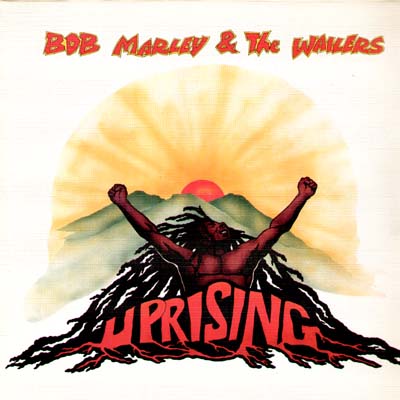
This is what Easter looks like.
But the hymn I mean is the Samuel Medley one from 1775. (Warning: That’s a CyberHymnal link with midi music — the button to turn off the sound is in the top left corner.) It’s usually sung to a tune that came later, in 1793, from John Hatton. That tune was originally called “Duke Street” — a name that just begs for a jazz arrangement.
My favorite rendition of the Medley/Hatton hymn is “My Redeemer Lives” by Mark Heard and Kate Miner on the lovely Easter album At the Foot of the Cross Vol. 1. Heard arranges Medley’s folk theology as something like folk-rock, which seems appropriate. He also skips several verses and rearranges the couplets of Medley’s lyrics to put more of the focus on “my Redeemer” and less of the focus on the I-me-mine at the center of the original lyrics.
I’ve read dozens of essays, articles, books and sermons criticizing modern American evangelical Christians for our shallow, individualistic, me-centered, “therapeutic” spirituality. While I tend to agree with those critiques, mostly, Medley’s lyrics from more than two centuries ago show that this problem isn’t actually a recent development unique to contemporary Christians.
He lives to grant me rich supply;
He lives to guide me with his eye;
He lives to comfort me when faint;
He lives to hear my soul’s complaint.He lives to silence all my fears;
He lives to wipe away my tears;
He lives to calm my troubled heart;
He lives all blessings to impart.He lives to bless me with his love;
He lives to plead for me above;
He lives my hungry soul to feed;
He lives to help in time of need.
That’s a stark summary of what it looks like when we reduce Jesus Christ to our “personal Lord and Savior.” The emphasis always ends up on the “personal” part, and for all the talk of “my Redeemer” the song winds up sounding more like it’s about my valet. Those verses above read like they should be Bertie Wooster’s hymn to Jeeves — a psalm in praise of the divine butler who attends our every need.
This individualistic, therapeutic, etc., spirituality is far removed from the defiant demand for justice in the passage that gives the hymn its title. “I call aloud, but there is no justice,” Job wails. Job wasn’t inclined toward the comfort-the-comfortable evangelical spirituality embodied by Medley’s hymn because Job was no longer pampered and thus could not imagine God as the divine pamperer.
Here, again, we see the daunting problem facing people like me when we try to read a book like the Bible. The Bible was not written by people like me, and it was not written for people like me, and people like me will never be able to understand it until we come to grips with that.
Even worse, it’s very hard for people like me to realize that we’re people like me. The “invisible knapsack” is invisible, after all — privilege means never having to think about being privileged. And because it’s hard for us to see that the Bible is going to be such a challenge for us, we tend to miss that challenge and thus to fail it. We misunderstand it without even realizing we’re doing so.
The Bible is a book for exiles. It was written by people in exile and it was written for people in exile. So people like me, who have never experienced exile, are going to need some help understanding this book. We’re going to need help from people like the people who wrote it — from exiles.
So let’s consider another song — a song written by just such a person. As much as I love to sing that Medley hymn, this is a far better Easter song.
http://www.youtube.com/watch?v=OFGgbT_VasI
That’s Bob Marley singing “Redemption Song,” and that first verse cuts to the heart of what it means to be “redeemed.” The etymology of that word, the biblical roots of it, involve liberation and Jubilee — being set free from slavery, debt, oppression and exile. Marley understands those things in a way that Medley could not, and so Marley’s song of redemption tells us more than Medley’s song of a redeemer.
If people like me, or like Medley, are going to try to understand what it means to sing that “my Redeemer lives,” we would do well to study the first verse of Marley’s song:
Old pirates, yes, they rob I;
Sold I to the merchant ships,
Minutes after they took I
From the bottomless pit.
But my hand was made strong
By the hand of the Almighty.
We forward in this generation
Triumphantly.
Won’t you help to sing
These songs of freedom
‘Cause all I ever have:
Redemption songs;
Redemption songs.
The Jamaican grammar of Marley’s lyric defies translation into any more formal form of English. In the usual grammar, “I” is the subjective first-person pronoun, while “me” should be used as the objective first-person pronoun. The middle-school grammar teacher wants to “correct” Marley’s patois: The old pirates did not rob “I.” The old pirates robbed “me.”
Methinks Marley knew that, but also knew that this “correction” would change the meaning of what he was singing. He’s not saying “the pirates robbed me” — that would mean they had stolen property from him. He’s saying the pirates robbed I — they stole him, treating him as property. He rejects the objective pronoun because he is not an object. He is a subject. The pirates and the merchants may say otherwise, but he has the strength of the Almighty on his side and he will triumph. This is what redemption means.
Now, I’m certainly not suggesting that we turn to Bob Marley for our systematic theology. He was no theologian, and much of what he at times believed was, frankly, flat-out wrong. (Haile Selassie was, alas, nothing more than Haile Selassie.)
But when I turn to many of the best theologians writing today — at least among those theologians who are people like me — I can’t help but notice that the broad outlines of the story they are telling is remarkably similar to the story Bob Marley sang for us. I’m thinking of theologians like N.T. Wright. I can’t keep pace with Wright, who writes books faster than I can read them. But if you look at the grand sweep of everything Wright is teaching us about the story of the Bible, you’ll find it is remarkably familiar to the story at the heart of Marley’s music.
This shouldn’t be surprising. The Bible was written by exiles and the Bible was written for exiles. People like me, who have never been exiles, cannot understand such a book on our own. If we want to understand our redemption song, we need to turn to those who can say it’s all they’ve ever had.
Anyway, here’s the Playing for Change version of “Redemption Song.” And here’s Matisyahu. John Legend. Muntu Valdo. Pink. Jackson Browne. Sinead O’Connor. Cassandra Wilson. Joe Strummer & The Mescaleros. Johnny Cash & Joe Strummer. Stevie Wonder. And Angelique Kidjo.
Previous Post

April 2, 2013
Smart people saying smart things
Next Post
April 3, 2013 9 years ago: Landless homeowners
Browse Our Archives
Select a Category class warfare evangelicals Iraq Left Behind Mammon music Uncategorized
Select a Month October 2026 September 2026 August 2026 July 2026 June 2026 May 2026 April 2026 March 2026 January 2026 December 2025 November 2025 October 2025 September 2025 August 2025 July 2025 June 2025 May 2025 April 2025 March 2025 February 2025 January 2025 December 2024 November 2024 October 2024 September 2024 August 2024 July 2024 June 2024 May 2024 April 2024 March 2024 February 2024 January 2024 December 2023 November 2023 October 2023 September 2023 August 2023 July 2023 June 2023 May 2023 April 2023 March 2023 February 2023 January 2023 December 2022 November 2022 October 2022 September 2022 August 2022 July 2022 June 2022 May 2022 April 2022 March 2022 February 2022 January 2022 December 2021 November 2021 October 2021 September 2021 August 2021 July 2021 June 2021 May 2021 April 2021 March 2021 February 2021 January 2021 December 2020 November 2020 October 2020 September 2020 August 2020 July 2020 June 2020 May 2020 April 2020 March 2020 February 2020 January 2020 December 2019 November 2019 October 2019 September 2019 August 2019 July 2019 June 2019 May 2019 April 2019 March 2019 February 2019 January 2019 December 2018 November 2018 October 2018 September 2018 August 2018 July 2018 June 2018 May 2018 April 2018 March 2018 February 2018 January 2018 December 2017 November 2017 October 2017 September 2017 August 2017 July 2017 June 2017 May 2017 April 2017 March 2017 February 2017 January 2017 December 2016 November 2016 October 2016 September 2016 August 2016 July 2016 June 2016 May 2016 April 2016 March 2016 February 2016 January 2016 December 2015 November 2015 October 2015 September 2015 August 2015 July 2015 June 2015 May 2015 April 2015 March 2015 February 2015 January 2015 December 2014 November 2014 October 2014 September 2014 August 2014 July 2014 June 2014 May 2014 April 2014 March 2014 February 2014 January 2014 December 2013 November 2013 October 2013 September 2013 August 2013 July 2013 June 2013 May 2013 April 2013 March 2013 February 2013 January 2013 December 2012 November 2012 October 2012 September 2012 August 2012 July 2012 June 2012 May 2012 April 2012 March 2012 February 2012 January 2012 December 2011 November 2011 October 2011 September 2011 August 2011 July 2011 June 2011 May 2011 April 2011 March 2011 February 2011 January 2011 December 2010 November 2010 October 2010 September 2010 August 2010 July 2010 June 2010 May 2010 April 2010 March 2010 February 2010 January 2010 December 2009 November 2009 October 2009 September 2009 August 2009 July 2009 June 2009 May 2009 April 2009 March 2009 February 2009 January 2009 December 2008 November 2008 October 2008 September 2008 August 2008 July 2008 June 2008 May 2008 April 2008 March 2008 February 2008 January 2008 December 2007 November 2007 October 2007 September 2007 August 2007 July 2007 June 2007 May 2007 April 2007 March 2007 February 2007 January 2007 December 2006 November 2006 October 2006 September 2006 August 2006 July 2006 June 2006 May 2006 April 2006 March 2006 February 2006 January 2006 December 2005 November 2005 October 2005 September 2005 August 2005 July 2005 June 2005 May 2005 April 2005 March 2005 February 2005 January 2005 December 2004 November 2004 October 2004 September 2004 August 2004 July 2004 June 2004 May 2004 April 2004 March 2004 February 2004 January 2004 December 2003 November 2003 October 2003 September 2003
Follow Us!
TAKE THE
Religious Wisdom Quiz
Who was the Roman governor who sentenced Jesus to be crucified?
Select your answer to see how you score.
Pontius Pilate Felix Herod Agrippa
Related posts from slacktivist

It's not 'pick and choose.' It's pick a...

Is this the right room for an argument?

Team Everybody sliding into our DMs

TRENDING AT PATHEOS Progressive Christian

The Problem with False Prophets
Miller’s Station UMC| 10/18/26| Anchor Verse: Jeremiah 23: 1, 9-23 I...

Emotion in Early Christianity by Andrew Crislip
Andrew Crislip’s Emotion in Early Christianity examines an often overlooked dimension of...

16 Spiritual Touchstones for a More Grounded Life
After decades of spiritual study, here are 16 principles I try...

Catholic Evangelization: Sharing Your Faith Every Day
Welcome back to the Graceful Awakening mini-series called, “From Faith to Mission.” ...

The Pillar of the Boatmen: the Ancient Monument...
The Pillar of the Boatmen is a Romano-Gaulish sculpture that dates from...

In one sense walking into Westminster Abbey is like walking down the...
view all Progressive Christian blogs
Ad-Free & Subscriber Log-In Subscription Support
- About Us
- 2026 Calendar
- Videos
- Podcasts
- Library of World Religions
- Faith In Media Tracker
- Advertise With Us
- Write for Us
- Privacy Policy
- Terms of Service
- Do Not Sell My Data
- Contact Us
- Radiant Digital
- Manage Newsletter Subscriptions
- Unsubscribe From Notifications
- Sitemap
Copyright 2008-2026, Patheos. All rights reserved.
Subscription Support Ad-Free & Subscriber Log-In
Follow Patheos