
BuddhistCatholicContemplativeEvangelicalGeneral ChristianHinduJewishLatter-day SaintMuslimNew VisionsProgressive Christian
Beliefs
- Buddhist
- Catholic
- Contemplative
- Evangelical
- General Christian
- Hindu
- Jewish
- Latter-day Saint
- More Voices
- Muslim
- New Visions
- Pagan
- Progressive Christian
Topics
- Religion News
- Food and Religion
- Sports and Religion
- Religious Art
- Religious Music and Entertainment
- Religious Events
- History and Religion
- Style and Religion
- Politics and Religion
- Women in Religion
- Recreation Outdoors and Religion
- Business Finance and Religion
- Careers Workplace and Religion
- Education and Religion
- Family Parenting and Religion
- Health Fitness and Religion
- Home and Religion
- Relationships and Religion
- Technology and Religion
- Travel and Religion
Columnists
- Buddhist Columnists
- Business Finance and Religion Columnists
- Careers Workplace and Religion Columnists
- Catholic Columnists
- Contemplative Columnists
- Education and Religion Columnists
- Evangelists Columnists
- Family Parenting and Religion Columnists
- General Christian Columnists
- Health Fitness and Religion Columnists
- Hindu Columnists
- History and Religion Columnists
- Home and Religion Columnists
- Jewish Columnists
- More Voices Columnists
- Latter Day Columnists
- Muslim Columnists
- New Visions Columnists
- Nonreligious Columnists
- Pagan Columnists
- Politics and Religion Columnists
- Progressive Columnists
- Recreation Outdoors and Religion Columnists
- Relationships and Religion Columnists
- Religion News Columnists
- Religious Art Columnists
- Religious Events Columnists
- Religious Music and Entertainment Columnists
- Sports and Religion Columnists
- Style and Religion Columnists
- Technology and Religion Columnists
- Travel and Religion Columnists
- Women in Religion Columnists
Resource Library
- 2026 Calendar
- Library of World Religions
- The 100 Most Holy Places on Earth
- Patheos Answers
- Podcasts
- Videos
- Faith Leaders Database
- Anglican Episcopalian
- Bahai
- Baptist
- Buddhism
- Christianity
- Confucianism
- Eastern Orthodoxy
- Hinduism
- Holiness and Pentecostal
- ISKCON
- Islam
- Judaism
- Lutheran
- Methodist
- The Church of Jesus Christ of Latter-day Saints
- New Age
- Paganism
- Presbytarian and Reformed
- Protestantism
- Religion Behind the Scenes
- Roman Catholic
- Scientology
- Shia Islam
- Sikhism
- Sufism
- Sunni Islam
- Taoism
- Zen
- See all religions
Research Tools
 Ad-Free & Subscriber Log-In Subscription Support
Follow Patheos 

- Trending:
- Advent
- |
- Forgiveness
- |
- Thanksgiving
- |
- Election
- |
- Seasonal Holidays
- |
- Marriage

- Home
- Progressive Christian
- Roe v. Wade backlash myth clouds real history of state’s rights and segregated schools
Roe v. Wade backlash myth clouds real history of state’s rights and segregated schools
Last updated on: January 23, 2013 at 5:12 pm by Fred Clark
Roe v. Wade backlash myth clouds real history of state’s rights and segregated schools 2013-01-23T17:12:20-05:00 Fred Clark
Patheos Explore the world's faith through different perspectives on religion and spirituality! Patheos has the views of the prevalent religions and spiritualities of the world.
I believe that there are programs like that, programs like education and others, that should be turned back to the states and the local communities with the tax sources to fund them, and let the people [applause drowns out end of statement].
I believe in state’s rights; I believe in people doing as much as they can for themselves at the community level and at the private level. And I believe that we’ve distorted the balance of our government today by giving powers that were never intended in the Constitution to that federal establishment. And if I do get the job I’m looking for, I’m going to devote myself to trying to reorder those priorities and to restore to the states and local communities those functions which properly belong there.
Ronald Reagan kicked off his campaign for president in 1980 with a speech at the Neshoba County Fair near Philadelphia, Mississippi. It was his first public speech since his nomination at the Republican Convention.
And, like the speech he gave at that convention accepting his nomination, it never mentioned abortion.
It was, instead, about “state’s rights.” And no, the choice to give this speech near Philadelphia, Miss., was not a coincidence.
This was seven years after Roe v. Wade, and no huge backlash against that decision could be detected in Reagan’s campaign or in the groundswell of white evangelical support bolstering his run for the White House. You can’t find a hint of that in either speech and you won’t find much more than a hint of that in the 1980 election.
If evangelicals recoiled in moral horror after Roe v. Wade, as Al Mohler asserts, they did so very quietly and almost imperceptibly throughout the 1970s.
 White evangelicals certainly were upset with the U.S. Supreme Court in those years, and Roe fit broadly into the pattern of the decisions about which white evangelicals were angry. But that anger wasn’t about abortion at all. That anger was about — to borrow Reagan’s preferred euphemism — “state’s rights.” It was about the belief that “that we’ve distorted the balance of our government today by giving powers that were never intended in the Constitution to that federal establishment.”
It was about white evangelicals’ desire to run tax-exempt private schools without federal interference.
Roe was a scarcely noticed footnote to the list of Supreme Court decisions that white evangelicals believed had, in Reagan’s words “distorted the balance of our government,” overriding their “state’s rights” in a way that was “incompatible with the sovereignty of the States, and of the Constitution itself.”
Mohler’s column reiterates what religious historian Randall Balmer calls “the abortion myth” — the creation story of the Religious Right:
Roe was the catalyst for the moral revolution within evangelicalism. The reality of abortion on demand and exposure to the logic of the abortion rights movement led to a fundamental shift in the evangelical conscience.
No it wasn’t. No it didn’t.
Look, we’re not talking about competing interpretations of ancient history. We’re talking about the 1970s. Mohler is 53 years old. He was there. The Bicentennial, Disco, Star Wars, Mr. October, Fonzie on water skis. He’s old enough to remember all of those things, and so he’s old enough to remember that the big flip-flop on legal abortion he calls “a fundamental shift in the evangelical conscience” came after the political realignment of “state’s rights” evangelicals, not before it.
I argue that white evangelicals’ reversal on abortion politics is a consequence of the political realignment that preceded it. It’s possible to disagree with that argument, but it’s not possible to argue — as Mohler does — that this reversal caused something that preceded it.
Balmer discusses the actual, rather than the mythic, origins of the religious right in his book Thy Kingdom Come, from which I’ve typed in the big excerpt below:
In the 1980s, in order to solidify the shift from divorce to abortion, the Religious Right constructed an abortion myth, one accepted by most Americans as true. Simply put, the abortion myth is this: Leaders of the Religious Right would have us believe that their movement began in direct response to the U.S. Supreme Court’s 1973 Roe v. Wade decision. Politically conservative evangelical leaders were so morally outraged by the ruling that they instantly shed their apolitical stupor in order to mobilize politically in defense of the sanctity of life. Most of these leaders did so reluctantly and at great personal sacrifice, risking the obloquy of their congregants and the contempt of liberals and “secular humanists,” who were trying their best to ruin America. But these selfless, courageous leaders of the Religious Right, inspired by the opponents of slavery in the 19th century, trudged dutifully into battle in order to defend those innocent unborn children, newly endangered by the Supreme Court’s misguided Roe decision.
It’s a compelling story, no question about it. Except for one thing: It isn’t true.
Although various Roman Catholic groups denounced the ruling, and Christianity Today complained that the Roe decision “runs counter to the moral teachings of Christianity through the ages but also to the moral sense of the American people,” the vast majority of evangelical leaders said virtually nothing about it; many of those who did comment actually applauded the decision. W. Barry Garrett of Baptist Press wrote, “Religious liberty, human equality and justice are advanced by the Supreme Court abortion decision.” Indeed, even before the Roe decision, the messengers (delegates) to the 1971 Southern Baptist Convention gathering in St. Louis, Missouri, adopted a resolution that stated, “we call upon Southern Baptists to work for legislation that will allow the possibility of abortion under such conditions as rape, incest, clear evidence of severe fetal deformity, and carefully ascertained evidence of the likelihood of damage to the emotional, mental, and physical health of the mother.” W.A. Criswell, former president of the Southern Baptist Convention and pastor of First Baptist Church in Dallas, Texas, expressed his satisfaction with the Roe v. Wade ruling. “I have always felt that it was only after a child was born and had a life separate from its mother that it became an individual person,” the redoubtable fundamentalist declared, “and it has always, therefore, seemed to me that what is best for the mother and for the future should be allowed.”
The Religious Right’s self-portrayal as mobilizing in response to the Roe decision was so pervasive among evangelicals that few questioned it. But my attendance at an unusual gathering in Washington, D.C., finally alerted me to the abortion myth. In November 1990, for reasons that I still don’t entirely understand, I was invited to attend a conference in Washington sponsored by the Ethics and Public Policy Center, a Religious Right organization (though I didn’t realize it at the time). I soon found myself in a conference room with a couple of dozen people, including Ralph Reed, then head of the Christian Coalition; Carl F.H. Henry, an evangelical theologian; Tom Minnery of Focus on the Family; Donald Wildmon, head of the American Family Association; Richard Land of the Southern Baptist Convention; and Edward G. Dobson, pastor of an evangelical church in Grand Rapids, Michigan, and formerly one of Jerry Falwell’s acolytes at Moral Majority. Paul M. Weyrich, a longtime conservative activist, head of what is now called the Free Congress Foundation, and one of the architects of the Religious Right in the late 1970s, was also there.
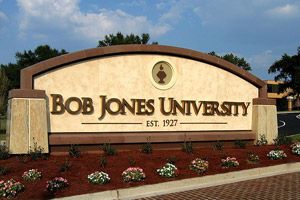
In the course of the sessions, Weyrich tried to make a point to his Religious Right brethren (no women attended the conference, as I recall). Let’s remember, he said animatedly, that the Religious Right did not come together in response to the Roe decision. No, Weyrich insisted, what got us going as a political movement was the attempt on the part of the Internal Revenue Service (IRS) to rescind the tax-exempt status of Bob Jones University because of its racially discriminatory policies.
Bob Jones University was one target of a broader attempt by the federal government to enforce the provisions of the Civil Rights Act of 1964. Several agencies, including the Equal Employment Opportunity Commission, had sought to penalize schools for failure to abide by antisegregation provisions. A court case in 1972, Green v. Connally, produced a ruling that any institution that practiced segregation was not, by definition, a charitable institution and, therefore, no longer qualified for tax-exempt standing.
The IRS sought to revoke the tax-exempt status of Bob Jones University in 1975 because the school’s regulations forbade interracial dating; African Americans, in fact, had been denied admission altogether until 1971, and it took another four years before unmarried African Americans were allowed to enroll. The university filed suit to retain its tax-exempt status, although that suit would not reach the Supreme Court until 1983. …
Initially, I found Weyrich’s admission jarring. He declared, in effect, that the origins of the Religious Right lay in Green v. Connally rather than Roe v. Wade. I quickly concluded, however, that his story made a great deal of sense. When I was growing up within the evangelical subculture, there was an unmistakably defensive cast to evangelicalism. I recall many presidents of colleges or Bible institutes coming through our churches to recruit students and to raise money. One of their recurrent themes was, We don’t accept federal money, so the government can’t tell us how to run our shop — whom to hire or fire or what kind of rules to live by. The IRS attempt to deny tax-exempt status to segregated private schools, then, represented an assault on the evangelical subculture, something that raised an alarm among many evangelical leaders, who mobilized against it.
For his part, Weyrich saw the evangelical discontent over the Bob Jones case as the opening he was looking for to start a new conservative movement using evangelicals as foot soldiers. Although both the Green decision of 1972 and the IRS action against Bob Jones University in 1975 predated Jimmy Carter’s presidency, Weyrich succeeded in blaming Carter for efforts to revoke the tax-exempt status of segregated Christian schools. He recruited James Dobson and Jerry Falwell to the cause, the latter of whom complained, “In some states it’s easier to open a massage parlor than to open a Christian school.”
Weyrich, whose conservative activism dates at least as far back as the Barry Goldwater campaign in 1964, had been trying for years to energize evangelical voters over school prayer, abortion, or the proposed equal rights amendment to the Constitution. “I was trying to get those people interested in those issues and I utterly failed,” he recalled in an interview in the early 1990s. “What changed their mind was Jimmy Carter’s intervention against the Christian schools, trying to deny them tax-exempt status on the basis of so-called de facto segregation.”
During the meeting in Washington, D.C., Weyrich went on to characterize the leaders of the Religious Right as reluctant to take up the abortion cause even close to a decade after the Roe ruling. … “What cause the movement to surface,” Weyrich reiterated, “was the federal government’s moves against Christian schools.” The IRS threat against segregated schools, he said, “enraged the Christian community.” That, not abortion, according to Weyrich, was what galvanized politically conservative evangelicals into the Religious Right and goaded them into action. “It was not the other things,” he said.
Ed Dobson, Falwell’s erstwhile associate, corroborated Weyrich’s account during the ensuing discussion. “The Religious New Right did not start because of a concern about abortion,” Dobson said. “I sat in the smoke-filled back room with the Moral Majority, and I frankly do not remember abortion ever being mentioned as a reason why we ought to do something.”
… The abortion myth serves as a convenient fiction because it suggests noble and altruistic motives behind the formation of the Religious Right. But it is highly disingenuous and renders absurd the argument of the leaders of the Religious Right that, in defending the rights of the unborn, they are the “new abolitionists.” The Religious Right arose as a political movement for the purpose, effectively, of defending racial discrimination at Bob Jones University and at other segregated schools. Whereas evangelical abolitionists of the 19th century sought freedom for African Americans, the Religious Right of the late 20th century organized to perpetuate racial discrimination.
Previous Post

January 23, 2013
You Gotta Believe! -- rewriting 1973 to make ourselves happy
Next Post
January 24, 2013 Outsourcing theocracy to Uganda: This is what bad fruit looks like
Browse Our Archives
Select a Category class warfare evangelicals Iraq Left Behind Mammon music Uncategorized
Select a Month November 2026 October 2026 September 2026 August 2026 July 2026 June 2026 May 2026 April 2026 March 2026 January 2026 December 2025 November 2025 October 2025 September 2025 August 2025 July 2025 June 2025 May 2025 April 2025 March 2025 February 2025 January 2025 December 2024 November 2024 October 2024 September 2024 August 2024 July 2024 June 2024 May 2024 April 2024 March 2024 February 2024 January 2024 December 2023 November 2023 October 2023 September 2023 August 2023 July 2023 June 2023 May 2023 April 2023 March 2023 February 2023 January 2023 December 2022 November 2022 October 2022 September 2022 August 2022 July 2022 June 2022 May 2022 April 2022 March 2022 February 2022 January 2022 December 2021 November 2021 October 2021 September 2021 August 2021 July 2021 June 2021 May 2021 April 2021 March 2021 February 2021 January 2021 December 2020 November 2020 October 2020 September 2020 August 2020 July 2020 June 2020 May 2020 April 2020 March 2020 February 2020 January 2020 December 2019 November 2019 October 2019 September 2019 August 2019 July 2019 June 2019 May 2019 April 2019 March 2019 February 2019 January 2019 December 2018 November 2018 October 2018 September 2018 August 2018 July 2018 June 2018 May 2018 April 2018 March 2018 February 2018 January 2018 December 2017 November 2017 October 2017 September 2017 August 2017 July 2017 June 2017 May 2017 April 2017 March 2017 February 2017 January 2017 December 2016 November 2016 October 2016 September 2016 August 2016 July 2016 June 2016 May 2016 April 2016 March 2016 February 2016 January 2016 December 2015 November 2015 October 2015 September 2015 August 2015 July 2015 June 2015 May 2015 April 2015 March 2015 February 2015 January 2015 December 2014 November 2014 October 2014 September 2014 August 2014 July 2014 June 2014 May 2014 April 2014 March 2014 February 2014 January 2014 December 2013 November 2013 October 2013 September 2013 August 2013 July 2013 June 2013 May 2013 April 2013 March 2013 February 2013 January 2013 December 2012 November 2012 October 2012 September 2012 August 2012 July 2012 June 2012 May 2012 April 2012 March 2012 February 2012 January 2012 December 2011 November 2011 October 2011 September 2011 August 2011 July 2011 June 2011 May 2011 April 2011 March 2011 February 2011 January 2011 December 2010 November 2010 October 2010 September 2010 August 2010 July 2010 June 2010 May 2010 April 2010 March 2010 February 2010 January 2010 December 2009 November 2009 October 2009 September 2009 August 2009 July 2009 June 2009 May 2009 April 2009 March 2009 February 2009 January 2009 December 2008 November 2008 October 2008 September 2008 August 2008 July 2008 June 2008 May 2008 April 2008 March 2008 February 2008 January 2008 December 2007 November 2007 October 2007 September 2007 August 2007 July 2007 June 2007 May 2007 April 2007 March 2007 February 2007 January 2007 December 2006 November 2006 October 2006 September 2006 August 2006 July 2006 June 2006 May 2006 April 2006 March 2006 February 2006 January 2006 December 2005 November 2005 October 2005 September 2005 August 2005 July 2005 June 2005 May 2005 April 2005 March 2005 February 2005 January 2005 December 2004 November 2004 October 2004 September 2004 August 2004 July 2004 June 2004 May 2004 April 2004 March 2004 February 2004 January 2004 December 2003 November 2003 October 2003 September 2003
Follow Us!
TAKE THE
Religious Wisdom Quiz
Who was Abraham's nephew?
Select your answer to see how you score.
Jacob Lot Isaac Ishmael
Related posts from slacktivist

Jesus loves me, this I know, for Pete...

Is this the right room for an argument?

The Amish are not 'Evangelicals.' They're Amish.

The lumpers, the splitters, and me
TRENDING AT PATHEOS Progressive Christian

Thanksgiving as a Way of Life: A Christian...
Each year, Thanksgiving brings families and friends together to share meals, stories,...

Two Women Doctors Who Went Against the Current
Women physicians who transformed healthcare for "Indians" “I shall have an advantage...

Reading Culture Through Scripture, Not the Other Way...
A Radix Teleology and Faith Before Seeing: Essentialism “For we also have...
Thy Word is Truth: The Bible Vindicated by...
My 59th book, completed on 9 November 2026; 204 pages. *****...

Adventurous Lectionary -1st. Sunday of Advent - November...
The Adventurous Lectionary - The First Sunday of Advent – November 29,...

Will Islam become the world's biggest religion by 2035? Congo will replace...
view all Progressive Christian blogs
Ad-Free & Subscriber Log-In Subscription Support
- About Us
- 2026 Calendar
- Videos
- Podcasts
- Library of World Religions
- Faith In Media Tracker
- Advertise With Us
- Write for Us
- Privacy Policy
- Terms of Service
- Do Not Sell My Data
- Contact Us
- Radiant Digital
- Manage Newsletter Subscriptions
- Unsubscribe From Notifications
- Sitemap
Copyright 2008-2026, Patheos, part of the Radiant Digital network of media brands. All rights reserved.
Subscription Support Ad-Free & Subscriber Log-In
Follow Patheos