
BuddhistCatholicContemplativeEvangelicalGeneral ChristianHinduJewishLatter-day SaintMuslimNew VisionsProgressive Christian
Beliefs
- Buddhist
- Catholic
- Contemplative
- Evangelical
- General Christian
- Hindu
- Jewish
- Latter-day Saint
- More Voices
- Muslim
- New Visions
- Pagan
- Progressive Christian
Topics
- Religion News
- Food and Religion
- Sports and Religion
- Religious Art
- Religious Music and Entertainment
- Religious Events
- History and Religion
- Style and Religion
- Politics and Religion
- Women in Religion
- Recreation Outdoors and Religion
- Business Finance and Religion
- Careers Workplace and Religion
- Education and Religion
- Family Parenting and Religion
- Health Fitness and Religion
- Home and Religion
- Relationships and Religion
- Technology and Religion
- Travel and Religion
Columnists
- Buddhist Columnists
- Business Finance and Religion Columnists
- Careers Workplace and Religion Columnists
- Catholic Columnists
- Contemplative Columnists
- Education and Religion Columnists
- Evangelists Columnists
- Family Parenting and Religion Columnists
- General Christian Columnists
- Health Fitness and Religion Columnists
- Hindu Columnists
- History and Religion Columnists
- Home and Religion Columnists
- Jewish Columnists
- More Voices Columnists
- Latter Day Columnists
- Muslim Columnists
- New Visions Columnists
- Nonreligious Columnists
- Pagan Columnists
- Politics and Religion Columnists
- Progressive Columnists
- Recreation Outdoors and Religion Columnists
- Relationships and Religion Columnists
- Religion News Columnists
- Religious Art Columnists
- Religious Events Columnists
- Religious Music and Entertainment Columnists
- Sports and Religion Columnists
- Style and Religion Columnists
- Technology and Religion Columnists
- Travel and Religion Columnists
- Women in Religion Columnists
Resource Library
- 2026 Calendar
- Library of World Religions
- The 100 Most Holy Places on Earth
- Patheos Answers
- Podcasts
- Videos
- Faith Leaders Database
- Anglican Episcopalian
- Bahai
- Baptist
- Buddhism
- Christianity
- Confucianism
- Eastern Orthodoxy
- Hinduism
- Holiness and Pentecostal
- ISKCON
- Islam
- Judaism
- Lutheran
- Methodist
- The Church of Jesus Christ of Latter-day Saints
- New Age
- Paganism
- Presbytarian and Reformed
- Protestantism
- Religion Behind the Scenes
- Roman Catholic
- Scientology
- Shia Islam
- Sikhism
- Sufism
- Sunni Islam
- Taoism
- Zen
- See all religions
Research Tools
 Ad-Free & Subscriber Log-In Subscription Support
Ad-Free & Subscriber Log-In Subscription Support
Follow Patheos 

- Trending:
- Forgiveness
- |
- Marriage
- |
- Consciousness
- |
- Death Penalty
- |
- Election
- |
- Halloween

- Home
- Progressive Christian
- NRA: Stealing from the starving
NRA: Stealing from the starving
Last updated on: November 2, 2012 at 6:22 pm by Fred Clark
NRA: Stealing from the starving 2012-11-02T18:22:04-04:00 Fred Clark
Patheos Explore the world's faith through different perspectives on religion and spirituality! Patheos has the views of the prevalent religions and spiritualities of the world.
Nicolae: The Rise of Antichrist, pp. 74-89
I do not like Buck Williams. If he were a real person whom I met in real life I would not want to spend time with him. Ditto for Rayford Steele.
The heroes of a story do not have to be likable. I have liked many stories that featured protagonists I did not like. But what sets Buck and Rayford apart from all those other unlikable heroes in otherwise likable stories is that the protagonists here in Left Behind are unintentionally unlikable.
Tim LaHaye and Jerry Jenkins want us to like Buck and Rayford. They expect us to like them — to admire them, to find them good, funny and fun, clever and charming. And yet Buck and Rayford do not come across as any of those things.
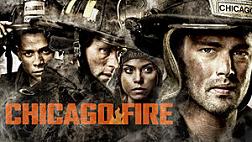
A bunch of government bureaucrats getting in Buck’s way.
Stranger still is that Buck and Rayford are most unlikable due to the very things the authors most expect will make us like them. That’s particularly clear in the pages we’re revisiting today. Jenkins seems to be working hard here to show us Buck Williams: Cool Guy. But what we find instead is Buck Williams: Big Jerk.
The context here is one in which Buck ought to have our sympathy. His wife is missing and in jeopardy and he’s racing to find her. That’s a situation in which I’m inclined to give a character every benefit of the doubt. Buck is facing an emergency, and the context of an emergency can make some otherwise jerk-like behavior seem excusable or even commendable. We can forgive a person in a life-and-death emergency for being rude, impatient or testy — that just shows they’re focused on the proper priority with an appropriate urgency.
But the underlying problem in this chapter — and all throughout this series — is that Buck responds to his own emergency without acknowledging that everyone around him is also facing the very same emergency and the very same stakes.
We can forgive a character who steals a loaf of bread to feed his starving children, but we cannot forgive a character who steals that bread from someone else’s starving children.
For six pages, Buck races through traffic and that’s all the other vehicles and motorists are to him, traffic — objects and obstacles in his way. Buck’s aggressive disregard for those people is excused as a necessary expediency because his loved one may be in danger after his city has been destroyed. It does not occur to either Buck or Jenkins that everyone else on the road is in the exact same predicament. The sequence is thus presented as though everyone else were just commuting or running errands while Buck and Buck alone has an urgent need to get somewhere.
This disregard for everyone else becomes even sharper when Buck finally skids to a stop amidst “a busy force of emergency workers.”
Jenkins typed those words: “busy,” “emergency” and “workers.” And yet the meaning of those words do not seem to have registered with him. He presents them, and Buck reacts to them, as just another set of obstacles, just more annoying others getting in Buck’s way.
Jenkins even tells us that the scene includes “squad cars, ambulances, fire trucks” — so this is a crowd of first responders who are “busy” responding when Buck nearly runs them down. Yet Buck and Jenkins regard them as government bureaucrats.
This creates two unnecessary problems, both of which make Buck more difficult to like. First, it means he spends several pages interfering with these emergency workers who have to stop busily helping people in a war zone in order to deal with him. But secondly it also means that it doesn’t occur to Buck to enlist their help.
And this crew would have been very helpful. Buck knows Chloe was in a crash, so she may need the help of firefighters and EMTs. But he doesn’t know where the crash happened — so a police officer with a patrol-car radio linked to other patrol cars in the area seems like just exactly what Chloe needs right now.
Yet Buck doesn’t ask for their help. He doesn’t tell them that he’s trying to find his wife, that she’s been in a crash and may be injured. He doesn’t describe Chloe or her SUV or ask any of these workers if they’ve seen or heard of anything to match that description. All Buck thinks about, instead, is how to get past and away from these bureaucrats, these people in his way.
“I’m Cameron Williams, publisher of Global Community Weekly,” he tells them. “I report directly to the potentate.”
A young, slender cop pulled Buck’s real ID wallet from the hands of the woman officer. “Let me just have a look at this,” he said with sarcasm. “If you really report to Nicolae Carpathia, you’d have level 2-A clearance, and I don’t see — oops, I guess I do see level 2-A security clearance here.”
The three officers huddled to peer at the unusual identification card. “You know, carrying phony 2-A security clearance is punishable by death –”
“Yes, I do.”
The reader has to do most of the work in this series to construct the world of Nicolae Carpathia’s one-world dictatorship. Little scraps of information like this have to be collected carefully throughout these books in order to piece together the picture of life under the Antichrist. This is a significant detail, revealing that Nicolae is running a tyrannical police state of the sort in which impersonating an officer can be grounds for execution.
Informing us of that doesn’t seem to have been the purpose of including this detail here, though. The effect Jenkins is trying for seems to be, instead, to show us that Buck is cool. The police officers are awed by his security clearance, after all, so that must mean he is awesome.
“I borrowed this car from a friend named Zee,” Buck tells the officers. “You can check that for sure before you have it junked.”
“You can’t leave this car here!”
“What am I gonna do with it?” Buck said. “It’s worthless, it’s got a flat tire, and there’s no way we’re gonna find help for that tonight.”
“Or for the next two weeks, most likely,” one of the cops said.
So one of the world’s major cities can be rebuilt after a nuclear attack in about two weeks, but a car with a flat tire is beyond repair.
For all Buck knows, Verna has a spare tire in the trunk, but he decides to set out on foot without even checking. One gets the feeling that he’d have abandoned Verna’s car even if it had just run out of gas — “It’s worthless, the tank is empty!”
That “two weeks” bit highlights the weirdness of this entire scene, none of which seems like it plays out in the context of a nuclear war zone. The cop’s next question to Buck is: “So, where were you goin’ in such an all-fired hurry?” Set aside the oddness of a Chicago police officer talking like someone at an old-timey Wild West show, and just try to imagine anyone asking such a question makes any sense in the immediate aftermath of the obliteration of Chicago by perhaps-nuclear bombs. “What’s your hurry?” just isn’t a question most people would think to ask in a war zone.
Buck tells the officer he has to get to the Drake hotel, and he seems to mean it, even though this is the one place in all of the Chicago region that he knows Chloe can’t be.
“Where have you been, pal? Don’t you listen to the news? Most of Michigan Avenue is toast.”
“Including The Drake?”
“I don’t know about that, but it can’t be in too good a shape by now.”
“If I walk up over that rise and get onto Michigan Avenue on foot, am I gonna die of radiation poisoning?”
“Civil Defense guys tell us there’s no fallout readings. That means this must have been done by the militia, trying to spare as much human life as possible. Anyway, if those bombs had been nuclear, the radiation would have traveled a lot farther than this already.”
“True enough,” Buck said. “Am I free to go?”
Here are more details to try to fit into our picture of the world. Chicago police officers are still armed, so they must really be Global Community forces, since everyone else has been dis-armed by Nicolae’s OWG (except for militia groups, which have their own ultra-modern air force and nuclear arsenal, apparently). Chicago and/or the Global Community also operates something called “Civil Defense,” the function of which is unclear in a one-world government. I am having a hard time making all of these pieces fit together.
I’m also having a hard time figuring out Buck’s plan here. Chloe was just leaving Chicago on a highway when she crashed, so why is Buck headed all the way into downtown Chicago? And why on foot? How are he and Chloe going to get back to Mount Prospect? Or what if Chloe needs to be rushed to a hospital (if any non-nuked hospitals still stand)? Is he just assuming that his beloved Range Rover will still be able to drive?
Buck doesn’t think about any of that as he trudges inexplicably toward the hotel. He’s thinking about Verna. No, he’s not thinking, “It was so nice of Verna to lend me her car and I feel just awful that I won’t be able to return it to her.” He’s thinking, rather, that perhaps he should not have offered to help her in the first place.
It suddenly hit Buck that he had taken a huge risk. It wouldn’t be long before Verna Zee learned that he had, at least at one time, been a full-fledged member of New Hope Village Church. He had been so careful about not taking a leadership role there, not speaking in public, not being known to very many people. Now one of his own employees — and a long-standing enemy at that — would have knowledge that could ruin him, even cost him his life.
Buck’s cautious secrecy about his church is strange when we contrast it with Rayford’s missionary zeal toward his co-workers. Rayford’s outspoken proselytizing shows that Buck’s furtiveness is not necessary — Nicolae doesn’t seem to care that Rayford is a born-again Christian. It also underscores the selfishness of Buck’s attitude. He believes that Verna and Alice and the others will be damned to Hell for eternity unless he warns them not to take the Mark of the Beast, but he’s not willing to warn them if that means risking his “level 2-A clearance” and all the perks that go with it.
Worrying that Verna has learned all his secrets, Buck dials Loretta’s house and asks to speak to Verna.
Loretta said, “I’m just tellin’ her my story, as I assumed you wanted me to.”
Buck was silent. Finally, he said, “Put her on, would you, Loretta?”
This could have been a nice character moment — a chance for some gentle musing on Buck’s reluctance to see Verna converted and to have to then welcome her as a sister. But it’s not presented that way. It’s presented, instead, as an attempt to build suspense … Oh no! What if Verna learns the Jesus secret?!
Once he’s talking to Verna on the phone, Buck briefly behaves decently — offering to replace her car with an upgrade and asking if there’s anything she needs from the old one before he abandons it.
“Is there anything you need out of it?”
“Nothing I can think of. There is a hairbrush I really like in the glove box.”
“Verna!”
“That does seem a little trivial in light of everything.”
“No documents, personal belongings, hidden money, anything like that?”
“No. Just do what you gotta do. It would be nice if I didn’t get in trouble for this.”
“I’ll leave word with the authorities that when they get around to it they can tow this car to any junkyard and trade whatever the yard gives them for it for the towing fee.”
A hair brush isn’t a personal belonging?
Buck’s plan for abandoning the car recalls the earlier scene in which he elaborately arranges to have his rental car returned to the airport — less than an hour after he witnessed the destruction of the airport by a perhaps-nuclear bomb. Once again Buck seems serenely certain that a nuclear assault won’t have any bearing on the routine operation of towing companies or salvage yards.
Before he hangs up, Verna mentions that Loretta has “got some really strange ideas.” Buck pockets the phone, worrying that Loretta will tell Verna all about the Antichrist and the Tribulation Force and Bruce’s charts and all the rest. He thinks to himself:
“Either she becomes a believer, or I’m dead.”
This is why I don’t like Buck Williams. Even when the subject is somebody else’s eternal soul, he still thinks it’s all about him.
Next Post

November 2, 2012 Smart people saying smart things
Browse Our Archives
Select a Category class warfare evangelicals Iraq Left Behind Mammon music Uncategorized
Select a Month October 2026 September 2026 August 2026 July 2026 June 2026 May 2026 April 2026 March 2026 January 2026 December 2025 November 2025 October 2025 September 2025 August 2025 July 2025 June 2025 May 2025 April 2025 March 2025 February 2025 January 2025 December 2024 November 2024 October 2024 September 2024 August 2024 July 2024 June 2024 May 2024 April 2024 March 2024 February 2024 January 2024 December 2023 November 2023 October 2023 September 2023 August 2023 July 2023 June 2023 May 2023 April 2023 March 2023 February 2023 January 2023 December 2022 November 2022 October 2022 September 2022 August 2022 July 2022 June 2022 May 2022 April 2022 March 2022 February 2022 January 2022 December 2021 November 2021 October 2021 September 2021 August 2021 July 2021 June 2021 May 2021 April 2021 March 2021 February 2021 January 2021 December 2020 November 2020 October 2020 September 2020 August 2020 July 2020 June 2020 May 2020 April 2020 March 2020 February 2020 January 2020 December 2019 November 2019 October 2019 September 2019 August 2019 July 2019 June 2019 May 2019 April 2019 March 2019 February 2019 January 2019 December 2018 November 2018 October 2018 September 2018 August 2018 July 2018 June 2018 May 2018 April 2018 March 2018 February 2018 January 2018 December 2017 November 2017 October 2017 September 2017 August 2017 July 2017 June 2017 May 2017 April 2017 March 2017 February 2017 January 2017 December 2016 November 2016 October 2016 September 2016 August 2016 July 2016 June 2016 May 2016 April 2016 March 2016 February 2016 January 2016 December 2015 November 2015 October 2015 September 2015 August 2015 July 2015 June 2015 May 2015 April 2015 March 2015 February 2015 January 2015 December 2014 November 2014 October 2014 September 2014 August 2014 July 2014 June 2014 May 2014 April 2014 March 2014 February 2014 January 2014 December 2013 November 2013 October 2013 September 2013 August 2013 July 2013 June 2013 May 2013 April 2013 March 2013 February 2013 January 2013 December 2012 November 2012 October 2012 September 2012 August 2012 July 2012 June 2012 May 2012 April 2012 March 2012 February 2012 January 2012 December 2011 November 2011 October 2011 September 2011 August 2011 July 2011 June 2011 May 2011 April 2011 March 2011 February 2011 January 2011 December 2010 November 2010 October 2010 September 2010 August 2010 July 2010 June 2010 May 2010 April 2010 March 2010 February 2010 January 2010 December 2009 November 2009 October 2009 September 2009 August 2009 July 2009 June 2009 May 2009 April 2009 March 2009 February 2009 January 2009 December 2008 November 2008 October 2008 September 2008 August 2008 July 2008 June 2008 May 2008 April 2008 March 2008 February 2008 January 2008 December 2007 November 2007 October 2007 September 2007 August 2007 July 2007 June 2007 May 2007 April 2007 March 2007 February 2007 January 2007 December 2006 November 2006 October 2006 September 2006 August 2006 July 2006 June 2006 May 2006 April 2006 March 2006 February 2006 January 2006 December 2005 November 2005 October 2005 September 2005 August 2005 July 2005 June 2005 May 2005 April 2005 March 2005 February 2005 January 2005 December 2004 November 2004 October 2004 September 2004 August 2004 July 2004 June 2004 May 2004 April 2004 March 2004 February 2004 January 2004 December 2003 November 2003 October 2003 September 2003
Follow Us!
TAKE THE
Religious Wisdom Quiz
How many years from Abraham to Jesus?
Select your answer to see how you score.
2500 years 1000 years 1500 years 2000 years
Related posts from slacktivist

Hal Lindsey is gone (the Late, Great Planet...

Can't seem to get it through my head

For Buffy and Carl so loved the world

TRENDING AT PATHEOS Progressive Christian

The Iron Gates and the Lion of the...
Yesterday, I didn't finish my report about, well, yesterday. So I'll...

Dolly Parton’s Last Song Wins Dove Award with...
Bluegrass band The Grascals, speaking on the red carpet at the 57th...

The Image: On the Horror of Capitalism and...
The Image Then went the Pharisees, and took counsel how they might...

We are approaching the date of our new American national holiday: October...

Letters on Living the Faith by C.S. Lewis
Most of us met C.S. Lewis as a public intellectual. Mere Christianity....

When Halloween Unmasks Married Hearts
Written by Dr. David K. Ewen from Eternal Truth Bible College Behind...
view all Progressive Christian blogs
Ad-Free & Subscriber Log-In Subscription Support
- About Us
- 2026 Calendar
- Videos
- Podcasts
- Library of World Religions
- Faith In Media Tracker
- Advertise With Us
- Write for Us
- Privacy Policy
- Terms of Service
- Do Not Sell My Data
- Contact Us
- Radiant Digital
- Manage Newsletter Subscriptions
- Unsubscribe From Notifications
- Sitemap
Copyright 2008-2026, Patheos. All rights reserved.
Subscription Support Ad-Free & Subscriber Log-In
Follow Patheos