
BuddhistCatholicContemplativeEvangelicalGeneral ChristianHinduJewishLatter-day SaintMuslimNew VisionsProgressive Christian
Beliefs
- Buddhist
- Catholic
- Contemplative
- Evangelical
- General Christian
- Hindu
- Jewish
- Latter-day Saint
- More Voices
- Muslim
- New Visions
- Pagan
- Progressive Christian
Topics
- Religion News
- Food and Religion
- Sports and Religion
- Religious Art
- Religious Music and Entertainment
- Religious Events
- History and Religion
- Style and Religion
- Politics and Religion
- Women in Religion
- Recreation Outdoors and Religion
- Business Finance and Religion
- Careers Workplace and Religion
- Education and Religion
- Family Parenting and Religion
- Health Fitness and Religion
- Home and Religion
- Relationships and Religion
- Technology and Religion
- Travel and Religion
Columnists
- Buddhist Columnists
- Business Finance and Religion Columnists
- Careers Workplace and Religion Columnists
- Catholic Columnists
- Contemplative Columnists
- Education and Religion Columnists
- Evangelists Columnists
- Family Parenting and Religion Columnists
- General Christian Columnists
- Health Fitness and Religion Columnists
- Hindu Columnists
- History and Religion Columnists
- Home and Religion Columnists
- Jewish Columnists
- More Voices Columnists
- Latter Day Columnists
- Muslim Columnists
- New Visions Columnists
- Nonreligious Columnists
- Pagan Columnists
- Politics and Religion Columnists
- Progressive Columnists
- Recreation Outdoors and Religion Columnists
- Relationships and Religion Columnists
- Religion News Columnists
- Religious Art Columnists
- Religious Events Columnists
- Religious Music and Entertainment Columnists
- Sports and Religion Columnists
- Style and Religion Columnists
- Technology and Religion Columnists
- Travel and Religion Columnists
- Women in Religion Columnists
Resource Library
- 2026 Calendar
- Library of World Religions
- The 100 Most Holy Places on Earth
- Patheos Answers
- Podcasts
- Videos
- Faith Leaders Database
- Anglican Episcopalian
- Bahai
- Baptist
- Buddhism
- Christianity
- Confucianism
- Eastern Orthodoxy
- Hinduism
- Holiness and Pentecostal
- ISKCON
- Islam
- Judaism
- Lutheran
- Methodist
- The Church of Jesus Christ of Latter-day Saints
- New Age
- Paganism
- Presbytarian and Reformed
- Protestantism
- Religion Behind the Scenes
- Roman Catholic
- Scientology
- Shia Islam
- Sikhism
- Sufism
- Sunni Islam
- Taoism
- Zen
- See all religions
Research Tools
 Ad-Free & Subscriber Log-In Subscription Support
Follow Patheos 

- Trending:
- Advent
- |
- Forgiveness
- |
- Thanksgiving
- |
- Election
- |
- Seasonal Holidays
- |
- Marriage

- Home
- Progressive Christian
- The clobber verses of slavery & the slavery of clobber verses
The clobber verses of slavery & the slavery of clobber verses
Last updated on: October 10, 2012 at 1:21 am by Fred Clark
The clobber verses of slavery & the slavery of clobber verses 2012-10-10T01:21:57-04:00 Fred Clark
Patheos Explore the world's faith through different perspectives on religion and spirituality! Patheos has the views of the prevalent religions and spiritualities of the world.
Mark Twain and Neo-Confederate fossil Loy Mauch agree on one point: The Bible contains many texts that permit, condone, and even command slavery.
 They’re both right about that. It does.
But it would be wrong to conclude that, therefore, the Bible as a whole condones slavery. Because the same Bible that offers this “authorization” of slavery in some places also, in other places, demands its end. The Bible both condones slavery and condemns it.
Mauch is as clueless about what the Bible actually says as he is about American history. He falsely claims that slavery is never condemned by “Jesus, Paul or the prophets.” That’s not something he could say if he’d ever read Jesus, Paul or the prophets.
The final chapters of Isaiah, for example, are filled with visions of a world without slavery. In Isaiah 58, the prophet dismisses religious observance as irrelevant without liberation of the enslaved:
Is not this the fast that I choose:
to loose the bonds of injustice,
to undo the thongs of the yoke,
to let the oppressed go free,
and to break every yoke?
Jesus read a nearby passage from Isaiah in his very first sermon, announcing the essence of his gospel of the kingdom of God. Slavery has no place in God’s kingdom:
When he came to Nazareth, where he had been brought up, he went to the synagogue on the sabbath day, as was his custom. He stood up to read, and the scroll of the prophet Isaiah was given to him. He unrolled the scroll and found the place where it was written:
The Spirit of the Lord is upon me,
because he has anointed me
to bring good news to the poor.
He has sent me to proclaim release to the captives
and recovery of sight to the blind,
to let the oppressed go free,
to proclaim the year of the Lord’s favor.And he rolled up the scroll, gave it back to the attendant, and sat down. The eyes of all in the synagogue were fixed on him. Then he began to say to them, “Today this scripture has been fulfilled in your hearing.”
The reference there is to Jubilee — the end of slavery and debt. Jesus was proclaiming the fulfillment of Jubilee. Even more than that, Jesus was declaring himself to be that fulfillment, declaring himself to be the ultimate, final Jubilee. It’s absurd to say that Jesus never spoke against slavery when he began his ministry with the audacious announcement that he was emancipation personified.
As for Paul, well there’s a long, popular convention of plucking clobber verses out of his epistles — usually from out of the midst of one of his many long arguments against being ruled by clobber verses. Those seeking proof-texts condoning slavery can find them in Paul, but to do so they’ll have to dance around and between other passages where he proclaims that there can be no slaves in Christ or tells his readers “do not submit again to a yoke of slavery.” And Paul can only be declared a defender of slavery by those pre-committed to a perversely obtuse reading of Philemon (about which more later).
But let’s not get sucked into the very thing Isaiah and Jesus and Paul all warned us against — imagining that religion amounts to compiling lists of clobber verses to tell us what to do. If you’re reading the Bible as a collection of clobber verses, then you’re doing it wrong. The point is never to see which side’s clobber verses can out-clobber the other side, but to account for the full context and trajectory of the whole.
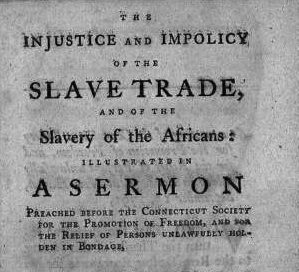
This argument — proof-texting vs. a more comprehensive reading of the Bible — has been going on here in America for centuries. And this argument began in earnest around this very subject: slavery. What the Bible says about slavery depends on how you go about reading the Bible. Long before the Civil War — and even before the Revolution — Americans fought over slavery by fighting over how to read the Bible.
The defenders of slavery settled on the approach to biblical interpretation that best served their purpose (and, not coincidentally, that best served their economic interest). The only way to make the Bible useful in defense of slavery was to treat it as a collection of legal proof-texts. They began isolating and elevating these disparate texts and demanding that they be treated as authoritative. They asserted that this was a literal, obvious and common-sense approach to the Bible (all while desperately avoiding the glaring fact that American-style slavery is nothing like the kinds of slavery described in those passages).
Opponents of slavery sometimes also cited particular texts, appealing to their authority. But generally they took a broader view — invoking not just specific passages, but the great central themes of scripture, the over-arching principles rather than the isolated proof-texts.
Historian Mark Noll has written a great deal about all of this — about how the debate over slavery in America was, for many years, shaped by a parallel debate over biblical hermeneutics. And, he notes, that debate over slavery has continued to shape American biblical hermeneutics more than a century after Emancipation. (See, for example, Noll’s The Civil War as a Theological Crisis.)
There’s an excellent essay of Noll’s online, titled “Battle for the Bible.” Noll begins by describing a theological debate from 1845 between slavery proponent Nathan L. Rice and abolitionist Jonathan Blanchard (who went on to help found Wheaton College).
While Rice methodically tied Blanchard in knots over how to interpret the proslavery implications of specific texts, Blanchard returned repeatedly to “the broad principle of common equity and common sense” that he found in scripture, to “the general principles of the Bible” and “the whole scope of the Bible,” where to him it was obvious that “the principles of the Bible are justice and righteousness.” Early on in the debate, Blanchard’s exasperation with Rice’s attention to particular passages led him to utter a particularly revealing statement of his own reasoning: “Abolitionists take their stand upon the New Testament doctrine of the natural equity of man. The one-bloodism of human kind [from Acts 17:26]: — and upon those great principles of human rights, drawn from the New Testament, and announced in the American Declaration of Independence, declaring that all men have natural and inalienable rights to person, property and the pursuit of happiness.”
Blanchard’s linkage between themes from scripture and tropes from American republicanism was repeated regularly by abolitionists. But this use of the Bible almost never found support in the South and only rarely among northern moderates and conservatives. In general, it was a use that suffered particular difficulties when, as in the ground rules laid down for Blanchard and Rice in their Cincinnati debate, disputants pledged themselves in good Protestant fashion to base what they said on the Bible as their only authoritative source.
Abolitionists like Blanchard moved from “the whole scope of the Bible” to “great principles of human rights,” but as Noll notes:
The stronger their arguments based on general humanitarian principles became, the weaker the Bible looked in any traditional sense. By contrast, rebuttal of such arguments from biblical principle increasingly came to look like a defense of scripture itself.
… Nuanced biblical attacks on American slavery faced rough going precisely because they were nuanced. This position could not simply be read out of any one biblical text; it could not be lifted directly from the page. Rather, it needed patient reflection on the entirety of the scriptures; it required expert knowledge of the historical circumstances of ancient Near Eastern and Roman slave systems as well as of the actually existing conditions in the slave states; and it demanded that sophisticated interpretative practice replace a commonsensically literal approach to the sacred text. In short, this was an argument of elites requiring that the populace defer to its intellectual betters. As such, it contradicted democratic and republican intellectual instincts. In the culture of the U.S., as that culture had been constructed by three generations of evangelical Bible believers, the nuanced biblical argument was doomed.
Noll’s conclusion closely echoes the words of Mark Twain. “The world has corrected the Bible,” Twain wrote. “The Church never corrects it; and also never fails to drop in at the tail of the procession.” Noll sees the same dynamic:
The country had a problem because its most trusted religious authority, the Bible, was sounding an uncertain note. The evangelical Protestant churches had a problem because the mere fact of trusting implicitly in the Bible was not solving disagreements about what the Bible taught concerning slavery. The country and the churches were both in trouble because the remedy that finally solved the question of how to interpret the Bible was recourse to arms. The supreme crisis over the Bible was that there existed no apparent biblical resolution to the crisis. It was left to those consummate theologians, the reverend doctors Ulysses S. Grant and William Tecumseh Sherman, to decide what in fact the Bible actually meant.
Previous Post

October 9, 2012
Mark Twain shreds Republican Loy Mauch
Next Post
October 10, 2012 Chick-fil-A Biblical Family of the Day
Browse Our Archives
Select a Category class warfare evangelicals Iraq Left Behind Mammon music Uncategorized
Select a Month November 2026 October 2026 September 2026 August 2026 July 2026 June 2026 May 2026 April 2026 March 2026 January 2026 December 2025 November 2025 October 2025 September 2025 August 2025 July 2025 June 2025 May 2025 April 2025 March 2025 February 2025 January 2025 December 2024 November 2024 October 2024 September 2024 August 2024 July 2024 June 2024 May 2024 April 2024 March 2024 February 2024 January 2024 December 2023 November 2023 October 2023 September 2023 August 2023 July 2023 June 2023 May 2023 April 2023 March 2023 February 2023 January 2023 December 2022 November 2022 October 2022 September 2022 August 2022 July 2022 June 2022 May 2022 April 2022 March 2022 February 2022 January 2022 December 2021 November 2021 October 2021 September 2021 August 2021 July 2021 June 2021 May 2021 April 2021 March 2021 February 2021 January 2021 December 2020 November 2020 October 2020 September 2020 August 2020 July 2020 June 2020 May 2020 April 2020 March 2020 February 2020 January 2020 December 2019 November 2019 October 2019 September 2019 August 2019 July 2019 June 2019 May 2019 April 2019 March 2019 February 2019 January 2019 December 2018 November 2018 October 2018 September 2018 August 2018 July 2018 June 2018 May 2018 April 2018 March 2018 February 2018 January 2018 December 2017 November 2017 October 2017 September 2017 August 2017 July 2017 June 2017 May 2017 April 2017 March 2017 February 2017 January 2017 December 2016 November 2016 October 2016 September 2016 August 2016 July 2016 June 2016 May 2016 April 2016 March 2016 February 2016 January 2016 December 2015 November 2015 October 2015 September 2015 August 2015 July 2015 June 2015 May 2015 April 2015 March 2015 February 2015 January 2015 December 2014 November 2014 October 2014 September 2014 August 2014 July 2014 June 2014 May 2014 April 2014 March 2014 February 2014 January 2014 December 2013 November 2013 October 2013 September 2013 August 2013 July 2013 June 2013 May 2013 April 2013 March 2013 February 2013 January 2013 December 2012 November 2012 October 2012 September 2012 August 2012 July 2012 June 2012 May 2012 April 2012 March 2012 February 2012 January 2012 December 2011 November 2011 October 2011 September 2011 August 2011 July 2011 June 2011 May 2011 April 2011 March 2011 February 2011 January 2011 December 2010 November 2010 October 2010 September 2010 August 2010 July 2010 June 2010 May 2010 April 2010 March 2010 February 2010 January 2010 December 2009 November 2009 October 2009 September 2009 August 2009 July 2009 June 2009 May 2009 April 2009 March 2009 February 2009 January 2009 December 2008 November 2008 October 2008 September 2008 August 2008 July 2008 June 2008 May 2008 April 2008 March 2008 February 2008 January 2008 December 2007 November 2007 October 2007 September 2007 August 2007 July 2007 June 2007 May 2007 April 2007 March 2007 February 2007 January 2007 December 2006 November 2006 October 2006 September 2006 August 2006 July 2006 June 2006 May 2006 April 2006 March 2006 February 2006 January 2006 December 2005 November 2005 October 2005 September 2005 August 2005 July 2005 June 2005 May 2005 April 2005 March 2005 February 2005 January 2005 December 2004 November 2004 October 2004 September 2004 August 2004 July 2004 June 2004 May 2004 April 2004 March 2004 February 2004 January 2004 December 2003 November 2003 October 2003 September 2003
Follow Us!
TAKE THE
Religious Wisdom Quiz
Which region did the Israelites wander in for 40 years after leaving Egypt?
Select your answer to see how you score.
Moab Judea The Wilderness Galilee
Related posts from slacktivist

It's not 'pick and choose.' It's pick a...

Is this the right room for an argument?
Team Everybody sliding into our DMs
TRENDING AT PATHEOS Progressive Christian

More Than a Meal: A Messianic Thanksgiving
A Messianic Thanksgiving What if Thanksgiving became more than a meal to...

The Darkening of the Sun, Moon, and Stars
The darkening of the sun and moon and the falling of stars...

Gratitude as the Parent of All Virtues
Giving thanks stems from gratitude. Cicero said that gratitude is the parent...

Make Thanksgiving Bring Family Closer
Written by Dr. David K. Ewen from Eternal Truth Bible College Start...

Ghosts, Spirits, and Wizards in Post-Puritan New England
As it is Thanksgiving, I have a seasonal post concerned with New...

Here are two Thanksgiving columns that I originally wrote for the...
view all Progressive Christian blogs
Ad-Free & Subscriber Log-In Subscription Support
- About Us
- 2026 Calendar
- Videos
- Podcasts
- Library of World Religions
- Faith In Media Tracker
- Advertise With Us
- Write for Us
- Privacy Policy
- Terms of Service
- Do Not Sell My Data
- Contact Us
- Radiant Digital
- Manage Newsletter Subscriptions
- Unsubscribe From Notifications
- Sitemap
Copyright 2008-2026, Patheos, part of the Radiant Digital network of media brands. All rights reserved.
Subscription Support Ad-Free & Subscriber Log-In
Follow Patheos