
BuddhistCatholicContemplativeEvangelicalGeneral ChristianHinduJewishLatter-day SaintMuslimNew VisionsProgressive Christian
Beliefs
- Buddhist
- Catholic
- Contemplative
- Evangelical
- General Christian
- Hindu
- Jewish
- Latter-day Saint
- More Voices
- Muslim
- New Visions
- Pagan
- Progressive Christian
Topics
- Religion News
- Food and Religion
- Sports and Religion
- Religious Art
- Religious Music and Entertainment
- Religious Events
- History and Religion
- Style and Religion
- Politics and Religion
- Women in Religion
- Recreation Outdoors and Religion
- Business Finance and Religion
- Careers Workplace and Religion
- Education and Religion
- Family Parenting and Religion
- Health Fitness and Religion
- Home and Religion
- Relationships and Religion
- Technology and Religion
- Travel and Religion
Columnists
- Buddhist Columnists
- Business Finance and Religion Columnists
- Careers Workplace and Religion Columnists
- Catholic Columnists
- Contemplative Columnists
- Education and Religion Columnists
- Evangelists Columnists
- Family Parenting and Religion Columnists
- General Christian Columnists
- Health Fitness and Religion Columnists
- Hindu Columnists
- History and Religion Columnists
- Home and Religion Columnists
- Jewish Columnists
- More Voices Columnists
- Latter Day Columnists
- Muslim Columnists
- New Visions Columnists
- Nonreligious Columnists
- Pagan Columnists
- Politics and Religion Columnists
- Progressive Columnists
- Recreation Outdoors and Religion Columnists
- Relationships and Religion Columnists
- Religion News Columnists
- Religious Art Columnists
- Religious Events Columnists
- Religious Music and Entertainment Columnists
- Sports and Religion Columnists
- Style and Religion Columnists
- Technology and Religion Columnists
- Travel and Religion Columnists
- Women in Religion Columnists
Resource Library
- 2026 Calendar
- Library of World Religions
- The 100 Most Holy Places on Earth
- Patheos Answers
- Podcasts
- Videos
- Faith Leaders Database
- Anglican Episcopalian
- Bahai
- Baptist
- Buddhism
- Christianity
- Confucianism
- Eastern Orthodoxy
- Hinduism
- Holiness and Pentecostal
- ISKCON
- Islam
- Judaism
- Lutheran
- Methodist
- The Church of Jesus Christ of Latter-day Saints
- New Age
- Paganism
- Presbytarian and Reformed
- Protestantism
- Religion Behind the Scenes
- Roman Catholic
- Scientology
- Shia Islam
- Sikhism
- Sufism
- Sunni Islam
- Taoism
- Zen
- See all religions
Research Tools
 Ad-Free & Subscriber Log-In Subscription Support
Ad-Free & Subscriber Log-In Subscription Support
Follow Patheos 

- Trending:
- Forgiveness
- |
- Marriage
- |
- Consciousness
- |
- Death Penalty
- |
- Election
- |
- Halloween

- Home
- Progressive Christian
- Miracles and X-Files: Tim Stafford and Dana Scully
Miracles and X-Files: Tim Stafford and Dana Scully
Last updated on: July 29, 2012 at 12:36 pm by Fred Clark
Miracles and X-Files: Tim Stafford and Dana Scully 2012-07-29T12:36:48-04:00 Fred Clark
Patheos Explore the world's faith through different perspectives on religion and spirituality! Patheos has the views of the prevalent religions and spiritualities of the world.
This month, the Patheos Book Club is looking at Tim Stafford’s Miracles.
I might have better been able to enjoy this book if it hadn’t come with a misleading subtitle that created a set of false expectations.
That subtitle is “A Journalist Looks at Modern-Day Experiences of God’s Power,” but that has very little to do with this book. Stafford is, in fact, an accomplished journalist, but this book is not an act of journalism. Miracles is a personal testimony, it is an often thoughtful meditation on faith and the nature of God, and it is a winsome, if not ultimately persuasive, argument for belief in miracles. But it’s not journalism.
 Stafford isn’t writing here as a journalist, but as an advocate for a belief. He often makes a strong case for that belief, but that is always what he is about in this book — making a case. He’s set aside the role of the journalist to take on the role of a defense attorney. In that role he calls on eyewitnesses and presents their testimony as evidence. Stafford assures us, repeatedly, that they are credible, but that is not how credibility accrues. Witness testimony is made credible by withstanding cross-examination, but these witnesses are never cross-examined. Miracles lacks a prosecuting attorney to test — and to demonstrate — the strength of Stafford’s case for the defense.
For me that had the effect of generating more skepticism than I might have otherwise had in evaluating the stories Stafford relates. Reading this book I found myself sliding into the vacant role of the prosecutor, partly just out of a sense of forensic fairness.
The story at the heart of this book involves a healing. Jeff was in a wheelchair, unable to walk due to unbearable pain in his feet. A series of doctors were unable to determine the cause of this pain, or to provide any remedy. Then one day Jeff was taken to a healing service in a Pentecostal church. They prayed over Jeff and, just at that moment, the pain was gone. For good, it seems. Jeff couldn’t walk. Now he can. That happened.
Something extraordinary occurred. But what, exactly? Stafford says it was a miracle of healing by the triune Christian God. I’m prepared to agree. I’m even inclined to agree. But a host of questions remain not only unanswered, but unacknowledged.
For a sense of the problem here, let me cite one of the 20 “affirmations” from Stafford’s penultimate chapter:
Miracles happen. Reliable people testify to miracles. As with all historical events, trustworthy witness is the only real test.
But we can’t say both that something is miraculous and that it can be regarded just like “all historical events.” As Stafford says in his eighth affirmation: “Miracles are rare.” And they are wondrous — to be wondered at.
Miracles, in other words, are extraordinary. The claim that a miracle has occurred is an extraordinary claim, and such extraordinary claims require extraordinary evidence. The “trustworthy witness” of a few people (setting aside the question of how to establish “trustworthiness”) may be a sufficient test for an ordinary historical event, but we’re going to need more than that to confirm an extraordinary event.
That’s what’s frustrating about the subtitle’s broken promise of a journalist’s perspective. Jeff’s story is news, but no editor would agree to run such a story unless it was confirmed by several other sources beyond Jeff and his family. Jeff’s mom tells Stafford that before his healing, the family had sought “a consultation with a famous doctor at Stanford.” Stafford quotes her account of that consultation:
“‘You need to stop,’ he told us. ‘No more surgeries. You have to get used to it. Jeff is going to be in a wheelchair. It’s possible the pain will go away by itself, but we don’t know what causes it, and we can’t predict what will help it.'”
A journalist’s editor would have demanded the name of that doctor, and that his account of that consultation also be included in the story. The lack of any comment from that doctor after Jeff’s healing also raises flags.
Reading Miracles, I kept feeling like AD Walter Skinner on The X-Files, listening to another astonishing report from Agent Fox Mulder. I kept wanting to ask the question Skinner always asked, “What does Agent Scully think about this?”
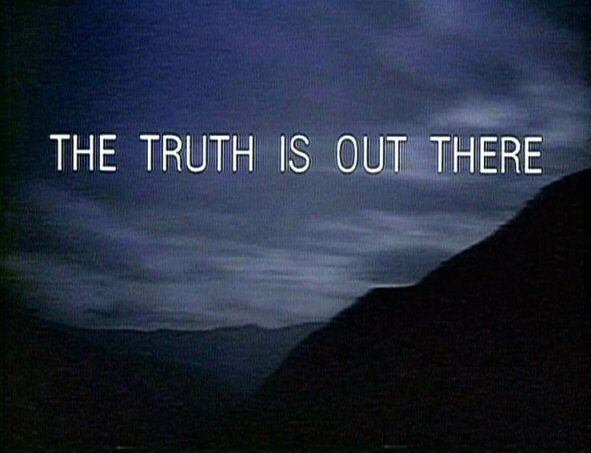 That X-Files analogy also highlights another underlying problem with Miracles. If you’re not familiar with Chris Carter’s wonderful 1990s TV show, it follows the adventures of two FBI agents who are tasked with investigating unexplained phenomena. Agent Scully, played by Gillian Anderson, is the one who believes in UFOs.
Many people get that backwards. Since Scully is the skeptical scientist and Mulder the idealistic true believer, they mistakenly think Mulder believes in UFOs. He doesn’t. Mulder can’t abide allowing flying objects to remain unidentified. He doesn’t believe in UFOs, he believes in alien spacecraft.
This is true of most of the alleged experts on UFOs or on the “mysteries of the unexplained.” You’ll find many such experts in supermarket tabloids or on the wide array of tabloid TV shows now boosting the ratings and destroying the credibility of purportedly educational cable channels. The experts are brought on to discuss some “unexplained phenomena” and within seconds they explain it. Eyewitnesses attest to strange lights in the sky and the alleged “ufologist” quickly declares, with utmost confidence, that these flying objects can be identified. He proceeds to identify them with great precision, expressing certainty as to what they are, what they mean, and even the planet of origin of their supposed pilots.
Like these “experts,” Agent Mulder allows no room for the possibility of unidentified flying objects or for unexplained phenomena. His partner, Scully, might often be at a loss for an explanation, but Mulder never is.
Mulder is a crusader. He is, like Tim Stafford, an advocate for a particular point of view. Mulder isn’t a journalist or a scientist disinterestedly collecting data and following wherever it leads. He is, instead, a theorist seeking data that might prove his theory.
Now, both the fictional Mulder and the real-world Stafford seem to appreciate one danger of this approach. They both seem to recognize — and to guard against — the temptation to cherry-pick favorable data, sifting the evidence to select only that which supports their view.
But neither of them is able to escape the way their approach inevitably shapes one’s perception of the world. It condenses a universe of possibilities into a binary, yes-or-no question, precluding any consideration of other possibilities. That’s why Mulder needs Scully — to remind him of those other possibilities, including the indispensable category of “We do not know and we cannot say.”
Mulder needs Scully — and Tim Stafford needs Scully — to remind him that his theory isn’t the only possibility. Something extraordinary occurred. Jeff could not walk. Now Jeff can walk. Stafford’s theory-bound approach is only able to consider this through the binary framework of asking “Is this a miracle or not?” And for Stafford that word “miracle” refers to a very specific sort of divine intervention by a very specific deity.
But if “trustworthy witness is the only real test” for verifying miraculous acts, then we’re going to be stuck accepting the validity of many miracles that have little to do with the particular form of religion that Stafford and I subscribe to. Stafford writes:
Miracles have happened in front of all kinds of people who have testified to them and in some cases have tested them. A thousand witnesses will tell you that they have seen a miracle with their own eyes.
That’s true. But not all of those thousand witnesses are Christians and not all of those miracles are Christian miracles. It’s hard to know from this book what Stafford would make of the multitude of miracle stories from Islam, Hinduism, Vodou and various Pagan traditions. Would he accept the trustworthy witness of the Latter-day Saints in 1848 Utah who testify to the “miracle of the gulls“?
Or consider the dissonant note in his chapter on “Global Pentecostalism.” He profiles a group of Pentecostal missionaries in rural Mozambique. “Don’t go back to the witch doctor,” one missionary cautions a local woman.
This same missionary, Stafford tells us, conducts regular healing services and the missionaries’ church is overflowing with tales of miraculous healing. “It’s hard to remain skeptical when you hear so many such testimonies,” Stafford writes.
Yet just as many testimonies from just as many earnest people could be collected to attest to the miraculous works of “the witch doctor.” If such testimonies are sufficient evidence for the Christian miracles, why are they insufficient for the miracles of the shaman?
I don’t think Stafford dismisses the miracles of the witch doctors just because they’re the product of a rival religion. I think he’s simply unable to consider them because they lie outside the binary framework of his theory. They don’t fit into, or speak to, the sectarian Christian vs. rational atheist either/or that shapes the book’s discussion.
And but so, what do I think happened to Jeff?
To Stafford’s credit, it is impossible to engage this book without engaging that question. Something happened — something unusual and extraordinary and wonderful. If it had not happened, Stafford would not have written this book. But because it did happen, he had to write this book.
And for all the blindspots and shortcomings I’ve complained about above, that makes this book compelling. Here is a man, Tim Stafford, who has witnessed something that doesn’t fit — something that knocked him back on his heels and sent him on a fitful search for answers to account for it.
Some of Stafford’s most insightful writing in Miracles anticipates my own reaction to this story of Jeff’s healing. He notes that such stories never seem quite as compelling when heard second-hand. And he guesses — correctly — that many of us will not be as awestruck as he was witnessing the healing of his friend up close.
Jeff couldn’t walk before and now he can. That happened. I don’t share Stafford’s confidence that we can know how or why it happened, or what, precisely, it means. Extraordinary claims require extraordinary evidence and, in the absence of that, I would classify this story as a UFO, as an unexplained phenomenon.
I suppose that response will disappoint Stafford or cause him to classify me among the “semi-believing doubters.” But I would remind him of a phrase he uses dozens of times throughout Miracles — “signs and wonders.” That last word — wonder — can convey both awe and curiosity. Where Stafford leans more toward the former, I’m inclined more toward the latter. If this story of healing has not left me in a state of wonder, it does have me wondering.
Previous Post

July 28, 2012
Banks Behaving Badly (All Consumerist Edition)
Next Post
July 29, 2012 Sunday favorites
Browse Our Archives
Select a Category class warfare evangelicals Iraq Left Behind Mammon music Uncategorized
Select a Month October 2026 September 2026 August 2026 July 2026 June 2026 May 2026 April 2026 March 2026 January 2026 December 2025 November 2025 October 2025 September 2025 August 2025 July 2025 June 2025 May 2025 April 2025 March 2025 February 2025 January 2025 December 2024 November 2024 October 2024 September 2024 August 2024 July 2024 June 2024 May 2024 April 2024 March 2024 February 2024 January 2024 December 2023 November 2023 October 2023 September 2023 August 2023 July 2023 June 2023 May 2023 April 2023 March 2023 February 2023 January 2023 December 2022 November 2022 October 2022 September 2022 August 2022 July 2022 June 2022 May 2022 April 2022 March 2022 February 2022 January 2022 December 2021 November 2021 October 2021 September 2021 August 2021 July 2021 June 2021 May 2021 April 2021 March 2021 February 2021 January 2021 December 2020 November 2020 October 2020 September 2020 August 2020 July 2020 June 2020 May 2020 April 2020 March 2020 February 2020 January 2020 December 2019 November 2019 October 2019 September 2019 August 2019 July 2019 June 2019 May 2019 April 2019 March 2019 February 2019 January 2019 December 2018 November 2018 October 2018 September 2018 August 2018 July 2018 June 2018 May 2018 April 2018 March 2018 February 2018 January 2018 December 2017 November 2017 October 2017 September 2017 August 2017 July 2017 June 2017 May 2017 April 2017 March 2017 February 2017 January 2017 December 2016 November 2016 October 2016 September 2016 August 2016 July 2016 June 2016 May 2016 April 2016 March 2016 February 2016 January 2016 December 2015 November 2015 October 2015 September 2015 August 2015 July 2015 June 2015 May 2015 April 2015 March 2015 February 2015 January 2015 December 2014 November 2014 October 2014 September 2014 August 2014 July 2014 June 2014 May 2014 April 2014 March 2014 February 2014 January 2014 December 2013 November 2013 October 2013 September 2013 August 2013 July 2013 June 2013 May 2013 April 2013 March 2013 February 2013 January 2013 December 2012 November 2012 October 2012 September 2012 August 2012 July 2012 June 2012 May 2012 April 2012 March 2012 February 2012 January 2012 December 2011 November 2011 October 2011 September 2011 August 2011 July 2011 June 2011 May 2011 April 2011 March 2011 February 2011 January 2011 December 2010 November 2010 October 2010 September 2010 August 2010 July 2010 June 2010 May 2010 April 2010 March 2010 February 2010 January 2010 December 2009 November 2009 October 2009 September 2009 August 2009 July 2009 June 2009 May 2009 April 2009 March 2009 February 2009 January 2009 December 2008 November 2008 October 2008 September 2008 August 2008 July 2008 June 2008 May 2008 April 2008 March 2008 February 2008 January 2008 December 2007 November 2007 October 2007 September 2007 August 2007 July 2007 June 2007 May 2007 April 2007 March 2007 February 2007 January 2007 December 2006 November 2006 October 2006 September 2006 August 2006 July 2006 June 2006 May 2006 April 2006 March 2006 February 2006 January 2006 December 2005 November 2005 October 2005 September 2005 August 2005 July 2005 June 2005 May 2005 April 2005 March 2005 February 2005 January 2005 December 2004 November 2004 October 2004 September 2004 August 2004 July 2004 June 2004 May 2004 April 2004 March 2004 February 2004 January 2004 December 2003 November 2003 October 2003 September 2003
Follow Us!
TAKE THE
Religious Wisdom Quiz
What miracle did Elisha perform for a widow?
Select your answer to see how you score.
Multiplied oil Made fire fall Fed 5,000 Raised her son
Related posts from slacktivist

Costly discipleship in the discount bin

Two more thoughts on 'Miracles'
Letters to the present church (with an eye...
TRENDING AT PATHEOS Progressive Christian

The Problem with False Prophets
Miller’s Station UMC| 10/18/26| Anchor Verse: Jeremiah 23: 1, 9-23 I...

Emotion in Early Christianity by Andrew Crislip
Andrew Crislip’s Emotion in Early Christianity examines an often overlooked dimension of...

16 Spiritual Touchstones for a More Grounded Life
After decades of spiritual study, here are 16 principles I try...

Catholic Evangelization: Sharing Your Faith Every Day
Welcome back to the Graceful Awakening mini-series called, “From Faith to Mission.” ...

The Pillar of the Boatmen: the Ancient Monument...
The Pillar of the Boatmen is a Romano-Gaulish sculpture that dates from...

In one sense walking into Westminster Abbey is like walking down the...
view all Progressive Christian blogs
Ad-Free & Subscriber Log-In Subscription Support
- About Us
- 2026 Calendar
- Videos
- Podcasts
- Library of World Religions
- Faith In Media Tracker
- Advertise With Us
- Write for Us
- Privacy Policy
- Terms of Service
- Do Not Sell My Data
- Contact Us
- Radiant Digital
- Manage Newsletter Subscriptions
- Unsubscribe From Notifications
- Sitemap
Copyright 2008-2026, Patheos. All rights reserved.
Subscription Support Ad-Free & Subscriber Log-In
Follow Patheos