
BuddhistCatholicContemplativeEvangelicalGeneral ChristianHinduJewishLatter-day SaintMuslimNew VisionsProgressive Christian
Beliefs
- Buddhist
- Catholic
- Contemplative
- Evangelical
- General Christian
- Hindu
- Jewish
- Latter-day Saint
- More Voices
- Muslim
- New Visions
- Pagan
- Progressive Christian
Topics
- Religion News
- Food and Religion
- Sports and Religion
- Religious Art
- Religious Music and Entertainment
- Religious Events
- History and Religion
- Style and Religion
- Politics and Religion
- Women in Religion
- Recreation Outdoors and Religion
- Business Finance and Religion
- Careers Workplace and Religion
- Education and Religion
- Family Parenting and Religion
- Health Fitness and Religion
- Home and Religion
- Relationships and Religion
- Technology and Religion
- Travel and Religion
Columnists
- Buddhist Columnists
- Business Finance and Religion Columnists
- Careers Workplace and Religion Columnists
- Catholic Columnists
- Contemplative Columnists
- Education and Religion Columnists
- Evangelists Columnists
- Family Parenting and Religion Columnists
- General Christian Columnists
- Health Fitness and Religion Columnists
- Hindu Columnists
- History and Religion Columnists
- Home and Religion Columnists
- Jewish Columnists
- More Voices Columnists
- Latter Day Columnists
- Muslim Columnists
- New Visions Columnists
- Nonreligious Columnists
- Pagan Columnists
- Politics and Religion Columnists
- Progressive Columnists
- Recreation Outdoors and Religion Columnists
- Relationships and Religion Columnists
- Religion News Columnists
- Religious Art Columnists
- Religious Events Columnists
- Religious Music and Entertainment Columnists
- Sports and Religion Columnists
- Style and Religion Columnists
- Technology and Religion Columnists
- Travel and Religion Columnists
- Women in Religion Columnists
Resource Library
- 2026 Calendar
- Library of World Religions
- The 100 Most Holy Places on Earth
- Patheos Answers
- Podcasts
- Videos
- Faith Leaders Database
- Anglican Episcopalian
- Bahai
- Baptist
- Buddhism
- Christianity
- Confucianism
- Eastern Orthodoxy
- Hinduism
- Holiness and Pentecostal
- ISKCON
- Islam
- Judaism
- Lutheran
- Methodist
- The Church of Jesus Christ of Latter-day Saints
- New Age
- Paganism
- Presbytarian and Reformed
- Protestantism
- Religion Behind the Scenes
- Roman Catholic
- Scientology
- Shia Islam
- Sikhism
- Sufism
- Sunni Islam
- Taoism
- Zen
- See all religions
Research Tools
 Ad-Free & Subscriber Log-In Subscription Support
Ad-Free & Subscriber Log-In Subscription Support
Follow Patheos 

- Trending:
- Forgiveness
- |
- Marriage
- |
- Consciousness
- |
- Death Penalty
- |
- Election
- |
- Halloween

- Home
- Progressive Christian
- ‘Broken Words’ and the freedom to ask questions
‘Broken Words’ and the freedom to ask questions
Last updated on: December 1, 2011 at 3:22 pm by Fred Clark
‘Broken Words’ and the freedom to ask questions 2011-12-01T15:22:00-05:00 Fred Clark
Patheos Explore the world's faith through different perspectives on religion and spirituality! Patheos has the views of the prevalent religions and spiritualities of the world.
I recently listed Jonathan Dudley’s Broken Words: The Abuse of Science and Faith in American Politics along with other spiritual memoirs by younger writers challenging aspects of what they have been taught in the American evangelical subculture.
“Memoir” isn’t really the right word for Dudley’s book, which is more impersonal and analytical than that implies. He steps back to examine ideas and ideologies rather than focusing on the particulars of his own story or journey.
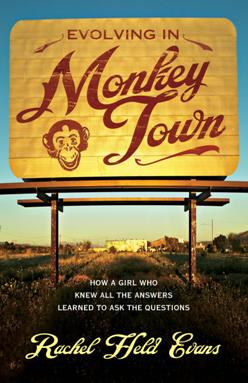
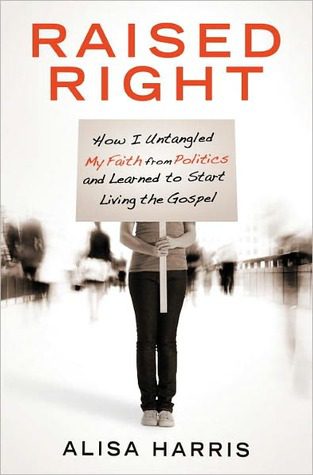
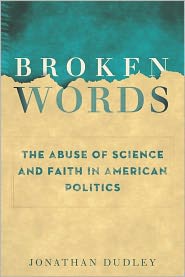 But that’s what this journey was like for many of us. It was a matter of ideas — ideas at first accepted, then examined, then found wanting. Books like Rachel Held Evans’ Evolving in Monkey Town, Alisa Harris’ Raised Right or Donald Miller’s Blue Like Jazz deal with many of these same ideas, but those writers approach the subject as writers — as skilled memoirists who plumb the particulars of their own experience. Dudley, instead, approaches these ideas like a prosecutor — placing each in the dock and examining the evidence to build his case against each in turn. Where the others present their testimonies — to use a word employed both in court and in evangelical churches — Dudley presents an argument. It’s a sustained and compelling argument.
And that argument is also, in a sense, his testimony. When he lays out the inconsistencies, contradictions and factual errors of these ideas, Dudley is also describing his own story. And, as with those other memoirs, it’s not only his story. It’s a familiar account for many of us who were raised in the American evangelical subculture and received there both a spiritual heritage we treasure and a set of unsustainable ideologies we are no longer able to embrace.
Where the memoirists approach this subject as storytellers, Dudley is more clinical and methodical. He enumerates his objections, summarizing the thesis he aims to defend in the very first paragraph:
I learned a few things growing up as an evangelical Christian: that abortion is murder; homosexuality, sin; evolution, nonsense; and environmentalism, a farce. I learned to accept these ideas — the “big four” — as part of the package deal of Christianity. In some circles, I learned that my eternal salvation hinged on it. Those who denied them were outsiders, liberals, and legitimate targets for evangelism. If they didn’t change their minds after being “witnessed to,” they became legitimate targets for hell.
Dudley then systematically works his way through that list — the “big four” — examining each idea separately while also showing how they relate to each other, diagnosing the common threads and shared misconceptions that underlie all of them.
That approach is more impersonal than a memoir, but also more precise. But then, for some of us, such clinical precision is personal — at least for those of us who tend to live a bit too much in our heads.
Dudley’s approach brings a clarity and specificity to this broader trend of millennial-generation evangelicals challenging and questioning the political and ideological orthodoxies they were taught were inseparable from faith in Jesus Christ. That specificity is bound to get Dudley in more hot water — to ensure his book is denounced with more clarity and specificity than those more personal, idiosyncratic memoirs have been. Where those other books make older evangelicals uncomfortable by asking taboo questions, Dudley trespasses further by offering taboo answers. He doesn’t just say that it’s wrong to make the big four central, defining and inviolable tenets of faith, he also says that the older generation is wrong about the big four — wrong to oppose legal abortion, wrong to oppose civil rights for GLBT people, wrong to oppose evolution, wrong to oppose environmentalism.
Dudley’s discussion of each of those subjects deserves a closer look, and I want to return to his book in future posts examining all of those points.
Here, I just want to note that his contention — that evangelicals have been wrong about the big four — is not permitted within the sphere of conversation controlled by the older generation of evangelicals. These things simply may not be debated or questioned. Just look at the knee-jerk uniformity of response to Karl Giberson’s recent articles on evangelical anti-intellectualism. Or look at what happened to Rich Cizik.
Figures like Mark Noll, Jim Wallis or Tony Campolo are branded as dangerously “controversial” for occasionally kinda sorta nibbling around the edges of the big four — suggesting that perhaps, maybe, there might be a teensy bit of wiggle room to allow for a very slightly broader approach to these topics. But even that negligible deviation from the sacrosanct official stance carries a cost. And to go further would be to risk getting Cizik-ed — losing your job, your church, your chance of ever again being employed by any evangelical agency that relies on the current generation of donors (a wealthy, very conservative constituency determined to cut off any dissident who questions the big four). There’s a reason Mark Noll is now teaching at Notre Dame.
I believe there is a real generational shift taking place in American evangelicalism. Particularly when it comes to GLBT issues, millennials consistently reject the misleading claims of the older generation. But I think this recent wave of dissident books by younger writers reflects more than just that.
I think it also reflects something Brian McLaren (another one of those dangerously “controversial” people) mentioned recently in response to a question about the no-dissent-allowed subject of abortion:
Relatively few people are in a position to talk about abortion as a theological and biblical question without having to worry about the consequences, meaning where their views would locate them in political, social, and even economic struggles.
 Younger writers don’t have to worry about those consequences. The evangelical establishment can’t threaten their privileges because they don’t have any privileges in that establishment. They don’t need to worry about an unflattering article in Christianity Today causing their speaking-fees to dry up because they’re not depending on any such speaking fees. They don’t have to worry about possibly offending the sensibilities of Howard Ahmanson and thereby losing their grant money because they’re not supported by such grants (and, happily for them, they may never even have heard of Howard Ahmanson).
Fear of punitive, retaliatory “consequences” prevents older evangelicals from speaking up and speaking out the way these younger writers do. More than that, it prevents them from even entertaining the thoughts that might lead them to having something to speak up and speak out about.
The same inconsistencies, contradictions and factual errors that trouble Jonathan Dudley are noticed — or at least glimpsed — by leaders of the older generation of the evangelical establishment. But they don’t even allow themselves the chance to give them a second thought because the consequences of that line of thought are all too clear.
Rachel Held Evans and Alisa Harris are both thoughtful and perceptive people, but the troubling doubts they wrote about so well aren’t unique to them. The same doubts and reservations have occurred to scores of older evangelicals too, but that older generation had too much at stake to allow themselves to think through the implications of those doubts as thoughtfully as those younger writers have.
I’m not intending this as a criticism or judgement against that older generation. They are well and truly trapped. I won’t accuse them of timidity because their options really are constrained.
 Tony Jones discusses the implications of this bind as it relates to evangelical scholarship — even in an area like New Testament studies (see “Honest Scholarship May Not Be Possible at a Christian School“). But it also has real-world, tangibly hurtful implications for many involved in direct ministry.
Let me keep this strictly hypothetical and let me stress that I’m being strictly hypothetical. I’m not speculating about any actual evangelical leaders and whether they might fit this description, nor do I know for certain of any who do.
But let’s say you run an evangelical ministry helping at-risk kids in urban areas. You’ve never addressed any of the big four issues — never even been anywhere near them. After a couple of decades of hard work you’ve built a network of after-school tutoring programs, health clinics, food pantries, youth groups, mentoring networks — the full-court press. And it’s all dependent on the support of evangelical churches. That support is, in turn, contingent on the imprimatur of an ever-shifting list of “gatekeepers,” those self-appointed bishops — authors, radio hosts, columnists, activists, mega-church pastors, etc. — who define the boundaries of acceptable evangelical ideology.
You can quantify all the good things your ministry is doing, but it’s not about the numbers for you. You know these kids and their families. You love them. They have names and faces and they depend on you.
And then one day some interviewer asks you about one of the big four issues while preparing a puff piece for Charisma magazine. Or you’re asked to sign the latest of the endless stream of “declarations” that always seem to be circulating among evangelicals (declarations that often seem to exist specifically in order to keep everyone in line on the big four). And whatever you say will have a direct and measurable impact on all those kids and their families.
That’s the trap. Zugzwang — every move is a bad one.
And all I’m willing to say with confidence about the moral calculus involved is that I’m grateful I’m not in such a trap myself.
But I’m also grateful — very grateful — that this wave of younger writers isn’t caught in that trap either. And I’m grateful that they are therefore able to write with an honesty and candor I’ve learned I cannot expect from an older generation of American evangelicals.
Previous Post

December 1, 2011
World AIDS Day
Next Post
December 1, 2011 Banks behaving badly
Browse Our Archives
Select a Category class warfare evangelicals Iraq Left Behind Mammon music Uncategorized
Select a Month October 2026 September 2026 August 2026 July 2026 June 2026 May 2026 April 2026 March 2026 January 2026 December 2025 November 2025 October 2025 September 2025 August 2025 July 2025 June 2025 May 2025 April 2025 March 2025 February 2025 January 2025 December 2024 November 2024 October 2024 September 2024 August 2024 July 2024 June 2024 May 2024 April 2024 March 2024 February 2024 January 2024 December 2023 November 2023 October 2023 September 2023 August 2023 July 2023 June 2023 May 2023 April 2023 March 2023 February 2023 January 2023 December 2022 November 2022 October 2022 September 2022 August 2022 July 2022 June 2022 May 2022 April 2022 March 2022 February 2022 January 2022 December 2021 November 2021 October 2021 September 2021 August 2021 July 2021 June 2021 May 2021 April 2021 March 2021 February 2021 January 2021 December 2020 November 2020 October 2020 September 2020 August 2020 July 2020 June 2020 May 2020 April 2020 March 2020 February 2020 January 2020 December 2019 November 2019 October 2019 September 2019 August 2019 July 2019 June 2019 May 2019 April 2019 March 2019 February 2019 January 2019 December 2018 November 2018 October 2018 September 2018 August 2018 July 2018 June 2018 May 2018 April 2018 March 2018 February 2018 January 2018 December 2017 November 2017 October 2017 September 2017 August 2017 July 2017 June 2017 May 2017 April 2017 March 2017 February 2017 January 2017 December 2016 November 2016 October 2016 September 2016 August 2016 July 2016 June 2016 May 2016 April 2016 March 2016 February 2016 January 2016 December 2015 November 2015 October 2015 September 2015 August 2015 July 2015 June 2015 May 2015 April 2015 March 2015 February 2015 January 2015 December 2014 November 2014 October 2014 September 2014 August 2014 July 2014 June 2014 May 2014 April 2014 March 2014 February 2014 January 2014 December 2013 November 2013 October 2013 September 2013 August 2013 July 2013 June 2013 May 2013 April 2013 March 2013 February 2013 January 2013 December 2012 November 2012 October 2012 September 2012 August 2012 July 2012 June 2012 May 2012 April 2012 March 2012 February 2012 January 2012 December 2011 November 2011 October 2011 September 2011 August 2011 July 2011 June 2011 May 2011 April 2011 March 2011 February 2011 January 2011 December 2010 November 2010 October 2010 September 2010 August 2010 July 2010 June 2010 May 2010 April 2010 March 2010 February 2010 January 2010 December 2009 November 2009 October 2009 September 2009 August 2009 July 2009 June 2009 May 2009 April 2009 March 2009 February 2009 January 2009 December 2008 November 2008 October 2008 September 2008 August 2008 July 2008 June 2008 May 2008 April 2008 March 2008 February 2008 January 2008 December 2007 November 2007 October 2007 September 2007 August 2007 July 2007 June 2007 May 2007 April 2007 March 2007 February 2007 January 2007 December 2006 November 2006 October 2006 September 2006 August 2006 July 2006 June 2006 May 2006 April 2006 March 2006 February 2006 January 2006 December 2005 November 2005 October 2005 September 2005 August 2005 July 2005 June 2005 May 2005 April 2005 March 2005 February 2005 January 2005 December 2004 November 2004 October 2004 September 2004 August 2004 July 2004 June 2004 May 2004 April 2004 March 2004 February 2004 January 2004 December 2003 November 2003 October 2003 September 2003
Follow Us!
TAKE THE
Religious Wisdom Quiz
Skin for skin! All that a man has he will give for something precious. What is it?
Select your answer to see how you score.
His family His life His wealth His soul
Related posts from slacktivist

Is this the right room for an argument?

The Amish are not 'Evangelicals.' They're Amish.

The lumpers, the splitters, and me

'Is it right on red or left on...
TRENDING AT PATHEOS Progressive Christian

How to Make a Decision When You Can't...
Main point: It’s much more valuable to stay close to God so...

Archdiocese Hosts Military Marriage Retreat in Germany
RASTATT, Germany — The transient military lifestyle, with its frequent deployments and...

Nearly every morning, I make the drive to Detroit with my high-school-age...

The Real AI Story Is Adoption Without Trust
Artificial intelligence has crossed a political threshold. It is no longer a...

A new article, written by Jeff Lindsay and Gale L. Pooley,...

Swimfan: Forgotten Aughts Pleasures
This is a recovery effort. In 2002, My Big Fat Greek Wedding...
view all Progressive Christian blogs
Ad-Free & Subscriber Log-In Subscription Support
- About Us
- 2026 Calendar
- Videos
- Podcasts
- Library of World Religions
- Faith In Media Tracker
- Advertise With Us
- Write for Us
- Privacy Policy
- Terms of Service
- Do Not Sell My Data
- Contact Us
- Radiant Digital
- Manage Newsletter Subscriptions
- Unsubscribe From Notifications
- Sitemap
Copyright 2008-2026, Patheos. All rights reserved.
Subscription Support Ad-Free & Subscriber Log-In
Follow Patheos