
BuddhistCatholicContemplativeEvangelicalGeneral ChristianHinduJewishLatter-day SaintMuslimNew VisionsProgressive Christian
Beliefs
- Buddhist
- Catholic
- Contemplative
- Evangelical
- General Christian
- Hindu
- Jewish
- Latter-day Saint
- More Voices
- Muslim
- New Visions
- Pagan
- Progressive Christian
Topics
- Religion News
- Food and Religion
- Sports and Religion
- Religious Art
- Religious Music and Entertainment
- Religious Events
- History and Religion
- Style and Religion
- Politics and Religion
- Women in Religion
- Recreation Outdoors and Religion
- Business Finance and Religion
- Careers Workplace and Religion
- Education and Religion
- Family Parenting and Religion
- Health Fitness and Religion
- Home and Religion
- Relationships and Religion
- Technology and Religion
- Travel and Religion
Columnists
- Buddhist Columnists
- Business Finance and Religion Columnists
- Careers Workplace and Religion Columnists
- Catholic Columnists
- Contemplative Columnists
- Education and Religion Columnists
- Evangelists Columnists
- Family Parenting and Religion Columnists
- General Christian Columnists
- Health Fitness and Religion Columnists
- Hindu Columnists
- History and Religion Columnists
- Home and Religion Columnists
- Jewish Columnists
- More Voices Columnists
- Latter Day Columnists
- Muslim Columnists
- New Visions Columnists
- Nonreligious Columnists
- Pagan Columnists
- Politics and Religion Columnists
- Progressive Columnists
- Recreation Outdoors and Religion Columnists
- Relationships and Religion Columnists
- Religion News Columnists
- Religious Art Columnists
- Religious Events Columnists
- Religious Music and Entertainment Columnists
- Sports and Religion Columnists
- Style and Religion Columnists
- Technology and Religion Columnists
- Travel and Religion Columnists
- Women in Religion Columnists
Resource Library
- 2026 Calendar
- Library of World Religions
- The 100 Most Holy Places on Earth
- Patheos Answers
- Podcasts
- Videos
- Faith Leaders Database
- Anglican Episcopalian
- Bahai
- Baptist
- Buddhism
- Christianity
- Confucianism
- Eastern Orthodoxy
- Hinduism
- Holiness and Pentecostal
- ISKCON
- Islam
- Judaism
- Lutheran
- Methodist
- The Church of Jesus Christ of Latter-day Saints
- New Age
- Paganism
- Presbytarian and Reformed
- Protestantism
- Religion Behind the Scenes
- Roman Catholic
- Scientology
- Shia Islam
- Sikhism
- Sufism
- Sunni Islam
- Taoism
- Zen
- See all religions
Research Tools
 Ad-Free & Subscriber Log-In Subscription Support
Ad-Free & Subscriber Log-In Subscription Support
Follow Patheos 

- Trending:
- Forgiveness
- |
- Marriage
- |
- Consciousness
- |
- Death Penalty
- |
- Election
- |
- Halloween

- Home
- Progressive Christian
- An invitation to an argument: ’25 Books Every Christian Should Read’
An invitation to an argument: ’25 Books Every Christian Should Read’
Last updated on: November 23, 2011 at 11:53 am by Fred Clark
An invitation to an argument: ’25 Books Every Christian Should Read’ 2011-11-23T11:53:14-05:00 Fred Clark
Patheos Explore the world's faith through different perspectives on religion and spirituality! Patheos has the views of the prevalent religions and spiritualities of the world.
Renovaré has a new book out that seems designed to start an argument. It’s called 25 Books Every Christian Should Read: A Guide to the Essential Spiritual Classics, and it’s just what it sounds like — an introduction to 25 classic works of Christian writing, with excerpts from each and short essays arguing for why these selections are worth reading.
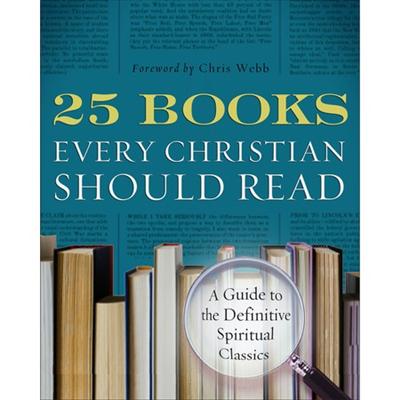 As with all such lists — think of those AFI lists, or those lists of “the best novels,” or NPR’s recent list of 100 science fiction books — part of the fun is the inevitable argument over which books should be included.
In this case, that argument ought to be a gentle one, seeing as these books are mostly classics of devotional literature whose most avid partisans ought to reflect the spirit of those books. One assumes that two friends with passionate opinions about, for example, the relative merits of The Practice of the Presence of God versus The Seven Storey Mountain would conduct their dispute in a manner that would make Brother Lawrence and Thomas Merton proud.
The Renovaré folks recognize this aspect of their project, and they see the fun in it, so they’ve structured their book to accommodate and encourage such discussion. Sprinkled throughout 25 Books are dozens of additional recommendations, including additional lists from a variety of interesting people — lists of their five favorites, or the six books they found most inspiring, or “Seven Books Those Idiots at Renovaré Unforgivably Failed to Include.” (No list is titled quite that explicitly, of course, but the editors are smart enough to realize that this is what many readers will inevitably be thinking.)
Patheos is also helping to continue that friendly argument with a book club forum on 25 Books.
The main list is a good one. I’ve read maybe half of these and am at least familiar with the rest, thanks in part to having been introduced to some of them years ago by a similar, earlier Renovaré publication called Devotional Classics. The excerpts, like the titles listed, are well-chosen, and the short essays make a good case for these entries.
The overall sense one gets from 25 Books is that of having an earnest, bookish friend enthusiastically pressing a stack of books into your lap and encouraging you to read them. Such enthusiasm — even from a stranger — is bound to nudge those titles higher in your mental queue of Books to Read Someday. But the weight we give such recommendations depends upon the friend making them. If it’s someone we trust and regard with affection, admiration and affinity, then the book may move to the top of the queue — even to the top of the nightstand.
So how much weight should we give to this stack of recommendations from Renovaré? That answer will depend, largely, on what one thinks of their list.
So let’s take a look at that list, and please let’s do have the friendly argument it’s bound to provoke.
Here is Renovaré’s list, followed by my suggested amendments, additions, etc.
- On the Incarnation, St. Athanasius
- Confessions, St. Augustine
- The Sayings of the Desert Fathers
- The Rule of St. Benedict, St. Benedict
- The Divine Comedy, Dante Alighieri
- The Cloud of Unknowing
- Revelations of Divine Love, Julian of Norwich
- The Imitation of Christ, Thomas a Kempis
- The Philokalia
- Institutes of the Christian Religion, John Calvin
- The Interior Castle, St. Teresa of Avila
- Dark Night of the Soul, St. John of the Cross
- Pensées, Blaise Pascal
- The Pilgrim’s Progress, John Bunyan
- The Practice of the Presence of God, Brother Lawrence
- A Serious Call to a Devout and Holy Life, William Law
- The Way of a Pilgrim
- The Brothers Karamazov, Fyodor Dostoevsky
- Orthodoxy, G.K. Chesterton
- The Poetry of Gerard Manley Hopkins
- The Cost of Discipleship, Dietrich Bonhoeffer
- A Testament of Devotion, Thomas R. Kelly
- The Seven Storey Mountain, Thomas Merton
- Mere Christianity, C.S. Lewis
- The Return of the Prodigal Son, Henri J.M. Nouwen
These are all worthy books and you won’t be wasting your time with any of them, but I’m not sure all of them belong in a short list of “essential spiritual classics.”
The Divine Comedy, for example, is one of the greatest human achievements in all of literature. You must read this before you die. Everyone should. But it’s not really a spiritual classic.
And if we’re only to have two poets in this list, must the other one be Hopkins? (My list of poets to include in this list would start with Emily Dickinson, Donne, Blake and Auden*,* and would probably go on for a bit longer before I got to Hopkins.) In general, I prefer poets to the sort of flat earnestness one encounters in a lot of the sort of writing that’s often regarded as “spiritual” or “devotional” — a category into which I’d lump several of the saintly works listed above, as well as some of the more recent entries there. “Till a’ the seas gang dry, my Dear, / And the rocks melt wi’ the sun!” strikes me as richer than “I really, really, really, really love you, very, very much” and that applies whether the object of love is human or divine.
Calvin’s Institutes is, again, a worthy and vastly influential book that every Christian ought to encounter and engage. It’s also a massive, sprawling book that I don’t think every Christian should or even could read in its entirety. Calvin wrote it in a great rush at a standing desk next to an open window in the winter so that he could work late into the night without falling asleep. I needed a similar arrangement to keep awake while reading it. I’m not saying Calvin doesn’t belong in a list like this one, just that the Institutes is not the best place to start. When you want to introduce readers to Joyce, you give them Dubliners or Portrait — you don’t hand them a copy of Finnegan’s Wake and say, “Good luck.”
If we’re going to include C.S. Lewis here, then let’s go with The Screwtape Letters, which is funnier, more insightful and a better crafted bit of writing than Mere Christianity (which is also a valuable book, but the reader can tell it began as a series of radio lectures that was later cobbled together).
The additional lists in 25 Books and an appendix on contemporary authors mention many of the writers or titles I would want to add to the list above: The Journal of John Woolman, Gustavo Gutiérrez’ A Theology of Liberation, Abraham Joshua Heschel’s The Prophets, John Howard Yoder’s The Politics of Jesus, A Good Man Is Hard to Find and the letters of Flannery O’Connor, and various works by N.T. Wright, Anne Lamott and Wendell Berry.
What else to add? The formidably clear-eyed Annie Dillard, for one — Pilgrim at Tinker Creek, Teaching a Stone to Talk, Holy the Firm (all three — they’re short). And some Graham Greene — The Power and the Glory or Monsignor Quixote. Charles Williams’ Descent into Hell, Charles Sheldon’s In His Steps, Frederick Buechner’s Alphabet of Grace, and some Kathleen Norris (take your pick) and some Reinhold Niebuhr (who doesn’t seem very “devotional,” unless you’re a sinner — no one writes more clearly about what that means).
And then two more that I think are the most glaring and egregious omissions: Life and Times of Frederick Douglass and Martin Luther King Jr.’s sermons and essays. This is a book published in America and primarily for American Christians, and no one should attempt to understand the current shape of American Christianity without confronting how it came to be shaped that way. At some point, that means encountering Frederick Douglass. And any conversation that includes the phrase “Every Christian Should Read” also needs, somewhere, to include the phrase “Letter from a Birmingham Jail.”
I’m sure I’m also forgetting many things that unquestionably belong in this list. And I’m sure someone will remind me of what those are in comments below. I hope so, anyway, because I can’t enjoy the fun of a friendly argument by myself.
Update: I like the approach Carl Gregg takes to 25 Books — working his way through the list and recommending alternates for each title. Let me follow his example by suggesting a substitute for Dietrich Bonhoeffer’s The Cost of Discipleship.
That’s a great book and Bonhoeffer was an exceptional, heroic saint. But that’s also the problem with our cult of esteem for Bonhoeffer. Instead of viewing him as exceptional, we pretend that his exceptional courage in the moral crucible of the Holocaust is how we would have behaved as well. We vicariously congratulate Christianity in general, and ourselves in particular, by imagining that his response was typical of how the church responded to the Holocaust. But his response was far from typical. We turn Bonhoeffer into something like the white protagonists of films like Mississippi Burning or Cry Freedom — it’s a way of reassuring ourselves or absolving ourselves without having to confront the reality of evil and our complicity in it.
As a reminder of that, and as an antidote to the self-congratulatory temptation of pretending we were all Bonhoeffer in a past life, let me recommend We Wish to Inform You That Tomorrow We Will Be Killed With Our Families: Stories from Rwanda, by Philip Gourevitch. Christian faith plays almost no role in the horrifying story Gourevitch recounts, although many of the figures involved were Christians. Christians were among the victims, among the rescuers, among the resistance, among the genocidaires, among the collaborators. And Christians were among the millions who stood by, frozen, and watched it all unfold without intervening.
Next Post

November 24, 2011 Judge says Alabama cannot steal immigrants' homes
Browse Our Archives
Select a Category class warfare evangelicals Iraq Left Behind Mammon music Uncategorized
Select a Month October 2026 September 2026 August 2026 July 2026 June 2026 May 2026 April 2026 March 2026 January 2026 December 2025 November 2025 October 2025 September 2025 August 2025 July 2025 June 2025 May 2025 April 2025 March 2025 February 2025 January 2025 December 2024 November 2024 October 2024 September 2024 August 2024 July 2024 June 2024 May 2024 April 2024 March 2024 February 2024 January 2024 December 2023 November 2023 October 2023 September 2023 August 2023 July 2023 June 2023 May 2023 April 2023 March 2023 February 2023 January 2023 December 2022 November 2022 October 2022 September 2022 August 2022 July 2022 June 2022 May 2022 April 2022 March 2022 February 2022 January 2022 December 2021 November 2021 October 2021 September 2021 August 2021 July 2021 June 2021 May 2021 April 2021 March 2021 February 2021 January 2021 December 2020 November 2020 October 2020 September 2020 August 2020 July 2020 June 2020 May 2020 April 2020 March 2020 February 2020 January 2020 December 2019 November 2019 October 2019 September 2019 August 2019 July 2019 June 2019 May 2019 April 2019 March 2019 February 2019 January 2019 December 2018 November 2018 October 2018 September 2018 August 2018 July 2018 June 2018 May 2018 April 2018 March 2018 February 2018 January 2018 December 2017 November 2017 October 2017 September 2017 August 2017 July 2017 June 2017 May 2017 April 2017 March 2017 February 2017 January 2017 December 2016 November 2016 October 2016 September 2016 August 2016 July 2016 June 2016 May 2016 April 2016 March 2016 February 2016 January 2016 December 2015 November 2015 October 2015 September 2015 August 2015 July 2015 June 2015 May 2015 April 2015 March 2015 February 2015 January 2015 December 2014 November 2014 October 2014 September 2014 August 2014 July 2014 June 2014 May 2014 April 2014 March 2014 February 2014 January 2014 December 2013 November 2013 October 2013 September 2013 August 2013 July 2013 June 2013 May 2013 April 2013 March 2013 February 2013 January 2013 December 2012 November 2012 October 2012 September 2012 August 2012 July 2012 June 2012 May 2012 April 2012 March 2012 February 2012 January 2012 December 2011 November 2011 October 2011 September 2011 August 2011 July 2011 June 2011 May 2011 April 2011 March 2011 February 2011 January 2011 December 2010 November 2010 October 2010 September 2010 August 2010 July 2010 June 2010 May 2010 April 2010 March 2010 February 2010 January 2010 December 2009 November 2009 October 2009 September 2009 August 2009 July 2009 June 2009 May 2009 April 2009 March 2009 February 2009 January 2009 December 2008 November 2008 October 2008 September 2008 August 2008 July 2008 June 2008 May 2008 April 2008 March 2008 February 2008 January 2008 December 2007 November 2007 October 2007 September 2007 August 2007 July 2007 June 2007 May 2007 April 2007 March 2007 February 2007 January 2007 December 2006 November 2006 October 2006 September 2006 August 2006 July 2006 June 2006 May 2006 April 2006 March 2006 February 2006 January 2006 December 2005 November 2005 October 2005 September 2005 August 2005 July 2005 June 2005 May 2005 April 2005 March 2005 February 2005 January 2005 December 2004 November 2004 October 2004 September 2004 August 2004 July 2004 June 2004 May 2004 April 2004 March 2004 February 2004 January 2004 December 2003 November 2003 October 2003 September 2003
Follow Us!
TAKE THE
Religious Wisdom Quiz
Who prophesied about the birth of Jesus in the Old Testament?
Select your answer to see how you score.
Jeremiah Ezekiel Daniel Isaiah
Related posts from slacktivist

Costly discipleship in the discount bin

Two more thoughts on 'Miracles'

Miracles and X-Files: Tim Stafford and Dana Scully
TRENDING AT PATHEOS Progressive Christian

The Problem with False Prophets
Miller’s Station UMC| 10/18/26| Anchor Verse: Jeremiah 23: 1, 9-23 I...

Emotion in Early Christianity by Andrew Crislip
Andrew Crislip’s Emotion in Early Christianity examines an often overlooked dimension of...

16 Spiritual Touchstones for a More Grounded Life
After decades of spiritual study, here are 16 principles I try...

Catholic Evangelization: Sharing Your Faith Every Day
Welcome back to the Graceful Awakening mini-series called, “From Faith to Mission.” ...

The Pillar of the Boatmen: the Ancient Monument...
The Pillar of the Boatmen is a Romano-Gaulish sculpture that dates from...

In one sense walking into Westminster Abbey is like walking down the...
view all Progressive Christian blogs
Ad-Free & Subscriber Log-In Subscription Support
- About Us
- 2026 Calendar
- Videos
- Podcasts
- Library of World Religions
- Faith In Media Tracker
- Advertise With Us
- Write for Us
- Privacy Policy
- Terms of Service
- Do Not Sell My Data
- Contact Us
- Radiant Digital
- Manage Newsletter Subscriptions
- Unsubscribe From Notifications
- Sitemap
Copyright 2008-2026, Patheos. All rights reserved.
Subscription Support Ad-Free & Subscriber Log-In
Follow Patheos