
BuddhistCatholicContemplativeEvangelicalGeneral ChristianHinduJewishLatter-day SaintMuslimNew VisionsProgressive Christian
Beliefs
- Buddhist
- Catholic
- Contemplative
- Evangelical
- General Christian
- Hindu
- Jewish
- Latter-day Saint
- More Voices
- Muslim
- New Visions
- Pagan
- Progressive Christian
Topics
- Religion News
- Food and Religion
- Sports and Religion
- Religious Art
- Religious Music and Entertainment
- Religious Events
- History and Religion
- Style and Religion
- Politics and Religion
- Women in Religion
- Recreation Outdoors and Religion
- Business Finance and Religion
- Careers Workplace and Religion
- Education and Religion
- Family Parenting and Religion
- Health Fitness and Religion
- Home and Religion
- Relationships and Religion
- Technology and Religion
- Travel and Religion
Columnists
- Buddhist Columnists
- Business Finance and Religion Columnists
- Careers Workplace and Religion Columnists
- Catholic Columnists
- Contemplative Columnists
- Education and Religion Columnists
- Evangelists Columnists
- Family Parenting and Religion Columnists
- General Christian Columnists
- Health Fitness and Religion Columnists
- Hindu Columnists
- History and Religion Columnists
- Home and Religion Columnists
- Jewish Columnists
- More Voices Columnists
- Latter Day Columnists
- Muslim Columnists
- New Visions Columnists
- Nonreligious Columnists
- Pagan Columnists
- Politics and Religion Columnists
- Progressive Columnists
- Recreation Outdoors and Religion Columnists
- Relationships and Religion Columnists
- Religion News Columnists
- Religious Art Columnists
- Religious Events Columnists
- Religious Music and Entertainment Columnists
- Sports and Religion Columnists
- Style and Religion Columnists
- Technology and Religion Columnists
- Travel and Religion Columnists
- Women in Religion Columnists
Resource Library
- 2026 Calendar
- Library of World Religions
- The 100 Most Holy Places on Earth
- Patheos Answers
- Podcasts
- Videos
- Faith Leaders Database
- Anglican Episcopalian
- Bahai
- Baptist
- Buddhism
- Christianity
- Confucianism
- Eastern Orthodoxy
- Hinduism
- Holiness and Pentecostal
- ISKCON
- Islam
- Judaism
- Lutheran
- Methodist
- The Church of Jesus Christ of Latter-day Saints
- New Age
- Paganism
- Presbytarian and Reformed
- Protestantism
- Religion Behind the Scenes
- Roman Catholic
- Scientology
- Shia Islam
- Sikhism
- Sufism
- Sunni Islam
- Taoism
- Zen
- See all religions
Research Tools
 Ad-Free & Subscriber Log-In Subscription Support
Ad-Free & Subscriber Log-In Subscription Support
Follow Patheos 

- Trending:
- Forgiveness
- |
- Marriage
- |
- Consciousness
- |
- Death Penalty
- |
- Election
- |
- Halloween
 I Have to Sit Down
- Home
- Contact me
- FAQses
- Simcha's Store
- Speaking
- All Posts
- The Sinner's Guide to NFP
- Shop Amazon Here!
- Home
- Catholic
- Is it easier for rich people to have big families?
Is it easier for rich people to have big families?
Last updated on: November 4, 2015 at 1:15 pm by Simcha Fisher
Is it easier for rich people to have big families? 2015-11-04T13:15:11-05:00 Simcha Fisher
Patheos Explore the world's faith through different perspectives on religion and spirituality! Patheos has the views of the prevalent religions and spiritualities of the world.

David Mills is doing a little self-examination at Aleteia with A Marxist Lesson for Breeding Catholics: What is romance to the comfortable can be a burden to the poor and sick. Mills is a good and honest man, and has a knack for prodding our weak spots without excusing himself. I think he’s only half right in this essay, though.
His main thesis: Most of the Catholics writing about Catholic sexuality are resting comfortably in a place of privilege — and they should knock it off. For a Catholic middle class couple, says Mills, having another child
may mean giving up a vacation if the family’s wealthy, or the Thursday family dinner out if the family’s middle class. Her arrival won’t mean giving up food, or rent or the parochial school that can make all the difference to his older siblings’ future.
It’s easy, he says, for a financially secure couple to let their marriages be fruitful, and to see Catholic sexual teaching as a lovely and liberating thing. But, says Mills, the poor do not have this luxury, and may face genuine hardships that a middle class couple never even considers.
Mills says,
The affluent for whom the Catholic teaching is not a great burden can fall to the temptations of their class, one of which is to think of their children as lifestyle accessories … You can feel that God rewarded your obedience and sacrifice by giving you more “toys” than your friends have.
He concludes:
We the comfortable, who speak so romantically of being open to life—because for us, with our privileges, it is a romance—could find ways to make it a romance, and not a terror, for others too.
Overall, he has a very good point — and truly, the main reason my book about the struggles of NFP sold so well was because there was such a glut of “perky” public discourse on the topic. About a decade ago, just about anybody who talked about the Church’s sexual teaching talked about how lovely, how fulfilling, how empowering, how enlightening, how life-changingly, marriage-buildingly, blindingly awesome it all is. So the world was pretty ready for a book that said, “Yes, but it’s also really hard, and sometimes it stinks on ice. Here’s why it’s still a good idea.” (And if you’re interested in making my life a little more romantic, then for goodness’ sake, buy my book!)
It’s a bad idea to present Church teaching as a golden ticket to happiness. But more specifically, I have a quibble with the idea that material wealth usually makes it easier to be “open to life” (a phrase which Mills uses to mean “ready to have another baby,” which is really only a part of what that phrase means — but that’s a post for another day!). Depending on what crowd you’re in, you can get very different ideas about who’s struggling with what. I mean no disrespect, but Mills, a white-bearded male scholar, most likely reads about Catholic sexual teaching in books and journals, where one is unlikely to hear anything candid, raw, unpolished or, frankly, honest. For some more useful research on the topic, try hanging around in the back of the church with other women who can’t sleep because they’re not sure if they’re pregnant or not, and they can’t make up their minds how guilty to feel about the way they feel about it.
He does acknowledge that the poor aren’t just helpless saps, too anemic to grapple with the headiness of solid doctrine:
The poor are not merely victims but moral agents who can teach the comfortable, not least about the good life and the place of children therein. As Pope Francis said, “For most poor people, a child is a treasure. … Let us also look at the generosity of that father and mother who see a treasure in every child.”
I wish he had said more about this. In truth, it’s often wealthy couples who struggle more with the notion of having another baby. Poor couples can be so accustomed to uncertainty, and so used to making the best out of whatever happens, that the notion of having yet another child is less terrifying to them than it would be to a wealthy, secure couple who feel like their material lives, at least, are under control. A couple with an empty checking account and a fridge full of government cheese can laugh hilariously when they read that it takes $245,000 to raise a child; but a couple who actually has $245,000 in the bank might gulp and think twice before taking that kind of plunge.
Poverty is (or at least can be) a great teacher, because we are (as Mills points out) all poor in one way or another — if not materially, than maybe physically, or emotionally, or in our relationships. Being poor in any of these ways makes it obvious that we are not in control, but that we still need to work very hard to get more in control — which is an excellent model for how to approach parenthood, and marriage, and life in general. Try really hard all the time; realize, all the time, that a lot of what happens is not up to you.
Is it easy to trust God, with your sexual life and otherwise, when you’re poor? I’m not going to say yes! Poverty is no joke, and being poor and pregnant can be twelve different kinds of miserable. But I’m not going to say that money makes it easier to trust God. There’s a reason Jesus warned about getting bogged down with riches.
As for why it’s mainly the secure and happy who write about sex, there are two reasons. The first is legitimate, and it’s that people who struggle don’t want to reveal private things about their marriage to the world. It may be comforting for Jack and Joanne to read that Alyssa and Aaron had a big fight about sex; but Aaron probably won’t appreciate it if Alyssa spills all to the Huffington Post.
The second reason is less defensible. We faithful can be loathe to speak publicly about our struggles because we’re afraid that we’ll scare away the undecided — that our suffering will be the final nudge that tips an on-the-fence couple the wrong way. So we Happy Face it up, thinking we’re helping the Holy Spirit out with one of His less-successful PR campaigns.
Poverty comes in many forms, as Mills acknowledges; and so does faith in God. I am working on learning how to put more trust in the truth when I write about my faith. It’s not up to me to paste a happy ending on the word of God, and that is true no matter how much money I have in the bank.
Previous Post

November 3, 2015
An Ethically-Produced Shingles Vaccine?
Next Post

November 4, 2015 Robin's Handmade Goatmilk Soap! 18 new varieties
Browse Our Archives
Select a Category Uncategorized
Select a Month November 2015 October 2015 September 2015 August 2015 July 2015 June 2015 May 2015 April 2015 March 2015 February 2015 January 2015 December 2014 November 2014 October 2014 September 2014 August 2014 July 2014 June 2014 May 2014 April 2014 March 2014 February 2014 January 2014 December 2013 November 2013 October 2013 September 2013 August 2013 July 2013 June 2013 May 2013 April 2013 March 2013 February 2013 January 2013 December 2012 November 2012 October 2012 September 2012 August 2012 July 2012 June 2012 May 2012 April 2012 March 2012 February 2012 January 2012 December 2011 November 2011 October 2011 September 2011 August 2011 July 2011 June 2011 May 2011 April 2011 March 2011 February 2011 January 2011 December 2010 November 2010 October 2010 September 2010 August 2010 July 2010 June 2010
Follow Us!
TAKE THE
Religious Wisdom Quiz
What does "do not worry about tomorrow" teach?
Select your answer to see how you score.
Trust God for the future Ignore everything Only seek money Worry all the time
Related posts from I Have to Sit Down
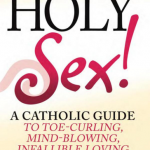
Additions, corrections to Greg Popcak's book Holy Sex?
"Something needs to be done," Said the Princess

Hunger and Help: Are Community Fridges the Answer?

Slimes and Blunders caption contest
TRENDING AT PATHEOS Catholic

The Parable Of The Sower And The Word...
One of Christ’s most famous parables is that of the sower who...

Rejecting Doom: Christian Hope And Human Action
Christianity is a religion of hope. We are to have hope and...

Why I Choose the Eucharist Over the Sermon
Choose the Eucharist, Not the Sermon What are we supposed to get...

5 Design Elements Found in Spiritually Rooted Homes
Putting Spirituality Into Home Decor Our homes are more than our living...

Credo: A Story of God Told with the...
About 10 years ago, I began to imagine a personal "Credo" that...

The Anatomy of Divine Revelation in Catholic Thought
The claim that God has made Himself known to human beings is...
view all Catholic blogs
Ad-Free & Subscriber Log-In Subscription Support
- About Us
- 2026 Calendar
- Videos
- Podcasts
- Library of World Religions
- Faith In Media Tracker
- Advertise With Us
- Write for Us
- Privacy Policy
- Terms of Service
- Do Not Sell My Data
- Contact Us
- Radiant Digital
- Manage Newsletter Subscriptions
- Unsubscribe From Notifications
- Sitemap
Copyright 2008-2026, Patheos. All rights reserved.
Subscription Support Ad-Free & Subscriber Log-In
Follow Patheos