
BuddhistCatholicContemplativeEvangelicalGeneral ChristianHinduJewishLatter-day SaintMuslimNew VisionsProgressive Christian
Beliefs
- Buddhist
- Catholic
- Contemplative
- Evangelical
- General Christian
- Hindu
- Jewish
- Latter-day Saint
- More Voices
- Muslim
- New Visions
- Pagan
- Progressive Christian
Topics
- Religion News
- Food and Religion
- Sports and Religion
- Religious Art
- Religious Music and Entertainment
- Religious Events
- History and Religion
- Style and Religion
- Politics and Religion
- Women in Religion
- Recreation Outdoors and Religion
- Business Finance and Religion
- Careers Workplace and Religion
- Education and Religion
- Family Parenting and Religion
- Health Fitness and Religion
- Home and Religion
- Relationships and Religion
- Technology and Religion
- Travel and Religion
Columnists
- Buddhist Columnists
- Business Finance and Religion Columnists
- Careers Workplace and Religion Columnists
- Catholic Columnists
- Contemplative Columnists
- Education and Religion Columnists
- Evangelists Columnists
- Family Parenting and Religion Columnists
- General Christian Columnists
- Health Fitness and Religion Columnists
- Hindu Columnists
- History and Religion Columnists
- Home and Religion Columnists
- Jewish Columnists
- More Voices Columnists
- Latter Day Columnists
- Muslim Columnists
- New Visions Columnists
- Nonreligious Columnists
- Pagan Columnists
- Politics and Religion Columnists
- Progressive Columnists
- Recreation Outdoors and Religion Columnists
- Relationships and Religion Columnists
- Religion News Columnists
- Religious Art Columnists
- Religious Events Columnists
- Religious Music and Entertainment Columnists
- Sports and Religion Columnists
- Style and Religion Columnists
- Technology and Religion Columnists
- Travel and Religion Columnists
- Women in Religion Columnists
Resource Library
- 2026 Calendar
- Library of World Religions
- The 100 Most Holy Places on Earth
- Patheos Answers
- Podcasts
- Videos
- Faith Leaders Database
- Anglican Episcopalian
- Bahai
- Baptist
- Buddhism
- Christianity
- Confucianism
- Eastern Orthodoxy
- Hinduism
- Holiness and Pentecostal
- ISKCON
- Islam
- Judaism
- Lutheran
- Methodist
- The Church of Jesus Christ of Latter-day Saints
- New Age
- Paganism
- Presbytarian and Reformed
- Protestantism
- Religion Behind the Scenes
- Roman Catholic
- Scientology
- Shia Islam
- Sikhism
- Sufism
- Sunni Islam
- Taoism
- Zen
- See all religions
Research Tools
 Ad-Free & Subscriber Log-In Subscription Support
Ad-Free & Subscriber Log-In Subscription Support
Follow Patheos 

- Trending:
- Forgiveness
- |
- Marriage
- |
- Consciousness
- |
- Death Penalty
- |
- Election
- |
- Halloween
 I Have to Sit Down
- Home
- Contact me
- FAQses
- Simcha's Store
- Speaking
- All Posts
- The Sinner's Guide to NFP
- Shop Amazon Here!
- Home
- Catholic
- Does pop psychology make us bad Christians?
Does pop psychology make us bad Christians?
Last updated on: June 4, 2015 at 10:42 am by Simcha Fisher
Does pop psychology make us bad Christians? 2015-06-04T10:42:16-05:00 Simcha Fisher
Patheos Explore the world's faith through different perspectives on religion and spirituality! Patheos has the views of the prevalent religions and spiritualities of the world.
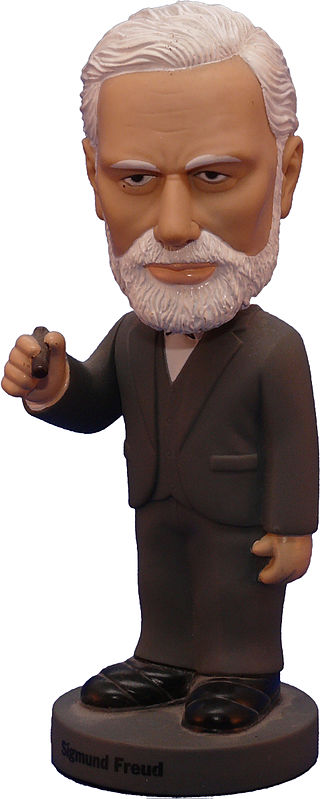
Yesterday, I wanted to talk about the concept of “enabling,” and how we use the term to give ourselves permission to behave badly. But I ended up talking more about our duty toward transsexuals, and frankly, I bit off more than I can chew!
What I really meant to write about is pop psychology, and how its vocabulary leeches into our psyches and turns us into terrible Christians. We may not be in therapy ourselves, but we’ve read an article, or talked to someone whose niece is in therapy, or watched Dr. Phil, or seen a sitcom where one of the characters has watched Dr. Phil, and we latch onto these catchy phrases and take them into our bosoms and call them our own.
It’s not a bad thing that people are comfortable talking about psychological problems in public. It can be very helpful to realize that we’re not the only ones who struggle, and it’s a relief to discover that our secret weirdness has a name. But the problem comes when we gather up these little bits of information and try to sculpt them into something grand and important — and when we use them as an excuse to be selfish, inflexible, lazy, or rude.
A young Catholic woman once told me, “Oh, I have a medical reason not to fast on Good Friday. I get light headed.” Mind you, she didn’t have some dangerous condition that would make her pass out while driving on the freeway. She just meant that, when she didn’t eat, she felt hungry. She had persuaded herself that she had a right to optimal comfort at all times, and that modern medicine backed her up, and excused her from self-discipline.
We do the same with our psyches: we persuade ourselves that we are entitled never to feel frustrated, uncomfortable, or put out — and looky here! There’s an official-sounding word that gives us permission not to fight against our inclinations. Not only does this abuse of terms let us off the hook, it trivializes the struggle of people who truly suffer from serious psychological conditions, as I explained in my post about triggers.
Some people suffer from genuine anxiety disorders; some of us just get worried sometimes. I can be an “introvert” and still force myself introduce myself to a stranger at a party. I’m not “addicted” to Facebook; I just have an extremely strong habit that is hard to break. Some people carry the cross of being bi-polar, but I’m don’t; I just need to work harder to control my emotions so I don’t make everyone miserable.
What other examples are there of modern people pathologizing everyday life?
Enabling. As I said in my other post,
Enabling is when you offer a shot of whiskey to someone who’s struggling to stop drinking, because hey, it’s his choice. Enabling is when you bail your no-good, DUI, vandal, rapist son out of jail because it might frighten him to spend a night in the tank with actual criminals. Enabling is when you lie to your buddy’s wife to cover up for his infidelity. Enabling is cleaning up the mess, sheltering a sinner from the consequences of his behavior, making it easy for someone to avoid facing the truth of what his life has become.
But it’s not “enabling” to treat someone with respect. It’s not “enabling” to treat someone as an equal. It’s not “enabling” to say, “Nah, I guess I don’t need to swat you down.” It’s not our place to treat everyone we meet as if they are in some way our patient, our spiritual underling, our disappointing ward.
And yet, lately, everyone with a keyboard and the ability to skim Wikipedia deems himself enough of a expert to dish out therapeutic protocols to everyone who crosses his path.
The concept of “enabling,” and the idea that we must avoid it at all costs, has permeated American culture. It’s so popular because it allows us to feel self-righteous about being selfish. I’d like to give you want you want, but it would be bad for you. So I refuse to help. You’re welcome! Why should my tax money go to giving an adequate meal to a kid who turns up without his lunch money again? We’ve given them three warnings; continuing to feed this child will just enable irresponsible parenting. This mindset allows us to bypass a panhandler, deny mercy to someone who screwed up (even though we know darn well that we’ve screwed up ourselves), and say no to just about anyone who needs our help, because if you look hard enough, you can discover some way that it’s their fault. And poof go the corporal works of mercy.
What are some other examples?
Setting boundaries. Sometimes setting boundaries makes life livable. Sometimes you really have to lay down the law and tell your mother-in-law, No, you may not make a key to our apartment so you can rearrange my cupboards while I’m having surgery, and no, you may not show my kid movies I’ve forbidden, and you may not feed her peanut butter to help her get over her allergies. It’s okay to say, “I’m sorry, I’m too busy to help you right now.” Some people need to learn how to stand up to outrageously pushy people, and some people need to learn how to say “no” without letting everyone down and being a worthless person.
However, it’s not “setting boundaries” when we simply refuse to do our part, or refuse to take our eyes off our own needs and desires and preferences. Yet I’ve heard it used this way: “I’m setting boundaries with my husband! From now on, I do my laundry, I cook my meals, I clean up my messes, I buy my food, I fetch my own coffee, I do what I want on the weekend, and I have my bank account . . . but him? He’s on his own.” Setting boundaries is to allow us to live our lives, not to thoroughly insulate us from other people. The ledger of the demands we make on other people, and the demands they make on us, will not always turn out even at the end of the day! Setting up partitions between us and other people is not a way of life; it’s for emergency situations, when we or another person are way out of line.
Toxic people. We can waste a lot of time trying to have healthy, pleasant, fruitful interactions with people who simply aren’t interested in any of that. Every time you spend time with a toxic person, you end up feeling like you’re the crazy one, because they can’t seem to function without rage, drama, bitterness, recriminations, emotional manipulations, accusations, treachery, and lies. So it’s a good idea to realize: This is just a toxic person, and unless there’s some miracle, I’m probably never going to have a normal relationship with him. It’s probably best for both of us if I just limit how much time I spend with him, or at least have very low expectations of our relationship. I can’t control who he is, but I can control how I will respond to him.
But we can’t just slap a “toxic” label on everyone who challenges us. Maybe he’s behaving badly because he’s suffering, and you should try to be extra kind. Maybe you’re the one who’s being unreasonable! Maybe he’s just kind of difficult, but you can just avoid bringing up certain topics of conversation, and you’ll have a peaceful relationship that way. It’s actually pretty rare to come across someone who is beyond hope, socially; so if we have a long list of “toxic people” whom we simply refuse to deal with, we might want to look in the mirror.
What else? What psychological terms have you seen abused? And . . . heh heh . . . are you kind of anal about it?
**
**
Freud Bobblehead image via Wikimedia Commons: By Gizlog (Own work) [CC BY-SA 3.0 (http://creativecommons.org/licenses/by-sa/3.0)], via Wikimedia Commons
Previous Post

June 3, 2015
Am I my brother's enabler?
Next Post

June 4, 2015 Everybody Knows the Church Will Change. (Everybody Is Wrong.)
Browse Our Archives
Select a Category Uncategorized
Select a Month November 2015 October 2015 September 2015 August 2015 July 2015 June 2015 May 2015 April 2015 March 2015 February 2015 January 2015 December 2014 November 2014 October 2014 September 2014 August 2014 July 2014 June 2014 May 2014 April 2014 March 2014 February 2014 January 2014 December 2013 November 2013 October 2013 September 2013 August 2013 July 2013 June 2013 May 2013 April 2013 March 2013 February 2013 January 2013 December 2012 November 2012 October 2012 September 2012 August 2012 July 2012 June 2012 May 2012 April 2012 March 2012 February 2012 January 2012 December 2011 November 2011 October 2011 September 2011 August 2011 July 2011 June 2011 May 2011 April 2011 March 2011 February 2011 January 2011 December 2010 November 2010 October 2010 September 2010 August 2010 July 2010 June 2010
Follow Us!
TAKE THE
Religious Wisdom Quiz
Who said: "Do not merely listen to the word, and so deceive yourselves. Do what it says"?
Select your answer to see how you score.
Paul Jesus James Peter
Related posts from I Have to Sit Down

Columbia Students Lay Siege to Themselves

At the Register: What does the Church teach...

At the Register: When Your Child Has Problems

At the Register: Don't Shoot Those Helicopters Down
TRENDING AT PATHEOS Catholic

Rejecting Doom: Christian Hope And Human Action
Christianity is a religion of hope. We are to have hope and...

It’s What Comes From Within Which Matters
One of the most difficult things for us to understand is why...

Why I Choose the Eucharist Over the Sermon
Choose the Eucharist, Not the Sermon What are we supposed to get...

5 Design Elements Found in Spiritually Rooted Homes
Putting Spirituality Into Home Decor Our homes are more than our living...

Credo: A Story of God Told with the...
About 10 years ago, I began to imagine a personal "Credo" that...

The Anatomy of Divine Revelation in Catholic Thought
The claim that God has made Himself known to human beings is...
view all Catholic blogs
Ad-Free & Subscriber Log-In Subscription Support
- About Us
- 2026 Calendar
- Videos
- Podcasts
- Library of World Religions
- Faith In Media Tracker
- Advertise With Us
- Write for Us
- Privacy Policy
- Terms of Service
- Do Not Sell My Data
- Contact Us
- Radiant Digital
- Manage Newsletter Subscriptions
- Unsubscribe From Notifications
- Sitemap
Copyright 2008-2026, Patheos. All rights reserved.
Subscription Support Ad-Free & Subscriber Log-In
Follow Patheos