
BuddhistCatholicContemplativeEvangelicalGeneral ChristianHinduJewishLatter-day SaintMuslimNew VisionsProgressive Christian
Beliefs
- Buddhist
- Catholic
- Contemplative
- Evangelical
- General Christian
- Hindu
- Jewish
- Latter-day Saint
- More Voices
- Muslim
- New Visions
- Pagan
- Progressive Christian
Topics
- Religion News
- Food and Religion
- Sports and Religion
- Religious Art
- Religious Music and Entertainment
- Religious Events
- History and Religion
- Style and Religion
- Politics and Religion
- Women in Religion
- Recreation Outdoors and Religion
- Business Finance and Religion
- Careers Workplace and Religion
- Education and Religion
- Family Parenting and Religion
- Health Fitness and Religion
- Home and Religion
- Relationships and Religion
- Technology and Religion
- Travel and Religion
Columnists
- Buddhist Columnists
- Business Finance and Religion Columnists
- Careers Workplace and Religion Columnists
- Catholic Columnists
- Contemplative Columnists
- Education and Religion Columnists
- Evangelists Columnists
- Family Parenting and Religion Columnists
- General Christian Columnists
- Health Fitness and Religion Columnists
- Hindu Columnists
- History and Religion Columnists
- Home and Religion Columnists
- Jewish Columnists
- More Voices Columnists
- Latter Day Columnists
- Muslim Columnists
- New Visions Columnists
- Nonreligious Columnists
- Pagan Columnists
- Politics and Religion Columnists
- Progressive Columnists
- Recreation Outdoors and Religion Columnists
- Relationships and Religion Columnists
- Religion News Columnists
- Religious Art Columnists
- Religious Events Columnists
- Religious Music and Entertainment Columnists
- Sports and Religion Columnists
- Style and Religion Columnists
- Technology and Religion Columnists
- Travel and Religion Columnists
- Women in Religion Columnists
Resource Library
- 2026 Calendar
- Library of World Religions
- The 100 Most Holy Places on Earth
- Patheos Answers
- Podcasts
- Videos
- Faith Leaders Database
- Anglican Episcopalian
- Bahai
- Baptist
- Buddhism
- Christianity
- Confucianism
- Eastern Orthodoxy
- Hinduism
- Holiness and Pentecostal
- ISKCON
- Islam
- Judaism
- Lutheran
- Methodist
- The Church of Jesus Christ of Latter-day Saints
- New Age
- Paganism
- Presbytarian and Reformed
- Protestantism
- Religion Behind the Scenes
- Roman Catholic
- Scientology
- Shia Islam
- Sikhism
- Sufism
- Sunni Islam
- Taoism
- Zen
- See all religions
Research Tools
 Ad-Free & Subscriber Log-In Subscription Support
Ad-Free & Subscriber Log-In Subscription Support
Follow Patheos 

- Trending:
- Forgiveness
- |
- Marriage
- |
- Consciousness
- |
- Death Penalty
- |
- Election
- |
- Halloween
 I Have to Sit Down
- Home
- Contact me
- FAQses
- Simcha's Store
- Speaking
- All Posts
- The Sinner's Guide to NFP
- Shop Amazon Here!
- Home
- Catholic
- Supreme Court will not hear confession confidentiality petition
Supreme Court will not hear confession confidentiality petition
Last updated on: January 21, 2015 at 2:00 pm by Simcha Fisher
Supreme Court will not hear confession confidentiality petition 2015-01-21T14:00:14-05:00 Simcha Fisher
Patheos Explore the world's faith through different perspectives on religion and spirituality! Patheos has the views of the prevalent religions and spiritualities of the world.
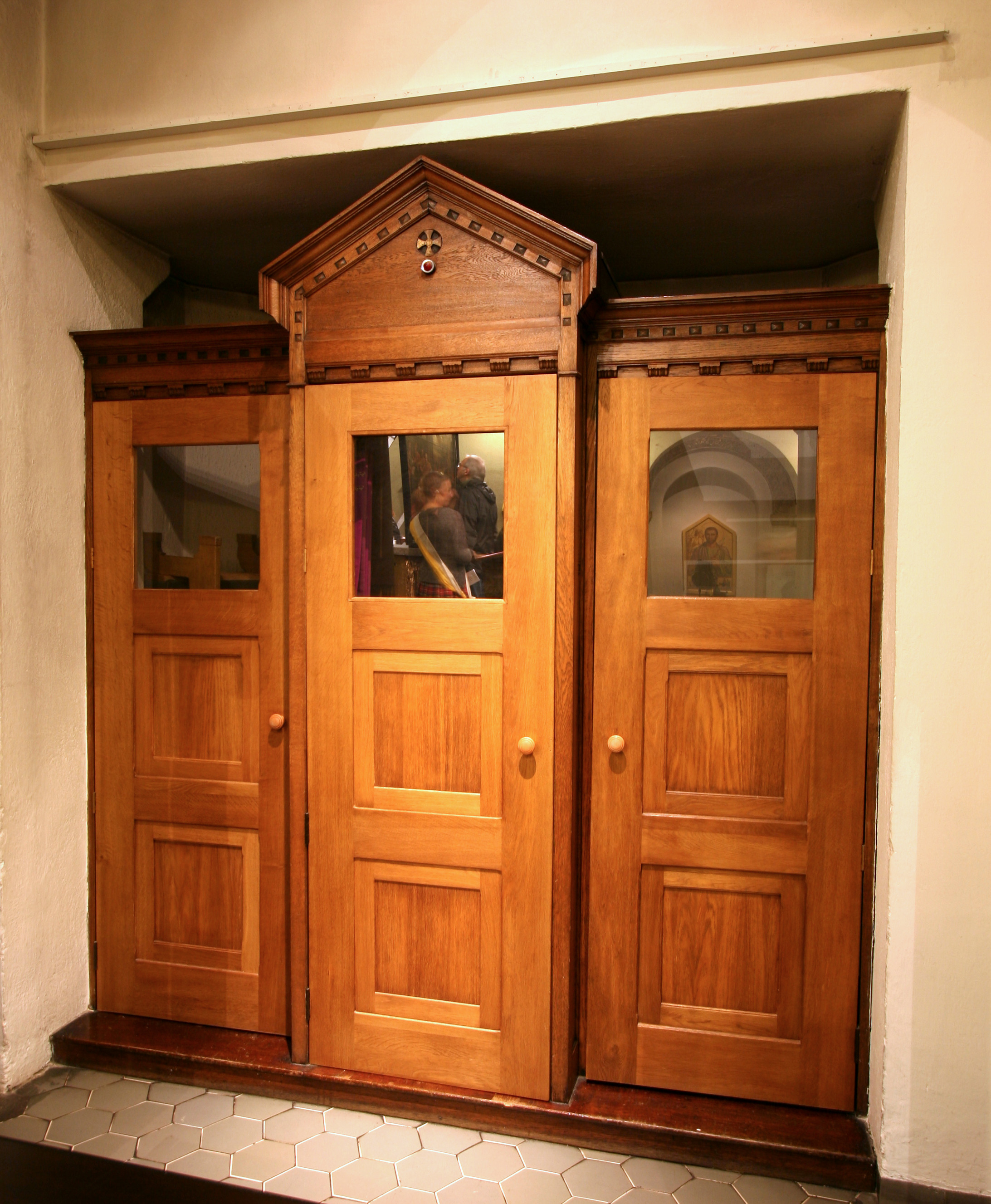
By Ib Rasmussen (Own work) [Public domain], via Wikimedia Commons
Not good: U.S. Supreme Court will not hear Baton Rouge Catholic confession case.
Backstory: A young woman is going to testify in a civil suit against the Diocese of Baton Rouge. She says that, when she was a girl, she revealed during confession that a member of the parish (who has since died) was molesting her, and that the priest told her she should hush it up.
Every priest who hears something during confession is morally obligated not to reveal what he heard during that confession. So if this woman testifies that he told her not to speak about her abuse, he may neither confirm nor deny that she said what she claims she said, or that he responded the way she says he did; and he may go to jail for refusing to testify.
So the diocese asked the federal Supreme Court to consider their petition to prevent her from testifying about what was said during the confession, and to prevent the priest from being compelled to respond to her testimony. Yesterday, the Supreme Court declined to hear the diocese’s petition.
I previously didn’t understand why it was dangerous for the woman to be allowed to testify about her confession, because I erroneously believed that a penitent may release a confessor from the seal of confession. I thought that she would simply have to give her permission for him to testify, and that he would then be free to confirm or deny what she said in the confession; but this is not so:
Can. 983 §1. The sacramental seal is inviolable; therefore it is absolutely forbidden for a confessor to betray in any way a penitent in words or in any manner and for any reason.
If a penitent wishes to discuss something he or she revealed during confession, he or she must have the conversation again, restating the issue outside of the sacrament. That is the only way that a confessor may morally discuss the topic that was confessed: if he hears the information outside of the seal of confession.
The young woman is, of course, still free to have a second conversation with the priest, and the priest would then be free to testify about that second conversation; but what is at issue is what happened in the original conversation, years ago.
Please note that there is no reason to believe that the young woman is lying about what she told the priest or about what he told her. The diocese is not trying to impugn her reputation, and we should not assume that its goal is to protect a guilty priest. The point is that the seal of confession is there to protect both the priest and the penitent. If the seal of confession may be legally violated, it would prove disastrous both for priests and for penitents, who have both always understood that what they say in the confessional is known only to themselves and to God. Jen Fitz explains, with her usual clarity and concision, why the seal of confession is vital for the safety of both the priest and the penitent.
If the woman’s testimony is allowed, then priests will constantly be in danger of having to remain silent in the face of accusations against them. I could make up any dreadful story about what happened inside a confessional, and a priest would not be able to defend himself. They would have to choose between going to jail and endangering their own souls by betraying their vows.
A well-trained confessor can find a way to get help for someone who has been victimized. It is not necessary for anyone’s safety to destroy the long-standing legal respect for the seal of confession.
Previous Post

January 20, 2015
Raising safe, independent kids
Next Post

January 22, 2015 March for Life, in person or in spirit
Browse Our Archives
Select a Category Uncategorized
Select a Month November 2015 October 2015 September 2015 August 2015 July 2015 June 2015 May 2015 April 2015 March 2015 February 2015 January 2015 December 2014 November 2014 October 2014 September 2014 August 2014 July 2014 June 2014 May 2014 April 2014 March 2014 February 2014 January 2014 December 2013 November 2013 October 2013 September 2013 August 2013 July 2013 June 2013 May 2013 April 2013 March 2013 February 2013 January 2013 December 2012 November 2012 October 2012 September 2012 August 2012 July 2012 June 2012 May 2012 April 2012 March 2012 February 2012 January 2012 December 2011 November 2011 October 2011 September 2011 August 2011 July 2011 June 2011 May 2011 April 2011 March 2011 February 2011 January 2011 December 2010 November 2010 October 2010 September 2010 August 2010 July 2010 June 2010
Follow Us!
TAKE THE
Religious Wisdom Quiz
What city is considered holy by Christians, Jews, and Muslims alike?
Select your answer to see how you score.
Antioch Rome Jerusalem Paris
Related posts from I Have to Sit Down



Why does the Church make things so complicated?

Will the Catholic Church be hurt by the...
TRENDING AT PATHEOS Catholic

Rejecting Doom: Christian Hope And Human Action
Christianity is a religion of hope. We are to have hope and...

It’s What Comes From Within Which Matters
One of the most difficult things for us to understand is why...

Why I Choose the Eucharist Over the Sermon
Choose the Eucharist, Not the Sermon What are we supposed to get...

5 Design Elements Found in Spiritually Rooted Homes
Putting Spirituality Into Home Decor Our homes are more than our living...

Credo: A Story of God Told with the...
About 10 years ago, I began to imagine a personal "Credo" that...

The Anatomy of Divine Revelation in Catholic Thought
The claim that God has made Himself known to human beings is...
view all Catholic blogs
Ad-Free & Subscriber Log-In Subscription Support
- About Us
- 2026 Calendar
- Videos
- Podcasts
- Library of World Religions
- Faith In Media Tracker
- Advertise With Us
- Write for Us
- Privacy Policy
- Terms of Service
- Do Not Sell My Data
- Contact Us
- Radiant Digital
- Manage Newsletter Subscriptions
- Unsubscribe From Notifications
- Sitemap
Copyright 2008-2026, Patheos. All rights reserved.
Subscription Support Ad-Free & Subscriber Log-In
Follow Patheos