
BuddhistCatholicContemplativeEvangelicalGeneral ChristianHinduJewishLatter-day SaintMuslimNew VisionsProgressive Christian
Beliefs
- Buddhist
- Catholic
- Contemplative
- Evangelical
- General Christian
- Hindu
- Jewish
- Latter-day Saint
- More Voices
- Muslim
- New Visions
- Pagan
- Progressive Christian
Topics
- Religion News
- Food and Religion
- Sports and Religion
- Religious Art
- Religious Music and Entertainment
- Religious Events
- History and Religion
- Style and Religion
- Politics and Religion
- Women in Religion
- Recreation Outdoors and Religion
- Business Finance and Religion
- Careers Workplace and Religion
- Education and Religion
- Family Parenting and Religion
- Health Fitness and Religion
- Home and Religion
- Relationships and Religion
- Technology and Religion
- Travel and Religion
Columnists
- Buddhist Columnists
- Business Finance and Religion Columnists
- Careers Workplace and Religion Columnists
- Catholic Columnists
- Contemplative Columnists
- Education and Religion Columnists
- Evangelists Columnists
- Family Parenting and Religion Columnists
- General Christian Columnists
- Health Fitness and Religion Columnists
- Hindu Columnists
- History and Religion Columnists
- Home and Religion Columnists
- Jewish Columnists
- More Voices Columnists
- Latter Day Columnists
- Muslim Columnists
- New Visions Columnists
- Nonreligious Columnists
- Pagan Columnists
- Politics and Religion Columnists
- Progressive Columnists
- Recreation Outdoors and Religion Columnists
- Relationships and Religion Columnists
- Religion News Columnists
- Religious Art Columnists
- Religious Events Columnists
- Religious Music and Entertainment Columnists
- Sports and Religion Columnists
- Style and Religion Columnists
- Technology and Religion Columnists
- Travel and Religion Columnists
- Women in Religion Columnists
Resource Library
- 2026 Calendar
- Library of World Religions
- The 100 Most Holy Places on Earth
- Patheos Answers
- Podcasts
- Videos
- Faith Leaders Database
- Anglican Episcopalian
- Bahai
- Baptist
- Buddhism
- Christianity
- Confucianism
- Eastern Orthodoxy
- Hinduism
- Holiness and Pentecostal
- ISKCON
- Islam
- Judaism
- Lutheran
- Methodist
- The Church of Jesus Christ of Latter-day Saints
- New Age
- Paganism
- Presbytarian and Reformed
- Protestantism
- Religion Behind the Scenes
- Roman Catholic
- Scientology
- Shia Islam
- Sikhism
- Sufism
- Sunni Islam
- Taoism
- Zen
- See all religions
Research Tools
 Ad-Free & Subscriber Log-In Subscription Support
Ad-Free & Subscriber Log-In Subscription Support
Follow Patheos 

- Trending:
- Forgiveness
- |
- Marriage
- |
- Consciousness
- |
- Death Penalty
- |
- Election
- |
- Halloween
 I Have to Sit Down
- Home
- Contact me
- FAQses
- Simcha's Store
- Speaking
- All Posts
- The Sinner's Guide to NFP
- Shop Amazon Here!
- Home
- Catholic
- Where Be Story Editor?
Where Be Story Editor?
Last updated on: November 16, 2015 at 11:02 pm by Simcha Fisher
Where Be Story Editor? 2015-11-16T23:02:35-05:00 Simcha Fisher
Patheos Explore the world's faith through different perspectives on religion and spirituality! Patheos has the views of the prevalent religions and spiritualities of the world.
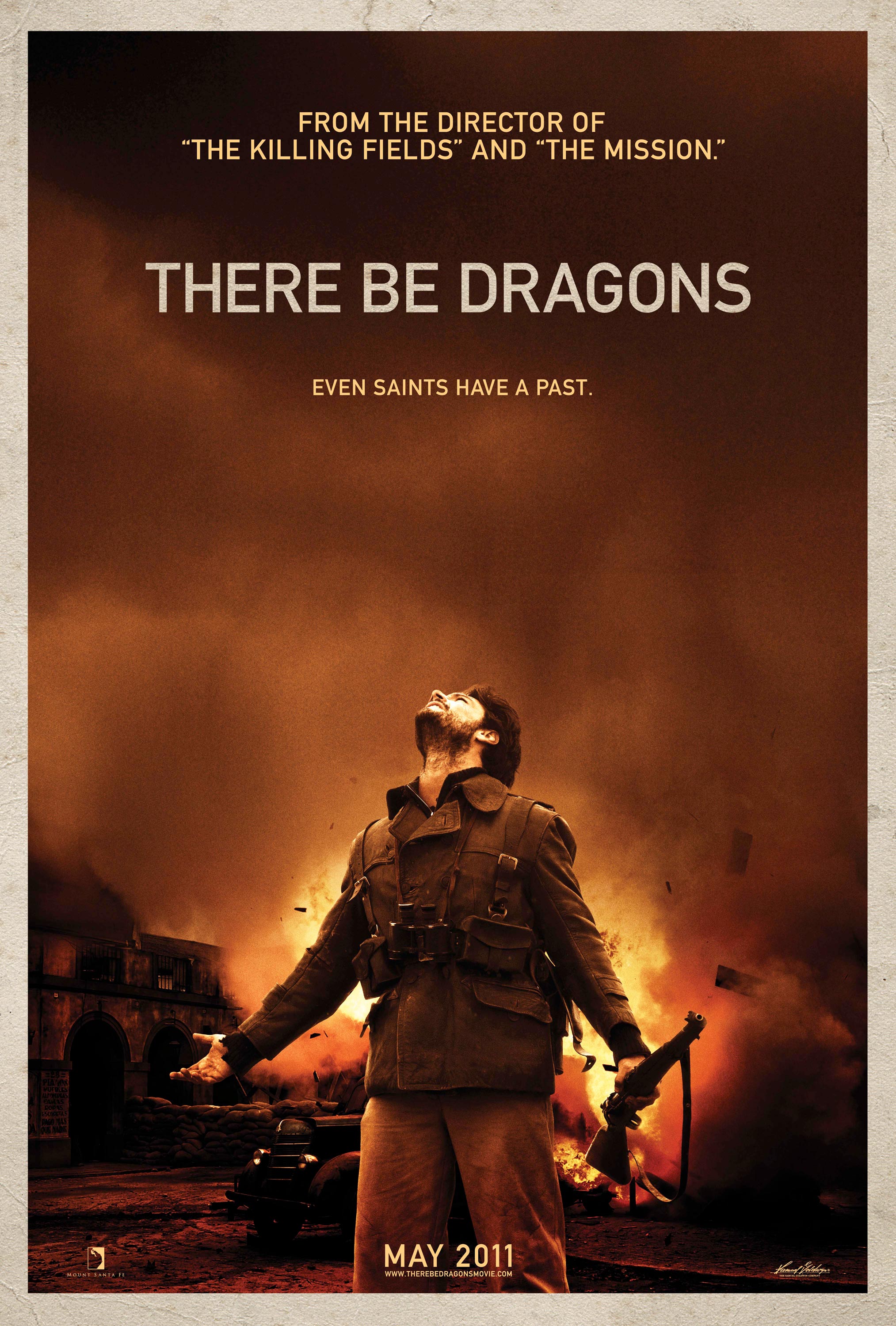
Roland Joffé’s new movie, There Be Dragons, is about half a good movie. What is good is so good that it makes the bad parts doubly frustrating.
Let’s start with the good. The best part was, happily, Charlie Cox, who plays Opus Dei’s founder, Josemaria Escriva. Knowing very little about the actual man, I had none of the mental baggage that can trouble a fan (“That’s not how I pictured Mr. Tumnus!”). The Fr. Josemaria he portrays is a strong, happy, humorous man who is not like other men. When he commands a room with quiet authority, you feel it. Despite the drama that surrounds him, his actions are not hammy or melodramatic. You care about him, and want him to succeed. When he learns to love everyone he meets, you believe it, and you feel glad that you met him, even if only on screen through an actor. There are several original and memorable scenes which demonstrate the humanity, holiness, and appeal of the man.
When he’s not on screen, however, the movie is kind of a mess. The first half hour or so is so cluttered with flashbacks, flash forwards, voice overs, text explanations, and a panoply of cinematic hokeyness, it’s a struggle just to figure out what story is being told.
I know what happened here. The director knew he had a good story on his hands: Josemaria Escriva was an amazing guy living in amazing times. But if you just do a biopic of a Catholic boy who becomes a priest and starts a religious movement, who’s going to watch it? So they decided to give the story some theatrical heft by telling two stories simultaneously: Josemaria and his onetime friend, Manolo Torres, who works as a fascist government mole in the trenches with the communist rebels. But that’s not all: the dual story is being uncovered by the alienated son of Manolo, who is writing a book about Josemaria, who was friends with Manolo, who is telling his son not to write the book, who is writing it because he’s mad at his father, who is mad at Josemaria because he’s . . . if this is making any sense, I’m telling it wrong.
Any time Manolo, or his son, or Manolo’s rebel beloved, or the beloved’s lover are on screen, the movie descends into — how do you say? — silliness. The characters are paper thin, the dialog is contrived, the voice overs never clarify anything, and the acting stinks. Again, I think I know what happened: the director has seen one to many Francis Ford Coppola movies, and was desperate to do the whole “violence and sacraments” juxtaposition thing. A rosary next to a pistol! A shattered statue of Mary amid the rubble of war! An angel amid the lunatics in the asylum! Or is it a devil! I know it’s not fair to say, “This is no Godfather,” but what can I say? Coppola pulled it off; this guy didn’t. The effect is just squirmfully corny. You really can’t zoom in on someone’s eyes, and then turn the screen into a swirling, glowing snowglobe to signify that God Is Talking. You just can’t. I, the marginally sophisticated viewer, will not stand for it.
At the same time, so many moments that could have been incredibly powerful cinema are just squandered. For example: the sniper is on the hillside, squinting through his gunsight at Josemaria and his friends below as they celebrate a makeshift Mass during their perilous escape in the middle of the Pyrenees. That could have been a gorgeous scene. With a little movement by the camera, it could have been the pivotal point — could have carried the weight of the whole movie. Instead, they just kind of . . . filmed it: here’s the sniper, here’s the priest. Bang! Next scene. So frustrating.
At a certain point in the movie, I felt as if I was watching a slide show or an especially melodramatic Powerpoint presentation which covered the plot, more than an actual story. There was no rhythm to the way it was told, just lots of stopping and starting — which isn’t the same. There was no deeper meaning to the double stories, just added complexity — which isn’t the same. There were no deeper themes of fatherhood and faith and forgiveness, just lots of talking about those things — which isn’t the same. They could have cut thirty minutes and half the characters without losing anything.
Well, now I feel like a jerk. This was a very sincere movie, and believe it or not, I still recommend it. It made me interested in Josemaria Escriva — I just wish they had stuck with him more, and skipped all the tacked-on extras of the other plot. I think high school students and younger would probably be pretty impressed by this movie, and it would make a great introduction to the saint for a confirmation class. I can see someone leaving the theater inspired and encouraged by what happened on the screen. As I said, the good parts (which occur mostly in the middle third of this two-hour film) are quite good. The bad parts aren’t unwatchable so much as frustrating: you keep thinking how much better it could have been.
I guess I’m just not willing to go whole hog and rave about it, just because it presents Catholics in a good light and had a budget of more than $750. I’m awfully, awfully tired of Catholics being the boogeyman in popular culture, but I’m also awfully, awfully tired of being told that everything that’s wholesome is a MUST SEE, a piece of CINEMATIC BRILLIANCE that will CHANGE YOUR LIFE, and is about FIREMEN. So, this movie was okay. I liked it. But it wasn’t an especially good movie.
It was extremely refreshing to see the Catholic faith represented as something that inspires generosity, courage, manliness, and heroism. I just wish that someone had been inspired to edit this movie, and heavily.
You can see the official trailer here.
Previous Post

April 26, 2011
Confessions from the Confession Line
Next Post
April 28, 2011 When Kids Evangelize
Browse Our Archives
Select a Category Uncategorized
Select a Month November 2015 October 2015 September 2015 August 2015 July 2015 June 2015 May 2015 April 2015 March 2015 February 2015 January 2015 December 2014 November 2014 October 2014 September 2014 August 2014 July 2014 June 2014 May 2014 April 2014 March 2014 February 2014 January 2014 December 2013 November 2013 October 2013 September 2013 August 2013 July 2013 June 2013 May 2013 April 2013 March 2013 February 2013 January 2013 December 2012 November 2012 October 2012 September 2012 August 2012 July 2012 June 2012 May 2012 April 2012 March 2012 February 2012 January 2012 December 2011 November 2011 October 2011 September 2011 August 2011 July 2011 June 2011 May 2011 April 2011 March 2011 February 2011 January 2011 December 2010 November 2010 October 2010 September 2010 August 2010 July 2010 June 2010
Follow Us!
TAKE THE
Religious Wisdom Quiz
Why was Daniel thrown into the lion’s den?
Select your answer to see how you score.
He stole from the treasury He refused to bow to the king He spoke against the king He prayed to God
Related posts from I Have to Sit Down

12+ Scary Movies Our Kids Loved (including at...
Worth Watching Again: The Edge
Archbishop Joseph Naumann Replaces Finn, Signalling Change in...
TRENDING AT PATHEOS Catholic

The Parable Of The Sower And The Word...
One of Christ’s most famous parables is that of the sower who...

Rejecting Doom: Christian Hope And Human Action
Christianity is a religion of hope. We are to have hope and...

Why I Choose the Eucharist Over the Sermon
Choose the Eucharist, Not the Sermon What are we supposed to get...

5 Design Elements Found in Spiritually Rooted Homes
Putting Spirituality Into Home Decor Our homes are more than our living...

Credo: A Story of God Told with the...
About 10 years ago, I began to imagine a personal "Credo" that...

The Anatomy of Divine Revelation in Catholic Thought
The claim that God has made Himself known to human beings is...
view all Catholic blogs
Ad-Free & Subscriber Log-In Subscription Support
- About Us
- 2026 Calendar
- Videos
- Podcasts
- Library of World Religions
- Faith In Media Tracker
- Advertise With Us
- Write for Us
- Privacy Policy
- Terms of Service
- Do Not Sell My Data
- Contact Us
- Radiant Digital
- Manage Newsletter Subscriptions
- Unsubscribe From Notifications
- Sitemap
Copyright 2008-2026, Patheos. All rights reserved.
Subscription Support Ad-Free & Subscriber Log-In
Follow Patheos