
BuddhistCatholicContemplativeEvangelicalGeneral ChristianHinduJewishLatter-day SaintMuslimNew VisionsProgressive Christian
Beliefs
- Buddhist
- Catholic
- Contemplative
- Evangelical
- General Christian
- Hindu
- Jewish
- Latter-day Saint
- More Voices
- Muslim
- New Visions
- Pagan
- Progressive Christian
Topics
- Religion News
- Food and Religion
- Sports and Religion
- Religious Art
- Religious Music and Entertainment
- Religious Events
- History and Religion
- Style and Religion
- Politics and Religion
- Women in Religion
- Recreation Outdoors and Religion
- Business Finance and Religion
- Careers Workplace and Religion
- Education and Religion
- Family Parenting and Religion
- Health Fitness and Religion
- Home and Religion
- Relationships and Religion
- Technology and Religion
- Travel and Religion
Columnists
- Buddhist Columnists
- Business Finance and Religion Columnists
- Careers Workplace and Religion Columnists
- Catholic Columnists
- Contemplative Columnists
- Education and Religion Columnists
- Evangelists Columnists
- Family Parenting and Religion Columnists
- General Christian Columnists
- Health Fitness and Religion Columnists
- Hindu Columnists
- History and Religion Columnists
- Home and Religion Columnists
- Jewish Columnists
- More Voices Columnists
- Latter Day Columnists
- Muslim Columnists
- New Visions Columnists
- Nonreligious Columnists
- Pagan Columnists
- Politics and Religion Columnists
- Progressive Columnists
- Recreation Outdoors and Religion Columnists
- Relationships and Religion Columnists
- Religion News Columnists
- Religious Art Columnists
- Religious Events Columnists
- Religious Music and Entertainment Columnists
- Sports and Religion Columnists
- Style and Religion Columnists
- Technology and Religion Columnists
- Travel and Religion Columnists
- Women in Religion Columnists
Resource Library
- 2026 Calendar
- Library of World Religions
- The 100 Most Holy Places on Earth
- Patheos Answers
- Podcasts
- Videos
- Faith Leaders Database
- Anglican Episcopalian
- Bahai
- Baptist
- Buddhism
- Christianity
- Confucianism
- Eastern Orthodoxy
- Hinduism
- Holiness and Pentecostal
- ISKCON
- Islam
- Judaism
- Lutheran
- Methodist
- The Church of Jesus Christ of Latter-day Saints
- New Age
- Paganism
- Presbytarian and Reformed
- Protestantism
- Religion Behind the Scenes
- Roman Catholic
- Scientology
- Shia Islam
- Sikhism
- Sufism
- Sunni Islam
- Taoism
- Zen
- See all religions
Research Tools
 Ad-Free & Subscriber Log-In Subscription Support
Ad-Free & Subscriber Log-In Subscription Support
Follow Patheos 

- Trending:
- Forgiveness
- |
- Marriage
- |
- Consciousness
- |
- Death Penalty
- |
- Election
- |
- Halloween
 I Have to Sit Down
- Home
- Contact me
- FAQses
- Simcha's Store
- Speaking
- All Posts
- The Sinner's Guide to NFP
- Shop Amazon Here!
- Home
- Catholic
- Seven Really Good Books for Young Adults
Seven Really Good Books for Young Adults
Last updated on: November 16, 2015 at 11:37 pm by Simcha Fisher
Seven Really Good Books for Young Adults 2015-11-16T23:37:09-05:00 Simcha Fisher
Patheos Explore the world's faith through different perspectives on religion and spirituality! Patheos has the views of the prevalent religions and spiritualities of the world.
Sorry this is so long. I didn’t have time to write anything shorter.
Seven Quick Takes: Seven Really Good Books for Young Adults
When I was in high school, everything we read had to be about either the Holocaust, or suicide, or both. An exception could be made for books about racism, provided several lynchings were described in technicolor. Then, after we finished our assigned reading for the year, the school board would hold a workshop on what to do about rampant and debilitating depression in the student body.
Well, it’s too late for me, of course. As soon as I’m done with this post, I’m going to go huff some wood glue, write a note blaming my parents, and OD on some Xanax I stole from the locker room while listening to Nevermind (to my younger readers: check your oldies station if that reference puzzles you. Oh, lord. . . )
But you still have a chance. Here are seven books of fiction I recommend for your teenager or almost-teenager. Kids that age do enjoy a good bout of angst, but these are books that don’t glorify teenage gloom, or teach that it’s the world’s job to learn to appreciate the delicate genius that is Teenage Me. Not all of the books are about teenagers, and all of them could easily be enjoyed by adults. Most of these books are about courage, and about something that teenagers really need to know: how to discern true love from its flashier counterfit. With the possible exception of the Patterson novels, I don’t think this list is too girly. The only other thing they have in common is that they are stuffed with good ideas that young people need to hear, and the writing is far above average.
–1–
Till We Have Faces by C. S. Lewis
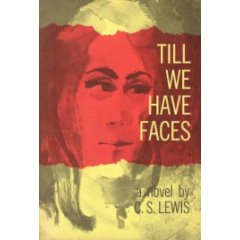
This one is often included in YA lists, but not for the right reasons, I think. Teenagers won’t fully appreciate the themes of love and fidelity in this fleshing-out of the myth of Cupid and Psyche, but there is plenty else in this gorgeous and searing novel to grab them by the scruff of the neck and shake the stupid ideas out of them. Heartrending and intense. For grades 9 and up.
–2 and 3–
Two novels by Katherine Patterson:
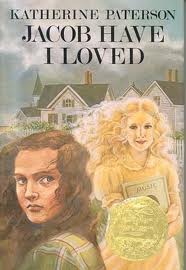
Jacob Have I Loved is a coming-of-age novel about twin girls living on a crabbing island in the Chesapeake Bay in the 1940’s. One sister is lovely, talented, fragile, and secretly vicious — the other, the narrator, is plain, strong, and full of rage. The character of the horrible old grandmother is unforgettable. The book achieves something I always look for in a novel: honesty about the flaws of the main character, with flashes of sympathy for even the worst characters. Flawless in structure, characterization, and style. For grades 7 and up.
Another excellent novel by Patterson, suitable for grades 5 and up, is The Great Gilly Hopkins.
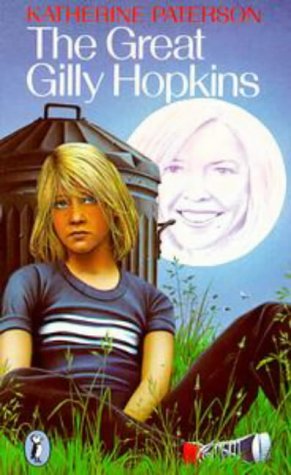
It’s like Flannery O’Connor, Jr. Great portrayals of hypocrisy, great portrayals of genuine love by a genuine Christian, who happens to be a fat, trashy, semi-literate foster mother named Trotter. It could easily have dissolved into melodrama, but resists. My only quibble is with the character of the black teacher, Miss Harris — she seems a bit too glibly drawn as the hard-as-nails and smart-as-a-whip black teacher with a heart of gold, etc. All the rest of the characters, though, are thoroughly believable, from Trotter, to her pathetic ward William Ernest Teague (W.E.T.), to the greasy-haired would-be sidekick, Agnes Stokes. (See, I remember all their names, and I haven’t read this book for years. It sticks with you!) I believe it’s sold as a novel about racism, but it’s really just about love.
–4–
The Education of Little Tree by Forrest Carter

I know, I know. The guy passed it off as an autobiography, and it wasn’t. Pretty awful — but darn it, I still like the book. It is beautiful and funny, and I feel happy while reading it. I wish I knew the characters in real life, which is more than you can say for most novels or autobiographies. If you’ve heard that this book is just a piece of anti-white propaganda, you’ll be surprised. I suppose there’s a message in it, but it’s not the main point — the story is, and it’s a wonderful story about a boy growing up with his Cherokee grandmother and half-Cherokee grandfather in the mountains during Prohibition. Also, it makes descriptions of scenery interesting. Apparently it’s been criticized as perpetuating the “noble savage” stereotype of the American Indian, but, again, I just don’t see that. What I read was an ancient story of happiness, broken by a terrible grief and darkness of separation, and then a return to happiness, until Eden is outgrown. To read more into it than that is to deprive yourself of a good story. For grades 6 and up.
–5–
A Canticle For Leibowitz by Walter M. Miller, Jr.
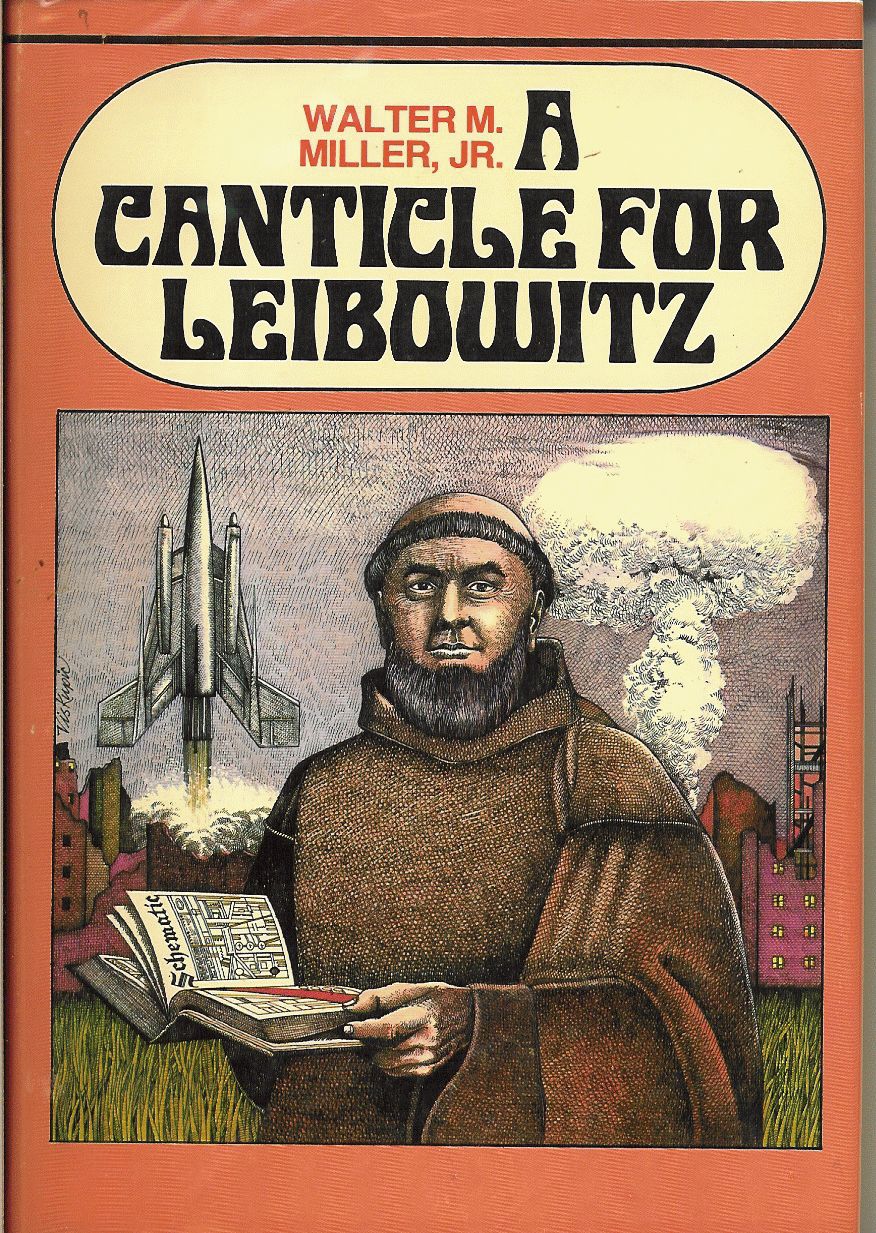
This one is for older teens, for sure. The story is complicated and demands a lot of the reader. To be honest, I’m too tired to explain the plot to you. It’s about Catholic monks and Jews and miracles and nuclear war and space travel and mutants. It’s a crazy, grotesque, hilarious, fascinating epic with lots and lots of ideas. There is a disturbing theme of the cyclic nature of history that seems to imply a “new” Immaculate Conception, but a teenager with a good grounding in the faith won’t be troubled by it. I like how the priests are real men. It will appeal to lovers of science fiction, but is so much more than that.
–6–
The Don Camillo stories by Giovanni Guareschi
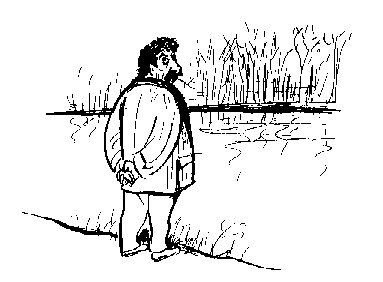
Three collections of short, sweet, funny and poignant stories from post-WWII Italy about a large and rash village priest and his rival, the equally large and rash communist mayor Peppone. If you don’t enjoy these stories, there is something wrong with you. I could do without the cartoonish illustrations by the author, but the stories are hugely entertaining, and touch on all kinds of interesting theological ideas. Don Camillo’s conversations with the crucified Christ in his church are authentic and moving. For grades 7 and up.
–7–
Out of the Silent Planet and Perelandra by C. S. Lewis
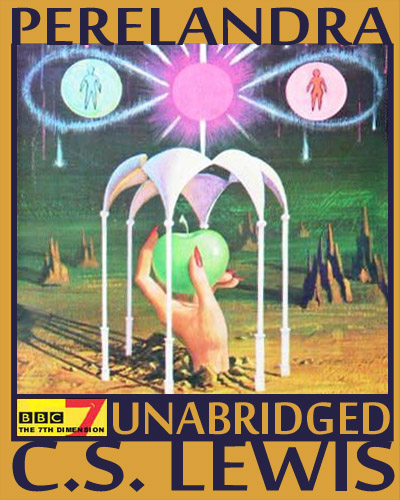
The first two books of the space trilogy are great stories and provide so many memorable scenes (the third in the series, That Hideous Strength, takes a different turn and is not for the kiddies). It was from Perelandra that I learned that evil isn’t interesting and the devil isn’t clever or charming — as Ransom learns one night as keeps watch on the beach with the Un-Man, and they have the following dialogue all night long “Ransom.” – “What?” – ” . . .Nothing.”
For more mature teenagers — there are ideas about sexuality which are entirely Catholic (yes, I know Lewis wasn’t), but which less mature kids won’t be able to manage. The only part that might strike readers as dated is the fact that the villain wants to conquer worlds and force humankind on the universe, whereas today’s humanist villains are more interested in shrinking and curtailing the human race. It might be an interesting conversation to discuss what the current evil ideas have in common with the ones in the books.
There are many, many wonderful scenes in both books. I was especially affected, as a teenager, by the passage in Perelandra where Ransom protests to God that there is a representative of Evil in the world, fighting for the soul of the unfallen Lady — and why is there no champion of Good? And the silent and terrifying answer comes booming back at him: you. There is also the memorable phrase, “In the name of the Father, and of the Son, and of the Holy Spirit, here goes! I mean, Amen!” Lewis’ descriptions of scenery are the only drawback to these books — he does go on and on, and you have to read really carefully to understand what he is describing. I think these passages could simply be excised without any damage to the books. For grades 10 and up.
————–
You’ll notice there is no Madeleine L’Engle in this list. I read her books several times as a Young Adult, and I’m sure they influenced me, but I just don’t like her. I don’t like her smarmy characters, I don’t like how her ideals of family life are utterly saturated in six kinds of snobbery. I don’t like the loosey goosey games she plays with comparative religion, and her stories leave me cold, irritated and unsatisfied. I’m always astonished that she’s described as some kind of genius — her prose always strikes me as hokey and stilted. She is very original, I’ll admit, but I have very little patience with her “Oh-the-aching-wonder-of-it-all” genre. I wouldn’t say “don’t read her stuff,” but I think you’ll do just fine if you never do read her.
Okay, so, yay, I wrote a blog post! Thanks to the gracious and prolific (in every way) Jen Fulwiler for hosting Seven Quick Takes every Friday.
UPDATE: Several readers mentioned Patterson’s Bridge to Terebithia and A Tree Grows in Brooklyn by Betty Smith. My take: yes, Bridge to Terebithia is just awful. As reader Suburban Correspondent put it, “It was everything that was wrong with YA books in my youth – all the hopelessly messed-up adults, the characters manipulated by the author to send some sort of message.” Yup, pretty much a blight on Patterson’s career. Her books that I recommended are totally different. I also remember that her novel The Master Puppeteer was quite good, and is about a boy. She has written many historical novels for young adults.
A Tree Grows in Brooklyn is fantastic — good call, folks. I can’t imagine a boy really enjoying it, but it really is a wonderful book. It’s about a girl growing up in the slums in Brooklyn before and during World War II. Betty Smith’s other books, unfortunately, are dreadful! A Tree Grows in Brooklyn is fiction, but obviously semi-autobiographical, and is very moving and full of insight into a young girl’s mind. Some of her notions about sex could be a little damaging to susceptible girls, though, so you should probably read this one first, and discuss it with your daughter.
Previous Post

December 3, 2010
7 Quick Takes: In Poor Taste
Next Post
December 13, 2010 Busy?
Browse Our Archives
Select a Category Uncategorized
Select a Month November 2015 October 2015 September 2015 August 2015 July 2015 June 2015 May 2015 April 2015 March 2015 February 2015 January 2015 December 2014 November 2014 October 2014 September 2014 August 2014 July 2014 June 2014 May 2014 April 2014 March 2014 February 2014 January 2014 December 2013 November 2013 October 2013 September 2013 August 2013 July 2013 June 2013 May 2013 April 2013 March 2013 February 2013 January 2013 December 2012 November 2012 October 2012 September 2012 August 2012 July 2012 June 2012 May 2012 April 2012 March 2012 February 2012 January 2012 December 2011 November 2011 October 2011 September 2011 August 2011 July 2011 June 2011 May 2011 April 2011 March 2011 February 2011 January 2011 December 2010 November 2010 October 2010 September 2010 August 2010 July 2010 June 2010
Follow Us!
TAKE THE
Religious Wisdom Quiz
According to 1 John, what commandment have we had from the beginning?
Select your answer to see how you score.
To forgive our enemies To love one another To believe in Jesus Christ To keep the Sabbath holy
Related posts from I Have to Sit Down
Additions, corrections to Greg Popcak's book Holy Sex?
Reading, watching, listening to ...
I'm reading, I'm watching, I'm listening to ....
I'm reading, I'm watching, I'm listening to ...
TRENDING AT PATHEOS Catholic

Creation, Preservation, and Teleology in Catholic Theology
As I write this, it is very early Monday morning. Like millions...

The Parable Of The Sower And The Word...
One of Christ’s most famous parables is that of the sower who...

Rejecting Doom: Christian Hope And Human Action
Christianity is a religion of hope. We are to have hope and...

Why I Choose the Eucharist Over the Sermon
Choose the Eucharist, Not the Sermon What are we supposed to get...

5 Design Elements Found in Spiritually Rooted Homes
Putting Spirituality Into Home Decor Our homes are more than our living...

Credo: A Story of God Told with the...
About 10 years ago, I began to imagine a personal "Credo" that...
view all Catholic blogs
Ad-Free & Subscriber Log-In Subscription Support
- About Us
- 2026 Calendar
- Videos
- Podcasts
- Library of World Religions
- Faith In Media Tracker
- Advertise With Us
- Write for Us
- Privacy Policy
- Terms of Service
- Do Not Sell My Data
- Contact Us
- Radiant Digital
- Manage Newsletter Subscriptions
- Unsubscribe From Notifications
- Sitemap
Copyright 2008-2026, Patheos. All rights reserved.
Subscription Support Ad-Free & Subscriber Log-In
Follow Patheos