
BuddhistCatholicContemplativeEvangelicalGeneral ChristianHinduJewishLatter-day SaintMuslimNew VisionsProgressive Christian
Beliefs
- Buddhist
- Catholic
- Contemplative
- Evangelical
- General Christian
- Hindu
- Jewish
- Latter-day Saint
- More Voices
- Muslim
- New Visions
- Pagan
- Progressive Christian
Topics
- Religion News
- Food and Religion
- Sports and Religion
- Religious Art
- Religious Music and Entertainment
- Religious Events
- History and Religion
- Style and Religion
- Politics and Religion
- Women in Religion
- Recreation Outdoors and Religion
- Business Finance and Religion
- Careers Workplace and Religion
- Education and Religion
- Family Parenting and Religion
- Health Fitness and Religion
- Home and Religion
- Relationships and Religion
- Technology and Religion
- Travel and Religion
Columnists
- Buddhist Columnists
- Business Finance and Religion Columnists
- Careers Workplace and Religion Columnists
- Catholic Columnists
- Contemplative Columnists
- Education and Religion Columnists
- Evangelists Columnists
- Family Parenting and Religion Columnists
- General Christian Columnists
- Health Fitness and Religion Columnists
- Hindu Columnists
- History and Religion Columnists
- Home and Religion Columnists
- Jewish Columnists
- More Voices Columnists
- Latter Day Columnists
- Muslim Columnists
- New Visions Columnists
- Nonreligious Columnists
- Pagan Columnists
- Politics and Religion Columnists
- Progressive Columnists
- Recreation Outdoors and Religion Columnists
- Relationships and Religion Columnists
- Religion News Columnists
- Religious Art Columnists
- Religious Events Columnists
- Religious Music and Entertainment Columnists
- Sports and Religion Columnists
- Style and Religion Columnists
- Technology and Religion Columnists
- Travel and Religion Columnists
- Women in Religion Columnists
Resource Library
- 2026 Calendar
- Library of World Religions
- The 100 Most Holy Places on Earth
- Patheos Answers
- Podcasts
- Videos
- Faith Leaders Database
- Anglican Episcopalian
- Bahai
- Baptist
- Buddhism
- Christianity
- Confucianism
- Eastern Orthodoxy
- Hinduism
- Holiness and Pentecostal
- ISKCON
- Islam
- Judaism
- Lutheran
- Methodist
- The Church of Jesus Christ of Latter-day Saints
- New Age
- Paganism
- Presbytarian and Reformed
- Protestantism
- Religion Behind the Scenes
- Roman Catholic
- Scientology
- Shia Islam
- Sikhism
- Sufism
- Sunni Islam
- Taoism
- Zen
- See all religions
Research Tools
 Ad-Free & Subscriber Log-In Subscription Support
Ad-Free & Subscriber Log-In Subscription Support
Follow Patheos 

- Trending:
- Forgiveness
- |
- Marriage
- |
- Consciousness
- |
- Death Penalty
- |
- Election
- |
- Halloween
 Sick Pilgrim
- Home
- Catholic
- Dark Devotional: The Firelight of Life
Dark Devotional: The Firelight of Life
Last updated on: February 25, 2022 at 11:55 am by guest writer
Dark Devotional: The Firelight of Life 2022-02-25T11:47:44-05:00 guest writer
Patheos Explore the world's faith through different perspectives on religion and spirituality! Patheos has the views of the prevalent religions and spiritualities of the world.
Alleluia for February 27, 2022
Shine like lights in the world as you hold on to the word of life (Phil. 2:15–16).
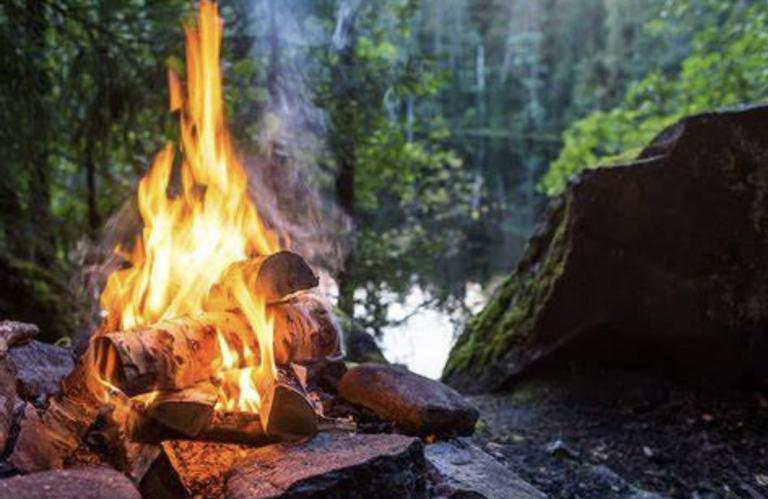
Walking along the dark path through the campground, I kept looking for the next fire, hoping it would signal that I’d found where my group had pitched their tents for the youth jamboree our church had sponsored. But there were no more campfires, it was pitch dark, and the dirt path led deeper into the mountain forest.
I was ten years old and a few steps away from becoming hopelessly lost in the woods. How did I end up wandering in the dark, searching for firelight?
After the praise and worship program that night, I told myself to stick close to the adult chaperones, warned myself that it would be very easy to get lost. But I ended up separated from my group leaders in the huge crowds of people (huge in the eyes of a ten-year-old anyway) and the evening twilight. I knew that there was a main “road” through the campgrounds, that other youth groups from our church’s denomination had set up their campsites on either side of that road. So, I found the road and started walking.
I wasn’t frightened, at least not at first. I’d been down this road earlier in the day. Our group had chosen to go rock climbing, but I’d become scared at that and one of the adults took me back to our camp. We ended up going on a nature walk through the campgrounds and out into the woods.
I knew my way around, I told myself. I didn’t need to approach another group, admit I’d become lost, and ask for help. I’d find my own way back to our site and no one would know I’d ever been missing.
But there were no more campfires, and I was starting to doubt there’d be another “just up ahead.” I paused, looked around. Then I gulped. I recognized the scenery now, even in the dark. I’d gone out beyond the boundaries of the campgrounds and was headed into the woods. The road that I’d been using was nearly gone. Had I walked on for even five more minutes, I might not have been able to find it again without a flashlight.
I turned around and retraced my steps, stopped at the first campfire I found, and asked for help. I was back at my own campsite a few minutes later. And, since this was the early 1980s, no one noticed I’d been missing and shrugged off the fact that they’d nearly lost one of their child campers on a very cold night in the Southern California mountains.
I think about that night every so often, and it’s become something of a personal parable. The unplanned nature walk that familiarized me with the layout of the camp—and that happened because I was suddenly struck by a panic attack at the thought of climbing rocks—taught me that it’s important to listen to the fears of children and accommodate them. My prescience that I could become lost, which had me on alert from the moment the meeting broke, helped me understand that I could trust my instincts (sometimes).
And while I was foolish not to ask for help right away, I did learn the importance of asking for help before it was too late.
Recently I thought of my childhood misadventure again when ruminating on what it means to be a pro-life Catholic.
I’ve considered myself pro-life since I was a teenager, long before I even thought of becoming Catholic. I grew up in the era of sit-ins at clinics, which pro-lifers liked to call “rescues.” I never attended any “rescues” myself, being too shy to join up with strangers without family support. (My parents leaned conservative but were politically apathetic, and weren’t about to waste their weekends ferrying me to sit-ins and potentially bailing me out of jail.) But I admired the rescuers, and wrote defenses of the anti-abortion movement for high school English class assignments.
After I became Catholic in the mid-1990s, my anti-abortion convictions were bolstered by the Church’s position on abortion. I was delighted to discover later that I’d first approached a local parish about the possibility of becoming Catholic the very week John Paul II promulgated Evangelium Vitae, his encyclical on the gospel of life. (Yes, in retrospect, that sounds superstitious, and perhaps it was. I still like to think it was my inner INFJ enjoying having made a “hidden connection” between my conversion and events in the wider Catholic world.)
In any event, after I became a professional Catholic apologist, I thought I’d found my purpose as a pro-lifer. I’ve never been the type who can walk up to someone and attempt to counsel her out of an abortion. But I was happy with the opportunity to explain the Church’s teaching on the life issues to clients, hoping I was helping them develop the knowledge they’d need to help women in crisis pregnancies.
In the last few years though, I’ve become more and more disheartened with identifying as pro-life. These days, the word pro-life brings to my mind the conservative politicians and fundamentalist Catholics (and other Christians) who are using their positions of power to force women to give birth, even if it means forcing those women to die in the attempt. I’m reminded of the colleague who snapped at me for suggesting he should have included more women writers in the anthology he’d shepherded to print in honor of the fiftieth anniversary of Humanae Vitae.
And I remember how I lost so many friends, mentors, and heroes when they tossed away whatever reservations they had about Donald Trump, becoming fanatic Red Hats in their determination to elect a failed businessman who had bragged openly about assaulting women—merely because he claimed to have had a pro-life “conversion.”
Is this what it meant to be “pro-life”? If so, I wanted nothing to do with it. But what if there was another way to be pro-life? What if being pro-life meant shining a light in the darkness so that those who freely choose to approach for help and comfort could find their way to safety?
It’s not easy to be a quiet place of refuge for people who may be wandering through. So much easier to call out from the side of the road, “Hey, over here! We’ll help you! We love you and your baby!” Of course, the implication is that the people wandering through require help. Perhaps they know what they’re doing and just want to be left alone. How much harder is it to trust that some of them may turn around and come back if they know they won’t be judged for wandering along on their own for a little while longer.
I’m sometimes asked how I can now call myself both “pro-life” and “pro-choice.” I see it as standing firm for what I believe is true about the dignity of the human person—while respecting each and every person’s free will to choose to do good as they understand it. If they need my input into the choices they are making, they’ll ask.
They can find me at the first campfire on the road back from the woods.
Michelle Arnold was a staff apologist for Catholic Answers, a Catholic apologetics apostolate in the Diocese of San Diego, California, from 2003–2020, answering questions from clients about the Catholic faith via phone, letter, email, and online platforms. She contributed essays to Catholic Answers’ online and print magazines, and wrote four booklets for the apostolate’s 20 Answers series. Her 20 Answers booklets were on Judaism, the New Age, witchcraft and the occult, and the Church’s liturgical year. Now a freelance writer, editor, and proofreader, Michelle Arnold has a blog at the Patheos Catholic channel. A portfolio of her published essays is available at Authory.
Previous Post
February 17, 2022
Dark Devotional: Let Me Smite Him
Browse Our Archives
Select a Category Advent Approaching Mystery art Book Reviews Catholic Ghost Story Catholicism community Confession Current Events Dark Devotional Deconstruction Deconstruction Fellow Travelers I Want To Believe Interview Laudato Si Lent Mary Matthew's Letters Movie Reviews Music Reviews Our Charism Personal Essay Pilgrims Pope Francis Popular Piety Prayer Publishing Richard Beck Saints Satan Sheed and Ward Sick Pilgrim Charism Sick Pilgrim Chats Sick Pilgrim Events Sick Pilgrim Travelin' Medicine Show Sick Pilgrimage to The West Sick Pilgrims Small Joys Spiritual Autobiography Spooky Files of Ave Maria Magazine Spooky October Spooky Pilgrim Spooky Pilgrimage Strange Journey The Inklings Things Keeping Us Going Trying to Say God TV Reviews Uncategorized women in the Catholic Church Wonder Podcast Write the Vision
Select a Month February 2022 January 2022 December 2021 November 2021 October 2021 September 2021 August 2021 July 2021 June 2021 May 2021 April 2021 March 2021 February 2021 January 2021 December 2020 April 2020 March 2020 February 2020 January 2020 December 2019 October 2019 September 2019 July 2019 June 2019 May 2019 April 2019 March 2019 February 2019 January 2019 December 2018 November 2018 October 2018 September 2018 August 2018 July 2018 June 2018 May 2018 April 2018 March 2018 February 2018 January 2018 December 2017 November 2017 October 2017 September 2017 August 2017 July 2017 June 2017 May 2017 April 2017 March 2017 February 2017 January 2017 December 2016 November 2016 October 2016 September 2016 August 2016 July 2016 June 2016 May 2016 April 2016 March 2016 February 2016 January 2016 December 2015
Follow Us!
TAKE THE
Religious Wisdom Quiz
What does the Greek word "Agape" mean in the Bible?
Select your answer to see how you score.
Unconditional Love Grace Peace Eternal Life
Related posts from Sick Pilgrim

Dark Devotional: Let Me Smite Him

Dark Devotional: Woe to Me, for I Have...

Dark Devotional: The Rise and Fall of Catholic...
TRENDING AT PATHEOS Catholic

Rejecting Doom: Christian Hope And Human Action
Christianity is a religion of hope. We are to have hope and...

It’s What Comes From Within Which Matters
One of the most difficult things for us to understand is why...

Why I Choose the Eucharist Over the Sermon
Choose the Eucharist, Not the Sermon What are we supposed to get...

5 Design Elements Found in Spiritually Rooted Homes
Putting Spirituality Into Home Decor Our homes are more than our living...

Credo: A Story of God Told with the...
About 10 years ago, I began to imagine a personal "Credo" that...

The Anatomy of Divine Revelation in Catholic Thought
The claim that God has made Himself known to human beings is...
view all Catholic blogs
Ad-Free & Subscriber Log-In Subscription Support
- About Us
- 2026 Calendar
- Videos
- Podcasts
- Library of World Religions
- Faith In Media Tracker
- Advertise With Us
- Write for Us
- Privacy Policy
- Terms of Service
- Do Not Sell My Data
- Contact Us
- Radiant Digital
- Manage Newsletter Subscriptions
- Unsubscribe From Notifications
- Sitemap
Copyright 2008-2026, Patheos. All rights reserved.
Subscription Support Ad-Free & Subscriber Log-In
Follow Patheos