
BuddhistCatholicContemplativeEvangelicalGeneral ChristianHinduJewishLatter-day SaintMuslimNew VisionsProgressive Christian
Beliefs
- Buddhist
- Catholic
- Contemplative
- Evangelical
- General Christian
- Hindu
- Jewish
- Latter-day Saint
- More Voices
- Muslim
- New Visions
- Pagan
- Progressive Christian
Topics
- Religion News
- Food and Religion
- Sports and Religion
- Religious Art
- Religious Music and Entertainment
- Religious Events
- History and Religion
- Style and Religion
- Politics and Religion
- Women in Religion
- Recreation Outdoors and Religion
- Business Finance and Religion
- Careers Workplace and Religion
- Education and Religion
- Family Parenting and Religion
- Health Fitness and Religion
- Home and Religion
- Relationships and Religion
- Technology and Religion
- Travel and Religion
Columnists
- Buddhist Columnists
- Business Finance and Religion Columnists
- Careers Workplace and Religion Columnists
- Catholic Columnists
- Contemplative Columnists
- Education and Religion Columnists
- Evangelists Columnists
- Family Parenting and Religion Columnists
- General Christian Columnists
- Health Fitness and Religion Columnists
- Hindu Columnists
- History and Religion Columnists
- Home and Religion Columnists
- Jewish Columnists
- More Voices Columnists
- Latter Day Columnists
- Muslim Columnists
- New Visions Columnists
- Nonreligious Columnists
- Pagan Columnists
- Politics and Religion Columnists
- Progressive Columnists
- Recreation Outdoors and Religion Columnists
- Relationships and Religion Columnists
- Religion News Columnists
- Religious Art Columnists
- Religious Events Columnists
- Religious Music and Entertainment Columnists
- Sports and Religion Columnists
- Style and Religion Columnists
- Technology and Religion Columnists
- Travel and Religion Columnists
- Women in Religion Columnists
Resource Library
- 2026 Calendar
- Library of World Religions
- The 100 Most Holy Places on Earth
- Patheos Answers
- Podcasts
- Videos
- Faith Leaders Database
- Anglican Episcopalian
- Bahai
- Baptist
- Buddhism
- Christianity
- Confucianism
- Eastern Orthodoxy
- Hinduism
- Holiness and Pentecostal
- ISKCON
- Islam
- Judaism
- Lutheran
- Methodist
- The Church of Jesus Christ of Latter-day Saints
- New Age
- Paganism
- Presbytarian and Reformed
- Protestantism
- Religion Behind the Scenes
- Roman Catholic
- Scientology
- Shia Islam
- Sikhism
- Sufism
- Sunni Islam
- Taoism
- Zen
- See all religions
Research Tools
 Ad-Free & Subscriber Log-In Subscription Support
Ad-Free & Subscriber Log-In Subscription Support
Follow Patheos 

- Trending:
- Forgiveness
- |
- Marriage
- |
- Consciousness
- |
- Death Penalty
- |
- Election
- |
- Halloween
 Sick Pilgrim
- Home
- Catholic
- Dark Devotional: New Light in the Night Sky
Dark Devotional: New Light in the Night Sky
Last updated on: December 30, 2021 at 10:29 pm by guest writer
Dark Devotional: New Light in the Night Sky 2021-12-30T22:29:17-05:00 guest writer
Patheos Explore the world's faith through different perspectives on religion and spirituality! Patheos has the views of the prevalent religions and spiritualities of the world.
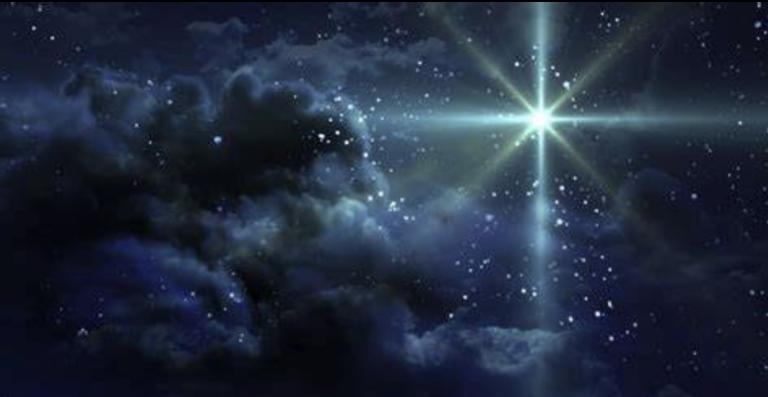
We saw his star at its rising and have come to do him homage (Matt. 2:2).
What does your faith move you to do?
During a train trip, a religious sister, who had spent nearly twenty years living the fairly privileged life as a teacher of the daughters of wealthy families in India, saw a destitute man sitting alone and abandoned. He reached out to her, saying, “I’m thirsty.” In his desperate plea, Mother Teresa of Kolkata heard the voice of Jesus on the cross, saying to her, “I thirst” (John 19:28). She would spend the next fifty years serving Christ by caring for the poorest of the poor in India.
Mother Teresa always told anyone who wanted to join her work in the hopes of creating social change in India to go home and create that social change where they lived. What she and her sisters were doing wasn’t “social work.” The focus of the Missionaries of Charity was on finding and venerating Christ in the destitute they encountered in their communities.
Some Catholics claim their faith moves them to do, well, vastly different things. When I was an apologist, I heard from people who claimed their faith was moving them to shun relatives, including their own children, for choices those relatives made. These Catholics decided their faith compelled them to refuse to attend weddings and holiday gatherings, either because they disapproved of a new partner or because they disapproved of the life the loved one was leading.
The reason they were contacting me usually was because they wanted my help in snubbing their relative without having to experience consequences for their act. For example, “My son is telling me that I’ll never get to see any children he and his fiancée might have if I don’t attend their invalid wedding. How can I refuse to go to the wedding without losing the chance to be a grandma?”
Some people did want to know if their Catholic faith actually compelled them to cut family members or other people out of their lives—for everything from marrying the “wrong” person to voting for the “wrong” political party. But most people just wanted to know how they could do what they believed their faith was moving them to do without personal inconvenience or discomfort.
Needless to say, there are significant differences between how faith prompted Mother Teresa to act and how many Catholics believe their faith is moving them to act. Here are a few:
Doing good. Mother Teresa’s “call within a call” motivated her to reach out to other human beings to help them in their time of need. She may not have been interested in creating social change, but she took in the sick and dying, fed them, nursed them, washed them, made sure their needs were taken care of so that they could either recover in peace or die with dignity.
Building connections. Even non-Christians who had no interest in Christ were impressed by Mother Teresa’s faith. She once approached a baker to beg for leftover bread for her home for the dying. The baker, who was annoyed both by the request and by Mother Teresa bringing the destitute and dying into his neighborhood, spat in her face. She calmly wiped off the spittle, then said, “That was for me. Now, do you have any bread you can spare for my people?” He was so shocked by her response that he handed over the bread.
Inspiring others. Mother Teresa didn’t seek out accolades, and she didn’t even set out initially to create a religious order. But the work she did impressed people, even those who started out hostile because of religious differences. Many were inspired to either join her in India or to do similar work in their own communities.
Accepting consequences. Mother Teresa knew that the choices she made would affect her own life. She gave up her original religious community, of which she’d been a member for two decades. The life of ease and privilege as a teaching sister vanished, and she lived side by side with the poor she served, sharing the life they lived. When she died, she was famous around the world, but her fellow Missionaries reported that she never accepted anything that wasn’t also available to them.
By contrast, those Catholics who claim their faith moves them to cut off people of whom they disapprove do nothing more than satisfy their own sense of righteousness. They don’t do good. Their actions create mistrust of Christians and Christianity. Any hint that their actions might have consequences leads to complaints about “persecution.” And, ultimately, they have contributed to the deeply polarized world in which we now find ourselves, in which everyone eyes each other with suspicion across a wide cultural chasm.
When the wise men saw a new light in the night sky, they knew it meant something. They believed the star had appeared as a sign that a king had been born. That faith that the appearance of the star was important, that the message it signified was meaningful to them, inspired them to set out on a journey to find the source of the message.
The journey wasn’t simply to confirm the message. The wise men also wanted to honor this newborn king, to bring him gifts worthy of royalty. Along the way, they made connections with people they met. Not all of the people they met looked kindly upon their mission; Herod, for one, saw in this a threat to his own power. But the wise men were able to complete their mission, and their joyful response to the baby king, pouring out the gifts they brought at his crib, undoubtedly startled the child’s mother (who St. Matthew otherwise largely ignores in his infancy narrative, but takes note of here).
The wise men’s journey created a ripple effect far beyond what they might have imagined. They had to take a different route home, which likely made for a more difficult journey than the one they’d just completed. The couple they just visited had to pack up their baby son and flee to Egypt. And the town they’d just left would soon be devastated by the arrival of henchmen at the service of an evil king bent on protecting his family’s claim to his throne.
If your faith doesn’t move you to act—if it doesn’t inspire you to do good, no matter the cost—your faith may be dead. And what if your faith inspires you to cause harm? To shun other people? To pass judgment and create dissension? To harm others instead of helping them? To destroy families, including your own?
Maybe, just maybe, your faith isn’t dead. Maybe it’s evil.
Michelle Arnold was a staff apologist for Catholic Answers, a Catholic apologetics apostolate in the Diocese of San Diego, California, from 2003–2020, answering questions from clients about the Catholic faith via phone, letter, email, and online platforms. She contributed essays to Catholic Answers’ online and print magazines, and wrote four booklets for the apostolate’s 20 Answers series. Her 20 Answers booklets were on Judaism, the New Age, witchcraft and the occult, and the Church’s liturgical year. Now a freelance writer, editor, and proofreader, Michelle Arnold has a blog at the Patheos Catholic channel. A portfolio of her published essays is available at Authory.
Previous Post
December 23, 2021
Dark Devotional: The Virgin Mary's Guide to Biblical Motherhood
Next Post

January 3, 2022 Things Keeping Us Going: Imago Dei Edition
Browse Our Archives
Select a Category Advent Approaching Mystery art Book Reviews Catholic Ghost Story Catholicism community Confession Current Events Dark Devotional Deconstruction Deconstruction Fellow Travelers I Want To Believe Interview Laudato Si Lent Mary Matthew's Letters Movie Reviews Music Reviews Our Charism Personal Essay Pilgrims Pope Francis Popular Piety Prayer Publishing Richard Beck Saints Satan Sheed and Ward Sick Pilgrim Charism Sick Pilgrim Chats Sick Pilgrim Events Sick Pilgrim Travelin' Medicine Show Sick Pilgrimage to The West Sick Pilgrims Small Joys Spiritual Autobiography Spooky Files of Ave Maria Magazine Spooky October Spooky Pilgrim Spooky Pilgrimage Strange Journey The Inklings Things Keeping Us Going Trying to Say God TV Reviews Uncategorized women in the Catholic Church Wonder Podcast Write the Vision
Select a Month February 2022 January 2022 December 2021 November 2021 October 2021 September 2021 August 2021 July 2021 June 2021 May 2021 April 2021 March 2021 February 2021 January 2021 December 2020 April 2020 March 2020 February 2020 January 2020 December 2019 October 2019 September 2019 July 2019 June 2019 May 2019 April 2019 March 2019 February 2019 January 2019 December 2018 November 2018 October 2018 September 2018 August 2018 July 2018 June 2018 May 2018 April 2018 March 2018 February 2018 January 2018 December 2017 November 2017 October 2017 September 2017 August 2017 July 2017 June 2017 May 2017 April 2017 March 2017 February 2017 January 2017 December 2016 November 2016 October 2016 September 2016 August 2016 July 2016 June 2016 May 2016 April 2016 March 2016 February 2016 January 2016 December 2015
Follow Us!
TAKE THE
Religious Wisdom Quiz
What symbol is most commonly associated with Christianity worldwide?
Select your answer to see how you score.
The cross The fish The lamb The dove
Related posts from Sick Pilgrim

Dark Devotional: The Firelight of Life

Dark Devotional: Let Me Smite Him

Dark Devotional: Woe to Me, for I Have...

TRENDING AT PATHEOS Catholic

Rejecting Doom: Christian Hope And Human Action
Christianity is a religion of hope. We are to have hope and...

It’s What Comes From Within Which Matters
One of the most difficult things for us to understand is why...

Why I Choose the Eucharist Over the Sermon
Choose the Eucharist, Not the Sermon What are we supposed to get...

5 Design Elements Found in Spiritually Rooted Homes
Putting Spirituality Into Home Decor Our homes are more than our living...

Credo: A Story of God Told with the...
About 10 years ago, I began to imagine a personal "Credo" that...

The Anatomy of Divine Revelation in Catholic Thought
The claim that God has made Himself known to human beings is...
view all Catholic blogs
Ad-Free & Subscriber Log-In Subscription Support
- About Us
- 2026 Calendar
- Videos
- Podcasts
- Library of World Religions
- Faith In Media Tracker
- Advertise With Us
- Write for Us
- Privacy Policy
- Terms of Service
- Do Not Sell My Data
- Contact Us
- Radiant Digital
- Manage Newsletter Subscriptions
- Unsubscribe From Notifications
- Sitemap
Copyright 2008-2026, Patheos. All rights reserved.
Subscription Support Ad-Free & Subscriber Log-In
Follow Patheos