
BuddhistCatholicContemplativeEvangelicalGeneral ChristianHinduJewishLatter-day SaintMuslimNew VisionsProgressive Christian
Beliefs
- Buddhist
- Catholic
- Contemplative
- Evangelical
- General Christian
- Hindu
- Jewish
- Latter-day Saint
- More Voices
- Muslim
- New Visions
- Pagan
- Progressive Christian
Topics
- Religion News
- Food and Religion
- Sports and Religion
- Religious Art
- Religious Music and Entertainment
- Religious Events
- History and Religion
- Style and Religion
- Politics and Religion
- Women in Religion
- Recreation Outdoors and Religion
- Business Finance and Religion
- Careers Workplace and Religion
- Education and Religion
- Family Parenting and Religion
- Health Fitness and Religion
- Home and Religion
- Relationships and Religion
- Technology and Religion
- Travel and Religion
Columnists
- Buddhist Columnists
- Business Finance and Religion Columnists
- Careers Workplace and Religion Columnists
- Catholic Columnists
- Contemplative Columnists
- Education and Religion Columnists
- Evangelists Columnists
- Family Parenting and Religion Columnists
- General Christian Columnists
- Health Fitness and Religion Columnists
- Hindu Columnists
- History and Religion Columnists
- Home and Religion Columnists
- Jewish Columnists
- More Voices Columnists
- Latter Day Columnists
- Muslim Columnists
- New Visions Columnists
- Nonreligious Columnists
- Pagan Columnists
- Politics and Religion Columnists
- Progressive Columnists
- Recreation Outdoors and Religion Columnists
- Relationships and Religion Columnists
- Religion News Columnists
- Religious Art Columnists
- Religious Events Columnists
- Religious Music and Entertainment Columnists
- Sports and Religion Columnists
- Style and Religion Columnists
- Technology and Religion Columnists
- Travel and Religion Columnists
- Women in Religion Columnists
Resource Library
- 2026 Calendar
- Library of World Religions
- The 100 Most Holy Places on Earth
- Patheos Answers
- Podcasts
- Videos
- Faith Leaders Database
- Anglican Episcopalian
- Bahai
- Baptist
- Buddhism
- Christianity
- Confucianism
- Eastern Orthodoxy
- Hinduism
- Holiness and Pentecostal
- ISKCON
- Islam
- Judaism
- Lutheran
- Methodist
- The Church of Jesus Christ of Latter-day Saints
- New Age
- Paganism
- Presbytarian and Reformed
- Protestantism
- Religion Behind the Scenes
- Roman Catholic
- Scientology
- Shia Islam
- Sikhism
- Sufism
- Sunni Islam
- Taoism
- Zen
- See all religions
Research Tools
 Ad-Free & Subscriber Log-In Subscription Support
Ad-Free & Subscriber Log-In Subscription Support
Follow Patheos 

- Trending:
- Forgiveness
- |
- Marriage
- |
- Consciousness
- |
- Death Penalty
- |
- Election
- |
- Halloween
 Sick Pilgrim
- Home
- Catholic
- Dark Devotional: Everything Is Naked
Dark Devotional: Everything Is Naked
Last updated on: October 8, 2021 at 8:33 am by guest writer
Dark Devotional: Everything Is Naked 2021-10-08T08:33:15-05:00 guest writer
Patheos Explore the world's faith through different perspectives on religion and spirituality! Patheos has the views of the prevalent religions and spiritualities of the world.
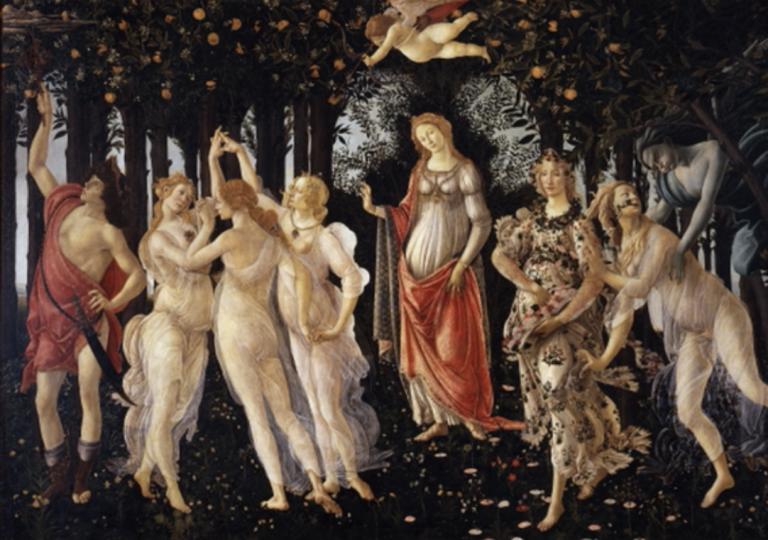
No creature is concealed from him, but everything is naked and exposed to the eyes of him to whom we must render an account (Heb. 4:13).
“Clothing is meant to conceal a woman’s figure, not to reveal it.”
“Your choice of clothing at Mass demonstrates your respect for our Lord in the Blessed Sacrament.”
“Would you wear that if Jesus was right here in this room?”
I spent two decades of my life in the conservative Catholic bubble, where tropes like this are constantly bandied about, usually with the intent of shaming women into wearing high-necked, long-sleeved blouses, skirts to their ankles, and lace on their heads. Usually it’s the Blessed Virgin who is presented as the model of modesty for Catholic women—never mind the fact that our Lady once appeared wearing trousers and, on another occasion, ditched her veil.
Sometimes, what Jesus thinks of women’s dress is brought into the discussion. We hear about Our Lady of Fatima’s dire warning that there would be “certain fashions … introduced that will offend our Lord very much.” The assumption, naturally, is that the fashions that offend Jesus will be those worn by women. “Wifebeaters” that show off a man’s chest hair and ratty sweats that sag around his hips never seem to get any mention as offensive to our Lord’s presumably delicate sensibilities.
No one seems to question just how delicate our Lord’s sensibilities are though. When a woman called out to him from a crowd, saying, “Blessed is the womb that bore you, and the breasts that you sucked!” (Luke 11:27), St. Luke doesn’t report Jesus calling for his smelling salts or even reprimanding the woman for referring to his Mother’s breasts. Rather, Jesus answered, seemingly matter-of-factly, “Blessed rather are those who hear the word of God and keep it!” (Luke 11:28).
Then there was that time when the religious authorities brought a woman “caught in adultery” to Jesus (John 8:1–11). Many have wondered about the curious detail in the story that Jesus “bent down and wrote with his finger on the ground” (John 8:6, 8).
Years ago, a female speaker at an event I attended noted that perhaps the woman brought to Jesus was quite literally “caught in adultery” and dragged from the scene of her crime to Jesus. Perhaps the reason Jesus kept bending down and doodling in the sand was because the adulteress was nekkid. If so, Jesus may have been unwilling to look at an undressed woman, but neither did he seem particularly disturbed by her state of undress.
In this week’s second reading from the Letter to the Hebrews, we hear a perennial favorite of Bible-thumping Protestant Fundamentalists. “The word of God,” we’re told, “is living and effective, sharper than any two-edged sword, penetrating even between soul and spirit, joints and marrow, and able to discern reflections and thoughts of the heart” (Heb. 4:12). This verse is often pressed into service to substantiate sola scriptura—the idea that Scripture alone is the sole source of divine revelation and that Christians have no need of oral tradition or a divinely-appointed teaching authority.
The context of this verse though shows something quite different. In verse 13, we’re told that “no creature is concealed from him, but everything is naked and exposed to the eyes of him to whom we must render an account” (emphasis added). “The word of God” referred to here isn’t a thing, such as a scroll of Scripture, but a person. And when we remember St. John’s prologue, referring to God the Son as the incarnate Word of God (John 1:1–14), then it’s apparent that the author of Hebrews is referring to Jesus as “the word.”
Which got me to thinking that perhaps achieving sanctification isn’t so much bound to concealing bare skin or the shape of our bodies, but to preparing ourselves to be exposed completely in the sight of God.
So, what does the Church teach about the Last Judgment? The Catechism of the Catholic Church states:
“In the presence of Christ, who is Truth itself, the truth of each man’s relationship with God will be laid bare. The Last Judgment will reveal even to its furthest consequences the good each person has done or failed to do during his earthly life” (CCC 1039).
Laid bare? You mean like getting nekkid in the sight of God?
Then there’s the very next paragraph, in which we’re informed that “The Last Judgment will reveal that God’s justice triumphs over all the injustices committed by his creatures and that God’s love is stronger than death” (CCC 1040, emphasis added).
Oh. So, when Jesus judges us, he’s not going to be checking to see if our necklines fall more than a few finger-widths beneath our throat and measuring how far our skirts reach past our knees? He’ll be more concerned with the injustices we’ve committed? We could be covered head to toe in fabric and still be naked in his sight if we’ve mistreated our fellow creatures?
I firmly believe that one reason so many people think Jesus is a prig is because they are the ones who are prigs. The people who mock a progressive image of Jesus, saying that our Lord was no “social justice warrior,” are the very same people who assume Jesus would start spitting fire at the sight of a woman in a bikini. Those who mutter about women showing up to Mass in trousers, heads uncovered, are the ones who believe they’re being “disrespected” by a lack of conformity to their expectations. But rather than own that they want everyone to dress for Mass to their specifications, they project their opinions onto Jesus.
But the Jesus of the Gospels, the one who we’ll meet on the last day, is no prig. We’ll be exposed in his sight, but what he’ll be looking at is how we’ve treated others, not how we’ve dressed for others.
And the Jesus of the Letter to the Hebrews, who penetrates beneath the surface of our lives and judges us based on our deeds? Perhaps it’s no coincidence that there has been some speculation that the anonymous author of that letter was St. Priscilla, the Jewish woman who tutored Apollos in “the way of God” (Acts 18:26) and whom Paul praised, along with her husband, as “my fellow workers in Christ Jesus” (Rom. 16:3).
Michelle Arnold was a staff apologist for Catholic Answers, a Catholic apologetics apostolate in the Diocese of San Diego, California, from 2003–2020, answering questions from clients about the Catholic faith via phone, letter, email, and online platforms. She contributed essays to Catholic Answers’ online and print magazines, and wrote four booklets for the apostolate’s 20 Answers series. Her 20 Answers booklets were on Judaism, the New Age, witchcraft and the occult, and the Church’s liturgical year. Now a freelance writer, editor, and proofreader, Michelle Arnold has a blog at the Patheos Catholic channel. A portfolio of her published essays is available at Authory.
Previous Post
October 1, 2021
Dark Devotional: It Is Not Good to Be Alone
Next Post

October 11, 2021 Things Keeping Us Going: I Love A Parade Edition
Browse Our Archives
Select a Category Advent Approaching Mystery art Book Reviews Catholic Ghost Story Catholicism community Confession Current Events Dark Devotional Deconstruction Deconstruction Fellow Travelers I Want To Believe Interview Laudato Si Lent Mary Matthew's Letters Movie Reviews Music Reviews Our Charism Personal Essay Pilgrims Pope Francis Popular Piety Prayer Publishing Richard Beck Saints Satan Sheed and Ward Sick Pilgrim Charism Sick Pilgrim Chats Sick Pilgrim Events Sick Pilgrim Travelin' Medicine Show Sick Pilgrimage to The West Sick Pilgrims Small Joys Spiritual Autobiography Spooky Files of Ave Maria Magazine Spooky October Spooky Pilgrim Spooky Pilgrimage Strange Journey The Inklings Things Keeping Us Going Trying to Say God TV Reviews Uncategorized women in the Catholic Church Wonder Podcast Write the Vision
Select a Month February 2022 January 2022 December 2021 November 2021 October 2021 September 2021 August 2021 July 2021 June 2021 May 2021 April 2021 March 2021 February 2021 January 2021 December 2020 April 2020 March 2020 February 2020 January 2020 December 2019 October 2019 September 2019 July 2019 June 2019 May 2019 April 2019 March 2019 February 2019 January 2019 December 2018 November 2018 October 2018 September 2018 August 2018 July 2018 June 2018 May 2018 April 2018 March 2018 February 2018 January 2018 December 2017 November 2017 October 2017 September 2017 August 2017 July 2017 June 2017 May 2017 April 2017 March 2017 February 2017 January 2017 December 2016 November 2016 October 2016 September 2016 August 2016 July 2016 June 2016 May 2016 April 2016 March 2016 February 2016 January 2016 December 2015
Follow Us!
TAKE THE
Religious Wisdom Quiz
James says that trials of many kinds test what, producing perseverance?
Select your answer to see how you score.
Your patience Your love Your character Your faith
Related posts from Sick Pilgrim

Dark Devotional: The Firelight of Life

Dark Devotional: Let Me Smite Him

Dark Devotional: Woe to Me, for I Have...

TRENDING AT PATHEOS Catholic

Rejecting Doom: Christian Hope And Human Action
Christianity is a religion of hope. We are to have hope and...

It’s What Comes From Within Which Matters
One of the most difficult things for us to understand is why...

Why I Choose the Eucharist Over the Sermon
Choose the Eucharist, Not the Sermon What are we supposed to get...

5 Design Elements Found in Spiritually Rooted Homes
Putting Spirituality Into Home Decor Our homes are more than our living...

Credo: A Story of God Told with the...
About 10 years ago, I began to imagine a personal "Credo" that...

The Anatomy of Divine Revelation in Catholic Thought
The claim that God has made Himself known to human beings is...
view all Catholic blogs
Ad-Free & Subscriber Log-In Subscription Support
- About Us
- 2026 Calendar
- Videos
- Podcasts
- Library of World Religions
- Faith In Media Tracker
- Advertise With Us
- Write for Us
- Privacy Policy
- Terms of Service
- Do Not Sell My Data
- Contact Us
- Radiant Digital
- Manage Newsletter Subscriptions
- Unsubscribe From Notifications
- Sitemap
Copyright 2008-2026, Patheos. All rights reserved.
Subscription Support Ad-Free & Subscriber Log-In
Follow Patheos