
BuddhistCatholicContemplativeEvangelicalGeneral ChristianHinduJewishLatter-day SaintMuslimNew VisionsProgressive Christian
Beliefs
- Buddhist
- Catholic
- Contemplative
- Evangelical
- General Christian
- Hindu
- Jewish
- Latter-day Saint
- More Voices
- Muslim
- New Visions
- Pagan
- Progressive Christian
Topics
- Religion News
- Food and Religion
- Sports and Religion
- Religious Art
- Religious Music and Entertainment
- Religious Events
- History and Religion
- Style and Religion
- Politics and Religion
- Women in Religion
- Recreation Outdoors and Religion
- Business Finance and Religion
- Careers Workplace and Religion
- Education and Religion
- Family Parenting and Religion
- Health Fitness and Religion
- Home and Religion
- Relationships and Religion
- Technology and Religion
- Travel and Religion
Columnists
- Buddhist Columnists
- Business Finance and Religion Columnists
- Careers Workplace and Religion Columnists
- Catholic Columnists
- Contemplative Columnists
- Education and Religion Columnists
- Evangelists Columnists
- Family Parenting and Religion Columnists
- General Christian Columnists
- Health Fitness and Religion Columnists
- Hindu Columnists
- History and Religion Columnists
- Home and Religion Columnists
- Jewish Columnists
- More Voices Columnists
- Latter Day Columnists
- Muslim Columnists
- New Visions Columnists
- Nonreligious Columnists
- Pagan Columnists
- Politics and Religion Columnists
- Progressive Columnists
- Recreation Outdoors and Religion Columnists
- Relationships and Religion Columnists
- Religion News Columnists
- Religious Art Columnists
- Religious Events Columnists
- Religious Music and Entertainment Columnists
- Sports and Religion Columnists
- Style and Religion Columnists
- Technology and Religion Columnists
- Travel and Religion Columnists
- Women in Religion Columnists
Resource Library
- 2026 Calendar
- Library of World Religions
- The 100 Most Holy Places on Earth
- Patheos Answers
- Podcasts
- Videos
- Faith Leaders Database
- Anglican Episcopalian
- Bahai
- Baptist
- Buddhism
- Christianity
- Confucianism
- Eastern Orthodoxy
- Hinduism
- Holiness and Pentecostal
- ISKCON
- Islam
- Judaism
- Lutheran
- Methodist
- The Church of Jesus Christ of Latter-day Saints
- New Age
- Paganism
- Presbytarian and Reformed
- Protestantism
- Religion Behind the Scenes
- Roman Catholic
- Scientology
- Shia Islam
- Sikhism
- Sufism
- Sunni Islam
- Taoism
- Zen
- See all religions
Research Tools
 Ad-Free & Subscriber Log-In Subscription Support
Ad-Free & Subscriber Log-In Subscription Support
Follow Patheos 

- Trending:
- Forgiveness
- |
- Marriage
- |
- Consciousness
- |
- Death Penalty
- |
- Election
- |
- Halloween
 Sick Pilgrim
- Home
- Catholic
- Dark Devotional: Silence, the Love Language of God
Dark Devotional: Silence, the Love Language of God
Last updated on: September 3, 2021 at 4:25 am by guest writer
Dark Devotional: Silence, the Love Language of God 2021-09-02T10:35:11-05:00 guest writer
Patheos Explore the world's faith through different perspectives on religion and spirituality! Patheos has the views of the prevalent religions and spiritualities of the world.
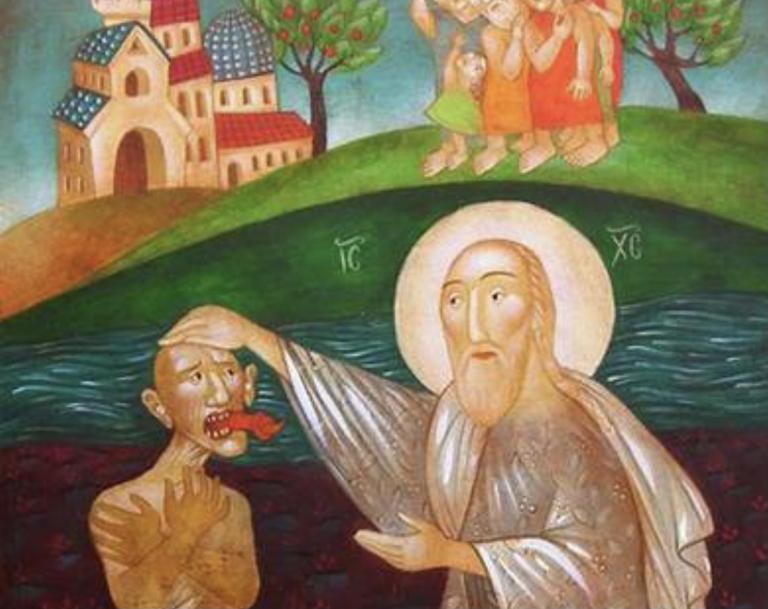
“Then will the eyes of the blind be opened,
the ears of the deaf be cleared;
then will the lame leap like a stag,
then the tongue of the mute will sing.”
“The Lord gives sight to the blind;
the Lord raises up those who were bowed down.”
The miracles mentioned in this Sunday’s Scripture – in Isaiah 35 and Psalm 146 – are good things, and certainly something to rejoice over. However, one can’t help wondering about the personhood and individuality of those who are healed. Yes, it is great that they are healed, but is this all they are – mere impersonal ciphers paraded around for the glory of an all-powerful Lord? Yes, the healing power of God is good, and indeed worthy to be praised, but these initial passages might make us wonder whether God in fact cares. Yes, he can heal – both physically and spiritually – but is there an authenticity and personal concern in such healing, or is it mere spectacle?
What I am trying to get at is that the real question around healing is not whether it can or does happen. It both can and does. The real question is whether it reduces those who experience it to something less than a person, a mere condition existing to let the divinity “show his stuff.” Such an interpretation would mean these passages inadvertently show the exact opposite of what they here are trying to communicate; whereas they would portray the Lord as a great healer, they perhaps risk suggesting he is rather a great magician turning human lives into trophies.
Fortunately, however, we are given the gospel in these readings as a hermeneutic through which to interpret such healing, and we find in it that, far from being a worker of impersonal spectacles, Christ is interested in the intimacy and even incommunicability of what happens when he touches us. Notice how the healed man is treated by the crowd. They bring him to Christ as though he were an object. And even when they talk about the healing afterward, they refer to “the deaf” and “the mute,” as though there were nothing more to the man. For the crowd, the man himself is little more than a spectacle, an object on which they want to see Christ enact his power.
But notice Christ’s resistance to this attitude. He draws the man away from the crowd. And then he heals him through touch, a groan, a word, and an exchange of bodily fluids, means that have all the messy intimacy of sacramentality. Further, the man speaks – yet we are not even told what his words after the healing are. Clearly, this was a word between a man and his maker, not to be shouted or bandied about by the crowds, and the gospel writer’s sensitivity in not reporting these words accords well with the sense of privacy that Christ himself accords to this miracle. All this to say that, in taking this man away from the madding crowd, healing him intimately, and preserving this intimacy such that the man’s first words are kept secret, Christ encounters this person as a person, and not a mere victory token to be trotted about in praise of His name. Indeed, he arguably foresees the possibility of such triumphalism and tries to prevent it, directing those with him “not to tell anyone.” Thus, the gospel reveals to us good news; in case the earlier passages led us to think that God was just out for his own glory and merely using healed humans as trophies, we are shown in the gospel how Christ’s way with humans is the exact opposite of that – he resists the proclamation of the proud, but gives grace in humility.
Indeed, in this gospel I can’t help seeing something of my own spiritual journey as well. Growing up Evangelical, one of the most important things we were supposed to do was to witness for Christ, that is, testify to the miracles that he has done – and indeed, even as tired Catholics, we are still called to this to an extent. However, as seen in the interaction between today’s readings, there are ways of testifying to miracles that, having lost their Christological center, can in fact present God as a mere magician using humans for the sake of spectacles. Furthermore, there are things at the center of miracles that, because of their sheer intimacy, are perhaps best left unrecorded lest they be profaned by the crowds. Since my days in Evangelicalism, I have along these lines learned that, paradoxically, shouting about miracles is a sure way to obscure them, while dwelling with them in patient silence can open up times and opportunities to share them with others as necessary. If I say less about God now, it is because I have learned that being with Him is in many instances a secret too complex to tell – and silence too is its own form of speech, the love-language of God.
Karl Persson is Assistant Professor of Literature at Our Lady Seat of Wisdom College in Barry’s Bay, Ontario. His interests include mentoring students, doing research on premodern wisdom literature, and encouraging discussion of mental illness in Christian communities.
Previous Post
August 30, 2021
Things Keeping Us Going: Standing on the Ledge of Mt. Whelm Edition
Next Post

September 6, 2021 Things Keeping Us Going: Happy New Year Edition
Browse Our Archives
Select a Category Advent Approaching Mystery art Book Reviews Catholic Ghost Story Catholicism community Confession Current Events Dark Devotional Deconstruction Deconstruction Fellow Travelers I Want To Believe Interview Laudato Si Lent Mary Matthew's Letters Movie Reviews Music Reviews Our Charism Personal Essay Pilgrims Pope Francis Popular Piety Prayer Publishing Richard Beck Saints Satan Sheed and Ward Sick Pilgrim Charism Sick Pilgrim Chats Sick Pilgrim Events Sick Pilgrim Travelin' Medicine Show Sick Pilgrimage to The West Sick Pilgrims Small Joys Spiritual Autobiography Spooky Files of Ave Maria Magazine Spooky October Spooky Pilgrim Spooky Pilgrimage Strange Journey The Inklings Things Keeping Us Going Trying to Say God TV Reviews Uncategorized women in the Catholic Church Wonder Podcast Write the Vision
Select a Month February 2022 January 2022 December 2021 November 2021 October 2021 September 2021 August 2021 July 2021 June 2021 May 2021 April 2021 March 2021 February 2021 January 2021 December 2020 April 2020 March 2020 February 2020 January 2020 December 2019 October 2019 September 2019 July 2019 June 2019 May 2019 April 2019 March 2019 February 2019 January 2019 December 2018 November 2018 October 2018 September 2018 August 2018 July 2018 June 2018 May 2018 April 2018 March 2018 February 2018 January 2018 December 2017 November 2017 October 2017 September 2017 August 2017 July 2017 June 2017 May 2017 April 2017 March 2017 February 2017 January 2017 December 2016 November 2016 October 2016 September 2016 August 2016 July 2016 June 2016 May 2016 April 2016 March 2016 February 2016 January 2016 December 2015
Follow Us!
TAKE THE
Religious Wisdom Quiz
Who was told to prophesy to the mountains and valleys of Israel?
Select your answer to see how you score.
Hosea Daniel Micah Ezekiel
Related posts from Sick Pilgrim

Dark Devotional: The Firelight of Life

Dark Devotional: Let Me Smite Him

Dark Devotional: Woe to Me, for I Have...

TRENDING AT PATHEOS Catholic

Rejecting Doom: Christian Hope And Human Action
Christianity is a religion of hope. We are to have hope and...

It’s What Comes From Within Which Matters
One of the most difficult things for us to understand is why...

Why I Choose the Eucharist Over the Sermon
Choose the Eucharist, Not the Sermon What are we supposed to get...

5 Design Elements Found in Spiritually Rooted Homes
Putting Spirituality Into Home Decor Our homes are more than our living...

Credo: A Story of God Told with the...
About 10 years ago, I began to imagine a personal "Credo" that...

The Anatomy of Divine Revelation in Catholic Thought
The claim that God has made Himself known to human beings is...
view all Catholic blogs
Ad-Free & Subscriber Log-In Subscription Support
- About Us
- 2026 Calendar
- Videos
- Podcasts
- Library of World Religions
- Faith In Media Tracker
- Advertise With Us
- Write for Us
- Privacy Policy
- Terms of Service
- Do Not Sell My Data
- Contact Us
- Radiant Digital
- Manage Newsletter Subscriptions
- Unsubscribe From Notifications
- Sitemap
Copyright 2008-2026, Patheos. All rights reserved.
Subscription Support Ad-Free & Subscriber Log-In
Follow Patheos