
BuddhistCatholicContemplativeEvangelicalGeneral ChristianHinduJewishLatter-day SaintMuslimNew VisionsProgressive Christian
Beliefs
- Buddhist
- Catholic
- Contemplative
- Evangelical
- General Christian
- Hindu
- Jewish
- Latter-day Saint
- More Voices
- Muslim
- New Visions
- Pagan
- Progressive Christian
Topics
- Religion News
- Food and Religion
- Sports and Religion
- Religious Art
- Religious Music and Entertainment
- Religious Events
- History and Religion
- Style and Religion
- Politics and Religion
- Women in Religion
- Recreation Outdoors and Religion
- Business Finance and Religion
- Careers Workplace and Religion
- Education and Religion
- Family Parenting and Religion
- Health Fitness and Religion
- Home and Religion
- Relationships and Religion
- Technology and Religion
- Travel and Religion
Columnists
- Buddhist Columnists
- Business Finance and Religion Columnists
- Careers Workplace and Religion Columnists
- Catholic Columnists
- Contemplative Columnists
- Education and Religion Columnists
- Evangelists Columnists
- Family Parenting and Religion Columnists
- General Christian Columnists
- Health Fitness and Religion Columnists
- Hindu Columnists
- History and Religion Columnists
- Home and Religion Columnists
- Jewish Columnists
- More Voices Columnists
- Latter Day Columnists
- Muslim Columnists
- New Visions Columnists
- Nonreligious Columnists
- Pagan Columnists
- Politics and Religion Columnists
- Progressive Columnists
- Recreation Outdoors and Religion Columnists
- Relationships and Religion Columnists
- Religion News Columnists
- Religious Art Columnists
- Religious Events Columnists
- Religious Music and Entertainment Columnists
- Sports and Religion Columnists
- Style and Religion Columnists
- Technology and Religion Columnists
- Travel and Religion Columnists
- Women in Religion Columnists
Resource Library
- 2026 Calendar
- Library of World Religions
- The 100 Most Holy Places on Earth
- Patheos Answers
- Podcasts
- Videos
- Faith Leaders Database
- Anglican Episcopalian
- Bahai
- Baptist
- Buddhism
- Christianity
- Confucianism
- Eastern Orthodoxy
- Hinduism
- Holiness and Pentecostal
- ISKCON
- Islam
- Judaism
- Lutheran
- Methodist
- The Church of Jesus Christ of Latter-day Saints
- New Age
- Paganism
- Presbytarian and Reformed
- Protestantism
- Religion Behind the Scenes
- Roman Catholic
- Scientology
- Shia Islam
- Sikhism
- Sufism
- Sunni Islam
- Taoism
- Zen
- See all religions
Research Tools
 Ad-Free & Subscriber Log-In Subscription Support
Ad-Free & Subscriber Log-In Subscription Support
Follow Patheos 

- Trending:
- Forgiveness
- |
- Marriage
- |
- Consciousness
- |
- Death Penalty
- |
- Election
- |
- Halloween
 Sick Pilgrim
- Home
- Catholic
- Dark Devotional: What Do You Do for the Poor?
Dark Devotional: What Do You Do for the Poor?
Last updated on: July 23, 2021 at 4:51 am by guest writer
Dark Devotional: What Do You Do for the Poor? 2021-07-22T17:57:21-05:00 guest writer
Patheos Explore the world's faith through different perspectives on religion and spirituality! Patheos has the views of the prevalent religions and spiritualities of the world.
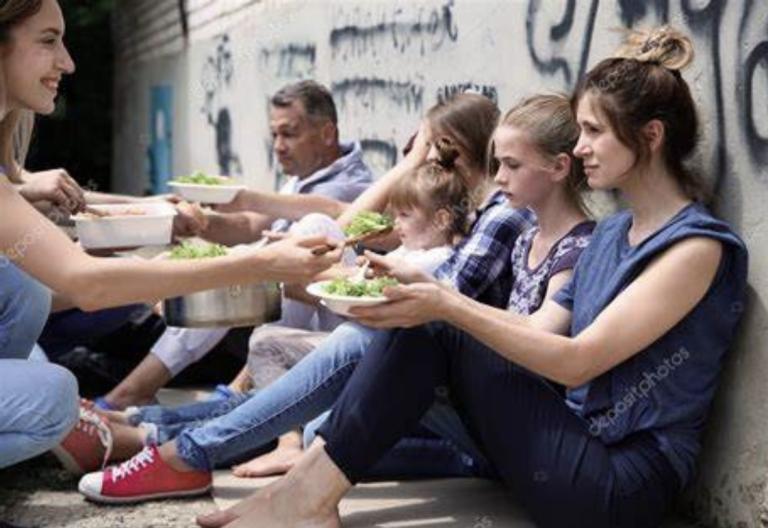
Jesus took the loaves, gave thanks, and distributed them to those who were reclining, and also as much of the fish as they wanted (John 6:11).
For several years I took classes in Judaism at a local synagogue, occasionally attending services, especially on holy days. One Sukkot, I attended the congregational supper in the synagogue’s sukkah, the outdoor hut reminiscent of those used by the Israelites during their wandering in the desert that Jews use for meals during the seven-day holiday. The rabbi and his wife had invited me to sit at their table. I was seated next to the widow of the synagogue’s previous rabbi and we chatted amiably throughout the meal.
At one point, she asked me what I did for a living. This was a question I dreaded whenever I visited the synagogue. Out of respect for my hosts, I always did my best to be discreet about the fact that I worked as an apologist for Catholic Answers. I didn’t want congregants to wonder if I was there to proselytize them. The strategy I developed over time was to deflect the question.
“So, tell me, Michelle, what do you do for a living?”
“I work for a local nonprofit.”
This answer sometimes satisfied my questioners, especially if they were asking out of politeness and didn’t have a deep interest in the answer. Occasionally, though, someone would light up, wanting to know more. Perhaps because we were visiting over a meal, that’s what happened with the rabbi’s widow. She immediately wanted to know more.
“What do you do for this nonprofit?”
“I’m in customer service.”
This wasn’t precisely accurate, but I did answer calls from Catholic Answers’ constituents and provide them with assistance. I really didn’t want to explain what an apologist was and how exactly apologists “helped” people.
But my new friend kept pressing. Eventually, I ended up telling her the whole story. She wasn’t shocked or annoyed. Much to my surprise, she was fascinated. What exactly did Catholic Answers do?
I explained as best I could, still trying to play down the whole “defending the Catholic faith” and “lead[ing] non-Catholics into the fullness of the truth” aspect of Catholic Answers’ “mission.”
“I see,” she said in a thoughtful tone of voice, nodding. “And what do you do for the poor?”
Great question. What did we do for the poor?
I don’t remember now how I answered her. But the question stuck with me, popping up at odd times to remind me that I didn’t have a good answer for what Catholic Answers did that actually made a difference in people’s lives.
Yes, Catholic Answers donated materials to seminarians, to the military, and to prisoners. We could pull out letters from people grateful to have received a free subscription to the magazine or free booklets and tracts. Yes, we sometimes heard from people who told us that something they’d heard on the radio show or read on the web site had helped them better understand the Catholic faith.
But we were barely known in the Diocese of San Diego, where the apostolate is located. It became an inside joke that we’d have to repeat the apostolate’s name more than once in conversations because most people had never heard of it. One of my coworkers once told someone she worked for Catholic Answers and the response was “Catholic Dancers?”
Meanwhile, most people in San Diego have heard of Father Joe’s Villages, the downtown ministry to the homeless that was built from the ground up by the late Msgr. Joseph Carroll, an affable priest who became well-known to Catholics and non-Catholics alike as the face of outreach to the poor in San Diego. Generations of San Diegans watched him on television asking for support, inviting them to be “neighbors helping neighbors,” as he liked to say.
Father Joe, as he preferred to be called, died recently. The outpouring of reminiscences from people whose lives he changed has been flooding local media. I couldn’t help but compare this spontaneous show of love for a priest in my community—especially in a time of justifiable distrust for Catholic clergy as a whole—to the occasional emails and letters of thanks I saw during my years at Catholic Answers.
What then has more impact? What ultimately has more lasting importance? Telling people how to live their lives, or helping them access the resources they need to escape poverty and find hope?
Apologists might answer that teaching people about “the fullness of truth” points them to heaven. “Instructing the ignorant” is one of the spiritual works of mercy, and conservative Catholics tend to have a higher appreciation for the spiritual works than for the corporal works, such as feeding the hungry and clothing the naked. I’ve seen other priests sneer at the idea that Christians should focus on treating people kindly and offering them food. Why do you need to be Christian if that’s all Christianity is about, they ask.
But Jesus didn’t limit himself to instructing the ignorant. The most spectacular of his miracles, recounted in all four gospels, was his feeding of the masses from a few loaves of bread and a couple of fish. Alleviating hunger mattered. Sparing people a long walk back to where they might be able to find something to eat was important. The miracle was followed up by the promise of the Eucharist, Jesus’ promised food for the soul. And the Eucharist, it’s worth noting, wasn’t a lecture or an exhortation, but Christ’s gift of his own body and blood to strengthen souls.
The outpouring of gratitude for the miraculous meal was immediate. The crowds were in awe and thought that “This is truly the Prophet, the one who is to come into the world” (John 6:14). They wanted to make Jesus their king.
Being crowned an earthly king wasn’t Jesus’ goal, so he took off. But there’s something to be said for the instinct the crowd had to anoint Jesus as their chosen leader. They were overwhelmed by Jesus’ care for their needs, they wanted to express their gratitude that their needs were taken seriously. So, they tried to make him king, likely the highest form of honor they had available.
What do you do for the poor? Perhaps that’s a question that should be asked more often. Because in both this life and the next, we’ll be judged by how well or how poorly we serve our neighbors in need.
Michelle Arnold was a staff apologist for Catholic Answers, a Catholic apologetics apostolate in the Diocese of San Diego, California, from 2003–2020, answering questions from clients about the Catholic faith via phone, letter, email, and online platforms. She contributed essays to Catholic Answers’ online and print magazines, and wrote four booklets for the apostolate’s 20 Answers series. Her 20 Answers booklets were on Judaism, the New Age, witchcraft and the occult, and the Church’s liturgical year. Now a freelance writer, editor, and proofreader, Michelle Arnold has a blog at the Patheos Catholic channel. A portfolio of her published essays is available at Authory.
Previous Post

July 16, 2021
Dark Devotional: A Wolf in Shepherd’s Clothing
Next Post

July 27, 2021 Things Keeping Us Going: Away on a Writers’ Retreat Edition
Browse Our Archives
Select a Category Advent Approaching Mystery art Book Reviews Catholic Ghost Story Catholicism community Confession Current Events Dark Devotional Deconstruction Deconstruction Fellow Travelers I Want To Believe Interview Laudato Si Lent Mary Matthew's Letters Movie Reviews Music Reviews Our Charism Personal Essay Pilgrims Pope Francis Popular Piety Prayer Publishing Richard Beck Saints Satan Sheed and Ward Sick Pilgrim Charism Sick Pilgrim Chats Sick Pilgrim Events Sick Pilgrim Travelin' Medicine Show Sick Pilgrimage to The West Sick Pilgrims Small Joys Spiritual Autobiography Spooky Files of Ave Maria Magazine Spooky October Spooky Pilgrim Spooky Pilgrimage Strange Journey The Inklings Things Keeping Us Going Trying to Say God TV Reviews Uncategorized women in the Catholic Church Wonder Podcast Write the Vision
Select a Month February 2022 January 2022 December 2021 November 2021 October 2021 September 2021 August 2021 July 2021 June 2021 May 2021 April 2021 March 2021 February 2021 January 2021 December 2020 April 2020 March 2020 February 2020 January 2020 December 2019 October 2019 September 2019 July 2019 June 2019 May 2019 April 2019 March 2019 February 2019 January 2019 December 2018 November 2018 October 2018 September 2018 August 2018 July 2018 June 2018 May 2018 April 2018 March 2018 February 2018 January 2018 December 2017 November 2017 October 2017 September 2017 August 2017 July 2017 June 2017 May 2017 April 2017 March 2017 February 2017 January 2017 December 2016 November 2016 October 2016 September 2016 August 2016 July 2016 June 2016 May 2016 April 2016 March 2016 February 2016 January 2016 December 2015
Follow Us!
TAKE THE
Religious Wisdom Quiz
Which book of the Bible contains the story of Balaam’s talking donkey?
Select your answer to see how you score.
Exodus 1 Samuel Judges Numbers
Related posts from Sick Pilgrim

Dark Devotional: The Firelight of Life

Dark Devotional: Let Me Smite Him

Dark Devotional: Woe to Me, for I Have...

TRENDING AT PATHEOS Catholic

Rejecting Doom: Christian Hope And Human Action
Christianity is a religion of hope. We are to have hope and...

It’s What Comes From Within Which Matters
One of the most difficult things for us to understand is why...

Why I Choose the Eucharist Over the Sermon
Choose the Eucharist, Not the Sermon What are we supposed to get...

5 Design Elements Found in Spiritually Rooted Homes
Putting Spirituality Into Home Decor Our homes are more than our living...

Credo: A Story of God Told with the...
About 10 years ago, I began to imagine a personal "Credo" that...

The Anatomy of Divine Revelation in Catholic Thought
The claim that God has made Himself known to human beings is...
view all Catholic blogs
Ad-Free & Subscriber Log-In Subscription Support
- About Us
- 2026 Calendar
- Videos
- Podcasts
- Library of World Religions
- Faith In Media Tracker
- Advertise With Us
- Write for Us
- Privacy Policy
- Terms of Service
- Do Not Sell My Data
- Contact Us
- Radiant Digital
- Manage Newsletter Subscriptions
- Unsubscribe From Notifications
- Sitemap
Copyright 2008-2026, Patheos. All rights reserved.
Subscription Support Ad-Free & Subscriber Log-In
Follow Patheos