
BuddhistCatholicContemplativeEvangelicalGeneral ChristianHinduJewishLatter-day SaintMuslimNew VisionsProgressive Christian
Beliefs
- Buddhist
- Catholic
- Contemplative
- Evangelical
- General Christian
- Hindu
- Jewish
- Latter-day Saint
- More Voices
- Muslim
- New Visions
- Pagan
- Progressive Christian
Topics
- Religion News
- Food and Religion
- Sports and Religion
- Religious Art
- Religious Music and Entertainment
- Religious Events
- History and Religion
- Style and Religion
- Politics and Religion
- Women in Religion
- Recreation Outdoors and Religion
- Business Finance and Religion
- Careers Workplace and Religion
- Education and Religion
- Family Parenting and Religion
- Health Fitness and Religion
- Home and Religion
- Relationships and Religion
- Technology and Religion
- Travel and Religion
Columnists
- Buddhist Columnists
- Business Finance and Religion Columnists
- Careers Workplace and Religion Columnists
- Catholic Columnists
- Contemplative Columnists
- Education and Religion Columnists
- Evangelists Columnists
- Family Parenting and Religion Columnists
- General Christian Columnists
- Health Fitness and Religion Columnists
- Hindu Columnists
- History and Religion Columnists
- Home and Religion Columnists
- Jewish Columnists
- More Voices Columnists
- Latter Day Columnists
- Muslim Columnists
- New Visions Columnists
- Nonreligious Columnists
- Pagan Columnists
- Politics and Religion Columnists
- Progressive Columnists
- Recreation Outdoors and Religion Columnists
- Relationships and Religion Columnists
- Religion News Columnists
- Religious Art Columnists
- Religious Events Columnists
- Religious Music and Entertainment Columnists
- Sports and Religion Columnists
- Style and Religion Columnists
- Technology and Religion Columnists
- Travel and Religion Columnists
- Women in Religion Columnists
Resource Library
- 2026 Calendar
- Library of World Religions
- The 100 Most Holy Places on Earth
- Patheos Answers
- Podcasts
- Videos
- Faith Leaders Database
- Anglican Episcopalian
- Bahai
- Baptist
- Buddhism
- Christianity
- Confucianism
- Eastern Orthodoxy
- Hinduism
- Holiness and Pentecostal
- ISKCON
- Islam
- Judaism
- Lutheran
- Methodist
- The Church of Jesus Christ of Latter-day Saints
- New Age
- Paganism
- Presbytarian and Reformed
- Protestantism
- Religion Behind the Scenes
- Roman Catholic
- Scientology
- Shia Islam
- Sikhism
- Sufism
- Sunni Islam
- Taoism
- Zen
- See all religions
Research Tools
 Ad-Free & Subscriber Log-In Subscription Support
Ad-Free & Subscriber Log-In Subscription Support
Follow Patheos 

- Trending:
- Forgiveness
- |
- Marriage
- |
- Consciousness
- |
- Death Penalty
- |
- Election
- |
- Halloween
 Sick Pilgrim
- Home
- Catholic
- Dark Devotional: Obedient to Death
Dark Devotional: Obedient to Death
Last updated on: March 26, 2021 at 5:18 am by guest writer
Dark Devotional: Obedient to Death 2021-03-25T15:25:07-05:00 guest writer
Patheos Explore the world's faith through different perspectives on religion and spirituality! Patheos has the views of the prevalent religions and spiritualities of the world.
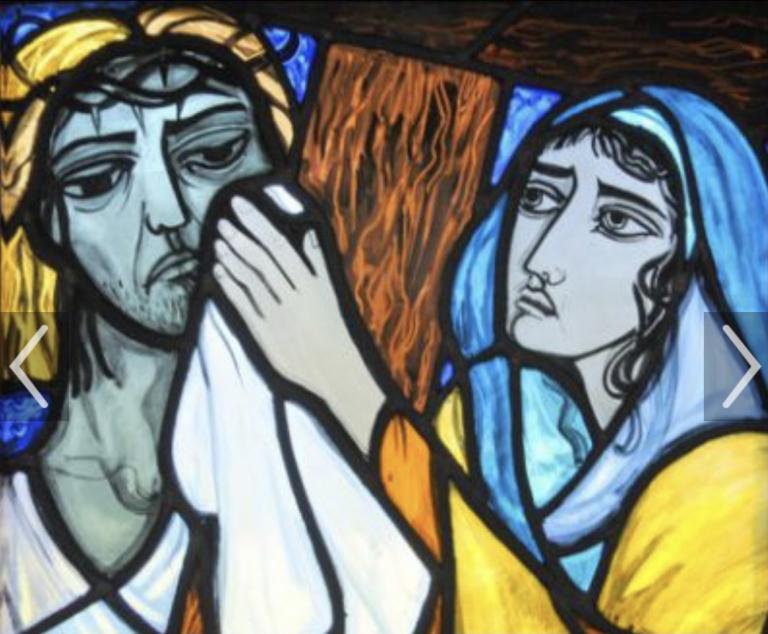
[Christ Jesus] humbled himself, becoming obedient to the point of death, even death on a cross (Phil. 2:8).
This Easter will mark my twenty-fifth year as a Catholic. I spent seventeen of those years working as a staff apologist for Catholic Answers, an independent lay apostolate in the Diocese of San Diego, California. When clients asked tough questions about the Catholic faith, our job was to present the faith in the best possible light. Using Scripture, the Catechism of the Catholic Church, magisterial documents, and other resources, we were there to explain what the Church taught and, all too often, to explain why difficulties and doubts about the faith just had to be better understood in a way that was favorable to the traditional teachings of Catholicism.
Challenges to faith were to be overcome by sheer intellectual brilliance—not accepted, let alone embraced, as crosses to be carried with little hope for relief in sight.
If the Church teaches that men and women are equal in dignity as human persons, why won’t the Church ordain women—even to the diaconate?
Oh, well, allow me to pull up Scripture verses, extracts from the Church Fathers, a couple of position papers from recent popes, and perhaps a brilliantly-argued summary from a thirty-something conservative Catholic bro with a popular podcast. This ought to suffice for you to understand that the Church couldn’t possibly have any room to grow in its understanding of sacramental theology and that you’re just wrong if you’re not convinced.
Media outlets explode with the news that a Vatican congregation has banged down its gavel and declared that there are to be no religious blessings for LGBT couples in same-sex unions.
You say that you still don’t understand why your son and his husband are being denied a blessing on their decades-long union, when your multiply-divorced daughter will be married this Saturday in a nuptial Mass at her parish church because she’s managed to get all of the necessary annulments finalized and her intended is a man? Just give me a few hours to Google the necessary Scripture verses, patristics citations, position papers, and archived podcast episodes, and I’ll get back to you.
Lather, rinse, repeat.
How much harder (and less profitable) might it be to say, “You’re right. This makes absolutely no sense and I don’t understand this either”?
In the epistle for Palm Sunday, St. Paul writes about how Christ, during his public ministry, up to and including his passion and death, “did not regard equality with God something to be grasped” (Phil. 2:6). While he remained God incarnate (God can’t stop being himself), in his humanity Christ set aside the prerogatives of being God—including his omniscience.
As God, Christ didn’t need to wonder why his disciples fell asleep while he prayed in a garden, suffering in anticipation of his coming passion. He knew all about the limits of human understanding, knew the tolls that stress and worry can take on a body, knew that his disciples (with one notable exception) loved him and were doing their best to stand by him.
But as a man, it made no more sense to Jesus that his friends would nap when he needed them most than it would make sense to a woman in labor if her husband asked if he could turn on the hospital-room TV and catch a game while they wait for her to start pushing. Just as a laboring woman needs her husband to focus his attention on her and not on his sportsball of choice, Jesus needed his friends to be there for him in his agony. They weren’t. And no explanation of human frailty, however reasonable and well-argued, takes away the pain of being abandoned in one’s greatest moment of need.
Nonetheless, Jesus persevered. He suffered being betrayed to the authorities by a friend, endured being beaten, spit on, stripped, and nailed to a cross. He continued to struggle to make sense of what was happening, crying out, “My God, my God, why have you forsaken me?” (Mark 15:34). It wasn’t merely a rhetorical question, intended to remind his listeners of a prophetic psalm (Ps. 22). It was an expression of agony, of bewilderment, at divine abandonment.
If obedience to death, the kind of obedience Christ modeled in his passion, doesn’t preclude questioning God, then it sure as heaven doesn’t preclude questioning the Church. Perhaps then, if we wish to actually help disaffected Catholics rather than bask in our own intellectual brilliance, we might look at what comforted Jesus in his agony when considering what might comfort disaffected Catholics in their agony.
Jesus didn’t need the well-meaning defense of a hotheaded bro drawing his sword to slash off someone’s ear (John 18:10–11). Philosophical questions while he stood covered in blood and grime were of no help to him (John 18:38). Mockery of his need for clothes after he’d been stripped and beaten only added to his suffering (John 19:1–3). Whataboutism from fellow convicts on nearby crosses not only didn’t help Jesus, but it also did nothing to alleviate their own agony (Matt. 27:42–44).
What was of help to Christ in his suffering? Relief from carrying his cross alone (Luke 23:26); empathy from onlookers who wept at the unjust treatment he was enduring (Luke 23:27); the repentance of one of his persecutors, who set aside his own grievances and suffering to become Christ’s final defender (Luke 23:39–43); and the unconditional support and presence of his Mother and her friends (John 19:25–27).
Catholic Twitter has been debating “What’s wrong with apologetics?” My response to that question was “The problem with apologetics is it became an end instead of a means.” It became a game in which the high scorer gets radio and TV appearances, book contracts, signature podcasts, and lots of followers on the Internet. It stopped being a means of supporting the vulnerable and marginalized at risk of losing their faith and became a way to push those very people out of the Church (while bemoaning one’s own “persecution”).
The last thing the Church needs is more apologists protecting it from reckoning with the agony of Catholics suffering ecclesial abandonment. Perhaps what the Church needs instead is to humbly set aside its prerogatives, empty itself of its certainties, and allow itself to become obedient to the point of death, even death on a cross.
After all, I hear Jesus’ own story didn’t end on the cross.
Because of this, God greatly exalted him
and bestowed on him the name
which is above every name,
that at the name of Jesus
every knee should bend,
of those in heaven and on earth and under the earth,
and every tongue confess that
Jesus Christ is Lord,
to the glory of God the Father (Phil. 2:9–11).
Michelle Arnold was a staff apologist for Catholic Answers, a Catholic apologetics apostolate in the Diocese of San Diego, California, from 2003–2020, answering questions from clients about the Catholic faith via phone, letter, email, and online platforms. She contributed essays to Catholic Answers’ online and print magazines, and wrote four booklets for the apostolate’s 20 Answers series. Her 20 Answers booklets were on Judaism, the New Age, witchcraft and the occult, and the Church’s liturgical year. Now a freelance writer, editor, and proofreader, Michelle Arnold has a blog at the Patheos Catholic channel. A portfolio of her published essays is available at Authory.
Previous Post

March 25, 2021
Still on the Road
Next Post
March 29, 2021 Things Keeping Us Going: Out Like a Lamb Edition
Browse Our Archives
Select a Category Advent Approaching Mystery art Book Reviews Catholic Ghost Story Catholicism community Confession Current Events Dark Devotional Deconstruction Deconstruction Fellow Travelers I Want To Believe Interview Laudato Si Lent Mary Matthew's Letters Movie Reviews Music Reviews Our Charism Personal Essay Pilgrims Pope Francis Popular Piety Prayer Publishing Richard Beck Saints Satan Sheed and Ward Sick Pilgrim Charism Sick Pilgrim Chats Sick Pilgrim Events Sick Pilgrim Travelin' Medicine Show Sick Pilgrimage to The West Sick Pilgrims Small Joys Spiritual Autobiography Spooky Files of Ave Maria Magazine Spooky October Spooky Pilgrim Spooky Pilgrimage Strange Journey The Inklings Things Keeping Us Going Trying to Say God TV Reviews Uncategorized women in the Catholic Church Wonder Podcast Write the Vision
Select a Month February 2022 January 2022 December 2021 November 2021 October 2021 September 2021 August 2021 July 2021 June 2021 May 2021 April 2021 March 2021 February 2021 January 2021 December 2020 April 2020 March 2020 February 2020 January 2020 December 2019 October 2019 September 2019 July 2019 June 2019 May 2019 April 2019 March 2019 February 2019 January 2019 December 2018 November 2018 October 2018 September 2018 August 2018 July 2018 June 2018 May 2018 April 2018 March 2018 February 2018 January 2018 December 2017 November 2017 October 2017 September 2017 August 2017 July 2017 June 2017 May 2017 April 2017 March 2017 February 2017 January 2017 December 2016 November 2016 October 2016 September 2016 August 2016 July 2016 June 2016 May 2016 April 2016 March 2016 February 2016 January 2016 December 2015
Follow Us!
TAKE THE
Religious Wisdom Quiz
I am the count that found over 600,000 men able to go to war. What am I?
Select your answer to see how you score.
The wilderness count God's numbering A military count The first census of Israel
Related posts from Sick Pilgrim

Dark Devotional: The Firelight of Life

Dark Devotional: Let Me Smite Him

Dark Devotional: Woe to Me, for I Have...

TRENDING AT PATHEOS Catholic

Rejecting Doom: Christian Hope And Human Action
Christianity is a religion of hope. We are to have hope and...

It’s What Comes From Within Which Matters
One of the most difficult things for us to understand is why...

Why I Choose the Eucharist Over the Sermon
Choose the Eucharist, Not the Sermon What are we supposed to get...

5 Design Elements Found in Spiritually Rooted Homes
Putting Spirituality Into Home Decor Our homes are more than our living...

Credo: A Story of God Told with the...
About 10 years ago, I began to imagine a personal "Credo" that...

The Anatomy of Divine Revelation in Catholic Thought
The claim that God has made Himself known to human beings is...
view all Catholic blogs
Ad-Free & Subscriber Log-In Subscription Support
- About Us
- 2026 Calendar
- Videos
- Podcasts
- Library of World Religions
- Faith In Media Tracker
- Advertise With Us
- Write for Us
- Privacy Policy
- Terms of Service
- Do Not Sell My Data
- Contact Us
- Radiant Digital
- Manage Newsletter Subscriptions
- Unsubscribe From Notifications
- Sitemap
Copyright 2008-2026, Patheos. All rights reserved.
Subscription Support Ad-Free & Subscriber Log-In
Follow Patheos