
BuddhistCatholicContemplativeEvangelicalGeneral ChristianHinduJewishLatter-day SaintMuslimNew VisionsProgressive Christian
Beliefs
- Buddhist
- Catholic
- Contemplative
- Evangelical
- General Christian
- Hindu
- Jewish
- Latter-day Saint
- More Voices
- Muslim
- New Visions
- Pagan
- Progressive Christian
Topics
- Religion News
- Food and Religion
- Sports and Religion
- Religious Art
- Religious Music and Entertainment
- Religious Events
- History and Religion
- Style and Religion
- Politics and Religion
- Women in Religion
- Recreation Outdoors and Religion
- Business Finance and Religion
- Careers Workplace and Religion
- Education and Religion
- Family Parenting and Religion
- Health Fitness and Religion
- Home and Religion
- Relationships and Religion
- Technology and Religion
- Travel and Religion
Columnists
- Buddhist Columnists
- Business Finance and Religion Columnists
- Careers Workplace and Religion Columnists
- Catholic Columnists
- Contemplative Columnists
- Education and Religion Columnists
- Evangelists Columnists
- Family Parenting and Religion Columnists
- General Christian Columnists
- Health Fitness and Religion Columnists
- Hindu Columnists
- History and Religion Columnists
- Home and Religion Columnists
- Jewish Columnists
- More Voices Columnists
- Latter Day Columnists
- Muslim Columnists
- New Visions Columnists
- Nonreligious Columnists
- Pagan Columnists
- Politics and Religion Columnists
- Progressive Columnists
- Recreation Outdoors and Religion Columnists
- Relationships and Religion Columnists
- Religion News Columnists
- Religious Art Columnists
- Religious Events Columnists
- Religious Music and Entertainment Columnists
- Sports and Religion Columnists
- Style and Religion Columnists
- Technology and Religion Columnists
- Travel and Religion Columnists
- Women in Religion Columnists
Resource Library
- 2026 Calendar
- Library of World Religions
- The 100 Most Holy Places on Earth
- Patheos Answers
- Podcasts
- Videos
- Faith Leaders Database
- Anglican Episcopalian
- Bahai
- Baptist
- Buddhism
- Christianity
- Confucianism
- Eastern Orthodoxy
- Hinduism
- Holiness and Pentecostal
- ISKCON
- Islam
- Judaism
- Lutheran
- Methodist
- The Church of Jesus Christ of Latter-day Saints
- New Age
- Paganism
- Presbytarian and Reformed
- Protestantism
- Religion Behind the Scenes
- Roman Catholic
- Scientology
- Shia Islam
- Sikhism
- Sufism
- Sunni Islam
- Taoism
- Zen
- See all religions
Research Tools
 Ad-Free & Subscriber Log-In Subscription Support
Ad-Free & Subscriber Log-In Subscription Support
Follow Patheos 

- Trending:
- Forgiveness
- |
- Marriage
- |
- Consciousness
- |
- Death Penalty
- |
- Election
- |
- Halloween
 Sick Pilgrim
- Home
- Catholic
- Dark Devotional: Darkness and Light
Dark Devotional: Darkness and Light
Last updated on: March 12, 2021 at 5:21 am by guest writer
Dark Devotional: Darkness and Light 2021-03-11T17:45:38-05:00 guest writer
Patheos Explore the world's faith through different perspectives on religion and spirituality! Patheos has the views of the prevalent religions and spiritualities of the world.
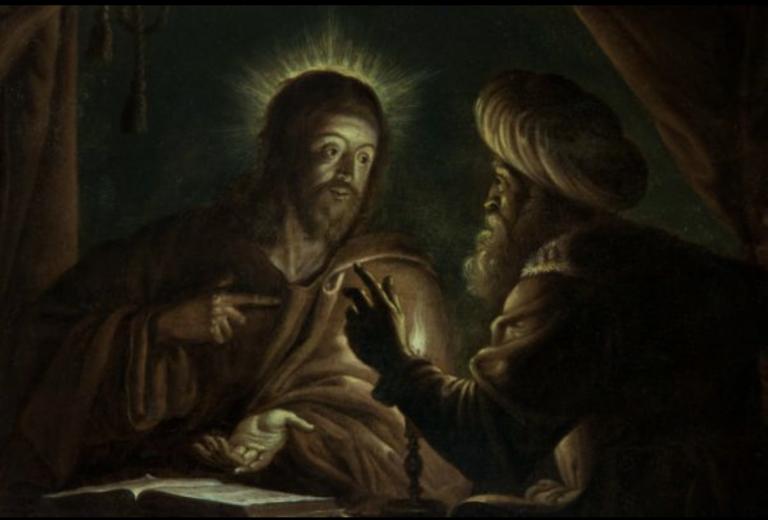
Whoever lives the truth comes to the light, so that his works may be clearly seen as done in God (John 3:21).
One of the more annoying aspects to the scriptural readings proclaimed at Mass is that the readings are rarely “complete.” With the exception of the passion narratives during Holy Week, most of the Gospel readings throughout the liturgical year have been pared down, essential details that are important to understanding the stories whittled away, perhaps in the interest of “saving time” during Mass.
Take today’s optional Gospel selection, John 3:14–21, for example. Last week’s optional Gospel selection was taken from John 2 and told the story of Jesus driving the money changers out of the Temple. In this week’s reading, we see Jesus lecturing Nicodemus, a Pharisee and teacher of Israel (John 3:1, 10) on those who prefer darkness to light because they don’t want the evil they do to be exposed to the light (John 3:19–20).
It’s no wonder then that homilists, in discussing today’s Gospel, prefer to zero in on John 3:16 and spend their seven to ten minutes offering comforting platitudes about God’s love, belief in Jesus, and the promise of heaven.
But if we move back to the start of chapter 3, John opens this story of Jesus’ encounter with Nicodemus with an important detail:
Now there was a man of the Pharisees, named Nicodemus, a ruler of the Jews. This man came to Jesus by night and said to him, “Rabbi, we know that you are a teacher come from God; for no one can do these signs that you do, unless God is with him” (John 3:1–2).
This man came to Jesus by night.
When noted at all, this detail is often portrayed negatively. Nicodemus was afraid of his fellow Pharisees, we’re told. Or perhaps the night is supposed to be a symbol for Nicodemus’s spiritual condition. But John never shows Nicodemus as having been afraid to approach Jesus or worried about his fellow Pharisees’ opinion of him. He simply says that Nicodemus first found Jesus in the dark. And, as we’ll see, John portrays Nicodemus as one of the heroes of his Gospel, not as a villain or as an ignorant fool.
This detail that Jesus and Nicodemus met at night frames the rest of the story, from Jesus’ talk of light and darkness to his prediction of the kind of death he would suffer to his reassurance to Nicodemus that he had come to save the world, not to condemn it.
Perhaps, then, it is worth thinking about how we find things in the dark.
Have you ever awakened in the middle of the night and needed to get up and do something? If you’re like me, you don’t want to turn on the light. You prefer to use your knowledge of the layout of your house to get what you need in the dark. So, you remember where all the obstacles are, carefully skirt them, find the doors, move quietly so as not to wake anyone else. You can do what you need to do, whether it’s a trip to the bathroom or to the kitchen for a midnight snack, without much trouble.
Why? You’re comfortable in the dark. You know there aren’t any monsters under the bed or murderers in the basement. At most, you risk stubbing your toe on your nightstand. Best of all, you’re more likely to stay half-asleep and return to sleep more quickly once you’re back under the covers.
That may be Jesus’ point in warning Nicodemus about deeds done in darkness. It’s not that people become more evil in the dark; it’s that they risk becoming more comfortable in the dark and unwilling to step into the light when they find it. Light wakes us up, it hurts our eyes, we have to take time to adjust to it.
But once we do, once we are in the light, we see everything more clearly.
Nicodemus doesn’t fade back into the darkness after his encounter with Jesus. He remains a quiet presence throughout the rest of John’s Gospel.
When the chief priests and the Pharisees were accusing their Temple guard of dereliction of duty for being unwilling to arrest Jesus (John 7:43–49), Nicodemus spoke up in Jesus’ defense: “Does our law judge a man without first giving him a hearing and learning what he does?” (v. 51). Essentially, Nicodemus was asking his fellow rabbis and the priests to do what he’d done, to approach Jesus and ask him questions so that they might better understand Jesus before attempting to arrest him.
The religious leaders sneer at Nicodemus’s suggestion, saying, “Are you from Galilee too? Search and you will see that no prophet is to rise from Galilee” (v. 52), but note what happens next. They all went home (v. 53). Jesus was left in peace, for a while longer, to continue his ministry. It’s not that much of a stretch to speculate that Nicodemus saved Jesus’ life that day.
Eventually, though, Jesus’ hour would come, and he would have to suffer and die in the manner he predicted to Nicodemus by being “lifted up” on the cross (John 3:14). And on that day, when darkness covered the land at midday (Matt. 27:45, Mark 15:33), Nicodemus approached Jesus again. This time he wasn’t there to ask questions but to take action. He brought a hundred pounds worth of myrrh and aloe with which to anoint Jesus’ body before burial (John 19:39).
A hundred pounds worth of valuable myrrh and aloe? Where on earth did Nicodemus obtain it all and have it on hand for Jesus’ burial? Is it possible that after he met with Jesus he started preparing for Jesus’ death—deciding, perhaps, that if the day came that Nicodemus was no longer in a position to save Jesus’ life that he would at least make sure that Jesus would be laid to rest with honor?
Nicodemus’s story reminds us that Jesus will meet us wherever we are, even in darkness. He is the way, the truth, and the life (John 14:6) and sometimes we can only find the way under cover of darkness. But Jesus is also the light of the world (John 8:12). If we choose to stay with him, to walk with him the rest of the way, we’ll need to become comfortable with transitioning from darkness to the light.
Michelle Arnold was a staff apologist for Catholic Answers, a Catholic apologetics apostolate in the Diocese of San Diego, California, from 2003–2020, answering questions from clients about the Catholic faith via phone, letter, email, and online platforms. She contributed essays to Catholic Answers’ online and print magazines, and wrote four booklets for the apostolate’s 20 Answers series. Her 20 Answers booklets were on Judaism, the New Age, witchcraft and the occult, and the Church’s liturgical year. Now a freelance writer, editor, and proofreader, Michelle Arnold has a blog at the Patheos Catholic channel. A portfolio of her published essays is available at Authory.
Previous Post

March 11, 2021
Keep Walking, Keep Letting Go
Next Post

March 15, 2021 Things Keeping Us Going for March 15th
Browse Our Archives
Select a Category Advent Approaching Mystery art Book Reviews Catholic Ghost Story Catholicism community Confession Current Events Dark Devotional Deconstruction Deconstruction Fellow Travelers I Want To Believe Interview Laudato Si Lent Mary Matthew's Letters Movie Reviews Music Reviews Our Charism Personal Essay Pilgrims Pope Francis Popular Piety Prayer Publishing Richard Beck Saints Satan Sheed and Ward Sick Pilgrim Charism Sick Pilgrim Chats Sick Pilgrim Events Sick Pilgrim Travelin' Medicine Show Sick Pilgrimage to The West Sick Pilgrims Small Joys Spiritual Autobiography Spooky Files of Ave Maria Magazine Spooky October Spooky Pilgrim Spooky Pilgrimage Strange Journey The Inklings Things Keeping Us Going Trying to Say God TV Reviews Uncategorized women in the Catholic Church Wonder Podcast Write the Vision
Select a Month February 2022 January 2022 December 2021 November 2021 October 2021 September 2021 August 2021 July 2021 June 2021 May 2021 April 2021 March 2021 February 2021 January 2021 December 2020 April 2020 March 2020 February 2020 January 2020 December 2019 October 2019 September 2019 July 2019 June 2019 May 2019 April 2019 March 2019 February 2019 January 2019 December 2018 November 2018 October 2018 September 2018 August 2018 July 2018 June 2018 May 2018 April 2018 March 2018 February 2018 January 2018 December 2017 November 2017 October 2017 September 2017 August 2017 July 2017 June 2017 May 2017 April 2017 March 2017 February 2017 January 2017 December 2016 November 2016 October 2016 September 2016 August 2016 July 2016 June 2016 May 2016 April 2016 March 2016 February 2016 January 2016 December 2015
Follow Us!
TAKE THE
Religious Wisdom Quiz
True or False: According to 1 John, God is love, and whoever abides in love abides in God.
Select your answer to see how you score.
TRUE FALSE
Related posts from Sick Pilgrim

Dark Devotional: The Firelight of Life

Dark Devotional: Let Me Smite Him

Dark Devotional: Woe to Me, for I Have...

TRENDING AT PATHEOS Catholic

Rejecting Doom: Christian Hope And Human Action
Christianity is a religion of hope. We are to have hope and...

It’s What Comes From Within Which Matters
One of the most difficult things for us to understand is why...

Why I Choose the Eucharist Over the Sermon
Choose the Eucharist, Not the Sermon What are we supposed to get...

5 Design Elements Found in Spiritually Rooted Homes
Putting Spirituality Into Home Decor Our homes are more than our living...

Credo: A Story of God Told with the...
About 10 years ago, I began to imagine a personal "Credo" that...

The Anatomy of Divine Revelation in Catholic Thought
The claim that God has made Himself known to human beings is...
view all Catholic blogs
Ad-Free & Subscriber Log-In Subscription Support
- About Us
- 2026 Calendar
- Videos
- Podcasts
- Library of World Religions
- Faith In Media Tracker
- Advertise With Us
- Write for Us
- Privacy Policy
- Terms of Service
- Do Not Sell My Data
- Contact Us
- Radiant Digital
- Manage Newsletter Subscriptions
- Unsubscribe From Notifications
- Sitemap
Copyright 2008-2026, Patheos. All rights reserved.
Subscription Support Ad-Free & Subscriber Log-In
Follow Patheos