
BuddhistCatholicContemplativeEvangelicalGeneral ChristianHinduJewishLatter-day SaintMuslimNew VisionsProgressive Christian
Beliefs
- Buddhist
- Catholic
- Contemplative
- Evangelical
- General Christian
- Hindu
- Jewish
- Latter-day Saint
- More Voices
- Muslim
- New Visions
- Pagan
- Progressive Christian
Topics
- Religion News
- Food and Religion
- Sports and Religion
- Religious Art
- Religious Music and Entertainment
- Religious Events
- History and Religion
- Style and Religion
- Politics and Religion
- Women in Religion
- Recreation Outdoors and Religion
- Business Finance and Religion
- Careers Workplace and Religion
- Education and Religion
- Family Parenting and Religion
- Health Fitness and Religion
- Home and Religion
- Relationships and Religion
- Technology and Religion
- Travel and Religion
Columnists
- Buddhist Columnists
- Business Finance and Religion Columnists
- Careers Workplace and Religion Columnists
- Catholic Columnists
- Contemplative Columnists
- Education and Religion Columnists
- Evangelists Columnists
- Family Parenting and Religion Columnists
- General Christian Columnists
- Health Fitness and Religion Columnists
- Hindu Columnists
- History and Religion Columnists
- Home and Religion Columnists
- Jewish Columnists
- More Voices Columnists
- Latter Day Columnists
- Muslim Columnists
- New Visions Columnists
- Nonreligious Columnists
- Pagan Columnists
- Politics and Religion Columnists
- Progressive Columnists
- Recreation Outdoors and Religion Columnists
- Relationships and Religion Columnists
- Religion News Columnists
- Religious Art Columnists
- Religious Events Columnists
- Religious Music and Entertainment Columnists
- Sports and Religion Columnists
- Style and Religion Columnists
- Technology and Religion Columnists
- Travel and Religion Columnists
- Women in Religion Columnists
Resource Library
- 2026 Calendar
- Library of World Religions
- The 100 Most Holy Places on Earth
- Patheos Answers
- Podcasts
- Videos
- Faith Leaders Database
- Anglican Episcopalian
- Bahai
- Baptist
- Buddhism
- Christianity
- Confucianism
- Eastern Orthodoxy
- Hinduism
- Holiness and Pentecostal
- ISKCON
- Islam
- Judaism
- Lutheran
- Methodist
- The Church of Jesus Christ of Latter-day Saints
- New Age
- Paganism
- Presbytarian and Reformed
- Protestantism
- Religion Behind the Scenes
- Roman Catholic
- Scientology
- Shia Islam
- Sikhism
- Sufism
- Sunni Islam
- Taoism
- Zen
- See all religions
Research Tools
 Ad-Free & Subscriber Log-In Subscription Support
Ad-Free & Subscriber Log-In Subscription Support
Follow Patheos 

- Trending:
- Forgiveness
- |
- Marriage
- |
- Consciousness
- |
- Death Penalty
- |
- Election
- |
- Halloween
 Sick Pilgrim
- Home
- Catholic
- Untangling the Bones
Untangling the Bones
Last updated on: October 31, 2019 at 11:58 am by Guest Contributor
Untangling the Bones 2019-10-31T11:58:32-05:00 Guest Contributor
Patheos Explore the world's faith through different perspectives on religion and spirituality! Patheos has the views of the prevalent religions and spiritualities of the world.
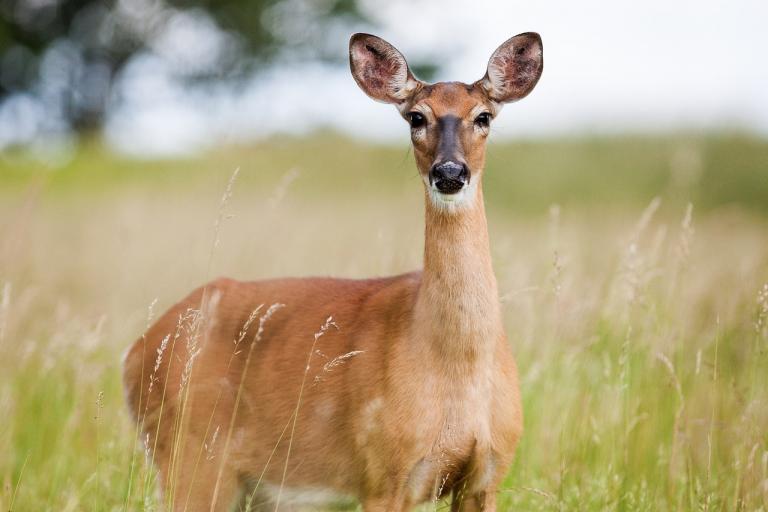
In the town where I grew up, the first day of doe hunting season was a school holiday. My grandfather wasn’t a hunter, but sure enough, every winter as the deer were shot, slaughtered, and processed, packages of venison would arrive from friends with too much meat for their freezers. The first time I ate deer, I loved it without knowing what it was. Of course, I didn’t know the loveable creature that we left stale bread in the back yard for was in the delicious stew I devoured from steaming plates on cold winter evenings. Once I found out it was deer – it was too late. I already loved it. There was an ambivalence about eating Bambi – or more accurately I suppose, Bambi’s mother – I loved the venison stew and other recipes that were part of our winter cuisine, but I hated the idea of someone purposefully taking the life of such a beautiful, peaceful creature.
In my ambivalence, I broached a conversation with my grandmother. It was February. The Pennsylvania mountain winter was in its peak of desolation. I looked out the window into the darkness and noticed the clock on the stove flashing 5:15 pm. Dicing carrots and potatoes for dinner, another venison stew taking shape, with a deep breath, I asked, “Do you ever feel bad for eating deer? They’re so beautiful and never hurt anyone?”
Turning to me and setting the knife on the counter, she said “No, not really. Though I understand what you’re asking. I don’t feel bad for eating the meat because if no deer were hunted, there would be an imbalance in the population, and there would be too many. If there’s not a balance of life and death in the wild, nothing can be healthy.” She also spoke about being grateful for the animal’s life and existence, and for its death, for through the death of its body, the deer nourished ours.
I thought I was asking her about how to be ok with eating the meat from a beautiful animal that died. I thought she was talking about one specific thing, one specific web of life that included both deer and me, reassuring me that the balance of deer and people, and everything in between, meant that some must die so others can be born and the balance remain. It made sense in my ten-year-old mind. I nodded and helped put the potatoes and carrots in the pot for the stew, the circle unbroken.
It was only years later, when I started seeing the skeletons, and entering the cycles of the living and the dying, crunching dry leaves with bones undisturbed beneath, that I realized she wasn’t just talking about deer, or even only about animals. Her words, “If there’s not a balance of life and death in the wild, nothing can be healthy,” resounded in my head. The meat was holy, and so was the death that gave it. The bones of the deer and the dead, slaughtered and scraped clean, are an invitation to weep with gratitude and joy over them. Bones are the stunning proof of life that hasn’t been destroyed. The deer is gone, her bones remain. Something new will be birthed from their decay.
Looking back on that conversation as an adult and not a child, a woman and not a girl, a parent and not a child, a person who has died and been reborn many times, who has lost everything except her own bones more than once, I see the deep wisdom of this woman who I knew but never knew and it steals my breath. The balance of life and death that keeps the whole web healthy? It’s not one thing, one place, one web. It’s everything that’s ever been and ever will be.
The earth, and everything in it, on it, and beneath it, participates in an endless cycle of life, death, and rebirth. Death is as important as life, as necessary and as terrible. One life lived well, involves many deaths and rebirths. The earth and its endless cycles of life, death, and rebirth, follow this pattern and we call it the seasons. Even in the dying of fall and the death of winter, the bones remain. Something stirs beneath the surface, patiently awaiting it’s time to bravely surface as something alive and ready to breathe again.
The wisdom of my grandmother isn’t limited to this one interaction; but what stays with me from her words is that without death, without gathering the bones of our world and our hearts and holding them close, embracing the fear of death and decay, we can’t cross the threshold into wholeness and new life, as individuals or as a planet. We must be willing to stoop down in the dirt and mud of the earth and our lives, to gather the bones with gentleness and care, to wash them of debris and cradle them as the treasure they are.
The bones hold the marrow of life, the secrets of what the Creator meant when She meant you, and me, and every being on earth. The bones contain what can’t be contained, they preserve what can’t be destroyed. They are beautiful, terrible beauty that we must be prepared for; a journey into the humus, dirt, and ash, the underworld where the bones live.
When I was in high school, a boy I liked was into hunting, so I pretended it was cool in the hopes he would like me (it didn’t work). This mostly involved looking at photos of deer carcasses in homeroom and trying not to vomit. It was the first time I’d seen the “in-between” process of how the deer went from, well, a deer, into the venison in my freezer. Blood, fur, sinew, bone, on display. It was disgusting and yet, I couldn’t look away.
Brave hearts, we can’t look away from the “in-between” processing of our souls, hearts, and bodies on this earth. The cycle of life, death, and rebirth never ends. The entirety of our lives on this earth when alive, and beneath it after death, is life, death, and rebirth happening around us, to us, and within us. To grip the life stage too tightly, fearful and cursing the death, is to refuse the in-between work of death that gives way to new life. New life can never come, except after a death. So it is in the created world, so it was with Christ, and so it is with us.
I died on my thirty-third birthday. It was during the third movement of Beethoven’s fifth symphony, which I was attending for my birthday, that my heart stopped beating. Making it to thirty-three years may seem insignificant to most people, but for me, it was a moment I both feared and believed would never happen. My mother died when she was thirty-two, a month shy of her thirty-third birthday. As I entered my thirties, a woman with three children aged 3 and under, I was drowning. Somehow, I made it to the middle of my thirty-second year when the panic attacks began.
Slight at first, but building with intensity, the smallest thing or an unexpected noise would send me reeling and my heart pounding, my body shaking. If my husband was ten minutes late getting home from work, I was convinced he was dead on the side of the road. Every ache or pain that I had led me to believe I must have cancer or another deadly disease. I was a ticking time bomb, not knowing then how common it is for people who have lost a parent young to experience anxiety approaching the age of the parent when they died.
The traumas were buried deep, and it would take years for me to accept the full weight of them and admit that my symptoms looked an awful lot like post-traumatic stress disorder, but that first day in therapy as a thirty-two-year-old woman convinced I or someone I loved was going to die soon, all I could do was open the door of my emotional landscape a sliver and catch a glimpse of the tangled, dirt-caked, and worm eaten bones of my life. For decades, I’d never let the death cycle do what it does, what it needs to do, so new life can emerge. The natural rhythms of my life were jammed with super-imposed ideas about death, the cyclical nature of life, and my connection with my own body’s sacred rhythms was severed. The bones of my trauma, broken, scattered, and neglected, were shoved into the recesses of my mind, heart, and soul, leaving me a husk of a woman, capable of living from only a fraction of myself. This is the inevitability of refusing to untangle the bones.
That day, listening to arguably the most awe-inspiring symphony ever penned, something happened within me. Awash in the miracle of music, having lived to out-live my mother, my heart stopped beating. Just for a second: Then the bones began to dance. “I am alive.” they whispered. “I am alive?” they asked one another. “I am alive!” they shouted at last. Still tangled, still disconnected, the music rattled their lifeless forms, activating what could not die entirely.
Tears in my eyes, leaning all the way forward to absorb as much of the evocative music as possible, a thought sprang to my mind. “I wonder if my mother ever saw a symphony? I wonder if she ever visited the Grand Canyon at sunset? Did she ever swim naked or roll in the creek bed, unashamed? Did she have enough sex? Did she enjoy it? How much of her short life did she live?” The thoughts tumbled out one after the other, mingled joy and sorrow.
“She’s hearing a symphony now” a voice floated on woodwind strains to my heart. “She’s hearing it now, with your ears. You are alive”, it said. “You are alive!” It screamed through the trumpets in movement two. The bones were alive, all the bones I’d ever hidden afraid to cradle and love into death, all the bones that had begged for new life. They were dirty and still broken, tangled and chaotic like fall leaves you’ve raked and children have jumped in. Scattered, but the beginning of a pattern emerges. A way forward is just visible at the edge of the shadow. That day was the moment of opening the door to the bones, of taking the first tentative step of bringing health and balance back into my own wilderness landscape. I was the in-between of that deer in the photo all those years ago. No longer who I was, not yet what I would become. It would take years, more deaths and rebirths for the work of untangling to truly begin. Once begun, it never truly ends. There are always new deaths and new things to be birthed.
Writing from my home in the northern hemisphere where it is the dying days of Earth, when the October ground is littered with the tiny deaths we love and call leaves, the trees are bursting into flame. They burn themselves, allowing destruction for the sake of what comes next. Every fall, I watch the earth untangle its own bones, not fighting and raging, but sighing and releasing, and think of my grandmother’s words all these years ago.
“If there’s not a balance of life and death in the wild, nothing can be healthy.”
May it be so, for you.
Sarah Babbs writes at the crossroads of creation spirituality, feminism, and memoir. Her forthcoming book, Elemental Faith, will be released in 2020 by Franciscan Media.
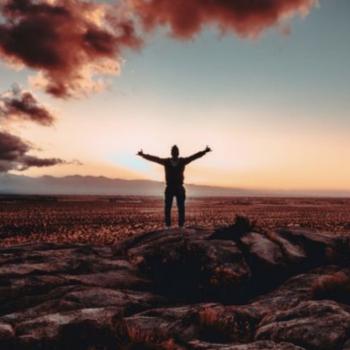
Image courtesy of Pixabay.
Previous Post
October 22, 2019
Iconoclasm and Misogyny at the Amazonian Synod
Next Post

December 24, 2019 For the Exiles on Christmas Eve
Browse Our Archives
Select a Category Advent Approaching Mystery art Book Reviews Catholic Ghost Story Catholicism community Confession Current Events Dark Devotional Deconstruction Deconstruction Fellow Travelers I Want To Believe Interview Laudato Si Lent Mary Matthew's Letters Movie Reviews Music Reviews Our Charism Personal Essay Pilgrims Pope Francis Popular Piety Prayer Publishing Richard Beck Saints Satan Sheed and Ward Sick Pilgrim Charism Sick Pilgrim Chats Sick Pilgrim Events Sick Pilgrim Travelin' Medicine Show Sick Pilgrimage to The West Sick Pilgrims Small Joys Spiritual Autobiography Spooky Files of Ave Maria Magazine Spooky October Spooky Pilgrim Spooky Pilgrimage Strange Journey The Inklings Things Keeping Us Going Trying to Say God TV Reviews Uncategorized women in the Catholic Church Wonder Podcast Write the Vision
Select a Month February 2022 January 2022 December 2021 November 2021 October 2021 September 2021 August 2021 July 2021 June 2021 May 2021 April 2021 March 2021 February 2021 January 2021 December 2020 April 2020 March 2020 February 2020 January 2020 December 2019 October 2019 September 2019 July 2019 June 2019 May 2019 April 2019 March 2019 February 2019 January 2019 December 2018 November 2018 October 2018 September 2018 August 2018 July 2018 June 2018 May 2018 April 2018 March 2018 February 2018 January 2018 December 2017 November 2017 October 2017 September 2017 August 2017 July 2017 June 2017 May 2017 April 2017 March 2017 February 2017 January 2017 December 2016 November 2016 October 2016 September 2016 August 2016 July 2016 June 2016 May 2016 April 2016 March 2016 February 2016 January 2016 December 2015
Follow Us!
TAKE THE
Religious Wisdom Quiz
Who interpreted Nebuchadnezzar's dream of a statue?
Select your answer to see how you score.
Joseph Abraham Daniel Ezekiel
Related posts from Sick Pilgrim
Things Keeping Us Going: It's Been Raining the...
Dark Devotional: Your Daughters Shall Prophesy
Dark Devotional: Rejoice and Be Glad
Dark Devotional: Practicing for Death....And Life
TRENDING AT PATHEOS Catholic

The Parable Of The Sower And The Word...
One of Christ’s most famous parables is that of the sower who...

Rejecting Doom: Christian Hope And Human Action
Christianity is a religion of hope. We are to have hope and...

Why I Choose the Eucharist Over the Sermon
Choose the Eucharist, Not the Sermon What are we supposed to get...

5 Design Elements Found in Spiritually Rooted Homes
Putting Spirituality Into Home Decor Our homes are more than our living...

Credo: A Story of God Told with the...
About 10 years ago, I began to imagine a personal "Credo" that...

The Anatomy of Divine Revelation in Catholic Thought
The claim that God has made Himself known to human beings is...
view all Catholic blogs
Ad-Free & Subscriber Log-In Subscription Support
- About Us
- 2026 Calendar
- Videos
- Podcasts
- Library of World Religions
- Faith In Media Tracker
- Advertise With Us
- Write for Us
- Privacy Policy
- Terms of Service
- Do Not Sell My Data
- Contact Us
- Radiant Digital
- Manage Newsletter Subscriptions
- Unsubscribe From Notifications
- Sitemap
Copyright 2008-2026, Patheos. All rights reserved.
Subscription Support Ad-Free & Subscriber Log-In
Follow Patheos