
BuddhistCatholicContemplativeEvangelicalGeneral ChristianHinduJewishLatter-day SaintMuslimNew VisionsProgressive Christian
Beliefs
- Buddhist
- Catholic
- Contemplative
- Evangelical
- General Christian
- Hindu
- Jewish
- Latter-day Saint
- More Voices
- Muslim
- New Visions
- Pagan
- Progressive Christian
Topics
- Religion News
- Food and Religion
- Sports and Religion
- Religious Art
- Religious Music and Entertainment
- Religious Events
- History and Religion
- Style and Religion
- Politics and Religion
- Women in Religion
- Recreation Outdoors and Religion
- Business Finance and Religion
- Careers Workplace and Religion
- Education and Religion
- Family Parenting and Religion
- Health Fitness and Religion
- Home and Religion
- Relationships and Religion
- Technology and Religion
- Travel and Religion
Columnists
- Buddhist Columnists
- Business Finance and Religion Columnists
- Careers Workplace and Religion Columnists
- Catholic Columnists
- Contemplative Columnists
- Education and Religion Columnists
- Evangelists Columnists
- Family Parenting and Religion Columnists
- General Christian Columnists
- Health Fitness and Religion Columnists
- Hindu Columnists
- History and Religion Columnists
- Home and Religion Columnists
- Jewish Columnists
- More Voices Columnists
- Latter Day Columnists
- Muslim Columnists
- New Visions Columnists
- Nonreligious Columnists
- Pagan Columnists
- Politics and Religion Columnists
- Progressive Columnists
- Recreation Outdoors and Religion Columnists
- Relationships and Religion Columnists
- Religion News Columnists
- Religious Art Columnists
- Religious Events Columnists
- Religious Music and Entertainment Columnists
- Sports and Religion Columnists
- Style and Religion Columnists
- Technology and Religion Columnists
- Travel and Religion Columnists
- Women in Religion Columnists
Resource Library
- 2026 Calendar
- Library of World Religions
- The 100 Most Holy Places on Earth
- Patheos Answers
- Podcasts
- Videos
- Faith Leaders Database
- Anglican Episcopalian
- Bahai
- Baptist
- Buddhism
- Christianity
- Confucianism
- Eastern Orthodoxy
- Hinduism
- Holiness and Pentecostal
- ISKCON
- Islam
- Judaism
- Lutheran
- Methodist
- The Church of Jesus Christ of Latter-day Saints
- New Age
- Paganism
- Presbytarian and Reformed
- Protestantism
- Religion Behind the Scenes
- Roman Catholic
- Scientology
- Shia Islam
- Sikhism
- Sufism
- Sunni Islam
- Taoism
- Zen
- See all religions
Research Tools
 Ad-Free & Subscriber Log-In Subscription Support
Ad-Free & Subscriber Log-In Subscription Support
Follow Patheos 

- Trending:
- Forgiveness
- |
- Marriage
- |
- Consciousness
- |
- Death Penalty
- |
- Election
- |
- Halloween
 Sick Pilgrim
- Home
- Catholic
- Toni Morrison and the White Blindness of First Things
Toni Morrison and the White Blindness of First Things
Last updated on: February 12, 2020 at 11:48 am by Jessica Mesman Griffith
Toni Morrison and the White Blindness of First Things 2020-02-12T11:48:25-05:00 Jessica Mesman Griffith
Patheos Explore the world's faith through different perspectives on religion and spirituality! Patheos has the views of the prevalent religions and spiritualities of the world.
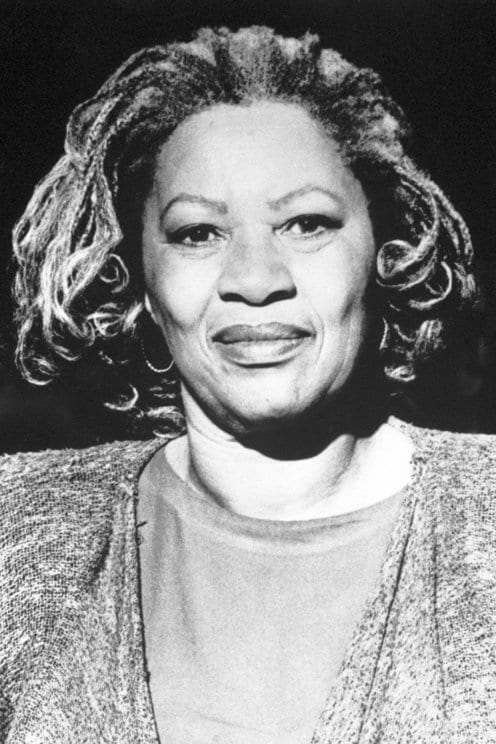
First Things has published an attempted takedown of the late Toni Morrison’s faith and writing, and it’s a breathtaking example of white people missing the point.
Senior editor Julia Yost, apparently weary of seeing tributes to and eulogies for the black woman who was arguably America’s greatest living writer–and a Catholic convert–accuses Toni Morrison, who died August 5, of having merely “distilled the spirituality of the suburbs” with her Nobel Prize-winning literature. Imagine the willful ignorance required to misread or misrepresent a novel grown from 400 years of oppression and the ongoing generational trauma of chattel slavery–a novel that is a foundational text for Black and Womanist Theology–as somehow being a watery distillation of suburban (read: white) spirituality.
Yost sneers at Morrison’s work as “not credally Christian but pop-gnostic. Pop-gnosticism is a cult by and for the bourgeoisie, an artifact of the worst early-Christian scholarship of the 1970s and the still worse late-Freudian psychology of the 1980s.”
Western art may have been born from the Catholic Church, but Black and Womanist Theology were born in part from art, and Morrison’s Beloved is in the canon. Morrison’s work has nothing to do with the “suburban” or the “bourgeois” or the “worst early-Christian scholarship” (again, read: white) spirituality. Toni Morrison–and her work–isn’t ours at all.
Yost goes on to yoke Morrison’s success to Oprah (who dares to be simultaneously rich, powerful, black, a woman, and encourage spiritual healing outside of institutional religion) and to sanctimoniously warn the First Things reader–overwhelmingly white, conservative, and Christian–who encounters her novels (again, as if Morrison wrote Beloved for white folks and our book clubs!) of Morrison’s gnosticism. What First Things seems to mean by gnosticism here is not specifically the Nag Hammadi texts but any expression of spirituality and theology that doesn’t center the “orthodox” white western experience.
I recently interviewed two scholars of African American literature and the arts–Biko Mandela Gray and Jessica Davenport–and as often does in conversations about Black and Womanist Theology, they turned to Beloved to express to me, a white woman, foundational differences in our spiritual experience. You can listen to that conversation here. They talked to me about how Black Theology has always reached beyond traditional religious and liturgical sources to music, art, dance, and literature to create and express the distinctive experience of black Christianity. Black people are producing—have always produced—creative works of theology out of necessity, because the black experience was misunderstood (at best), ignored, excluded and maligned by white Christians and white theology. All this work, Gray said, must be seriously considered within the mainstream Christian tradition if we are to dismantle white supremacy.
It’s not my place to say what black Christian faith is and isn’t, but it sure doesn’t look like Yost’s descriptions of gnosticism. If you want to learn more, read Womanist theologians like Katie Cannon, Teresa Frye Brown and Emilie Townes, and then read Beloved. It is profoundly embodied, experiential, and incarnational, not reliant on any secret or privileged knowledge, that would have been withheld from black communities of Christians anyway. Consider this passage, which Gray quoted to me from memory:
“In this here place, we flesh; flesh that weeps, laughs; flesh that dances on bare feet in grass. Love it. Love it hard. Yonder they do not love your flesh. They despise it. ”
Morrison’s work is very much about what it means “to flesh”—to mother, to love, to worship, to live in a black body, a body that wasn’t welcome, to put it mildly, in white institutionalized religion.
And then go read Yost’s article as a classic example of the white supremacy we are working against in the church. In it you’ll see a glaring blindspot. This is white supremacy: imagining that everything that is produced is produced with you in mind, with you as the assumed audience and judge.

About Jessica Mesman
Jessica Mesman Griffith is a writer specializing in Catholicism and culture. She is also an editor at Image Journal. Her book, Love and Salt: A Spiritual Memoir in Letters, won the 2014 Christopher Award for literature that affirms the highest values of the human spirit. Her home on the internet is www.jessicamesman.com. You can read more about the author here.
Previous Post
July 2, 2019
Dark Devotional: Let the Dead Bury Their Dead
Next Post

September 27, 2019 What I Learned from Dating a Catholic Priest: Part 2
Browse Our Archives
Select a Category Advent Approaching Mystery art Book Reviews Catholic Ghost Story Catholicism community Confession Current Events Dark Devotional Deconstruction Deconstruction Fellow Travelers I Want To Believe Interview Laudato Si Lent Mary Matthew's Letters Movie Reviews Music Reviews Our Charism Personal Essay Pilgrims Pope Francis Popular Piety Prayer Publishing Richard Beck Saints Satan Sheed and Ward Sick Pilgrim Charism Sick Pilgrim Chats Sick Pilgrim Events Sick Pilgrim Travelin' Medicine Show Sick Pilgrimage to The West Sick Pilgrims Small Joys Spiritual Autobiography Spooky Files of Ave Maria Magazine Spooky October Spooky Pilgrim Spooky Pilgrimage Strange Journey The Inklings Things Keeping Us Going Trying to Say God TV Reviews Uncategorized women in the Catholic Church Wonder Podcast Write the Vision
Select a Month February 2022 January 2022 December 2021 November 2021 October 2021 September 2021 August 2021 July 2021 June 2021 May 2021 April 2021 March 2021 February 2021 January 2021 December 2020 April 2020 March 2020 February 2020 January 2020 December 2019 October 2019 September 2019 July 2019 June 2019 May 2019 April 2019 March 2019 February 2019 January 2019 December 2018 November 2018 October 2018 September 2018 August 2018 July 2018 June 2018 May 2018 April 2018 March 2018 February 2018 January 2018 December 2017 November 2017 October 2017 September 2017 August 2017 July 2017 June 2017 May 2017 April 2017 March 2017 February 2017 January 2017 December 2016 November 2016 October 2016 September 2016 August 2016 July 2016 June 2016 May 2016 April 2016 March 2016 February 2016 January 2016 December 2015
Follow Us!
TAKE THE
Religious Wisdom Quiz
I was called three times in the night before I realized it was the Lord speaking to me. Who am I?
Select your answer to see how you score.
Eli Samuel David Saul
Related posts from Sick Pilgrim
TKUG--Rev. Dr. Martin Luther King, Jr. Edition
Book Recommendation: Meditations on the Way of the...
The Strangeness of Mary's Body

Miss Fourth of July by Joanna Penn Cooper
TRENDING AT PATHEOS Catholic

Rejecting Doom: Christian Hope And Human Action
Christianity is a religion of hope. We are to have hope and...

It’s What Comes From Within Which Matters
One of the most difficult things for us to understand is why...

Why I Choose the Eucharist Over the Sermon
Choose the Eucharist, Not the Sermon What are we supposed to get...

5 Design Elements Found in Spiritually Rooted Homes
Putting Spirituality Into Home Decor Our homes are more than our living...

Credo: A Story of God Told with the...
About 10 years ago, I began to imagine a personal "Credo" that...

The Anatomy of Divine Revelation in Catholic Thought
The claim that God has made Himself known to human beings is...
view all Catholic blogs
Ad-Free & Subscriber Log-In Subscription Support
- About Us
- 2026 Calendar
- Videos
- Podcasts
- Library of World Religions
- Faith In Media Tracker
- Advertise With Us
- Write for Us
- Privacy Policy
- Terms of Service
- Do Not Sell My Data
- Contact Us
- Radiant Digital
- Manage Newsletter Subscriptions
- Unsubscribe From Notifications
- Sitemap
Copyright 2008-2026, Patheos. All rights reserved.
Subscription Support Ad-Free & Subscriber Log-In
Follow Patheos