
BuddhistCatholicContemplativeEvangelicalGeneral ChristianHinduJewishLatter-day SaintMuslimNew VisionsProgressive Christian
Beliefs
- Buddhist
- Catholic
- Contemplative
- Evangelical
- General Christian
- Hindu
- Jewish
- Latter-day Saint
- More Voices
- Muslim
- New Visions
- Pagan
- Progressive Christian
Topics
- Religion News
- Food and Religion
- Sports and Religion
- Religious Art
- Religious Music and Entertainment
- Religious Events
- History and Religion
- Style and Religion
- Politics and Religion
- Women in Religion
- Recreation Outdoors and Religion
- Business Finance and Religion
- Careers Workplace and Religion
- Education and Religion
- Family Parenting and Religion
- Health Fitness and Religion
- Home and Religion
- Relationships and Religion
- Technology and Religion
- Travel and Religion
Columnists
- Buddhist Columnists
- Business Finance and Religion Columnists
- Careers Workplace and Religion Columnists
- Catholic Columnists
- Contemplative Columnists
- Education and Religion Columnists
- Evangelists Columnists
- Family Parenting and Religion Columnists
- General Christian Columnists
- Health Fitness and Religion Columnists
- Hindu Columnists
- History and Religion Columnists
- Home and Religion Columnists
- Jewish Columnists
- More Voices Columnists
- Latter Day Columnists
- Muslim Columnists
- New Visions Columnists
- Nonreligious Columnists
- Pagan Columnists
- Politics and Religion Columnists
- Progressive Columnists
- Recreation Outdoors and Religion Columnists
- Relationships and Religion Columnists
- Religion News Columnists
- Religious Art Columnists
- Religious Events Columnists
- Religious Music and Entertainment Columnists
- Sports and Religion Columnists
- Style and Religion Columnists
- Technology and Religion Columnists
- Travel and Religion Columnists
- Women in Religion Columnists
Resource Library
- 2026 Calendar
- Library of World Religions
- The 100 Most Holy Places on Earth
- Patheos Answers
- Podcasts
- Videos
- Faith Leaders Database
- Anglican Episcopalian
- Bahai
- Baptist
- Buddhism
- Christianity
- Confucianism
- Eastern Orthodoxy
- Hinduism
- Holiness and Pentecostal
- ISKCON
- Islam
- Judaism
- Lutheran
- Methodist
- The Church of Jesus Christ of Latter-day Saints
- New Age
- Paganism
- Presbytarian and Reformed
- Protestantism
- Religion Behind the Scenes
- Roman Catholic
- Scientology
- Shia Islam
- Sikhism
- Sufism
- Sunni Islam
- Taoism
- Zen
- See all religions
Research Tools
 Ad-Free & Subscriber Log-In Subscription Support
Ad-Free & Subscriber Log-In Subscription Support
Follow Patheos 

- Trending:
- Forgiveness
- |
- Marriage
- |
- Consciousness
- |
- Death Penalty
- |
- Election
- |
- Halloween
 Sick Pilgrim
- Home
- Catholic
- Strange Bodies, Strange Questions
Strange Bodies, Strange Questions
Last updated on: December 11, 2018 at 9:56 am by Maren Grossman
Strange Bodies, Strange Questions 2018-12-11T09:56:01-05:00 Maren Grossman
Patheos Explore the world's faith through different perspectives on religion and spirituality! Patheos has the views of the prevalent religions and spiritualities of the world.
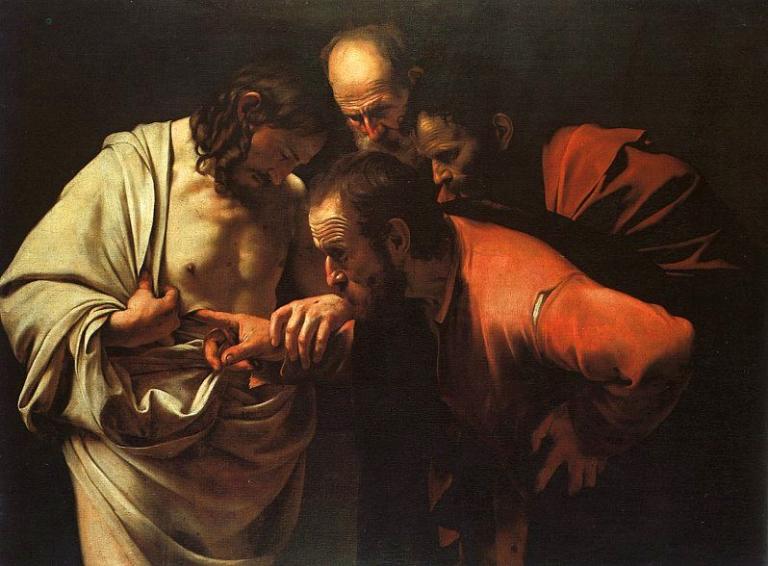
“What about the self as the grotesque?. What happens when that category is applied to ourselves, as opposed to when we apply it to something other? What happens when we begin to see ourselves as the other?”
These questions that really struck me when I heard them. They’ve stayed with me, partly because of the way I experience myself. As someone who is extremely introverted I’m used to seeing myself from the outside, feeling like I’m outside the group, or out of place. There is a sense of self-alienation that goes along with feeling alienated from other people.
But the other aspect of this question that really struck me was the way in which it played into questions about gender. I was initially reluctant to make the claim that it is a gendered thing to see oneself and one’s body as grotesque or as strange. It seems like there are a lot of factors that could lead to this sense.
But the thing that kept happening when I talked to people about this idea was that women immediately and universally knew what I was talking about when I talked about seeing oneself and one’s body as terra incognita. I barely had to explain the concept to them. They knew. They had their own examples of times that they felt alienated from their bodies, and their examples always included things that are unique to women’s bodies – menstruation, childbirth, gender specific illnesses.
This happened across the ideological spectrum. It wasn’t just self proclaimed feminists who identified with this theme. One woman (who absolutely would never describe herself as a feminist) got very heated when she pointed out that women live with feelings of self-alienation every day and no one takes it seriously, but that when a man writes about himself as the grotesque, it is considered great art. Franz Kafka may write about a man who wakes up to discover that he is a bug and call it The Metamorphosis, but, for women, sometimes that’s just called ‘waking up.’
As I said, the women got it. But the men generally didn’t. Talking about this theme with men generally led to blank stares. Guys tended to have a lot of questions about what precisely women felt alienated about. What exactly was it that was unknown about our bodies? Can we really say that our bodies are always changing when we have a menstrual cycle? A cycle is predictable, after all. And so on.
The conversations I’ve had lead me to think that experiencing oneself and one’s body as strange and grotesque is just part of having a woman’s body.
To some extent our attitude towards our own bodies is surely influenced by our cultural context and attitudes. But to what extent, if any, is our experience simply a reaction to the bare facts about female biology? Maybe part of having a cyclical body is just that you always feel a little strange because your body is always changing? Maybe part of being a body that menstruates is just that blood is gross and so you’re a little gross?
***
These were the thoughts that were rattling around in my brain at the Convivium conference. One question that arose in the panel on women’s bodies was “What practices or ideas or writers are restorative for women? What helps us move beyond this sense of alienation, and what helps us to accept our bodies and experience a sense of integration with our bodies instead of separation?”
Jessica wrote about how art can challenge this sense of alienation, particularly art that might shock our sensibilities. The disgust or discomfort that marks our reaction to certain images might make us ask why we have this reaction. We might find that an image that shocks actually reveals something alarming about the attitudes and assumptions we have about our own bodies.
Story is another space in which we can move away from this attitude towards ourselves. Through story, and through conversation, we can explore and tease out the things that are taken for granted in our own attitudes. A friend pointed out that a story about a dog stealing a steak from a counter is very different from a story about a dog pulling a used maxi-pad out of the bathroom garbage can.
Another friend related that a seminarian friend had told her that he had been advised, in seminary, to always keep a table between himself and any women he happened to be alone with.
There is something “extra” about women in the cultural imagination, and this is uncovered through shared stories. It isn’t just about blood and the way we respond to biological realities. When we make the choice to prioritize our own stories, to speak and write about them, it can be healing.
I believe that all this is true, and yet these questions about the body and about healing have been exacerbated for me by something that someone said at the conference: What about the sense of our bodies as being strange and wondrous?
This question stumped me. So much so that I couldn’t even really grasp the significance of the question for several days. Strange and wondrous instead of strange and grotesque? I couldn’t begin to imagine what she meant.
That isn’t strictly true. I’m familiar with a sort of hagiography of women’s bodies when it comes to motherhood. Motherhood is strange and wondrous. Pregnancy is a sort of holy mystery. Women have a special gift in their ability to bring new life to the world. All these things may be true, and yet, women are not always pregnant. Women do not always become mothers. Being female is a larger category than being a mother.
What was so fascinating to me about the question about our bodies being strange and wondrous, was that it was clear that the question did not refer to ideals surrounding motherhood. There was a recognition that pregnancy and motherhood are not the same thing as being-in-a-female-body. And yet, the argument was that there is something wondrous there, something strange, something holy.
A new question has arisen for me. What would a restoration of women’s relationship to our bodies look like? Will it involve accepting ourselves as normal, and renegotiating our idea of “normal?” Or will we always see ourselves as a little strange, but learn to see that as something wondrous, and not as something grotesque?
This question seems particularly relevant as we begin Advent. We are in a season that anticipates and celebrates the Incarnation. We reflect on God-made-man. We acknowledge that God has a human body. And yet, we haven’t really come to terms with the weirdness of our own embodied nature. We worship a God who became like us, and yet in taking on our flesh, he took on something that we ourselves have yet to understand. Gnosticism is a tempting heresy because it tells us what we already believe – that our bodies are gross or wrong or broken. Like my friend at Convivium, the Incarnation challenges me to examine how I think about bodies – women’s bodies, my own body. We often say that through the Incarnation, Christ took on our mortal grossness. Perhaps this is looking at things the wrong way round. We could also say that the Incarnation reveals something about our bodies that we did not know: that bodies are to be a site of the wondrous, of the holy. Even women’s bodies.
Previous Post
November 19, 2018
The Strangeness of Mary's Body
Next Post
December 18, 2018 Top 10 Holiday Gifts for Sick Pilgrims
Browse Our Archives
Select a Category Advent Approaching Mystery art Book Reviews Catholic Ghost Story Catholicism community Confession Current Events Dark Devotional Deconstruction Deconstruction Fellow Travelers I Want To Believe Interview Laudato Si Lent Mary Matthew's Letters Movie Reviews Music Reviews Our Charism Personal Essay Pilgrims Pope Francis Popular Piety Prayer Publishing Richard Beck Saints Satan Sheed and Ward Sick Pilgrim Charism Sick Pilgrim Chats Sick Pilgrim Events Sick Pilgrim Travelin' Medicine Show Sick Pilgrimage to The West Sick Pilgrims Small Joys Spiritual Autobiography Spooky Files of Ave Maria Magazine Spooky October Spooky Pilgrim Spooky Pilgrimage Strange Journey The Inklings Things Keeping Us Going Trying to Say God TV Reviews Uncategorized women in the Catholic Church Wonder Podcast Write the Vision
Select a Month February 2022 January 2022 December 2021 November 2021 October 2021 September 2021 August 2021 July 2021 June 2021 May 2021 April 2021 March 2021 February 2021 January 2021 December 2020 April 2020 March 2020 February 2020 January 2020 December 2019 October 2019 September 2019 July 2019 June 2019 May 2019 April 2019 March 2019 February 2019 January 2019 December 2018 November 2018 October 2018 September 2018 August 2018 July 2018 June 2018 May 2018 April 2018 March 2018 February 2018 January 2018 December 2017 November 2017 October 2017 September 2017 August 2017 July 2017 June 2017 May 2017 April 2017 March 2017 February 2017 January 2017 December 2016 November 2016 October 2016 September 2016 August 2016 July 2016 June 2016 May 2016 April 2016 March 2016 February 2016 January 2016 December 2015
Follow Us!
TAKE THE
Religious Wisdom Quiz
What small part of the body does James say is a restless evil, full of deadly poison?
Select your answer to see how you score.
The eye The tongue The heart The hand
Related posts from Sick Pilgrim
Dark Devotional: The Virgin Mary's Guide to Biblical...
Dark Devotional: Mary, Motherhood, and Mixed Feelings

Second Sunday in Advent: Let Me Love You...
Dark Devotional: Everything Is Naked
TRENDING AT PATHEOS Catholic

Rejecting Doom: Christian Hope And Human Action
Christianity is a religion of hope. We are to have hope and...

It’s What Comes From Within Which Matters
One of the most difficult things for us to understand is why...

Why I Choose the Eucharist Over the Sermon
Choose the Eucharist, Not the Sermon What are we supposed to get...

5 Design Elements Found in Spiritually Rooted Homes
Putting Spirituality Into Home Decor Our homes are more than our living...

Credo: A Story of God Told with the...
About 10 years ago, I began to imagine a personal "Credo" that...

The Anatomy of Divine Revelation in Catholic Thought
The claim that God has made Himself known to human beings is...
view all Catholic blogs
Ad-Free & Subscriber Log-In Subscription Support
- About Us
- 2026 Calendar
- Videos
- Podcasts
- Library of World Religions
- Faith In Media Tracker
- Advertise With Us
- Write for Us
- Privacy Policy
- Terms of Service
- Do Not Sell My Data
- Contact Us
- Radiant Digital
- Manage Newsletter Subscriptions
- Unsubscribe From Notifications
- Sitemap
Copyright 2008-2026, Patheos. All rights reserved.
Subscription Support Ad-Free & Subscriber Log-In
Follow Patheos