
BuddhistCatholicContemplativeEvangelicalGeneral ChristianHinduJewishLatter-day SaintMuslimNew VisionsProgressive Christian
Beliefs
- Buddhist
- Catholic
- Contemplative
- Evangelical
- General Christian
- Hindu
- Jewish
- Latter-day Saint
- More Voices
- Muslim
- New Visions
- Pagan
- Progressive Christian
Topics
- Religion News
- Food and Religion
- Sports and Religion
- Religious Art
- Religious Music and Entertainment
- Religious Events
- History and Religion
- Style and Religion
- Politics and Religion
- Women in Religion
- Recreation Outdoors and Religion
- Business Finance and Religion
- Careers Workplace and Religion
- Education and Religion
- Family Parenting and Religion
- Health Fitness and Religion
- Home and Religion
- Relationships and Religion
- Technology and Religion
- Travel and Religion
Columnists
- Buddhist Columnists
- Business Finance and Religion Columnists
- Careers Workplace and Religion Columnists
- Catholic Columnists
- Contemplative Columnists
- Education and Religion Columnists
- Evangelists Columnists
- Family Parenting and Religion Columnists
- General Christian Columnists
- Health Fitness and Religion Columnists
- Hindu Columnists
- History and Religion Columnists
- Home and Religion Columnists
- Jewish Columnists
- More Voices Columnists
- Latter Day Columnists
- Muslim Columnists
- New Visions Columnists
- Nonreligious Columnists
- Pagan Columnists
- Politics and Religion Columnists
- Progressive Columnists
- Recreation Outdoors and Religion Columnists
- Relationships and Religion Columnists
- Religion News Columnists
- Religious Art Columnists
- Religious Events Columnists
- Religious Music and Entertainment Columnists
- Sports and Religion Columnists
- Style and Religion Columnists
- Technology and Religion Columnists
- Travel and Religion Columnists
- Women in Religion Columnists
Resource Library
- 2026 Calendar
- Library of World Religions
- The 100 Most Holy Places on Earth
- Patheos Answers
- Podcasts
- Videos
- Faith Leaders Database
- Anglican Episcopalian
- Bahai
- Baptist
- Buddhism
- Christianity
- Confucianism
- Eastern Orthodoxy
- Hinduism
- Holiness and Pentecostal
- ISKCON
- Islam
- Judaism
- Lutheran
- Methodist
- The Church of Jesus Christ of Latter-day Saints
- New Age
- Paganism
- Presbytarian and Reformed
- Protestantism
- Religion Behind the Scenes
- Roman Catholic
- Scientology
- Shia Islam
- Sikhism
- Sufism
- Sunni Islam
- Taoism
- Zen
- See all religions
Research Tools
 Ad-Free & Subscriber Log-In Subscription Support
Ad-Free & Subscriber Log-In Subscription Support
Follow Patheos 

- Trending:
- Forgiveness
- |
- Marriage
- |
- Consciousness
- |
- Death Penalty
- |
- Election
- |
- Halloween
 Sick Pilgrim
- Home
- Catholic
- The Mothers at the Border Are Named Jochaved
The Mothers at the Border Are Named Jochaved
Last updated on: July 11, 2018 at 2:58 pm by Guest Contributor
The Mothers at the Border Are Named Jochaved 2018-07-11T14:58:11-05:00 Guest Contributor
Patheos Explore the world's faith through different perspectives on religion and spirituality! Patheos has the views of the prevalent religions and spiritualities of the world.
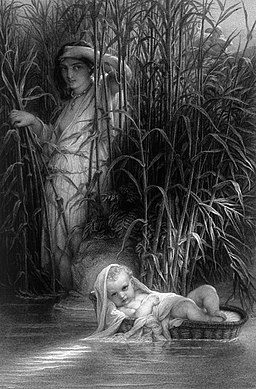
Like many, I’ve been deeply grieved by the policy of family separation at the border. For weeks I’ve cast about looking for a handhold, for an idea of what to do, for who I am to be during a desperate time like this. Like many of us, I’ve come up short. Somehow the drumbeat of “keep calling, keep writing, hold steady” has weakened under the constant stream of heartbreak being perpetrated at my border – in my name, no less. In the name of “protecting” me and my own child.
I know the mothers at the border.
I know them because they could be me in an instant, should my home turn violent, should my home be bombed, should my country fall to despotism.
I know them, too, because they are in my Christian scriptures.
They are Jocheved – mother of Moses.
Jocheved, who knew that her child was no longer safe in her arms due to the command of Pharaoh, who demanded that the children of Israel be slaughtered to maintain his power.
Perhaps you, too, see a theme here. Men in power, leading nations whose grasp on wealth was predicated on the oppression and terrorization of the marginalized in their midst, were afraid of children. And they mobilized their forces against those children.
Children, deemed a threat.
Children, kept in cages.
Children, forcibly removed from their parents, parents forced to flee to keep them in their arms.
Children.
Some of us have forgotten the story, or perhaps never heard it from the beginning. (Exodus 1:15-2:10) Pharaoh ordered that Hebrew boy-children should be slaughtered by midwives at their birth. Before we go any further, let us get one thing crystal clear: Pharoah didn’t give this decree because he categorically hated baby boys.
He gave this decree because he loved his life, his wealth, his power, his privilege so much that he would do anything to preserve it – and extend it.
His family and colleagues loved their lifestyle, wealth, power and privilege so much that they were willing to ignore what was being done in their name, order to preserve it.
The Egyptians of Exodus didn’t hate babies – they just loved their lives. And Pharaoh wanted his legacy and his children to be secure. He regards the Hebrew slaves’ lives as less than those of those he loves. So, in this equation, genocide isn’t a deterrent. It’s an investment in the future prosperity of his nation.
So children are called dangerous. Children are looked at as “animals,” pests to be exterminated. And midwives are turned into exterminators, killing male children as they exit the womb. Presumably, the midwives were to tell the Hebrew mothers that their children had died in childbirth.
Except our scriptures tell us that this is not the prevailing story. The women say “No.”
Shiphrah and Puah are named here as “the Hebrew midwives,” and we don’t know whether that means they are midwives who are Hebrew slaves, or whether they were Egyptian women who serve as midwives to the Hebrew women. Either way, they refused Pharaoh’s orders and were shrewd while they did it. Shiphrah and Puah used Pharaoh’s own racism against him – they turned his weapon around and shielded the Hebrew infants. If the Hebrew women were “animals,” well, they birthed so vigorously that the midwives just couldn’t get there in time.
And with this shrewd play, the children’s lives were purchased.
Because Shiphrah and Puah would not buy the fear that Pharaoh is selling.
Shiphrah and Puah understood something that Pharaoh didn’t.
Children are not dangerous. These women shake off any fear or power that would let them think otherwise.
In doing so, they purchased the life of Moses, our dangerous child.
But the shield erected by Shiphrah and Puah can only hold so long.
His original orders thwarted, Pharaoh ordered every Egyptian to cast Hebrew boy-children into the Nile. (And here I will note: Do we believe that Pharaoh or those following his orders cared to do a diaper or under-tunic check? And how easy is it, exactly, to tell a child’s sex without looking at their genitals? We must not deceive ourselves into thinking this was anything other than unbridled terror and genocide on all families)
After three months, scripture tells us, Moses’ mother could no longer hide him from every Egyptian she encounters. Pharaoh had turned the very land she lived in into a weapon against her and her children. So, we read, Jocheved places Moses in a basket of reeds and sends him floating down the river while his sister watches, hoping to learn his fate.
Poet-refugee Warsan Shire captures Jocheved’s choices in her poem titled, “Home.” In it, she writes:
No one leaves home unless home is the mouth of a shark…you have to understand that no one puts their child in a boat unless the water is safer than the land.
The crocodile infested waters of the Nile were safer than her own arms.
When we see Moses in the reed basket, we are seeing the children at the border.
When we read of mothers whose nursing children were ripped away from their breast, we must hear the cries of Jocheved. They are one and the same. And we are not apart from them.
This means that, for all God’s children on the US side of the border, we must name ourselves among Moses’ deliverers. We must take our cues from Shiphrah, Puah, and Pharaoh’s daughter.
Christians, the story of Moses and Pharaoh is unfolding before us.
Before Moses was the Deliverer, he was Moses the Delivered – before he faced off with Pharaoh, he was rescued from him.
Pharaoh, whose power was tenuous, convinced his people through fear and dehumanization that, somehow, children were dangerous.
Shiphrah and Puah refused this premise. The children lived, and stayed with their mothers.
Pharaoh doubled down, deputizing every Egyptian citizen to cast Hebrew boy children into the Nile, or call a guard to do so.
But Moses’ basket floated straight to Pharaoh’s own daughter. And she, too, said “No.”
She reunited Jocheved with her son, Moses, by hiring her as a wet nurse.
These women, the heroes of the story, were cunning, wise, resistant, and risked everything –
Because they knew the truth: children. are. not. dangerous.
The Christian call is, as always, to deliver. To answer God’s call, whether from a burning bush or from a heart on fire from a deep-seated sense of injustice and righteous anger – the desire to correct a wrong.
My fellow mothers, parents, caregivers, women, Christians, citizens of the United States:
The women at the border are named Jocheved. We must rise up and name ourselves Shiphrah, Puah, Pharaoh’s daughter.
We must steady ourselves in their legacy and in the truth: Children are not dangerous. Children are not to be kept in cages. Children must not suffer abuse at the hands of the state that would be prosecuted if committed by custodial parents.
We must work tirelessly to keep these families together. We must work tirelessly to reunite them once separated. The children at our border have floated straight to us. Pharaoh has drawn his line in the sand – his power over their lives. We must work tirelessly to keep these families together. We must work tirelessly to reunite them once separated.
For all of us here in Egypt, we’d do well to remember:
The women were right. Pharoah delivers on zero wins. Pharaoh does nothing, in the end, to protect the people he sought to keep in power by trampling on children and families. Power preserved on a base of condemning children is not long kept, nor is it worth keeping.
The mothers at the border are named Jocheved.
Pharaoh has issued his decree.
We know the outcome of this story, dear ones.
We know who we are called to be.
Repeat after Shiphrah, Puah, Pharaoh’s daughter:
Children are not dangerous. People are not animals. God the Deliverer is with and waiting among those praying for deliverance. And we are called to the work of delivering, protecting, and reuniting these families, even if it means open defiance of Pharaoh – be he our nation’s leader or the leader of our own house.
The mothers at the border are named Jocheved.
Pharaoh has issued his decree.
Who will be the midwives of mercy? Who will, though in the very household of Pharoah, receive and save?
We have our blueprint for action – our handhold, a light in the dark, an example of how we can make this work.
If you are looking for ways to meaningfully engage this work, please consider joining the #NotWithoutMyChild campaign. The work includes contacting your representatives, writing letters of encouragement to detained families, and supporting on-the-ground mobilization efforts around the country. For donations, please consider supporting this group of organizations with longstanding work representing the needs of migrant children and families.
Author bio:
Hannah Shanks is a writer, speaker, professor & social worker from St. Louis, Missouri.
Hannah writes about the intersections of faith, church history, social justice and personal experience. If you need to find her, just listen for the person laughing too loud in the back of the room and head in that direction. Her book, This is My Body: Embracing the Messiness of Faith and Motherhood, is available through your favorite book retailer. You can find her online at www.hannaheshanks.com, on Twitter @hannahdelight, or on Instagram @hannah_shanks

Next Post

July 11, 2018 Dark Devotional: My Bittersweet Birthright
Browse Our Archives
Select a Category Advent Approaching Mystery art Book Reviews Catholic Ghost Story Catholicism community Confession Current Events Dark Devotional Deconstruction Deconstruction Fellow Travelers I Want To Believe Interview Laudato Si Lent Mary Matthew's Letters Movie Reviews Music Reviews Our Charism Personal Essay Pilgrims Pope Francis Popular Piety Prayer Publishing Richard Beck Saints Satan Sheed and Ward Sick Pilgrim Charism Sick Pilgrim Chats Sick Pilgrim Events Sick Pilgrim Travelin' Medicine Show Sick Pilgrimage to The West Sick Pilgrims Small Joys Spiritual Autobiography Spooky Files of Ave Maria Magazine Spooky October Spooky Pilgrim Spooky Pilgrimage Strange Journey The Inklings Things Keeping Us Going Trying to Say God TV Reviews Uncategorized women in the Catholic Church Wonder Podcast Write the Vision
Select a Month February 2022 January 2022 December 2021 November 2021 October 2021 September 2021 August 2021 July 2021 June 2021 May 2021 April 2021 March 2021 February 2021 January 2021 December 2020 April 2020 March 2020 February 2020 January 2020 December 2019 October 2019 September 2019 July 2019 June 2019 May 2019 April 2019 March 2019 February 2019 January 2019 December 2018 November 2018 October 2018 September 2018 August 2018 July 2018 June 2018 May 2018 April 2018 March 2018 February 2018 January 2018 December 2017 November 2017 October 2017 September 2017 August 2017 July 2017 June 2017 May 2017 April 2017 March 2017 February 2017 January 2017 December 2016 November 2016 October 2016 September 2016 August 2016 July 2016 June 2016 May 2016 April 2016 March 2016 February 2016 January 2016 December 2015
Follow Us!
TAKE THE
Religious Wisdom Quiz
Which book of the Bible contains the story of Balaam’s talking donkey?
Select your answer to see how you score.
1 Samuel Numbers Exodus Judges
Related posts from Sick Pilgrim
Dark Devotional: The Virgin Mary's Guide to Biblical...
Dark Devotional: Mary, Motherhood, and Mixed Feelings


TKUG: Rolling Up on Lent Edition
TRENDING AT PATHEOS Catholic

Creation, Preservation, and Teleology in Catholic Theology
As I write this, it is very early Monday morning. Like millions...

The Parable Of The Sower And The Word...
One of Christ’s most famous parables is that of the sower who...

Rejecting Doom: Christian Hope And Human Action
Christianity is a religion of hope. We are to have hope and...

Why I Choose the Eucharist Over the Sermon
Choose the Eucharist, Not the Sermon What are we supposed to get...

5 Design Elements Found in Spiritually Rooted Homes
Putting Spirituality Into Home Decor Our homes are more than our living...

Credo: A Story of God Told with the...
About 10 years ago, I began to imagine a personal "Credo" that...
view all Catholic blogs
Ad-Free & Subscriber Log-In Subscription Support
- About Us
- 2026 Calendar
- Videos
- Podcasts
- Library of World Religions
- Faith In Media Tracker
- Advertise With Us
- Write for Us
- Privacy Policy
- Terms of Service
- Do Not Sell My Data
- Contact Us
- Radiant Digital
- Manage Newsletter Subscriptions
- Unsubscribe From Notifications
- Sitemap
Copyright 2008-2026, Patheos. All rights reserved.
Subscription Support Ad-Free & Subscriber Log-In
Follow Patheos