
BuddhistCatholicContemplativeEvangelicalGeneral ChristianHinduJewishLatter-day SaintMuslimNew VisionsProgressive Christian
Beliefs
- Buddhist
- Catholic
- Contemplative
- Evangelical
- General Christian
- Hindu
- Jewish
- Latter-day Saint
- More Voices
- Muslim
- New Visions
- Pagan
- Progressive Christian
Topics
- Religion News
- Food and Religion
- Sports and Religion
- Religious Art
- Religious Music and Entertainment
- Religious Events
- History and Religion
- Style and Religion
- Politics and Religion
- Women in Religion
- Recreation Outdoors and Religion
- Business Finance and Religion
- Careers Workplace and Religion
- Education and Religion
- Family Parenting and Religion
- Health Fitness and Religion
- Home and Religion
- Relationships and Religion
- Technology and Religion
- Travel and Religion
Columnists
- Buddhist Columnists
- Business Finance and Religion Columnists
- Careers Workplace and Religion Columnists
- Catholic Columnists
- Contemplative Columnists
- Education and Religion Columnists
- Evangelists Columnists
- Family Parenting and Religion Columnists
- General Christian Columnists
- Health Fitness and Religion Columnists
- Hindu Columnists
- History and Religion Columnists
- Home and Religion Columnists
- Jewish Columnists
- More Voices Columnists
- Latter Day Columnists
- Muslim Columnists
- New Visions Columnists
- Nonreligious Columnists
- Pagan Columnists
- Politics and Religion Columnists
- Progressive Columnists
- Recreation Outdoors and Religion Columnists
- Relationships and Religion Columnists
- Religion News Columnists
- Religious Art Columnists
- Religious Events Columnists
- Religious Music and Entertainment Columnists
- Sports and Religion Columnists
- Style and Religion Columnists
- Technology and Religion Columnists
- Travel and Religion Columnists
- Women in Religion Columnists
Resource Library
- 2026 Calendar
- Library of World Religions
- The 100 Most Holy Places on Earth
- Patheos Answers
- Podcasts
- Videos
- Faith Leaders Database
- Anglican Episcopalian
- Bahai
- Baptist
- Buddhism
- Christianity
- Confucianism
- Eastern Orthodoxy
- Hinduism
- Holiness and Pentecostal
- ISKCON
- Islam
- Judaism
- Lutheran
- Methodist
- The Church of Jesus Christ of Latter-day Saints
- New Age
- Paganism
- Presbytarian and Reformed
- Protestantism
- Religion Behind the Scenes
- Roman Catholic
- Scientology
- Shia Islam
- Sikhism
- Sufism
- Sunni Islam
- Taoism
- Zen
- See all religions
Research Tools
 Ad-Free & Subscriber Log-In Subscription Support
Ad-Free & Subscriber Log-In Subscription Support
Follow Patheos 

- Trending:
- Forgiveness
- |
- Marriage
- |
- Consciousness
- |
- Death Penalty
- |
- Election
- |
- Halloween
 Sick Pilgrim
- Home
- Catholic
- Family Photos, Statues, and Intergenerational Worry
Family Photos, Statues, and Intergenerational Worry
Last updated on: May 23, 2018 at 1:33 pm by Guest Contributor
Family Photos, Statues, and Intergenerational Worry 2018-05-23T13:33:05-05:00 Guest Contributor
Patheos Explore the world's faith through different perspectives on religion and spirituality! Patheos has the views of the prevalent religions and spiritualities of the world.
Republished with Permission from the blog Crone Cafe

That awkwardly-framed 80s photo is a picture of three generations, plus the BVM statue in the corner (for non-Catholics, that’s the Blessed Virgin Mary). I believe it’s Mother’s Day of my senior year in high school, so I was 17, my mom was 57, and my grandma was in her late 80s. The BVM is of course timelessly young, pure, and perfect.
My niece presented me with this and many other pictures when I went to Michigan to say a final goodbye to my mom in March. This photo was taken during a tumultuous time in my relationship with mom, and we were frequently either arguing or icily ignoring one another. I felt ready to be capable and independent; she was worried that the world would eat me alive. We were both right. After having these moments with my own teen daughters, I know how that feels from both ends. (Once I moved out of the house our relationship dramatically improved, and by the time I had children of my own we were close.)
Now at 47, I can also look at that picture of my mother and wonder if she was worried about losing her mother. By this point she and my aunt had moved my grandma closer to them so they could take turns visiting her almost daily. Mom was perhaps less worried than I was at the end that she would walk in and be mistaken for another nurse on the ever-changing rotation. But now I know—now I know what it is to lose your mom as your mother, before you lose her as a person; to leave your mother after a painful visit and wish you could talk to someone about it—but the only person you want to talk to about it is your mom. I can look back at this picture and see myself in my mother there, the reverse of relatives scanning new baby pictures for a repetition of their own nose or chin dimple. Instead I see clearly my own worry—about parent, about child, about one’s space in the middle. After all, she was a crone at that point, though I doubt she would have used that word.
It quickly becomes dizzying, swimming backward and forward through the generations and the roles. There is so much love, and care, and worry, stamped over and over, spiraling up and down through the DNA—which brings us to that statue in the corner.
As I mentioned, the statue is of the BVM, Jesus’s mother, stereotypically depicted as a young teen. Someday I will tell you more about the statue itself; it was in the corner of my parents’ home my entire life, having been given to them by my father’s mother (she died a year before I was born). The picture is skewed to include the statue purposefully—it would have been important to my mom on Mother’s Day to include the Blessed Mother in the picture. Mom and Dad were both devoted to her, and prayed the rosary daily.
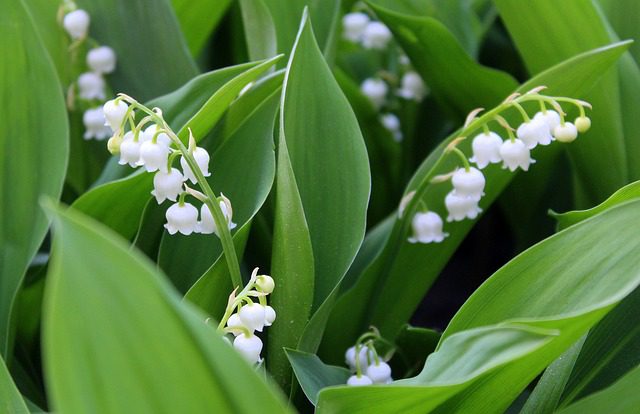
As a young child I admired the statue’s beauty and took seriously the responsibility of filling a vase full of Lily of the Valley (one of the approximately 7 billion flowers that have Marian-specific meaning) to put by the statue. By my teen years I was less thrilled, since it meant having to kneel rather than sit during family rosary time and bearing her name was often just another source of teasing (“ooooh….your name is Mary? You must be a viiiiiiirgin!”—which was true, but not something I wanted chanted at me on the bus). In truth, I had also come to resent that pure, idealized beauty and her annoying silence in scripture. Having already passed the youngest teen years it was clear I wouldn’t come close to the physical beauty, and keeping quiet was difficult even during the 7 weeks my jaws were wired shut at the beginning of my senior year.
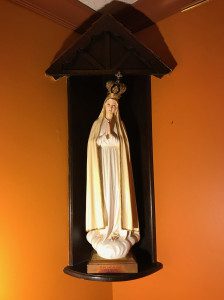
But looking at the photo I see that the statue, and Mary herself as a Divine Mother, have a stabilizing power. When those real mother-daughter relationships get swimmy and rocky and unsteady, as they do—there she is. Quiet, yes. Listening. Not judging (that’s not her job, after all). Interceding. Loving. (Don’t be fooled by the quiet—Mary is also a model of strength, power, and action. Our dear friend and fellow crone Eve perfectly describes who Mary really is here.) No, we don’t worship a statue. But its constant presence in the corner through decades does help us focus on an invisible reality that is otherwise easily forgotten—that we have divine as well as earthly parents, and so do our children. That it’s our job to love, but also that we are loved, already, as we are. That we may be parents now, but we are always still beloved children.
As a Mother’s Day gift, my husband hung the statue in the corner of our family room above the piano. I thought it would take some time to get used to her there, but I’ve already felt her presence steadying my brain when I get dizzy wondering which role I’m currently playing. Maybe it’s just wishful thinking, remembering what felt like countless days under her watchful gaze with my own mother. Either way, I’ll be planting some Lily of the Valley in time for next Mother’s Day.
Marybeth Chuey Bishop lives in Annapolis with her husband and children, two dogs, and some scruffy plants. She likes to walk, wear socks with kraken or Poe on them, and write with her blogging partner-in-crime Kristen at Crone Café. You can find them on Facebook or at cronecafe.wordpress.com.
Previous Post
May 21, 2018
Mary and the Cosmos
Next Post

May 25, 2018 Conjuring Charism: A Pentecost Dark Devotional
Browse Our Archives
Select a Category Advent Approaching Mystery art Book Reviews Catholic Ghost Story Catholicism community Confession Current Events Dark Devotional Deconstruction Deconstruction Fellow Travelers I Want To Believe Interview Laudato Si Lent Mary Matthew's Letters Movie Reviews Music Reviews Our Charism Personal Essay Pilgrims Pope Francis Popular Piety Prayer Publishing Richard Beck Saints Satan Sheed and Ward Sick Pilgrim Charism Sick Pilgrim Chats Sick Pilgrim Events Sick Pilgrim Travelin' Medicine Show Sick Pilgrimage to The West Sick Pilgrims Small Joys Spiritual Autobiography Spooky Files of Ave Maria Magazine Spooky October Spooky Pilgrim Spooky Pilgrimage Strange Journey The Inklings Things Keeping Us Going Trying to Say God TV Reviews Uncategorized women in the Catholic Church Wonder Podcast Write the Vision
Select a Month February 2022 January 2022 December 2021 November 2021 October 2021 September 2021 August 2021 July 2021 June 2021 May 2021 April 2021 March 2021 February 2021 January 2021 December 2020 April 2020 March 2020 February 2020 January 2020 December 2019 October 2019 September 2019 July 2019 June 2019 May 2019 April 2019 March 2019 February 2019 January 2019 December 2018 November 2018 October 2018 September 2018 August 2018 July 2018 June 2018 May 2018 April 2018 March 2018 February 2018 January 2018 December 2017 November 2017 October 2017 September 2017 August 2017 July 2017 June 2017 May 2017 April 2017 March 2017 February 2017 January 2017 December 2016 November 2016 October 2016 September 2016 August 2016 July 2016 June 2016 May 2016 April 2016 March 2016 February 2016 January 2016 December 2015
Follow Us!
TAKE THE
Religious Wisdom Quiz
We are the tribe assigned to carry the sacred objects and serve in worship. Who are we?
Select your answer to see how you score.
The Tribe of Judah The Tribe of Naphtali The Levites The Danites
Related posts from Sick Pilgrim
Dark Devotional: From Good Wine to Bitter Faith

Dark Devotional: The Virgin Mary's Guide to Biblical...
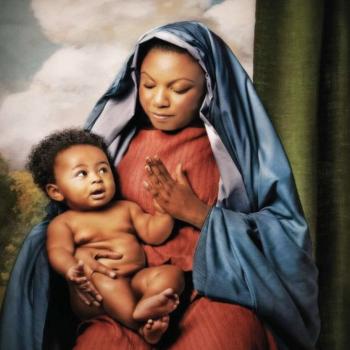
Dark Devotional: Mary, Motherhood, and Mixed Feelings

Second Sunday in Advent: Let Me Love You...
TRENDING AT PATHEOS Catholic

The Parable Of The Sower And The Word...
One of Christ’s most famous parables is that of the sower who...

Rejecting Doom: Christian Hope And Human Action
Christianity is a religion of hope. We are to have hope and...

Why I Choose the Eucharist Over the Sermon
Choose the Eucharist, Not the Sermon What are we supposed to get...

5 Design Elements Found in Spiritually Rooted Homes
Putting Spirituality Into Home Decor Our homes are more than our living...

Credo: A Story of God Told with the...
About 10 years ago, I began to imagine a personal "Credo" that...

The Anatomy of Divine Revelation in Catholic Thought
The claim that God has made Himself known to human beings is...
view all Catholic blogs
Ad-Free & Subscriber Log-In Subscription Support
- About Us
- 2026 Calendar
- Videos
- Podcasts
- Library of World Religions
- Faith In Media Tracker
- Advertise With Us
- Write for Us
- Privacy Policy
- Terms of Service
- Do Not Sell My Data
- Contact Us
- Radiant Digital
- Manage Newsletter Subscriptions
- Unsubscribe From Notifications
- Sitemap
Copyright 2008-2026, Patheos. All rights reserved.
Subscription Support Ad-Free & Subscriber Log-In
Follow Patheos