
BuddhistCatholicContemplativeEvangelicalGeneral ChristianHinduJewishLatter-day SaintMuslimNew VisionsProgressive Christian
Beliefs
- Buddhist
- Catholic
- Contemplative
- Evangelical
- General Christian
- Hindu
- Jewish
- Latter-day Saint
- More Voices
- Muslim
- New Visions
- Pagan
- Progressive Christian
Topics
- Religion News
- Food and Religion
- Sports and Religion
- Religious Art
- Religious Music and Entertainment
- Religious Events
- History and Religion
- Style and Religion
- Politics and Religion
- Women in Religion
- Recreation Outdoors and Religion
- Business Finance and Religion
- Careers Workplace and Religion
- Education and Religion
- Family Parenting and Religion
- Health Fitness and Religion
- Home and Religion
- Relationships and Religion
- Technology and Religion
- Travel and Religion
Columnists
- Buddhist Columnists
- Business Finance and Religion Columnists
- Careers Workplace and Religion Columnists
- Catholic Columnists
- Contemplative Columnists
- Education and Religion Columnists
- Evangelists Columnists
- Family Parenting and Religion Columnists
- General Christian Columnists
- Health Fitness and Religion Columnists
- Hindu Columnists
- History and Religion Columnists
- Home and Religion Columnists
- Jewish Columnists
- More Voices Columnists
- Latter Day Columnists
- Muslim Columnists
- New Visions Columnists
- Nonreligious Columnists
- Pagan Columnists
- Politics and Religion Columnists
- Progressive Columnists
- Recreation Outdoors and Religion Columnists
- Relationships and Religion Columnists
- Religion News Columnists
- Religious Art Columnists
- Religious Events Columnists
- Religious Music and Entertainment Columnists
- Sports and Religion Columnists
- Style and Religion Columnists
- Technology and Religion Columnists
- Travel and Religion Columnists
- Women in Religion Columnists
Resource Library
- 2026 Calendar
- Library of World Religions
- The 100 Most Holy Places on Earth
- Patheos Answers
- Podcasts
- Videos
- Faith Leaders Database
- Anglican Episcopalian
- Bahai
- Baptist
- Buddhism
- Christianity
- Confucianism
- Eastern Orthodoxy
- Hinduism
- Holiness and Pentecostal
- ISKCON
- Islam
- Judaism
- Lutheran
- Methodist
- The Church of Jesus Christ of Latter-day Saints
- New Age
- Paganism
- Presbytarian and Reformed
- Protestantism
- Religion Behind the Scenes
- Roman Catholic
- Scientology
- Shia Islam
- Sikhism
- Sufism
- Sunni Islam
- Taoism
- Zen
- See all religions
Research Tools
 Ad-Free & Subscriber Log-In Subscription Support
Ad-Free & Subscriber Log-In Subscription Support
Follow Patheos 

- Trending:
- Forgiveness
- |
- Marriage
- |
- Consciousness
- |
- Death Penalty
- |
- Election
- |
- Halloween
 Sick Pilgrim
- Home
- Catholic
- Recognition: Jean Vanier and “Summer in the Forest”
Recognition: Jean Vanier and “Summer in the Forest”
Last updated on: March 22, 2018 at 10:16 am by Matt Lafleur
Recognition: Jean Vanier and “Summer in the Forest” 2018-03-22T10:16:50-05:00 Matt Lafleur
Patheos Explore the world's faith through different perspectives on religion and spirituality! Patheos has the views of the prevalent religions and spiritualities of the world.
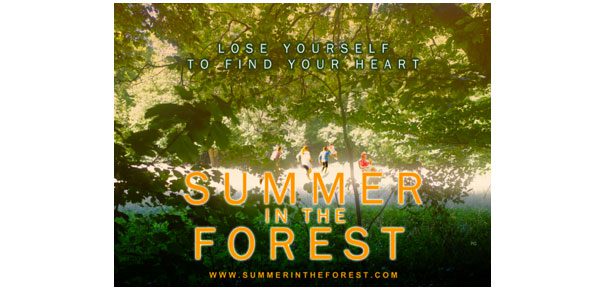
“I think that we human beings have a compass, a mysterious compass, which leads us to do what is right.” –Jean Vanier
Hearing the quote above–which begins Summer in the Forest, a documentary about L’Arche, founded by Jean Vanier–I was afraid the film itself would be overly pat and syrupy. I was wrong.
When four men labeled as “idiots” were confined to a life of imprisonment in asylum-like institutes in the 1960’s, a young Canadian philosopher named Jean Vanier secured their release and created a space for them to live. The L’Arche community is a place of residence for those with developmental disabilities and their caretakers. It became a movement and has spread widely, with chapters currently existing in 37 countries. The original L’Arche in France, the setting of this documentary, operates to this day, and Vanier still regularly visits.
The striking power of this documentary doesn’t lie in the feel-good formula that it sets up with the beginning quote, but in its willingness to follow many of the residents in their daily activities. The movie gives the residents a face and a voice. For an often hidden and voiceless population, this story-telling decision is profound.
One of the most powerful scenes in the documentary takes place in a quiet room in L’Arche.
“Dearest Sebastian,” Vanier says, to a 23-year-old man in a steeply reclined power wheelchair, “you are beautiful. Very, very beautiful.”
The man in the wheelchair is nonverbal, only able to converse with Vanier in grunts and in movements of his wide and crossed eyes. Yet Vanier understands him.
“Oui….oui…..oui,” Vanier agrees, as he continues to talk to Sebastian about Sebastian’s upcoming visit with his own parents.
I doubt that Sebastian is regularly able to engage with someone who has the ability and the will to understand him. And I doubt that Sebastian is regularly, if ever, called beautiful. Most people, myself included, see beauty in much narrower, much shallower ways. Vanier helps to remind us, in this scene, that real beauty grows in connection with another person. Real beauty is recognized in relationship, even though it may be difficult. And I would say therein lies real love.
Many times throughout the film, the camera lingers on a scene for a beat much longer than I expected, despite there being no significant action. We watch a couple of the residents as they eat dinner together. I expected something insightful or dramatic to happen. Yet the dinner progressed with no sweeping action and no breakthrough dialogue; the scene just drudged on, despite my impatience.
Then, about halfway through the movie, when one resident of L’Arche was shown walking down a staircase, painfully slowly and holding on to the wall; I blurted out loud “I know how that feels.” As someone with a physical disability, the sense of connection was striking. Seeing someone who showed similar signs of struggling with stairs, I finally understood the reason for the lingering shots. This struggle–this frustration–is inescapable to those of us with disabilities. By strategically peppering uncomfortably long scenes throughout, the filmmakers invite viewers to enter the lives of the people on the screen more fully, more realistically.
Seeing people with disabilities on-screen is always a gamble for me: will the disabled be used as static characters who only exist to pull the heart-strings of able-bodied people? The sad truth is we –people with disabilities– are barely ever the heroes of our stories; we inspire other people to achieve their goals. Stella Young says in her TED talk about living with disability, “I’m not your inspiration, thank you very much.” People with disabilities have stories to tell, and not just to make other people feel better about themselves.
Probably the greatest strength of the documentary Summer in the Forest is its fearlessness in thrusting the disabled population from the background to the role of the hero. In another documentary close to my heart, The Ataxian, a friend of mine who shares my genetic disorder is the main character. The film shows his struggles and his successes from his own perspective. He is not the wise disabled friend imparting knowledge to the main character. He laughs, jokes, cries, struggles, and succeeds in his goal to ride a recumbent trike across the US in nine days in the world’s toughest bike race.
That people matter and have a story to tell, even though they have a disability–Summer in the Forest breaks no ground with that epiphany. Yet, it’s a hopeful step rarely taken in film, and it is orchestrated beautifully.
Seeing someone else’s weaknesses and challenges can be incredibly difficult. I would prefer to recognize only the attractive parts of others –their humor, their kindness, their intelligence. But that’s incomplete. Only by wholly seeing someone–their strengths, weaknesses, abilities, and disabilities–can we recognize them as fully human. And only in that recognition can we really begin to love one another.
The documentary Summer in the Forest was a perfect way for me to align my mysterious inner compass, and to recognize that accepting others –both in their strengths and in their disabilities– is the beginning of compassion.
Summer in the Forest begins screening in select theaters soon. For a list of venues and cast and crew information, click here.
Matt Lafleur is Sick Pilgrim’s managing editor and a FARA ambassador.

Next Post

March 24, 2018 Dark Devotional: The Jackass
Browse Our Archives
Select a Category Advent Approaching Mystery art Book Reviews Catholic Ghost Story Catholicism community Confession Current Events Dark Devotional Deconstruction Deconstruction Fellow Travelers I Want To Believe Interview Laudato Si Lent Mary Matthew's Letters Movie Reviews Music Reviews Our Charism Personal Essay Pilgrims Pope Francis Popular Piety Prayer Publishing Richard Beck Saints Satan Sheed and Ward Sick Pilgrim Charism Sick Pilgrim Chats Sick Pilgrim Events Sick Pilgrim Travelin' Medicine Show Sick Pilgrimage to The West Sick Pilgrims Small Joys Spiritual Autobiography Spooky Files of Ave Maria Magazine Spooky October Spooky Pilgrim Spooky Pilgrimage Strange Journey The Inklings Things Keeping Us Going Trying to Say God TV Reviews Uncategorized women in the Catholic Church Wonder Podcast Write the Vision
Select a Month February 2022 January 2022 December 2021 November 2021 October 2021 September 2021 August 2021 July 2021 June 2021 May 2021 April 2021 March 2021 February 2021 January 2021 December 2020 April 2020 March 2020 February 2020 January 2020 December 2019 October 2019 September 2019 July 2019 June 2019 May 2019 April 2019 March 2019 February 2019 January 2019 December 2018 November 2018 October 2018 September 2018 August 2018 July 2018 June 2018 May 2018 April 2018 March 2018 February 2018 January 2018 December 2017 November 2017 October 2017 September 2017 August 2017 July 2017 June 2017 May 2017 April 2017 March 2017 February 2017 January 2017 December 2016 November 2016 October 2016 September 2016 August 2016 July 2016 June 2016 May 2016 April 2016 March 2016 February 2016 January 2016 December 2015
Follow Us!
TAKE THE
Religious Wisdom Quiz
How many books are in the New Testament?
Select your answer to see how you score.
21 30 13 27
Related posts from Sick Pilgrim
Dark Devotional: Haunted by God
Sonnet 73: Time, Friendship and Chronic Illness
Thirteen Ways of Looking at Catholicism: A Listicle...

Rereading "I Walk with Jesus" in January 2020
TRENDING AT PATHEOS Catholic

Rejecting Doom: Christian Hope And Human Action
Christianity is a religion of hope. We are to have hope and...

It’s What Comes From Within Which Matters
One of the most difficult things for us to understand is why...

Why I Choose the Eucharist Over the Sermon
Choose the Eucharist, Not the Sermon What are we supposed to get...

5 Design Elements Found in Spiritually Rooted Homes
Putting Spirituality Into Home Decor Our homes are more than our living...

Credo: A Story of God Told with the...
About 10 years ago, I began to imagine a personal "Credo" that...

The Anatomy of Divine Revelation in Catholic Thought
The claim that God has made Himself known to human beings is...
view all Catholic blogs
Ad-Free & Subscriber Log-In Subscription Support
- About Us
- 2026 Calendar
- Videos
- Podcasts
- Library of World Religions
- Faith In Media Tracker
- Advertise With Us
- Write for Us
- Privacy Policy
- Terms of Service
- Do Not Sell My Data
- Contact Us
- Radiant Digital
- Manage Newsletter Subscriptions
- Unsubscribe From Notifications
- Sitemap
Copyright 2008-2026, Patheos. All rights reserved.
Subscription Support Ad-Free & Subscriber Log-In
Follow Patheos