
BuddhistCatholicContemplativeEvangelicalGeneral ChristianHinduJewishLatter-day SaintMuslimNew VisionsProgressive Christian
Beliefs
- Buddhist
- Catholic
- Contemplative
- Evangelical
- General Christian
- Hindu
- Jewish
- Latter-day Saint
- More Voices
- Muslim
- New Visions
- Pagan
- Progressive Christian
Topics
- Religion News
- Food and Religion
- Sports and Religion
- Religious Art
- Religious Music and Entertainment
- Religious Events
- History and Religion
- Style and Religion
- Politics and Religion
- Women in Religion
- Recreation Outdoors and Religion
- Business Finance and Religion
- Careers Workplace and Religion
- Education and Religion
- Family Parenting and Religion
- Health Fitness and Religion
- Home and Religion
- Relationships and Religion
- Technology and Religion
- Travel and Religion
Columnists
- Buddhist Columnists
- Business Finance and Religion Columnists
- Careers Workplace and Religion Columnists
- Catholic Columnists
- Contemplative Columnists
- Education and Religion Columnists
- Evangelists Columnists
- Family Parenting and Religion Columnists
- General Christian Columnists
- Health Fitness and Religion Columnists
- Hindu Columnists
- History and Religion Columnists
- Home and Religion Columnists
- Jewish Columnists
- More Voices Columnists
- Latter Day Columnists
- Muslim Columnists
- New Visions Columnists
- Nonreligious Columnists
- Pagan Columnists
- Politics and Religion Columnists
- Progressive Columnists
- Recreation Outdoors and Religion Columnists
- Relationships and Religion Columnists
- Religion News Columnists
- Religious Art Columnists
- Religious Events Columnists
- Religious Music and Entertainment Columnists
- Sports and Religion Columnists
- Style and Religion Columnists
- Technology and Religion Columnists
- Travel and Religion Columnists
- Women in Religion Columnists
Resource Library
- 2026 Calendar
- Library of World Religions
- The 100 Most Holy Places on Earth
- Patheos Answers
- Podcasts
- Videos
- Faith Leaders Database
- Anglican Episcopalian
- Bahai
- Baptist
- Buddhism
- Christianity
- Confucianism
- Eastern Orthodoxy
- Hinduism
- Holiness and Pentecostal
- ISKCON
- Islam
- Judaism
- Lutheran
- Methodist
- The Church of Jesus Christ of Latter-day Saints
- New Age
- Paganism
- Presbytarian and Reformed
- Protestantism
- Religion Behind the Scenes
- Roman Catholic
- Scientology
- Shia Islam
- Sikhism
- Sufism
- Sunni Islam
- Taoism
- Zen
- See all religions
Research Tools
 Ad-Free & Subscriber Log-In Subscription Support
Ad-Free & Subscriber Log-In Subscription Support
Follow Patheos 

- Trending:
- Forgiveness
- |
- Marriage
- |
- Consciousness
- |
- Death Penalty
- |
- Election
- |
- Halloween
 Sick Pilgrim
- Home
- Catholic
- Write the Vision: Earth’s Delicate Balance
Write the Vision: Earth’s Delicate Balance
Last updated on: January 22, 2018 at 1:39 pm by Sarah Babbs
Write the Vision: Earth’s Delicate Balance 2018-01-22T13:39:49-05:00 Sarah Babbs
Patheos Explore the world's faith through different perspectives on religion and spirituality! Patheos has the views of the prevalent religions and spiritualities of the world.
Today in our Write the Vision series, author and farmer Rebecca Bratten Weiss shares her reflections on coming to intimately know the land of her childhood and how that land’s ravishment formed the backbone of her vision of God’s justice in light of Creation.
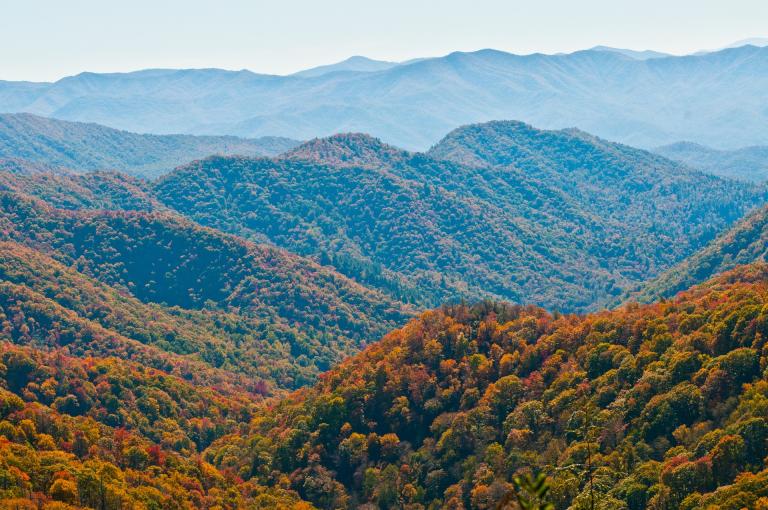
Earth’s Delicate Balance
When I was ten, we moved to an old abandoned farmhouse on a four thousand acre ranch and Christian community in eastern Ohio. The house sat on a hillside that sloped down to a valley with a row of maples that we tapped for syrup; above, it rose to a long flat plain, like you’d see in Montana. That was the land that had been mined and reclaimed, we were told. There was an airplane buried in the hillside somewhere, too: it had crashed there and they’d had the mining shovels on hand, so they just covered it in rock and soil. When digging post-holes if I ran up against something hard, I’d wonder if I’d hit the airplane. We never found out whether the pilot had survived, and for some reason I imagined him dead and buried there, too.
Further out lay the spoil banks and high walls: land that had never been reclaimed. Heaps of disrupted soil and jagged rocks had been just left there, as well as neon orange and green pools toxic with mine run off. Over the years, nature had slowly crept back in, and done her work. Groves of pale birches, which don’t mind the acid soil, rose from the steep hillsides, and ferns and multi-flora rose abounded. As a teenager, I didn’t think a lot about what had caused the spoil banks, or what it meant that hundreds of acres of land was now good for nothing: not farming, or fishing, or grazing. The old mining country was my playground, my miniature badlands, and we rode our horses deep into the wilderness. Once, on a horse camping trip, I actually climbed down a bank and took a swim in one of those toxic ponds, on a dare. I was indomitable, back in those days.
There was one jutting plateau of land with cliffs all around it that had been mysteriously left by the mining companies. We called it the Island, and it was a favorite place to ride, hike, camp, or just generally get into mischief. My dad had his prayer hut up there, and would drive up to cut firewood in the winter.
Many years after I had left home, I returned, and took a drive to look for the places where I had so many memories stored, and found that the Island was gone. Obliterated. No more forests or fields. No more prayer hut. The coal companies hadn’t gotten enough out of it the first time, so they’d come back to take what remained. The pond I’d dangerously swum in, the field I’d raced horses on, the valleys I’d trysted in: gone. All gone.
It’s weird enough to look for a childhood home and find it gone, but for an entire landscape to be wiped out is unsettling. If the ground we stand on can be shaken and torn, what really can we count on? How can we pretend to be indomitable when the soil itself is slipping beneath our feet?
At first, my resentment at the coal companies was merely personal. They’d taken something I’d loved. Then as I read up on it more, I began to realize that this was just what they did, all over the Appalachian region. Mountains blown up, streams polluted, homes destroyed, always with the promise of “jobs” while the richness of the land was dug up and hauled off, changed to money to line the pockets of someone far away, someone already rich. There are mine explosions and collapses, because the coal companies ignore regulations. And the CEOs and their political cronies argue that we need fewer regulations, that EPA and mine safety restrictions are “killing coal.”
After the coal companies came the oil and gas companies which, we were told, would bring jobs – and indeed, they did, to out-of-state workers who drove in, in big trucks, and then left when the boom slowed down. Fracking is less obviously devastating than mining, happening as it does deep beneath the earth, but my region of the state is now spider-webbed with pipelines, and if I look out my windows, across my gardens and the neighbor’s corn fields, there’s the cracking plant where the natural gas is broken down into usable components. Every night a plume of flame, a burn-off of irretrievable gas, reddens the horizon, reminiscent of Mordor.
From being a girl who dove into toxic ponds I have become an eco-activist, and what was first personal, the affront to the landscape of my memory, has become political, because this isn’t just about me. But I know it’s a losing battle, even when it comes to the things that are obviously ugly and destructive, like strip mining and garbage in our seas. If a farmer can’t stop them from putting a pipeline over her meticulously tended fields, who’s going to believe us when we talk about the dangers of global climate change? They won’t even listen to the pope.
Improvements in the developed world are encouraging, but deceptive. It’s great that you can breathe the air in Pittsburgh now, that the city is experiencing a cultural and economic rebirth. But as long as we have radical energy dependence on fossil fuels, and an economy that depends on an unending cycle of production and consumption, the ill effects of capitalism and industry will continue to exist. Even if they’re just farmed off elsewhere. It’s usually the poor who get the landfill in their back yard. In cities like Delhi, you might as well be smoking, as breathing the air.
I have a sense of hopelessness when I think about the damage being done to our ecosystems, especially with the Republicans in power, the ones who still think they’re indomitable, or who simply don’t care past the next big payout. We’re told that this is the party of life, even as they vote to drill in nature preserves, and remove mine regulations. We’re assured that we should keep having babies because God will provide, as though God will look past our greed and even reward us for our irresponsibility by miraculously granting us the bounty we have wantonly destroyed. What will our children, and our children’s children, live on, when the earth’s resources have been exploited?
We are part of the ecosystem, immersed in it, though we try to pretend that as humans we somehow rise above it all. The same microbes that populate the soil and give it life teem within us. There’s no helping this interconnection, and if we try to deny it, we court death.
But it’s not only that we need to protect the earth because we depend on it, as though we alone have dignity and value. Dignity and value belong to every living thing, and not just the creatures we’ve grown attached to. We don’t confer upon them their ineffable, irreplaceable goodness, the goodness that the Creator confirmed in the Genesis myth. Life itself is sacred, and worthy of protection, in all its forms, in its myriad strangeness, great and small, from the tiny microbes in the soil to the monsters of the deep. All creation gives glory to God, and all creation groans awaiting justice.
What would environmental justice look like? We can try to enact it, but original sin runs deep and puts enmity between ourselves and the earth we live on, so it is foreign to us, and we scorn it. And once an ecosystem has been disrupted and poisoned, this can’t just be magically healed. You can’t even really put topsoil back, once it’s been disturbed, because topsoil is an ecosystem itself, and moving it is like steamrolling over a city.
But when the prophet Isaiah speaks of every mountain and hill being laid low, I imagine the justice of the Lord like a great wind sweeping over the desolation of mining country, miraculously smoothing over the canyons and gashes in the earth, healing the wounds, raising the dirt itself from the dead. The same justice that comes to give solace to the poor comes to bring peace to every living thing.
But with righteousness shall he judge the poor, and reprove with equity for the meek of the earth: and he shall smite the earth: with the rod of his mouth, and with the breath of his lips shall he slay the wicked.
And righteousness shall be the girdle of his loins, and faithfulness the girdle of his reins.
The wolf also shall dwell with the lamb, and the leopard shall lie down with the kid; and the calf and the young lion and the fatling together; and a little child shall lead them.
And the cow and the bear shall feed; their young ones shall lie down together: and the lion shall eat straw like the ox.
And the sucking child shall play on the hole of the asp, and the weaned child shall put his hand on the cockatrice’ den.
They shall not hurt nor destroy in all my holy mountain: for the earth shall be full of the knowledge of the Lord, as the waters cover the sea.
Isaiah 11
Rebecca Bratten Weiss is a writer, farmer, and radical. She blogs at Suspended in her Jar.
Previous Post

January 20, 2018
Approaching Mystery: "Offering" by Carla Myers
Next Post
January 25, 2018 Approaching Mystery: The Mysteries of Girlhood by Joanna Penn Cooper
Browse Our Archives
Select a Category Advent Approaching Mystery art Book Reviews Catholic Ghost Story Catholicism community Confession Current Events Dark Devotional Deconstruction Deconstruction Fellow Travelers I Want To Believe Interview Laudato Si Lent Mary Matthew's Letters Movie Reviews Music Reviews Our Charism Personal Essay Pilgrims Pope Francis Popular Piety Prayer Publishing Richard Beck Saints Satan Sheed and Ward Sick Pilgrim Charism Sick Pilgrim Chats Sick Pilgrim Events Sick Pilgrim Travelin' Medicine Show Sick Pilgrimage to The West Sick Pilgrims Small Joys Spiritual Autobiography Spooky Files of Ave Maria Magazine Spooky October Spooky Pilgrim Spooky Pilgrimage Strange Journey The Inklings Things Keeping Us Going Trying to Say God TV Reviews Uncategorized women in the Catholic Church Wonder Podcast Write the Vision
Select a Month February 2022 January 2022 December 2021 November 2021 October 2021 September 2021 August 2021 July 2021 June 2021 May 2021 April 2021 March 2021 February 2021 January 2021 December 2020 April 2020 March 2020 February 2020 January 2020 December 2019 October 2019 September 2019 July 2019 June 2019 May 2019 April 2019 March 2019 February 2019 January 2019 December 2018 November 2018 October 2018 September 2018 August 2018 July 2018 June 2018 May 2018 April 2018 March 2018 February 2018 January 2018 December 2017 November 2017 October 2017 September 2017 August 2017 July 2017 June 2017 May 2017 April 2017 March 2017 February 2017 January 2017 December 2016 November 2016 October 2016 September 2016 August 2016 July 2016 June 2016 May 2016 April 2016 March 2016 February 2016 January 2016 December 2015
Follow Us!
TAKE THE
Religious Wisdom Quiz
What is the name for the Jewish prayer shawl?
Select your answer to see how you score.
Kippah Tallit Mezuzah Tefillin
Related posts from Sick Pilgrim

Dark Devotional: The Firelight of Life

Dark Devotional: Let Me Smite Him

Dark Devotional: Woe to Me, for I Have...

TRENDING AT PATHEOS Catholic

Rejecting Doom: Christian Hope And Human Action
Christianity is a religion of hope. We are to have hope and...

It’s What Comes From Within Which Matters
One of the most difficult things for us to understand is why...

Why I Choose the Eucharist Over the Sermon
Choose the Eucharist, Not the Sermon What are we supposed to get...

5 Design Elements Found in Spiritually Rooted Homes
Putting Spirituality Into Home Decor Our homes are more than our living...

Credo: A Story of God Told with the...
About 10 years ago, I began to imagine a personal "Credo" that...

The Anatomy of Divine Revelation in Catholic Thought
The claim that God has made Himself known to human beings is...
view all Catholic blogs
Ad-Free & Subscriber Log-In Subscription Support
- About Us
- 2026 Calendar
- Videos
- Podcasts
- Library of World Religions
- Faith In Media Tracker
- Advertise With Us
- Write for Us
- Privacy Policy
- Terms of Service
- Do Not Sell My Data
- Contact Us
- Radiant Digital
- Manage Newsletter Subscriptions
- Unsubscribe From Notifications
- Sitemap
Copyright 2008-2026, Patheos. All rights reserved.
Subscription Support Ad-Free & Subscriber Log-In
Follow Patheos