
BuddhistCatholicContemplativeEvangelicalGeneral ChristianHinduJewishLatter-day SaintMuslimNew VisionsProgressive Christian
Beliefs
- Buddhist
- Catholic
- Contemplative
- Evangelical
- General Christian
- Hindu
- Jewish
- Latter-day Saint
- More Voices
- Muslim
- New Visions
- Pagan
- Progressive Christian
Topics
- Religion News
- Food and Religion
- Sports and Religion
- Religious Art
- Religious Music and Entertainment
- Religious Events
- History and Religion
- Style and Religion
- Politics and Religion
- Women in Religion
- Recreation Outdoors and Religion
- Business Finance and Religion
- Careers Workplace and Religion
- Education and Religion
- Family Parenting and Religion
- Health Fitness and Religion
- Home and Religion
- Relationships and Religion
- Technology and Religion
- Travel and Religion
Columnists
- Buddhist Columnists
- Business Finance and Religion Columnists
- Careers Workplace and Religion Columnists
- Catholic Columnists
- Contemplative Columnists
- Education and Religion Columnists
- Evangelists Columnists
- Family Parenting and Religion Columnists
- General Christian Columnists
- Health Fitness and Religion Columnists
- Hindu Columnists
- History and Religion Columnists
- Home and Religion Columnists
- Jewish Columnists
- More Voices Columnists
- Latter Day Columnists
- Muslim Columnists
- New Visions Columnists
- Nonreligious Columnists
- Pagan Columnists
- Politics and Religion Columnists
- Progressive Columnists
- Recreation Outdoors and Religion Columnists
- Relationships and Religion Columnists
- Religion News Columnists
- Religious Art Columnists
- Religious Events Columnists
- Religious Music and Entertainment Columnists
- Sports and Religion Columnists
- Style and Religion Columnists
- Technology and Religion Columnists
- Travel and Religion Columnists
- Women in Religion Columnists
Resource Library
- 2026 Calendar
- Library of World Religions
- The 100 Most Holy Places on Earth
- Patheos Answers
- Podcasts
- Videos
- Faith Leaders Database
- Anglican Episcopalian
- Bahai
- Baptist
- Buddhism
- Christianity
- Confucianism
- Eastern Orthodoxy
- Hinduism
- Holiness and Pentecostal
- ISKCON
- Islam
- Judaism
- Lutheran
- Methodist
- The Church of Jesus Christ of Latter-day Saints
- New Age
- Paganism
- Presbytarian and Reformed
- Protestantism
- Religion Behind the Scenes
- Roman Catholic
- Scientology
- Shia Islam
- Sikhism
- Sufism
- Sunni Islam
- Taoism
- Zen
- See all religions
Research Tools
 Ad-Free & Subscriber Log-In Subscription Support
Ad-Free & Subscriber Log-In Subscription Support
Follow Patheos 

- Trending:
- Forgiveness
- |
- Marriage
- |
- Consciousness
- |
- Death Penalty
- |
- Election
- |
- Halloween
 Sick Pilgrim
- Home
- Catholic
- Five Lessons I Learned from Dorothy Day
Five Lessons I Learned from Dorothy Day
Last updated on: November 9, 2017 at 7:47 pm by Guest Contributor
Five Lessons I Learned from Dorothy Day 2017-11-09T19:47:27-05:00 Guest Contributor
Patheos Explore the world's faith through different perspectives on religion and spirituality! Patheos has the views of the prevalent religions and spiritualities of the world.
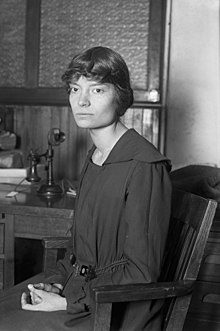
In my 33 years as a Catholic, I’ve found the saints–canonized or not–have often found me when I needed them, when I was ready to learn the lessons they could teach.
At the forefront of this cloud of witnesses, bearing me up and urging me on, is Dorothy Day. By now, many Catholics are familiar with her name, perhaps recognizing her as the co-founder and spiritual mother of the Catholic Worker movement. She is that, but also so much more – convert, writer, mother, grandmother, convicted criminal, pacifist, daily communicant, post-abortive woman, mystic, and spiritual mother to millions.
Day found me during a time in my adolescence when I knew that believing in Jesus and caring about injustice should always go together, but examples of people who did both were thin on the ground. She found me again on a hot July day when I was working at a soup kitchen with a group of other teens. Our group was part of group called GIFTS, Growing in Faith through Service. We spent time doing direct service with the poor and then came together to process and to engage our service learning with our faith. On that day, I was 16 and working at the St. Francis Soup Kitchen in downtown Scranton, serving lunch to folks in need of a meal, a kind word, a cool place to sit.
Our site director, an older man who had been working at St. Francis for years, was telling us about the Catholic Worker and his many visits to the “The Worker” in New York City over the years. As a young man, he’d met Dorothy Day once while there. He spoke of her with the awe of a child referencing his mother. I had to know more.
Over the next several years, I tried to find more of her work, not an easy task in the days before the internet and Amazon. But she found me again in college and from that time on, she’s been teaching me–because she and God know that I need it. There have been years and seasons when I know she was giving me serious side-eye, but she hasn’t abandoned me yet, and for that I am truly grateful. David Scott described her as “a single, working grandmother living in the slums, who prayed the rosary and went to Mass every day, who marched on picket lines with longshoremen in the 1930’s and farmworkers in the 1970’s, who went to jail for protesting war and took communion from the hands of the Pope.”
In modern parlance: my #squadgoals.
In honor of her birthday, and of the challenge, gift, and prophet she has been for women and the church, I want to share what she’s taught me, reluctant student that I’ve been:
We cannot love God without loving the poor, and we cannot love the poor without knowing them.
This is the challenge of my life and our times. We live and work and worship in segregated spaces. Segregated by race, by ethnicity yes, but even more by income. How many of us move among the poor on any kind of regular basis, and as an equal, a friend, in community – not swooping in with all the answers as a “savior”? Her example here shines. Once, upon sitting at a table in the Worker House with a man who was highly intoxicated and rambling incoherently, someone came in to speak with Dorothy. Yet before he could say anything, she looked at him and said “Oh, were you wanting to speak with one of us?” indicating herself and the man next to her at the table. I feel a tangible sense of my own pride and judgment of the poor, incoherent, intoxicated, when I realize that I would always assume someone had arrived to speak with me. Yet, Dorothy’s example is what love for the poor looks like. She also pointed out that “all the saints have begun their mission by seeking Christ among the poor.”
The love that comes from authentic, just, community is the only antidote to the world’s suffering. Community, real community, is the only answer for the pain and isolation of our world and it’s alienating institutions. Community where each one is seen and valued for the spark of Christ within her, and differences are invitations, not calls to arms.
We cannot do the works of justice for the long haul without prayer and the sacraments. Dorothy attended Mass daily and prayers including adoration and the rosary were part of her everyday life. She openly spoke of receiving the needed energy, perseverance and humor to do the work of the community through her daily Mass and prayers. Through reception of the Eucharist and prayer, we are given hearts of flesh that we may have the courage to do the works of mercy and justice.
It is not our place to judge who is or is not “worthy.” Dorothy taught me that none of us is worthy to judge the worthiness of others. Fall-down drunks and addicts like my father are no less worthy of love, safety, and food than the holiest of saints. Christ lives in both, and there is no time to stop and figure out who “deserves” and who doesn’t. She wrote, “We must see Christ everywhere, even in his most degraded disguise. There is no time to stop and figure out who are the worthy and who are the unworthy. We are each of us unprofitable servants. We are guilty of each other’s sins.”
Faith in Christ and work for justice can never be separated. Day was said to read the news of the day with the paper in one hand and the Gospel in the other. The Beatitudes, the judgement of the nations in Matthew 25, the very words of Christ – these, along with her knowledge of social movements, political philosophy, and literature – formed in her mind a clear picture of how the works of mercy and justice must always involve real people in their needs, and lives, and circumstances. It is not enough to pray and wish them well – we must ourselves perform the works of mercy and justice. This is the “way of love” of which Day spoke frequently.
A way in which, to paraphrase Jesuit theologian Henri deLubac, if we have chosen the poor, we have chosen like Jesus. We have chosen Jesus.
Day–mystical and yet so very grounded–is the revolutionary I need in an isolated, materialistic world. She’s the prophet I need to challenge my comfort, my pride, and my insulated privilege. She’s the saint I cannot so easily dismiss.
Sarah Babbs is a writer, mother, fertility counselor, social justice advocate and frequent contributor to Sick Pilgrim. She blogs at Fumbling Toward Grace.
Read more of Sarah’s work at http://www.patheos.com/blogs/sickpilgrim/2017/07/dark-devotional-worthy/#Eyip7DuHTwcfgW15.99
Previous Post

November 6, 2017
Spirit and Flesh: The Spiritual Experience of Getting a Tattoo
Next Post

November 10, 2017 Wisely Keeping Vigil, a Dark Devotional
Browse Our Archives
Select a Category Advent Approaching Mystery art Book Reviews Catholic Ghost Story Catholicism community Confession Current Events Dark Devotional Deconstruction Deconstruction Fellow Travelers I Want To Believe Interview Laudato Si Lent Mary Matthew's Letters Movie Reviews Music Reviews Our Charism Personal Essay Pilgrims Pope Francis Popular Piety Prayer Publishing Richard Beck Saints Satan Sheed and Ward Sick Pilgrim Charism Sick Pilgrim Chats Sick Pilgrim Events Sick Pilgrim Travelin' Medicine Show Sick Pilgrimage to The West Sick Pilgrims Small Joys Spiritual Autobiography Spooky Files of Ave Maria Magazine Spooky October Spooky Pilgrim Spooky Pilgrimage Strange Journey The Inklings Things Keeping Us Going Trying to Say God TV Reviews Uncategorized women in the Catholic Church Wonder Podcast Write the Vision
Select a Month February 2022 January 2022 December 2021 November 2021 October 2021 September 2021 August 2021 July 2021 June 2021 May 2021 April 2021 March 2021 February 2021 January 2021 December 2020 April 2020 March 2020 February 2020 January 2020 December 2019 October 2019 September 2019 July 2019 June 2019 May 2019 April 2019 March 2019 February 2019 January 2019 December 2018 November 2018 October 2018 September 2018 August 2018 July 2018 June 2018 May 2018 April 2018 March 2018 February 2018 January 2018 December 2017 November 2017 October 2017 September 2017 August 2017 July 2017 June 2017 May 2017 April 2017 March 2017 February 2017 January 2017 December 2016 November 2016 October 2016 September 2016 August 2016 July 2016 June 2016 May 2016 April 2016 March 2016 February 2016 January 2016 December 2015
Follow Us!
TAKE THE
Religious Wisdom Quiz
Who interpreted a dream about a tree that reached heaven?
Select your answer to see how you score.
Joel Amos Daniel Ezekiel
Related posts from Sick Pilgrim

Second Sunday in Advent: Let Me Love You...

Things Keeping Us Going: All Saints Edition
Dark Devotional: Am I an Atheist?

TRENDING AT PATHEOS Catholic

The Parable Of The Sower And The Word...
One of Christ’s most famous parables is that of the sower who...

Rejecting Doom: Christian Hope And Human Action
Christianity is a religion of hope. We are to have hope and...

Why I Choose the Eucharist Over the Sermon
Choose the Eucharist, Not the Sermon What are we supposed to get...

5 Design Elements Found in Spiritually Rooted Homes
Putting Spirituality Into Home Decor Our homes are more than our living...

Credo: A Story of God Told with the...
About 10 years ago, I began to imagine a personal "Credo" that...

The Anatomy of Divine Revelation in Catholic Thought
The claim that God has made Himself known to human beings is...
view all Catholic blogs
Ad-Free & Subscriber Log-In Subscription Support
- About Us
- 2026 Calendar
- Videos
- Podcasts
- Library of World Religions
- Faith In Media Tracker
- Advertise With Us
- Write for Us
- Privacy Policy
- Terms of Service
- Do Not Sell My Data
- Contact Us
- Radiant Digital
- Manage Newsletter Subscriptions
- Unsubscribe From Notifications
- Sitemap
Copyright 2008-2026, Patheos. All rights reserved.
Subscription Support Ad-Free & Subscriber Log-In
Follow Patheos