
BuddhistCatholicContemplativeEvangelicalGeneral ChristianHinduJewishLatter-day SaintMuslimNew VisionsProgressive Christian
Beliefs
- Buddhist
- Catholic
- Contemplative
- Evangelical
- General Christian
- Hindu
- Jewish
- Latter-day Saint
- More Voices
- Muslim
- New Visions
- Pagan
- Progressive Christian
Topics
- Religion News
- Food and Religion
- Sports and Religion
- Religious Art
- Religious Music and Entertainment
- Religious Events
- History and Religion
- Style and Religion
- Politics and Religion
- Women in Religion
- Recreation Outdoors and Religion
- Business Finance and Religion
- Careers Workplace and Religion
- Education and Religion
- Family Parenting and Religion
- Health Fitness and Religion
- Home and Religion
- Relationships and Religion
- Technology and Religion
- Travel and Religion
Columnists
- Buddhist Columnists
- Business Finance and Religion Columnists
- Careers Workplace and Religion Columnists
- Catholic Columnists
- Contemplative Columnists
- Education and Religion Columnists
- Evangelists Columnists
- Family Parenting and Religion Columnists
- General Christian Columnists
- Health Fitness and Religion Columnists
- Hindu Columnists
- History and Religion Columnists
- Home and Religion Columnists
- Jewish Columnists
- More Voices Columnists
- Latter Day Columnists
- Muslim Columnists
- New Visions Columnists
- Nonreligious Columnists
- Pagan Columnists
- Politics and Religion Columnists
- Progressive Columnists
- Recreation Outdoors and Religion Columnists
- Relationships and Religion Columnists
- Religion News Columnists
- Religious Art Columnists
- Religious Events Columnists
- Religious Music and Entertainment Columnists
- Sports and Religion Columnists
- Style and Religion Columnists
- Technology and Religion Columnists
- Travel and Religion Columnists
- Women in Religion Columnists
Resource Library
- 2026 Calendar
- Library of World Religions
- The 100 Most Holy Places on Earth
- Patheos Answers
- Podcasts
- Videos
- Faith Leaders Database
- Anglican Episcopalian
- Bahai
- Baptist
- Buddhism
- Christianity
- Confucianism
- Eastern Orthodoxy
- Hinduism
- Holiness and Pentecostal
- ISKCON
- Islam
- Judaism
- Lutheran
- Methodist
- The Church of Jesus Christ of Latter-day Saints
- New Age
- Paganism
- Presbytarian and Reformed
- Protestantism
- Religion Behind the Scenes
- Roman Catholic
- Scientology
- Shia Islam
- Sikhism
- Sufism
- Sunni Islam
- Taoism
- Zen
- See all religions
Research Tools
 Ad-Free & Subscriber Log-In Subscription Support
Ad-Free & Subscriber Log-In Subscription Support
Follow Patheos 

- Trending:
- Forgiveness
- |
- Marriage
- |
- Consciousness
- |
- Death Penalty
- |
- Election
- |
- Halloween
 Sick Pilgrim
- Home
- Catholic
- Taking Intersectionality to Church
Taking Intersectionality to Church
Last updated on: July 13, 2017 at 6:46 pm by Guest Contributor
Taking Intersectionality to Church 2017-07-13T18:46:30-05:00 Guest Contributor
Patheos Explore the world's faith through different perspectives on religion and spirituality! Patheos has the views of the prevalent religions and spiritualities of the world.
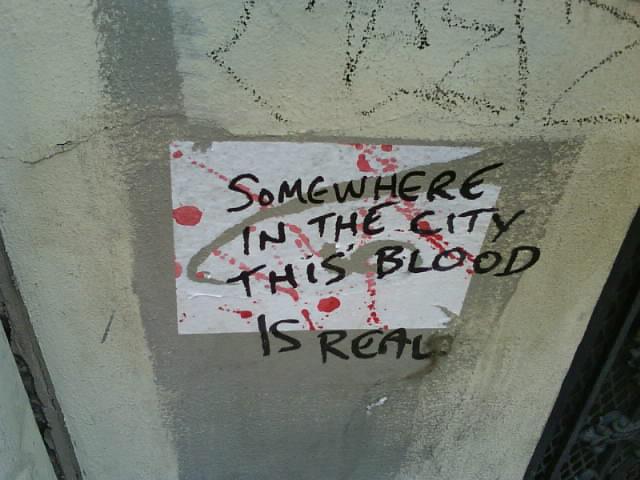
Photo Credit: Jonathan Ryan
I just read an article in First Things, called “First Church of Intersectionality,” by Elizabeth Corey. Her article was timely, in that I’ve been, over the last several months, reflecting more and more on what it means to have a body. To be a body. To move through life in a female body. In a body with fair skin. In a body that’s both given life and been the scene of a crime.
In delving into the riches of Catholic teachings on justice and social issues, I come back again and again to solidarity. As far as I can tell, intersectionality is what solidarity looks like with skin on, and rather than waging war on intersectionality, we as the church need to be engaging with intersectionality in a genuine way, for there are many points of contact along the way. Let’s unpack this a little further.
Corey says in the first paragraph that “many of the participants smelled of curry and incense.” I can’t help but believe, since Corey is an expert in social justice, that she would have realized the casual racism (or just making fun of liberals – who can tell the difference these days?) of her opening paragraph. Women with shaved heads, Birkenstocks, and baggy black clothes? Can someone fetch my smelling salts please?
The focus of her article is to critique the movement of intersectionality in academia–based largely, it seems, on her attendance at one particular academic conference. I can only speak to that so much, since it’s been years since I completed my work in social justice at a Catholic university. Yet in the intervening years I have moved in circles with people working towards intersectionality and justice, and can offer reflection from that perspective.
In critiquing the lecture she attended, Corey says,
“she charged the audience to form nonhierarchical networks of flexible solidarity, coalitions of conscience, made up of people who would devote themselves to upending the status quo…Nobody seemed to notice (or mind) that this was precisely the same language that radicals of all stripes have employed for at least the last fifty years”.
Perhaps I’m not a sharp as I once was, but I have to ask: what’s wrong with creating networks of solidarity where everyone is equal, and people come together around issues of conscience to devote themselves to making meaningful social change? Is it ok if people come together to do those things to try and outlaw abortion? Is that the only time we’re allowed to talk about social change?
She then states, somewhat aghast, that this is the kind of dangerous talk that “radicals” embrace.
Radicals like … Christ? Jesus, who ministered to the least, the last, and the lost every day of his life and who was, the least and the last? God with skin on who inhabited the body of a man born into poverty and who inherited exile and government occupation due to being a religious minority?
Radicals like Jesus of Nazareth, who toiled for his bread and gave without asking the cost, and saw the sacred core of dignity and goodness at the heart of each member of his creation unreservedly? And who exhorted his followers to literally eat his flesh and drink his blood so we may be strengthened to use our human hands to bring his kingdom of justice and flourishing – thy kingdom come, thy will be done?
Like my Savior, whose radical love was so dangerous to those in power that the religious minority colluded with their oppressors to have him murdered? Like that kind of radical?
As though any part of Christianity isn’t the most radical thing the world has ever seen.
Radical means “root” or going back to the roots of something. So, what’s at the root of intersectionality? Justice — and love for human bodies. What’s at the root of solidarity? Justice and love for human bodies with immortal precious souls.
What’s at the root of injustice, of the unequal distributions of power, possibility, and liberty in our world? Evil. I’ll say it again for the folk in the back. Evil stands squarely at the root of injustice, and it is not only radical to root it out, it’s part of our call as baptized Christians. Really what we need is more, not fewer, radicals.
Corey then makes a somewhat bold claim that intersectionality stands as kind of modern Gnosticism. Yet Gnosticism seeks a shrugging off of the body, of one’s particular embodied reality, to live solely from the brain. The severing of body and soul, and the secret knowledge that only a select group can attain, couldn’t be more distant from the intersectional justice I know. The people devoting themselves to lasting social change that I have known are very much living an embodied reality and the reality of violence, aggression and discrimination against human bodies – black, brown, female, disabled, LGBTQ+, poor – is at the forefront of their minds.
Secondly, while intersectionality may seem inaccessible to some people, the concept is straightforward. That many folks struggle to see or accept the reality of intersecting layers of oppression may have more to do with willful ignorance than an overly complicated principle.
Corey then detailed the stories shared by women of color in the audience, of the ways that they have experienced alienation and discrimination both personally and professionally. The stories hang there in the ether with no comment on the injustice she just recounted – the suffering of sisters in Christ. Instead she says,
“Expressions of hurt and exclusion were inevitably followed by anger at the system – at the patriarchy, racism, unjust institutions, and structural prejudices – and then by exhortations to do something about it.”
Once more I have to wonder, what’s wrong with that response? If someone repeatedly suffers injustice at the hands of a broken system, who could dare be shocked when those people become angry at that system? Should the families of Trayvon Martin and Rakia Boyd and Sandra Bland and Jordan Edwards and Tamir Rice and Emmit Till and all the unnamed men and women violated and murdered for inhabiting the wrong color body just smile and nod? What is an appropriate response to the evil of injustice but anger — which inspires us to work to change and dismantle broken systems?
Corey describes their righteous anger and action as “rebelling against the poor organization of the world, and maintained the hope of salvation through human effort.”
Oh man. Another word for “poor organization of the world” would be evil and sin. Another word for “salvation through human effort” is working for justice – that is being in right relationship with God and others – because God told us with his very own human mouth to build his kingdom and to hunger and thirst for justice.
Corey ends her article by comparing intersectional justice to a form of religion, and citing that this will necessarily end with “a long and bitter fight.” But what I see is a tremendous opportunity to engage with wounded human beings, whose very bodies have been used against them, to create a culture of encounter where we meet people as they are sharing the good news of God’s kingdom – the circle of kinship drawn so wide that no one is outside of it. When we can start to see intersectionality as a particular expression of solidarity, then we can continue building the kingdom.
Sarah Margaret Babbs is a regular contributor to Sick Pilgrim. She blogs at Fumbling Towards Grace.
Previous Post

July 10, 2017
I Love a Good Clean Murder
Next Post

July 14, 2017 Dark Devotional: Alive With Decay
Browse Our Archives
Select a Category Advent Approaching Mystery art Book Reviews Catholic Ghost Story Catholicism community Confession Current Events Dark Devotional Deconstruction Deconstruction Fellow Travelers I Want To Believe Interview Laudato Si Lent Mary Matthew's Letters Movie Reviews Music Reviews Our Charism Personal Essay Pilgrims Pope Francis Popular Piety Prayer Publishing Richard Beck Saints Satan Sheed and Ward Sick Pilgrim Charism Sick Pilgrim Chats Sick Pilgrim Events Sick Pilgrim Travelin' Medicine Show Sick Pilgrimage to The West Sick Pilgrims Small Joys Spiritual Autobiography Spooky Files of Ave Maria Magazine Spooky October Spooky Pilgrim Spooky Pilgrimage Strange Journey The Inklings Things Keeping Us Going Trying to Say God TV Reviews Uncategorized women in the Catholic Church Wonder Podcast Write the Vision
Select a Month February 2022 January 2022 December 2021 November 2021 October 2021 September 2021 August 2021 July 2021 June 2021 May 2021 April 2021 March 2021 February 2021 January 2021 December 2020 April 2020 March 2020 February 2020 January 2020 December 2019 October 2019 September 2019 July 2019 June 2019 May 2019 April 2019 March 2019 February 2019 January 2019 December 2018 November 2018 October 2018 September 2018 August 2018 July 2018 June 2018 May 2018 April 2018 March 2018 February 2018 January 2018 December 2017 November 2017 October 2017 September 2017 August 2017 July 2017 June 2017 May 2017 April 2017 March 2017 February 2017 January 2017 December 2016 November 2016 October 2016 September 2016 August 2016 July 2016 June 2016 May 2016 April 2016 March 2016 February 2016 January 2016 December 2015
Follow Us!
TAKE THE
Religious Wisdom Quiz
Which Orthodox celebration marks the resurrection of Christ?
Select your answer to see how you score.
Pentecost Epiphany Transfiguration Pascha
Related posts from Sick Pilgrim
Dark Devotional: It Is Not Good to Be...

Dark Devotional: Playing Craps with Jesus
Dark Devotional: Obedient to Death

TRENDING AT PATHEOS Catholic

The Parable Of The Sower And The Word...
One of Christ’s most famous parables is that of the sower who...

Rejecting Doom: Christian Hope And Human Action
Christianity is a religion of hope. We are to have hope and...

Why I Choose the Eucharist Over the Sermon
Choose the Eucharist, Not the Sermon What are we supposed to get...

5 Design Elements Found in Spiritually Rooted Homes
Putting Spirituality Into Home Decor Our homes are more than our living...

Credo: A Story of God Told with the...
About 10 years ago, I began to imagine a personal "Credo" that...

The Anatomy of Divine Revelation in Catholic Thought
The claim that God has made Himself known to human beings is...
view all Catholic blogs
Ad-Free & Subscriber Log-In Subscription Support
- About Us
- 2026 Calendar
- Videos
- Podcasts
- Library of World Religions
- Faith In Media Tracker
- Advertise With Us
- Write for Us
- Privacy Policy
- Terms of Service
- Do Not Sell My Data
- Contact Us
- Radiant Digital
- Manage Newsletter Subscriptions
- Unsubscribe From Notifications
- Sitemap
Copyright 2008-2026, Patheos. All rights reserved.
Subscription Support Ad-Free & Subscriber Log-In
Follow Patheos