
BuddhistCatholicContemplativeEvangelicalGeneral ChristianHinduJewishLatter-day SaintMuslimNew VisionsProgressive Christian
Beliefs
- Buddhist
- Catholic
- Contemplative
- Evangelical
- General Christian
- Hindu
- Jewish
- Latter-day Saint
- More Voices
- Muslim
- New Visions
- Pagan
- Progressive Christian
Topics
- Religion News
- Food and Religion
- Sports and Religion
- Religious Art
- Religious Music and Entertainment
- Religious Events
- History and Religion
- Style and Religion
- Politics and Religion
- Women in Religion
- Recreation Outdoors and Religion
- Business Finance and Religion
- Careers Workplace and Religion
- Education and Religion
- Family Parenting and Religion
- Health Fitness and Religion
- Home and Religion
- Relationships and Religion
- Technology and Religion
- Travel and Religion
Columnists
- Buddhist Columnists
- Business Finance and Religion Columnists
- Careers Workplace and Religion Columnists
- Catholic Columnists
- Contemplative Columnists
- Education and Religion Columnists
- Evangelists Columnists
- Family Parenting and Religion Columnists
- General Christian Columnists
- Health Fitness and Religion Columnists
- Hindu Columnists
- History and Religion Columnists
- Home and Religion Columnists
- Jewish Columnists
- More Voices Columnists
- Latter Day Columnists
- Muslim Columnists
- New Visions Columnists
- Nonreligious Columnists
- Pagan Columnists
- Politics and Religion Columnists
- Progressive Columnists
- Recreation Outdoors and Religion Columnists
- Relationships and Religion Columnists
- Religion News Columnists
- Religious Art Columnists
- Religious Events Columnists
- Religious Music and Entertainment Columnists
- Sports and Religion Columnists
- Style and Religion Columnists
- Technology and Religion Columnists
- Travel and Religion Columnists
- Women in Religion Columnists
Resource Library
- 2026 Calendar
- Library of World Religions
- The 100 Most Holy Places on Earth
- Patheos Answers
- Podcasts
- Videos
- Faith Leaders Database
- Anglican Episcopalian
- Bahai
- Baptist
- Buddhism
- Christianity
- Confucianism
- Eastern Orthodoxy
- Hinduism
- Holiness and Pentecostal
- ISKCON
- Islam
- Judaism
- Lutheran
- Methodist
- The Church of Jesus Christ of Latter-day Saints
- New Age
- Paganism
- Presbytarian and Reformed
- Protestantism
- Religion Behind the Scenes
- Roman Catholic
- Scientology
- Shia Islam
- Sikhism
- Sufism
- Sunni Islam
- Taoism
- Zen
- See all religions
Research Tools
 Ad-Free & Subscriber Log-In Subscription Support
Ad-Free & Subscriber Log-In Subscription Support
Follow Patheos 

- Trending:
- Forgiveness
- |
- Marriage
- |
- Consciousness
- |
- Death Penalty
- |
- Election
- |
- Halloween
 Sick Pilgrim
- Home
- Catholic
- Dark Devotional: Toxic Love
Dark Devotional: Toxic Love
Last updated on: July 3, 2017 at 1:06 pm by Guest Contributor
Dark Devotional: Toxic Love 2017-07-03T13:06:49-05:00 Guest Contributor
Patheos Explore the world's faith through different perspectives on religion and spirituality! Patheos has the views of the prevalent religions and spiritualities of the world.
Jesus said to his apostles:
“Whoever loves father or mother more than me is not worthy of me,and whoever loves son or daughter more than me is not worthy of me;
and whoever does not take up his cross
and follow after me is not worthy of me.
Whoever finds his life will lose it,
and whoever loses his life for my sake will find it” (Matt. 10.37-39).
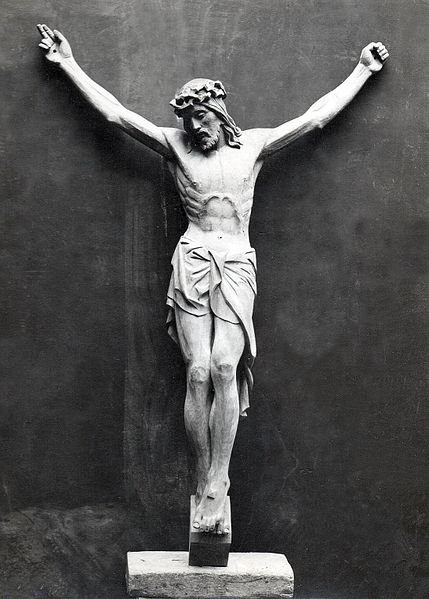
It was early in my PhD. One of my colleagues had a friend come up from Birmingham and so invited a bunch of us round to his house. We’d all been drinking, and at one point, the conversation turned to who Jesus is. A colleague’s friend who’d been a Christian but turned from the faith brought up this passage from this week’s Gospel reading. I can’t remember just what he said, but it was something along the lines of: If some guy came up to me and told me I had to love him more than my parents or more than my (hypothetical) kids, I’d call him batshit crazy.
I couldn’t help but feel that he got it. He understood this passage better than many of us often do.
Following Christ often appears insane. It seems to contradict all the things this world tells us is good. What’s more, Christ tells us that we have to love him more than our most basic, fundamental social units. Christianity is a rational religion––how could it not be when we have been created and baptized into the One who is Reason––and yet our rationality often appears like madness to the world. So my lapsed acquaintance is right. This call appears like bullshit. But here’s the secret, the passage doesn’t end here.
The last two lines of the portion I’ve quoted above change the dynamic of everything Christ has said. Up until those lines, he has told us love me more; as if he is in real competition with our families, with our very lives. But then he tells us “Whoever finds his life will lose it,/and whoever loses his life for my sake will find it.” I think this passage applies to everything he’s said before. Whoever finds his mother and father will lose them, and whoever loses her mother and father for my sake will find them. Whoever finds her children will lose them, and whoever loses her children for my sake will find them.
Christ is not in competition with our loves, rather loving him allows us to rightly order our loves.
A professor of mine used to say that when people asked him, “Do you love your wife more or less than God?” he would answer, “I love God by loving my wife.” While it’s true that following Christ may cause us to lose friends and family, it’s not necessarily the case that it must be so.
Loving Christ will cause us to find our families and love them the way we ought.
Love is toxic when it’s disordered. That’s what Christ is trying to teach us. An internalized love, loving something too much or too little, a love that causes you to exclude others, is a toxic love. And I think that’s Christ’s point here. We see that in the rest of the Gospel reading:
“Whoever receives you receives me,
and whoever receives me receives the one who sent me.
Whoever receives a prophet because he is a prophet
will receive a prophet’s reward,
and whoever receives a righteous man
because he is a righteous man
will receive a righteous man’s reward.
And whoever gives only a cup of cold water
to one of these little ones to drink
because the little one is a disciple—
amen, I say to you, he will surely not lose his reward” (Matt. 10.40-42).
Christ has gone from telling us that we must lose everything for his sake in order to find it (“Aim at heaven and you’ll get earth thrown in,” as Lewis said). Now, he’s telling us about how we love him, which is by receiving him. When we receive him we receive the one who sent him, namely the Father. And he shows us who he is in relation to the Father by telling us what kind of reward we shall receive by receiving him (the implication being that his reward is above that of the prophet’s or righteous man’s). And then he tells us:
“And whoever gives only a cup of cold water/to one of these little ones to drink/because the little one is a disciple—/amen, I say to you, he will surely not lose his reward.”
Receiving Christ means receiving and caring for his disciples, those whom he has sent.
If all we had was this passage, we might think that this means only care for our fellow Christians. But later in the gospel of Matthew, we see this is not the case. When the sheep and goats are separated both will be judged on when they clothed the naked, fed the hungry, gave drink to the thirsty (and, if we read this in conjunction with the Sermon on the Mount as it appears in Matthew, when they got justice for those who hungered and thirsted for it). Clearly, we receive Christ when we meet him in the poor and the oppressed––and not just amongst our fellow Christians, but all poor and oppressed––and it is Christ we care for when we care for them. This is what it means to love Christ more, it means that we will love Christ by loving all others in his name and for his sake. Christ becomes the lens by which we see, the means by which we love. Only by loving through Christ, in Christ, and with Christ, can our love be rightly ordered. Only by loving Christ can we see the world rightly. Christ infects everything we do when we love him.
I pray he so infects me, even when it’s uncomfortable. I pray he so infects you too.
David Russell Mosley is Dean of Humanities at Holy Family Academy. He is the author of Being Deified: Poetry and Fantasy on the Path to God, and On the Edges of Elfland: A Fairy Tale for Grown-ups. He keeps a blog called Letters from the Edge of Elfland.
Previous Post

June 23, 2017
Trying to Say God: An Address to the Artists
Next Post

July 6, 2017 The Bats of St. Alphonsus
Browse Our Archives
Select a Category Advent Approaching Mystery art Book Reviews Catholic Ghost Story Catholicism community Confession Current Events Dark Devotional Deconstruction Deconstruction Fellow Travelers I Want To Believe Interview Laudato Si Lent Mary Matthew's Letters Movie Reviews Music Reviews Our Charism Personal Essay Pilgrims Pope Francis Popular Piety Prayer Publishing Richard Beck Saints Satan Sheed and Ward Sick Pilgrim Charism Sick Pilgrim Chats Sick Pilgrim Events Sick Pilgrim Travelin' Medicine Show Sick Pilgrimage to The West Sick Pilgrims Small Joys Spiritual Autobiography Spooky Files of Ave Maria Magazine Spooky October Spooky Pilgrim Spooky Pilgrimage Strange Journey The Inklings Things Keeping Us Going Trying to Say God TV Reviews Uncategorized women in the Catholic Church Wonder Podcast Write the Vision
Select a Month February 2022 January 2022 December 2021 November 2021 October 2021 September 2021 August 2021 July 2021 June 2021 May 2021 April 2021 March 2021 February 2021 January 2021 December 2020 April 2020 March 2020 February 2020 January 2020 December 2019 October 2019 September 2019 July 2019 June 2019 May 2019 April 2019 March 2019 February 2019 January 2019 December 2018 November 2018 October 2018 September 2018 August 2018 July 2018 June 2018 May 2018 April 2018 March 2018 February 2018 January 2018 December 2017 November 2017 October 2017 September 2017 August 2017 July 2017 June 2017 May 2017 April 2017 March 2017 February 2017 January 2017 December 2016 November 2016 October 2016 September 2016 August 2016 July 2016 June 2016 May 2016 April 2016 March 2016 February 2016 January 2016 December 2015
Follow Us!
TAKE THE
Religious Wisdom Quiz
True or False: David committed adultery with Bathsheba and arranged for her husband Uriah to be killed.
Select your answer to see how you score.
TRUE FALSE
Related posts from Sick Pilgrim

Dark Devotional: The Firelight of Life

Dark Devotional: Let Me Smite Him

Dark Devotional: Woe to Me, for I Have...

TRENDING AT PATHEOS Catholic

Rejecting Doom: Christian Hope And Human Action
Christianity is a religion of hope. We are to have hope and...

It’s What Comes From Within Which Matters
One of the most difficult things for us to understand is why...

Why I Choose the Eucharist Over the Sermon
Choose the Eucharist, Not the Sermon What are we supposed to get...

5 Design Elements Found in Spiritually Rooted Homes
Putting Spirituality Into Home Decor Our homes are more than our living...

Credo: A Story of God Told with the...
About 10 years ago, I began to imagine a personal "Credo" that...

The Anatomy of Divine Revelation in Catholic Thought
The claim that God has made Himself known to human beings is...
view all Catholic blogs
Ad-Free & Subscriber Log-In Subscription Support
- About Us
- 2026 Calendar
- Videos
- Podcasts
- Library of World Religions
- Faith In Media Tracker
- Advertise With Us
- Write for Us
- Privacy Policy
- Terms of Service
- Do Not Sell My Data
- Contact Us
- Radiant Digital
- Manage Newsletter Subscriptions
- Unsubscribe From Notifications
- Sitemap
Copyright 2008-2026, Patheos. All rights reserved.
Subscription Support Ad-Free & Subscriber Log-In
Follow Patheos