
BuddhistCatholicContemplativeEvangelicalGeneral ChristianHinduJewishLatter-day SaintMuslimNew VisionsProgressive Christian
Beliefs
- Buddhist
- Catholic
- Contemplative
- Evangelical
- General Christian
- Hindu
- Jewish
- Latter-day Saint
- More Voices
- Muslim
- New Visions
- Pagan
- Progressive Christian
Topics
- Religion News
- Food and Religion
- Sports and Religion
- Religious Art
- Religious Music and Entertainment
- Religious Events
- History and Religion
- Style and Religion
- Politics and Religion
- Women in Religion
- Recreation Outdoors and Religion
- Business Finance and Religion
- Careers Workplace and Religion
- Education and Religion
- Family Parenting and Religion
- Health Fitness and Religion
- Home and Religion
- Relationships and Religion
- Technology and Religion
- Travel and Religion
Columnists
- Buddhist Columnists
- Business Finance and Religion Columnists
- Careers Workplace and Religion Columnists
- Catholic Columnists
- Contemplative Columnists
- Education and Religion Columnists
- Evangelists Columnists
- Family Parenting and Religion Columnists
- General Christian Columnists
- Health Fitness and Religion Columnists
- Hindu Columnists
- History and Religion Columnists
- Home and Religion Columnists
- Jewish Columnists
- More Voices Columnists
- Latter Day Columnists
- Muslim Columnists
- New Visions Columnists
- Nonreligious Columnists
- Pagan Columnists
- Politics and Religion Columnists
- Progressive Columnists
- Recreation Outdoors and Religion Columnists
- Relationships and Religion Columnists
- Religion News Columnists
- Religious Art Columnists
- Religious Events Columnists
- Religious Music and Entertainment Columnists
- Sports and Religion Columnists
- Style and Religion Columnists
- Technology and Religion Columnists
- Travel and Religion Columnists
- Women in Religion Columnists
Resource Library
- 2026 Calendar
- Library of World Religions
- The 100 Most Holy Places on Earth
- Patheos Answers
- Podcasts
- Videos
- Faith Leaders Database
- Anglican Episcopalian
- Bahai
- Baptist
- Buddhism
- Christianity
- Confucianism
- Eastern Orthodoxy
- Hinduism
- Holiness and Pentecostal
- ISKCON
- Islam
- Judaism
- Lutheran
- Methodist
- The Church of Jesus Christ of Latter-day Saints
- New Age
- Paganism
- Presbytarian and Reformed
- Protestantism
- Religion Behind the Scenes
- Roman Catholic
- Scientology
- Shia Islam
- Sikhism
- Sufism
- Sunni Islam
- Taoism
- Zen
- See all religions
Research Tools
 Ad-Free & Subscriber Log-In Subscription Support
Ad-Free & Subscriber Log-In Subscription Support
Follow Patheos 

- Trending:
- Forgiveness
- |
- Marriage
- |
- Consciousness
- |
- Death Penalty
- |
- Election
- |
- Halloween
 Sick Pilgrim
- Home
- Catholic
- Mary Karr: Trying to Say God
Mary Karr: Trying to Say God
Last updated on: January 26, 2017 at 11:11 am by Jessica Mesman Griffith
Mary Karr: Trying to Say God 2017-01-26T11:11:45-05:00 Jessica Mesman Griffith
Patheos Explore the world's faith through different perspectives on religion and spirituality! Patheos has the views of the prevalent religions and spiritualities of the world.
This post begins our series of features on the writers, musicians and artists who will be speaking and performing at the Trying to Say God Conference, June 22-24 at the University of Notre Dame.
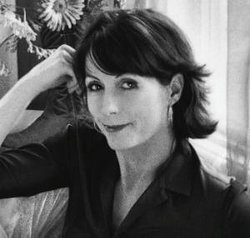
Mary Karr, American poet, essayist, Catholic
“Talking about spiritual activity to a secular audience is like doing card tricks on the radio,” Mary Karr, bestselling author of and “unlikely” Catholic convert, told Terry Gross.
I remember hearing Karr on Fresh Air as I pulled into the parking lot of my desk job after a miserably cold and grey Indiana lunch break. I’d recently graduated from an MFA program in nonfiction, where I’d been told I shouldn’t use the word “soul” in my essays because it was “too vague.” I’d gone to work writing marketing materials for a Catholic university, thinking, naively, that I’d find my kindred there. Instead my office mates referred to me as “the witch” because I preferred lamplight to florescent overhead bulbs and I had a collection of vintage holy cards displayed on my desk.
Hearing one of the most respected authors in the genre I loved–memoir and personal essay–talk about the discomforts and attractions of practicing an ancient faith as an artist gave me yet another reason to be late returning to work.
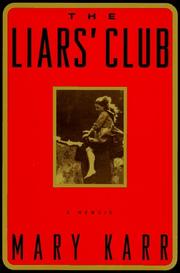
I’ve always looked up to Mary Karr. Not just because she’s a brilliant memoirist, though The Liars Club is still a book I return to again and again in wonder at how she does what she does. But because Karr comes from a world that I recognize–the working class world of the deep south.
Karr didn’t have the pedigree I’d grown, in grad school, to think was essential to writerly success. I was only the second person in my family to graduate from college (my sister was the first) and the fact that I’d gone to Louisiana’s flagship state university–LSU–and not a regional college had been enough to make my family think I was too big for my britches. They were proud, sure, but they’ve always been skeptical. Going to graduate school up north at the University of Pittsburgh–hardly a bastion of the elite–made me insufferable and unrecognizable to them. Imagine my surprise when, at a writing conference I attended, I heard the guest author opining that she had to lecture to “state school kids,” as if this was the very bottom rung of literary status.
Karr’s parents weren’t professors. She wasn’t carefully groomed from birth for success. And yet, she had succeeded–overcoming trauma, sexual abuse, addiction, a “ruined childhood” in a backward town. I was already her devoted fan. But then I heard from her own lips–via NPR–that she had converted. And when I heard why Mary Karr converted, the needle screeched off the record.
KARR: I thought I had a better shot at becoming a pole dancer at 40, right, than of making it in the Catholic Church, and I think what struck me really wasn’t the grandeur of the Mass. It was the simple faith of the people. For me this whole journey was a journey into awe. I would just get these moments of quiet where there wasn’t anything. My head would just shut up, and I knew that was a good thing. And also the carnality of the church: there was a body on the cross.
So much of the contemporary apologetics of the Catholic Church that I’d been reading focused on the rational reasons to believe in Catholicism, all of which left me cold. I am not really a rationalist. I was back in the Catholic Church because I wanted the faith I’d experienced in my childhood in New Orleans, a faith of human experience, not merely a faith of intellect; a faith whose rituals, by design, encourage a sense of awe; a faith that isn’t afraid of death and suffering (of which I’d already seen too much to believe pat Christian platitudes of a god who spends days running around slamming doors and opening windows) but instead goes right ahead and puts death in the middle of the church where you can’t help but stare at it.
And that’s the thing about Karr’s work–she writes about death, trauma, suffering, addiction, sin with a capital S, but she doesn’t resolve them neatly, nor does she give them the final word.
But here’s something else I love. Karr doesn’t just find religion in poetry, she finds poetry in religion. Religion is so often a dirty word–we’re fine with “spirituality” but “religion” is too confining a word, too old-fashioned, maybe, too backward. To say we are religious implies that we’ve given up our autonomy, foregone intellectual and personal freedom. The word itself, religion, does mean “to bind,” and God knows that this bondage has resulted in horrific abuse anywhere and everywhere it’s been enforced.
But Karr sees her own “binding” differently. The Mass, for example. It binds her to others in ritual worship, and it binds her to eternity, to Christ resurrected, in the Eucharist:
“I call it the carnality of mass: you stand up and kneel together, you all touch your chests when you say the act of contrition. My body bends the same way yours does. This type of connection is in poetry, too: when I read a poem, I breathe the way Wordsworth breathed. When we sing together, when we move together, inhaling and exhaling, our mechanisms are unified. I know a lot of people hate that as being sort of sheeplike, but sheeplike-ness, for me, for somebody who has been so special for so much of her life, is a very good thing. Pride is the sin I struggle with most. For me to become a citizen among citizens, a worshipper among worshippers, is central to my having any kind of spiritual change. Before, I didn’t know how much I needed this. I didn’t go in looking for it. But again, I was drawn.”
Karr’s most recent memoir, Lit, told me even more about how a smart-ass from small town Texas went on to start a renaissance of American literary memoir–and how her Catholicism is part of a story that has now inspired and encouraged many other smart ass girls from the south to take her as, if not a patron saint, than a patron “black-belt sinner.” And Her Art of Memoir gave us all the chance to eavesdrop on her classes in the graduate program at Syracuse University, worth the price of admission for the reading list alone.
Karr will speak at the Trying to Say God Conference on June 22, 2014 at 8 pm. To learn more about the conference, the invited speakers, and how you can participate, visit www.tryingtosaygod.com, follow the conference’s Facebook page, and/or contact us at Sick Pilgrim.
Previous Post
January 24, 2017
Screwtape Does America
Next Post
January 27, 2017 Dark Devotional: Blessed are the Poor in Spirit
Browse Our Archives
Select a Category Advent Approaching Mystery art Book Reviews Catholic Ghost Story Catholicism community Confession Current Events Dark Devotional Deconstruction Deconstruction Fellow Travelers I Want To Believe Interview Laudato Si Lent Mary Matthew's Letters Movie Reviews Music Reviews Our Charism Personal Essay Pilgrims Pope Francis Popular Piety Prayer Publishing Richard Beck Saints Satan Sheed and Ward Sick Pilgrim Charism Sick Pilgrim Chats Sick Pilgrim Events Sick Pilgrim Travelin' Medicine Show Sick Pilgrimage to The West Sick Pilgrims Small Joys Spiritual Autobiography Spooky Files of Ave Maria Magazine Spooky October Spooky Pilgrim Spooky Pilgrimage Strange Journey The Inklings Things Keeping Us Going Trying to Say God TV Reviews Uncategorized women in the Catholic Church Wonder Podcast Write the Vision
Select a Month February 2022 January 2022 December 2021 November 2021 October 2021 September 2021 August 2021 July 2021 June 2021 May 2021 April 2021 March 2021 February 2021 January 2021 December 2020 April 2020 March 2020 February 2020 January 2020 December 2019 October 2019 September 2019 July 2019 June 2019 May 2019 April 2019 March 2019 February 2019 January 2019 December 2018 November 2018 October 2018 September 2018 August 2018 July 2018 June 2018 May 2018 April 2018 March 2018 February 2018 January 2018 December 2017 November 2017 October 2017 September 2017 August 2017 July 2017 June 2017 May 2017 April 2017 March 2017 February 2017 January 2017 December 2016 November 2016 October 2016 September 2016 August 2016 July 2016 June 2016 May 2016 April 2016 March 2016 February 2016 January 2016 December 2015
Follow Us!
TAKE THE
Religious Wisdom Quiz
Which book is famous for hundreds of short sayings about wise living?
Select your answer to see how you score.
Psalms Revelation Leviticus Proverbs
Related posts from Sick Pilgrim
Dark Devotional: Holding the Door for Jesus
Dark Devotional: Mind Your Own Distractions
Dark Devotional: He Who Comes to Me Will...
Dark Devotional: Body Drawn and Quartered
TRENDING AT PATHEOS Catholic

Rejecting Doom: Christian Hope And Human Action
Christianity is a religion of hope. We are to have hope and...

It’s What Comes From Within Which Matters
One of the most difficult things for us to understand is why...

Why I Choose the Eucharist Over the Sermon
Choose the Eucharist, Not the Sermon What are we supposed to get...

5 Design Elements Found in Spiritually Rooted Homes
Putting Spirituality Into Home Decor Our homes are more than our living...

Credo: A Story of God Told with the...
About 10 years ago, I began to imagine a personal "Credo" that...

The Anatomy of Divine Revelation in Catholic Thought
The claim that God has made Himself known to human beings is...
view all Catholic blogs
Ad-Free & Subscriber Log-In Subscription Support
- About Us
- 2026 Calendar
- Videos
- Podcasts
- Library of World Religions
- Faith In Media Tracker
- Advertise With Us
- Write for Us
- Privacy Policy
- Terms of Service
- Do Not Sell My Data
- Contact Us
- Radiant Digital
- Manage Newsletter Subscriptions
- Unsubscribe From Notifications
- Sitemap
Copyright 2008-2026, Patheos. All rights reserved.
Subscription Support Ad-Free & Subscriber Log-In
Follow Patheos