
BuddhistCatholicContemplativeEvangelicalGeneral ChristianHinduJewishLatter-day SaintMuslimNew VisionsProgressive Christian
Beliefs
- Buddhist
- Catholic
- Contemplative
- Evangelical
- General Christian
- Hindu
- Jewish
- Latter-day Saint
- More Voices
- Muslim
- New Visions
- Pagan
- Progressive Christian
Topics
- Religion News
- Food and Religion
- Sports and Religion
- Religious Art
- Religious Music and Entertainment
- Religious Events
- History and Religion
- Style and Religion
- Politics and Religion
- Women in Religion
- Recreation Outdoors and Religion
- Business Finance and Religion
- Careers Workplace and Religion
- Education and Religion
- Family Parenting and Religion
- Health Fitness and Religion
- Home and Religion
- Relationships and Religion
- Technology and Religion
- Travel and Religion
Columnists
- Buddhist Columnists
- Business Finance and Religion Columnists
- Careers Workplace and Religion Columnists
- Catholic Columnists
- Contemplative Columnists
- Education and Religion Columnists
- Evangelists Columnists
- Family Parenting and Religion Columnists
- General Christian Columnists
- Health Fitness and Religion Columnists
- Hindu Columnists
- History and Religion Columnists
- Home and Religion Columnists
- Jewish Columnists
- More Voices Columnists
- Latter Day Columnists
- Muslim Columnists
- New Visions Columnists
- Nonreligious Columnists
- Pagan Columnists
- Politics and Religion Columnists
- Progressive Columnists
- Recreation Outdoors and Religion Columnists
- Relationships and Religion Columnists
- Religion News Columnists
- Religious Art Columnists
- Religious Events Columnists
- Religious Music and Entertainment Columnists
- Sports and Religion Columnists
- Style and Religion Columnists
- Technology and Religion Columnists
- Travel and Religion Columnists
- Women in Religion Columnists
Resource Library
- 2026 Calendar
- Library of World Religions
- The 100 Most Holy Places on Earth
- Patheos Answers
- Podcasts
- Videos
- Faith Leaders Database
- Anglican Episcopalian
- Bahai
- Baptist
- Buddhism
- Christianity
- Confucianism
- Eastern Orthodoxy
- Hinduism
- Holiness and Pentecostal
- ISKCON
- Islam
- Judaism
- Lutheran
- Methodist
- The Church of Jesus Christ of Latter-day Saints
- New Age
- Paganism
- Presbytarian and Reformed
- Protestantism
- Religion Behind the Scenes
- Roman Catholic
- Scientology
- Shia Islam
- Sikhism
- Sufism
- Sunni Islam
- Taoism
- Zen
- See all religions
Research Tools
 Ad-Free & Subscriber Log-In Subscription Support
Ad-Free & Subscriber Log-In Subscription Support
Follow Patheos 

- Trending:
- Forgiveness
- |
- Marriage
- |
- Consciousness
- |
- Death Penalty
- |
- Election
- |
- Halloween
 Sick Pilgrim
- Home
- Catholic
- We Wish You a Haunted Christmas
We Wish You a Haunted Christmas
Last updated on: December 20, 2016 at 9:05 pm by Guest Contributor
We Wish You a Haunted Christmas 2016-12-20T21:05:46-05:00 Guest Contributor
Patheos Explore the world's faith through different perspectives on religion and spirituality! Patheos has the views of the prevalent religions and spiritualities of the world.
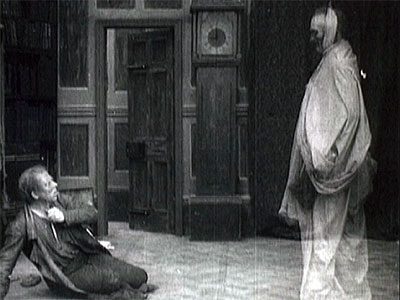
The Ghost of Christmas Past, Dickens
It’s that time of year when I don’t know who to be more frustrated with: those who reduce Christmas to commercialism and saccharine songs, or those who allegedly want to put the Christ back in Christmas – by which they usually mean their favorite idol. If I were feeling uncharitable, I might make some sort of comment about it being impossible to put the Christ back in Christmas without putting the Mass back in Christmas, as it’s hard to understand Christ apart from the work of the Church. Without Christ and His Church we’re left only with a vague feeling that we should have warm hearts and special generosity around this time because – well, because it’s Christmas.
Perhaps the most positive way we can put this is that the season is a mystery in the cultic sense – we don’t really know why or what we are doing when we celebrate Christmas, but we do it anyway because something in the mystery draws us. Like Bryan Adams, we simply feel there’s “something about Christmas time.” But because of the difficulty of sustaining a mystery religion in a modern, “progressive” world, we find ourselves longing for the infantile innocence of stupidity, which we excuse by mislabeling it “childlike.” You must only believe. But believe in what?
When we are urged to return to the “true meaning” of Christmas–whether understood as the Christian nativity story, a particular sobriety, the ousting of mammon, or the abolition of Santa Claus and other Christmas mythopoeia–I’m left astounded by the certainty with which those doing the urging seem to know the “true meaning” of Christmas. Really? Is it so simple to grasp the fact of God taking flesh, becoming human and also remaining God? Have we really got a handle on this such that we can go about correcting the imaginations of our friends and relatives?
As you can see, neither secularism nor a dead-certain faith–emphasis on “dead”–satisfies me. So where can I find the answer?
In ghosts.
I’m serious. I think we should heed Dickens and the spooky stories of twelfth night because they get at something about Christ’s incarnation that neither the secular sops nor the hard-nosed Christian killjoys understand: the spirit of Christmas is the uncanny.
Let me explain.
In literary theory, when we talk about “the uncanny,” we are not talking about simple concrete gruesome horror, nor are we talking about something that cannot ever be known. We’re talking, in simplest terms, about mystery. The uncanny disappears when certainty appears on either side, that is, when the ghost we are afraid of is debunked, or when it is put to rest within a solid and comprehensive metaphysics.
In some Christmas traditions, this uncanniness is negative, as in the case of the poem “Old Christmas Morning,” but in Dickens, the uncanny ghosts exist halfway between the worlds of marvel and terror, and the uncanniness of time – that is, the ungraspability – is shown in the persons of present, past, and future.
What I want to suggest is that, far from being a distraction from the “true meaning” of Christmas, this tradition of uncanniness points us right back to the central Christmas story – the uncanniness of Christ’s incarnation. “It’s the Most Wonderful Time of the Year” speaks more truth than ought to be allowed such a schmaltzy song when it speaks of “scary ghost stories and tales of the glories.” What ghosts are to our perception in a negative sense, the incarnation of Christ – inspired after all by a Holy Ghost – is in a positive sense. And we know this from the Gospel According to John.
It’s in John that we get the fullest account of Christ’s birth, though it’s not the gospel we usually associate with the Christmas story, given its omission of historical details. Yet there is a strong case to be made that John does in fact recount the Christmas story in the opening of his book – the difference is that he is recounting it from a metaphysical rather than merely human perspective. John, the eagle, looks into the sun of righteousness, and is dazzled. To say John points to the “true meaning of Christmas” here would be moot; rather, the logos has a hold of him and won’t let go.
If this – what John is describing – can happen, then anything might happen.
And this is explains the uncanny stories that crop up at Christmas. In such a world, challenged as it is by the incarnation of God, men might come back from the dead. Flowers might bloom in the bleak of winter. Sinners might even learn to repent.
Aside from the more frightening instances of uncanniness, this also explains much of the needless frivolity, absurdity, and silliness of Christmas – all perfectly justifiable on Christian grounds. In a world in which God can become incarnate, even the most foolish things have potential to be folly for God. We do absurd things like sing songs of hope in the middle of a blizzard, or gather together with the people we argue with the most – our family – and talk about peace on earth, good will toward men. Indeed, this overturning – this incarnation – may be enough to redeem the most unredeemable of things. Even kitsch and schmaltz and jest might lay their gifts at the manger. This comes to pass when a child is born.
When Christians seek to have a stranglehold on the “true meaning of Christmas,” they often miss the fact that its truest meaning is dazzling mystery, a mystery patient enough to wait out any clumsy attempts to wield it like a club. Seculars and pagans alike sense that mystery – but with nothing to point to, our festivities collapse into sentimentalism or despair. It’s with this in mind that I want to wish you all a (Christ) haunted Christmas.
The description is Flannery O’Connor’s, who once said that if the south of the United States was hardly Christ centered, it was certainly Christ-haunted. The same could be said of Christmas. The season is saturated with Christian imagery, palimpsests, and erasures. Yet simply trying to go back to the “good old days” when people knew what Christmas was about is not the answer; nor is the answer steamrolling current society so we can rebuild a Christmas worthy of Christendom.
Let’s return, instead, to the mystery of incarnation, a mystery so powerful it sustains all this imagination and beauty, from the highest to the silliest. Let’s follow O’Connor to the realization that even a chaos and confusion of symbols and theologies – a thoroughly haunted labyrinth – is no great obstacle to a God who calls order out of chaos and enters that order, both in the flesh, and as the Ghost Who haunts us.
Karl Persson is a scholar of premodern literature and theology, and is a professor in the Literature and Language Departments at Signum University. In his spare time, he enjoys creative and freelance writing, and is a regular contributor to the Patheos Catholic Channel’s Inner Room, a blog focused on contemplative spirituality and the recovery of ancient Christian practices and social imaginaries.
More on Christmas ghost stories:
Five Forgotten Christmas Ghost Stories from Paris Review
Christmas Ghost Stories from Gothic Curiosities
The forgotten tradition of reading ghost stories on Christmas Eve from The Guardian
And if you liked this post, you’ll LOVE the talk Karl Persson is giving about Christmas this Thursday, December 22, via Signum University: https://attendee.gotowebinar.com/register/2719669878451482370?splash=false
Previous Post
December 19, 2016
Advent: The Catholic Church IS the Rebellion
Next Post
December 22, 2016 Dark Devotional: It's Christmas, Let's Get Drunk!
Browse Our Archives
Select a Category Advent Approaching Mystery art Book Reviews Catholic Ghost Story Catholicism community Confession Current Events Dark Devotional Deconstruction Deconstruction Fellow Travelers I Want To Believe Interview Laudato Si Lent Mary Matthew's Letters Movie Reviews Music Reviews Our Charism Personal Essay Pilgrims Pope Francis Popular Piety Prayer Publishing Richard Beck Saints Satan Sheed and Ward Sick Pilgrim Charism Sick Pilgrim Chats Sick Pilgrim Events Sick Pilgrim Travelin' Medicine Show Sick Pilgrimage to The West Sick Pilgrims Small Joys Spiritual Autobiography Spooky Files of Ave Maria Magazine Spooky October Spooky Pilgrim Spooky Pilgrimage Strange Journey The Inklings Things Keeping Us Going Trying to Say God TV Reviews Uncategorized women in the Catholic Church Wonder Podcast Write the Vision
Select a Month February 2022 January 2022 December 2021 November 2021 October 2021 September 2021 August 2021 July 2021 June 2021 May 2021 April 2021 March 2021 February 2021 January 2021 December 2020 April 2020 March 2020 February 2020 January 2020 December 2019 October 2019 September 2019 July 2019 June 2019 May 2019 April 2019 March 2019 February 2019 January 2019 December 2018 November 2018 October 2018 September 2018 August 2018 July 2018 June 2018 May 2018 April 2018 March 2018 February 2018 January 2018 December 2017 November 2017 October 2017 September 2017 August 2017 July 2017 June 2017 May 2017 April 2017 March 2017 February 2017 January 2017 December 2016 November 2016 October 2016 September 2016 August 2016 July 2016 June 2016 May 2016 April 2016 March 2016 February 2016 January 2016 December 2015
Follow Us!
TAKE THE
Religious Wisdom Quiz
And if a kingdom be divided against itself, ____________.
Select your answer to see how you score.
it is doomed that kingdom cannot stand it has no hope it will fall
Related posts from Sick Pilgrim
Fourth Sunday of Advent: Two Out of Three
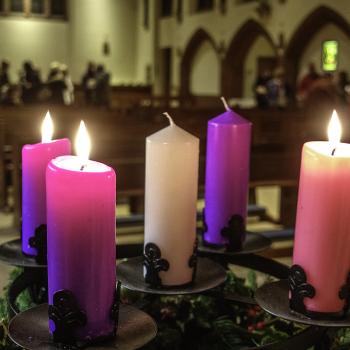
The Third Sunday of Advent: Love is Coming

Things Keeping Us Going: Santa Barf Edition

Second Sunday in Advent: Let Me Love You...
TRENDING AT PATHEOS Catholic

Rejecting Doom: Christian Hope And Human Action
Christianity is a religion of hope. We are to have hope and...

It’s What Comes From Within Which Matters
One of the most difficult things for us to understand is why...

Why I Choose the Eucharist Over the Sermon
Choose the Eucharist, Not the Sermon What are we supposed to get...

5 Design Elements Found in Spiritually Rooted Homes
Putting Spirituality Into Home Decor Our homes are more than our living...

Credo: A Story of God Told with the...
About 10 years ago, I began to imagine a personal "Credo" that...

The Anatomy of Divine Revelation in Catholic Thought
The claim that God has made Himself known to human beings is...
view all Catholic blogs
Ad-Free & Subscriber Log-In Subscription Support
- About Us
- 2026 Calendar
- Videos
- Podcasts
- Library of World Religions
- Faith In Media Tracker
- Advertise With Us
- Write for Us
- Privacy Policy
- Terms of Service
- Do Not Sell My Data
- Contact Us
- Radiant Digital
- Manage Newsletter Subscriptions
- Unsubscribe From Notifications
- Sitemap
Copyright 2008-2026, Patheos. All rights reserved.
Subscription Support Ad-Free & Subscriber Log-In
Follow Patheos