
BuddhistCatholicContemplativeEvangelicalGeneral ChristianHinduJewishLatter-day SaintMuslimNew VisionsProgressive Christian
Beliefs
- Buddhist
- Catholic
- Contemplative
- Evangelical
- General Christian
- Hindu
- Jewish
- Latter-day Saint
- More Voices
- Muslim
- New Visions
- Pagan
- Progressive Christian
Topics
- Religion News
- Food and Religion
- Sports and Religion
- Religious Art
- Religious Music and Entertainment
- Religious Events
- History and Religion
- Style and Religion
- Politics and Religion
- Women in Religion
- Recreation Outdoors and Religion
- Business Finance and Religion
- Careers Workplace and Religion
- Education and Religion
- Family Parenting and Religion
- Health Fitness and Religion
- Home and Religion
- Relationships and Religion
- Technology and Religion
- Travel and Religion
Columnists
- Buddhist Columnists
- Business Finance and Religion Columnists
- Careers Workplace and Religion Columnists
- Catholic Columnists
- Contemplative Columnists
- Education and Religion Columnists
- Evangelists Columnists
- Family Parenting and Religion Columnists
- General Christian Columnists
- Health Fitness and Religion Columnists
- Hindu Columnists
- History and Religion Columnists
- Home and Religion Columnists
- Jewish Columnists
- More Voices Columnists
- Latter Day Columnists
- Muslim Columnists
- New Visions Columnists
- Nonreligious Columnists
- Pagan Columnists
- Politics and Religion Columnists
- Progressive Columnists
- Recreation Outdoors and Religion Columnists
- Relationships and Religion Columnists
- Religion News Columnists
- Religious Art Columnists
- Religious Events Columnists
- Religious Music and Entertainment Columnists
- Sports and Religion Columnists
- Style and Religion Columnists
- Technology and Religion Columnists
- Travel and Religion Columnists
- Women in Religion Columnists
Resource Library
- 2026 Calendar
- Library of World Religions
- The 100 Most Holy Places on Earth
- Patheos Answers
- Podcasts
- Videos
- Faith Leaders Database
- Anglican Episcopalian
- Bahai
- Baptist
- Buddhism
- Christianity
- Confucianism
- Eastern Orthodoxy
- Hinduism
- Holiness and Pentecostal
- ISKCON
- Islam
- Judaism
- Lutheran
- Methodist
- The Church of Jesus Christ of Latter-day Saints
- New Age
- Paganism
- Presbytarian and Reformed
- Protestantism
- Religion Behind the Scenes
- Roman Catholic
- Scientology
- Shia Islam
- Sikhism
- Sufism
- Sunni Islam
- Taoism
- Zen
- See all religions
Research Tools
 Ad-Free & Subscriber Log-In Subscription Support
Ad-Free & Subscriber Log-In Subscription Support
Follow Patheos 

- Trending:
- Forgiveness
- |
- Marriage
- |
- Consciousness
- |
- Death Penalty
- |
- Election
- |
- Halloween
 Sick Pilgrim
- Home
- Catholic
- Jesus Frankenstein: Mary’s Baby and Mary Shelley’s Hideous Progeny
Jesus Frankenstein: Mary’s Baby and Mary Shelley’s Hideous Progeny
Last updated on: December 19, 2016 at 11:34 am by Guest Contributor
Jesus Frankenstein: Mary’s Baby and Mary Shelley’s Hideous Progeny 2016-12-19T11:34:50-05:00 Guest Contributor
Patheos Explore the world's faith through different perspectives on religion and spirituality! Patheos has the views of the prevalent religions and spiritualities of the world.
Shelley’s hideous progeny: Frankenstein’s Monster
“I, the miserable and the abandoned, am an abortion to be spurned at, and kicked, and trampled on.”
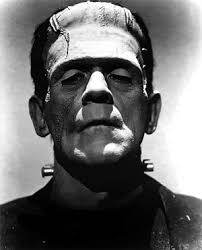
So cries Frankenstein’s monster at the end of Mary Shelley’s most famous work, published in 1818, when the author was just 21. In her introduction to the 1831 edition, Shelley attempts to answer the question “so frequently asked” of her –
“How [did] I, then a young girl, [come] to think of, and to dilate upon, so very hideous an idea?”
Her answer is less than satisfying: my parents were famous writers, I was bored on vacation and Lord Byron challenged us all to write ghost stories, my famous poet-husband encouraged me to develop the idea that had come to me in a half-waking vision.
Irony abounds in the afterlife of Mary’s novel – that easy slippage between Frankenstein the scientist and his unnamed creature, which we often call by his creator’s name, the endless adaptation of the story into the stuff of cheap, gruesome thrill, and most of all, the surprise, mock or otherwise, that such a young girl as Mary was could have dreamed up and set down such a horrifying – and enduring – tale: How did she, then a young girl, come to think of and dilate upon so very hideous an idea?
To ask the question is to assume that young girls do not think large and sometimes terrifying thoughts, having experienced too little of life to be able to write with any authority about human nature’s seamier side. To ask the question is to assume that girlhood means, universally, an idealized upper-middle class girlhood sheltered from knowledge of sex and from discussion of any bodily functions, full of dolls and needlework and cheerful daydreams. To ask the question is to forget what most girls’ lives are and have been.
Frankenstein is a story about creativity, about incarnation, and by the time Mary conceived the idea, at age 18, she had already experienced incarnation’s cost. Her mother, the famous feminist writer Mary Wollestonecraft, died eleven days after Mary was born from puerperal fever, a strep infection of the uterus and a frequent slayer of newly delivered women in the age before antibiotics. Mary Shelley herself was just sixteen and pregnant when she ran off to Europe with the poet Percy Shelley, who was married, and whose wife was also pregnant. Mary’s child was born prematurely, and died too soon to be named –
“find my baby dead,” she wrote in her journal. “A miserable day.”
Mary Shelley was pregnant again just eight weeks later; the baby was five months old when she began writing Frankenstein. A few months after she started, her half sister killed herself. Then Harriet Shelley, Percy’s wife, drowned herself, pregnant by another man. Mary Shelley was pregnant almost constantly for five years, with but one living child. For Mary, there was no birth, no life, no love without the specter of death. Victor Frankenstein’s creation, the monster, is a story of conception, of ecstatic desire, of exhausting pregnancy, of birth, of crushing postpartum depression, and of infant abandonment:
“I had worked so hard for nearly two years for the sole purpose of infusing life into an inanimate body. For this I had deprived myself of rest and health. I had desired it with an ardor that exceeded moderation; but now that I had finished, the beauty of the dream vanished, and breathless horror and disgust filled my heart.”
It’s then that the monster opens its eyes, and Victor flees, leaving the intelligent, sensitive but ugly creature to make his own way without a benevolent creator – or a loving mother – to guide him.
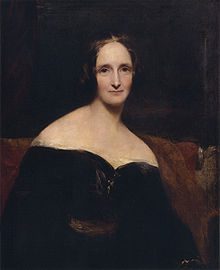
Mary Shelley, grieving mother
Mary Shelley wrote in her journal of a dream she had after finding her first little baby dead. She dreamed that it was not dead, but merely cold, and that she rubbed it before the fire, and it warmed and reanimated – life warmed from death, precisely what Victor Frankenstein aspired to and achieved, but to horrific effect. The novel is, of course, often read as a caution against godlike aspiration.
When Christians think and talk about Incarnation, or the Nativity, we think of it as very beautiful, very quaint. We talk a lot about light – the Star, the light of lights coming into the world. But incarnation has that little root in there – carnis – carnage. It implies God taking on gruesomeness unflinchingly – not only not abandoning the creature, not only becoming the creature, but of taking up space inside the creature, making his way “between urine and feces” as is often misattributed to St. Augustine. Christmas means carnage.
Mary Shelley explicitly writes Frankenstein as a bad creator. But her creature is bad because he has been abandoned, so it’s equally plausible to read in Frankenstein her understanding of God: how dare he judge us? He left us.
It’s also possible to read in Frankenstein Shelley’s ambiguity about motherhood – the frightful state that killed her mother and made her so frequently pregnant and yet so often without a living child, the state that impelled her rival’s suicide. I imagine her visceral horror, her disgust, at finding her dead baby, perhaps already starting to decompose.
And it’s then that I remember what a scary thing Incarnation is; how much the Blessed Virgin’s consent means. For every pregnancy exacts a blood sacrifice, and sometimes the ultimate sacrifice. And there is, crushingly, no guarantee that it won’t end with a whimper, with blood in the toilet, with a bereft mother dreaming of her baby’s resurrection.
Which is, of course, what the Blessed Virgin Mary did. And her baby did reanimate before the fire.
Maybe that’s why, dark though the Christmas story certainly is, we hope.
Rachel Marie Stone teaches English at The Stony Brook School in New York, and is the author of several books, including Eat With Joy: Redeeming God’s Gift of Food, and, most recently, the 40th anniversary edition of the More-With-Less cookbook, just out from Herald Press. She’s pictured here with her elderly cat.
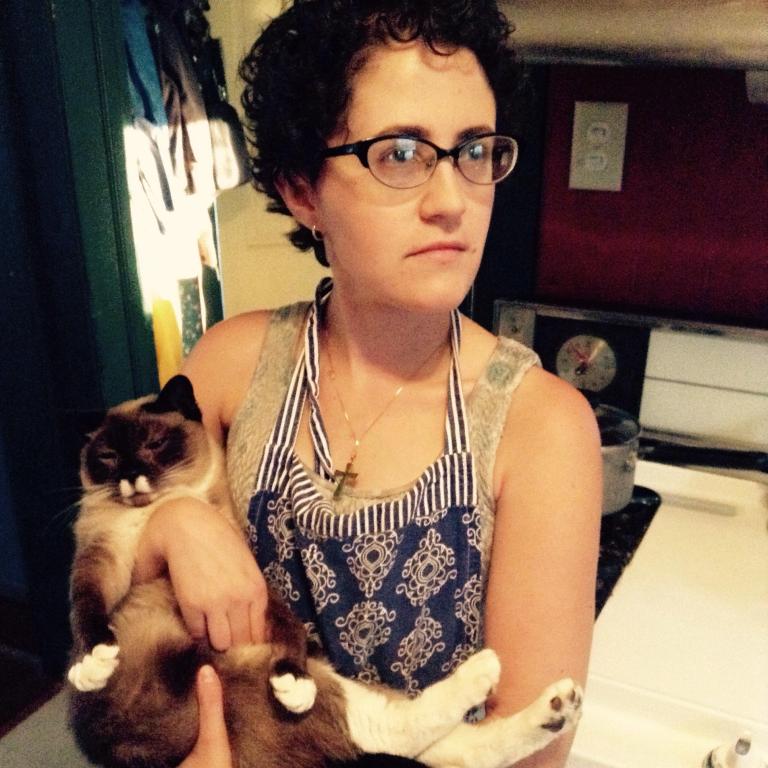
Rachel Stone and her elderly cat wish you a very merry Christmas amid the carnage.
(Rachel’s humanitarian service includes creating the No. 1 trending Twitter hashtag #AddAWordRuinAChristianBook. Do yourself a favor and search some of the results. –Ed.)
Previous Post

December 16, 2016
Dark Devotional: Fourth Sunday in Advent: Listen to the Misfits
Next Post
December 19, 2016 Advent: The Catholic Church IS the Rebellion
Browse Our Archives
Select a Category Advent Approaching Mystery art Book Reviews Catholic Ghost Story Catholicism community Confession Current Events Dark Devotional Deconstruction Deconstruction Fellow Travelers I Want To Believe Interview Laudato Si Lent Mary Matthew's Letters Movie Reviews Music Reviews Our Charism Personal Essay Pilgrims Pope Francis Popular Piety Prayer Publishing Richard Beck Saints Satan Sheed and Ward Sick Pilgrim Charism Sick Pilgrim Chats Sick Pilgrim Events Sick Pilgrim Travelin' Medicine Show Sick Pilgrimage to The West Sick Pilgrims Small Joys Spiritual Autobiography Spooky Files of Ave Maria Magazine Spooky October Spooky Pilgrim Spooky Pilgrimage Strange Journey The Inklings Things Keeping Us Going Trying to Say God TV Reviews Uncategorized women in the Catholic Church Wonder Podcast Write the Vision
Select a Month February 2022 January 2022 December 2021 November 2021 October 2021 September 2021 August 2021 July 2021 June 2021 May 2021 April 2021 March 2021 February 2021 January 2021 December 2020 April 2020 March 2020 February 2020 January 2020 December 2019 October 2019 September 2019 July 2019 June 2019 May 2019 April 2019 March 2019 February 2019 January 2019 December 2018 November 2018 October 2018 September 2018 August 2018 July 2018 June 2018 May 2018 April 2018 March 2018 February 2018 January 2018 December 2017 November 2017 October 2017 September 2017 August 2017 July 2017 June 2017 May 2017 April 2017 March 2017 February 2017 January 2017 December 2016 November 2016 October 2016 September 2016 August 2016 July 2016 June 2016 May 2016 April 2016 March 2016 February 2016 January 2016 December 2015
Follow Us!
TAKE THE
Religious Wisdom Quiz
How did Nehemiah respond to threats and ridicule while rebuilding the wall?
Select your answer to see how you score.
Fled Jerusalem Gave up Bribed enemies Prayed and posted guards
Related posts from Sick Pilgrim
Dark Devotional: The Virgin Mary's Guide to Biblical...
Fourth Sunday of Advent: Two Out of Three
Dark Devotional: Mary, Motherhood, and Mixed Feelings
The Third Sunday of Advent: Love is Coming
TRENDING AT PATHEOS Catholic

Creation, Preservation, and Teleology in Catholic Theology
As I write this, it is very early Monday morning. Like millions...

The Parable Of The Sower And The Word...
One of Christ’s most famous parables is that of the sower who...

Rejecting Doom: Christian Hope And Human Action
Christianity is a religion of hope. We are to have hope and...

Why I Choose the Eucharist Over the Sermon
Choose the Eucharist, Not the Sermon What are we supposed to get...

5 Design Elements Found in Spiritually Rooted Homes
Putting Spirituality Into Home Decor Our homes are more than our living...

Credo: A Story of God Told with the...
About 10 years ago, I began to imagine a personal "Credo" that...
view all Catholic blogs
Ad-Free & Subscriber Log-In Subscription Support
- About Us
- 2026 Calendar
- Videos
- Podcasts
- Library of World Religions
- Faith In Media Tracker
- Advertise With Us
- Write for Us
- Privacy Policy
- Terms of Service
- Do Not Sell My Data
- Contact Us
- Radiant Digital
- Manage Newsletter Subscriptions
- Unsubscribe From Notifications
- Sitemap
Copyright 2008-2026, Patheos. All rights reserved.
Subscription Support Ad-Free & Subscriber Log-In
Follow Patheos