
BuddhistCatholicContemplativeEvangelicalGeneral ChristianHinduJewishLatter-day SaintMuslimNew VisionsProgressive Christian
Beliefs
- Buddhist
- Catholic
- Contemplative
- Evangelical
- General Christian
- Hindu
- Jewish
- Latter-day Saint
- More Voices
- Muslim
- New Visions
- Pagan
- Progressive Christian
Topics
- Religion News
- Food and Religion
- Sports and Religion
- Religious Art
- Religious Music and Entertainment
- Religious Events
- History and Religion
- Style and Religion
- Politics and Religion
- Women in Religion
- Recreation Outdoors and Religion
- Business Finance and Religion
- Careers Workplace and Religion
- Education and Religion
- Family Parenting and Religion
- Health Fitness and Religion
- Home and Religion
- Relationships and Religion
- Technology and Religion
- Travel and Religion
Columnists
- Buddhist Columnists
- Business Finance and Religion Columnists
- Careers Workplace and Religion Columnists
- Catholic Columnists
- Contemplative Columnists
- Education and Religion Columnists
- Evangelists Columnists
- Family Parenting and Religion Columnists
- General Christian Columnists
- Health Fitness and Religion Columnists
- Hindu Columnists
- History and Religion Columnists
- Home and Religion Columnists
- Jewish Columnists
- More Voices Columnists
- Latter Day Columnists
- Muslim Columnists
- New Visions Columnists
- Nonreligious Columnists
- Pagan Columnists
- Politics and Religion Columnists
- Progressive Columnists
- Recreation Outdoors and Religion Columnists
- Relationships and Religion Columnists
- Religion News Columnists
- Religious Art Columnists
- Religious Events Columnists
- Religious Music and Entertainment Columnists
- Sports and Religion Columnists
- Style and Religion Columnists
- Technology and Religion Columnists
- Travel and Religion Columnists
- Women in Religion Columnists
Resource Library
- 2026 Calendar
- Library of World Religions
- The 100 Most Holy Places on Earth
- Patheos Answers
- Podcasts
- Videos
- Faith Leaders Database
- Anglican Episcopalian
- Bahai
- Baptist
- Buddhism
- Christianity
- Confucianism
- Eastern Orthodoxy
- Hinduism
- Holiness and Pentecostal
- ISKCON
- Islam
- Judaism
- Lutheran
- Methodist
- The Church of Jesus Christ of Latter-day Saints
- New Age
- Paganism
- Presbytarian and Reformed
- Protestantism
- Religion Behind the Scenes
- Roman Catholic
- Scientology
- Shia Islam
- Sikhism
- Sufism
- Sunni Islam
- Taoism
- Zen
- See all religions
Research Tools
 Ad-Free & Subscriber Log-In Subscription Support
Ad-Free & Subscriber Log-In Subscription Support
Follow Patheos 

- Trending:
- Forgiveness
- |
- Marriage
- |
- Consciousness
- |
- Death Penalty
- |
- Election
- |
- Halloween
 Sick Pilgrim
- Home
- Catholic
- We are Blood Thirsty: Twilight, Fifty Shades, and Leviticus
We are Blood Thirsty: Twilight, Fifty Shades, and Leviticus
Last updated on: October 27, 2016 at 10:46 am by Guest Contributor
We are Blood Thirsty: Twilight, Fifty Shades, and Leviticus 2016-10-27T10:46:56-05:00 Guest Contributor
Patheos Explore the world's faith through different perspectives on religion and spirituality! Patheos has the views of the prevalent religions and spiritualities of the world.
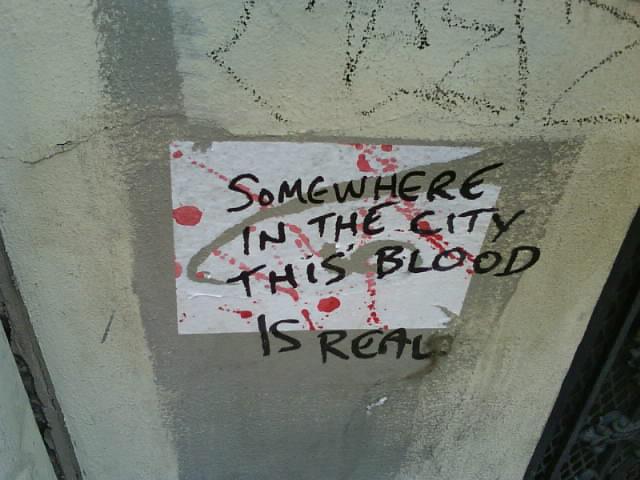
Photo Credit: Jonathan Ryan
Editor’s Note:This post discusses ritualistic cutting and self-injury in the context of a theology of blood. If you or someone you love practices non-suicidal self-injury to relieve emotional pain, more information and resources are available here.
More than half of girls aged 10-14 and one in five aged 10-18 ritualistically bleed themselves through cutting practices they say “make them feel alive” as they silently “cry tears of blood” that “relieve the pain.”
I called a friend who habitually cut herself, participating in ritual cutting with others as a teenager. She said she had an affinity for cutting, according to her experiences and circle of friends, because “blood is more intimate than sex, because life is in the blood.”
I suggested that sex is naturally ordered toward life. So life is “in” sex too, unless there is contraception or some other sterile union. Birth involves blood and life as well. Violently so.
My friend was surprised to learn that her remark “life is in the blood” is a direct quote from Leviticus 17:11-14 (“the life of a thing is in its blood”). She answered that blood is more intimate than sex, because you never share your blood with others–unless you’re hurt.
Everyone has sex, nowadays, and it means nothing, she said, going on to express that in sharing blood with another, you are part of that person and their pain, and they are part of you. There is unity.
“Human to human, blood to blood,” she said.
I found it interesting that she spoke of life, blood and sacrifice in the same context. Her view seems to echo our cultural fascination with books like Twilight and Fifty Shades. (The latter series began as fan fiction, inspired by the former.) In both sets of books, the heroines are virgins before they become sexually involved with the main male characters. Both Edward and Christian Gray draw their blood in other ways, fictional attempts to take the blood relationship even further, make it deeper.
What if this vampiric obsession shares roots with self-cutting practices, and even the Eucharist? What if similar attempts at personal communion through blood are inherently and unconsciously driven by a sort of divine imprint on the soul? What if that longing exists because the sacred exchange of blood was God’s idea from the beginning of time?
What if it all goes back to Leviticus?
Contracts in Blood
Theologians explain that a contract is simply a legal agreement, whereas a biblical covenant, like the Sacrament of Matrimony, is a complete self-donation, a sacrificial exchange of persons. Since a female usually bleeds in her first sexual encounter, whether the woman acknowledged it or not, her blood was a sign that marked the couple’s first intimate encounter as a permanent blood covenant. Through that encounter, and every one afterward, the husband transmits the seed of life, and she potentially carries and nurtures that union unto new life, sacrificially giving birth to the union again, in blood and pain.
The Bible is full of such sacrificial blood covenants. Not because God loves gore and death, but because blood is holy.
If the life of a thing is in its blood, then blood is particularly God’s, since it is God who gives every living thing its life.
After Adam and Eve sinned, they hid from God under fig leaves in sudden shame for their nakedness. God then provided animal skins for them to wear. Maybe that sacrifice of animal blood also signified, from the earliest moments in human history, God’s permanent commitment to humanity even–maybe even especially–in its sin. Perhaps that first animal sacrifice was God preparing us for an even deeper reality.
In the Old Testament, blood was particularly holy and never to be presumptuously touched. God enacted a strict prohibition against eating or drinking blood upon pain of death (Lev. 17:11-14). The prohibition makes blood seem dirty, but in fact, in Jewish thought, anything holy had connotations similar to that of radioactivity. If you get holiness “on you” and you’re not holy yourself, it will hurt you somehow.
As I explore in chapter three of Unleashed, women experiencing their monthly flow of blood were considered unclean for this reason (Lev. 15:19-28)–a Levitical mandate that had personally offended me, since that joyful feminine experience is hardly my fault. Then I made the connection of that monthly flow of blood with the ability to sacrificially bring new life into the world. God-as-Life-Giver made the prohibitions to set woman apart as uniquely holy.
Honestly? That realization changed the way I saw my own blood.
Blood to Blood, Life to Life
Part of why the Old Testament seems so brutal is because of all the bloody animal sacrifices God required. Those sacrifices illustrated the brutality of sin. Sin introduces death and leeches away life – a quality of life we can barely imagine or experience yet.
Each Old Testament sacrifice foreshadowed the one Super Sacrifice of the Blood of Christ, required to atone for human sin. Only an eternal sacrifice could atone for an immortal soul. Jesus shared our blood and our pain. He gives us His eternal-life seed through His pain and His blood. “Human to human, blood to blood.”
And yet, the cross didn’t end the life-blood connection. The Old Testament prohibited the drinking of blood, but Jesus requires we do so for eternal life: “Truly, truly, I say to you, unless you eat the flesh of the Son of man and drink his blood, you have no life in you; he who eats my flesh and drinks my blood has eternal life” (Joh 6:53-54). Lest we misunderstand and think He is speaking symbolically, he uses the literal Greek word for gnawing.
If you’re offended or disgusted by Jesus’ gory literalism, well, you’re not the first: “After this [saying], many of his disciples drew back and no longer went about with him” (John 6:66).
The Mass is a true sacrifice because it is the same Jesus present, body and blood, pouring Himself out for our sins. In doing so He is not redeeming us again – He did that already on the Cross – but He offers Himself in Eucharistic Communion to transmit His divine life to us through His sacrificial body and blood.
When He says, “This is the cup of the new covenant in my blood that is poured out for you for the forgiveness of sins,” He uses the same word the Old Testament used for the pouring out of sacrificial blood in the tabernacle and covenant sacrifices. To eat and drink the blood of those sacrifices would have been to drink unto death, so God enacted a protective prohibition against such. And yet Jesus, who came to give us life, made eating His flesh and drinking His blood the whole point of the New Covenant, because His sacrificial, resurrected, eternal life is literally and uniquely present there.
No wonder we thirst for blood–longing for human connection through blood is imprinted on the soul.When unfulfilled, this longing displays itself in other bloody, painful ways. But only Jesus satiates the world’s primal need for the blood-giving, life-demands we read about in Leviticus.
I remember this now when I think of Twilight, of Vampires, of S&M, and even of cutting. I remember it when I receive Him in the Eucharist. I’m meant to go forth and be broken and spilled out–through Him, in Him, and with Him–in every precious encounter: human to human, life to life.
___
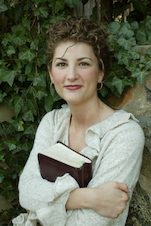 Sonja Corbitt is the Bible Study Evangelista, a Catholic Scripture teacher and author of Unleashed, Fearless, and *Ignite (*summer 2017 with Deacon Harold Burke-Sivers). She hosts a weekly radio show on Breadbox Media, and you can catch her newest audio study series on understanding the Old Testament here. What’s an “evangelista” anyway? Find out at biblestudyevangelista.com.
Previous Post

October 26, 2016
Things Keeping the Undead Alive
Next Post

October 28, 2016 Dark Devotional: The Terror of the Saintly Call
Browse Our Archives
Select a Category Advent Approaching Mystery art Book Reviews Catholic Ghost Story Catholicism community Confession Current Events Dark Devotional Deconstruction Deconstruction Fellow Travelers I Want To Believe Interview Laudato Si Lent Mary Matthew's Letters Movie Reviews Music Reviews Our Charism Personal Essay Pilgrims Pope Francis Popular Piety Prayer Publishing Richard Beck Saints Satan Sheed and Ward Sick Pilgrim Charism Sick Pilgrim Chats Sick Pilgrim Events Sick Pilgrim Travelin' Medicine Show Sick Pilgrimage to The West Sick Pilgrims Small Joys Spiritual Autobiography Spooky Files of Ave Maria Magazine Spooky October Spooky Pilgrim Spooky Pilgrimage Strange Journey The Inklings Things Keeping Us Going Trying to Say God TV Reviews Uncategorized women in the Catholic Church Wonder Podcast Write the Vision
Select a Month February 2022 January 2022 December 2021 November 2021 October 2021 September 2021 August 2021 July 2021 June 2021 May 2021 April 2021 March 2021 February 2021 January 2021 December 2020 April 2020 March 2020 February 2020 January 2020 December 2019 October 2019 September 2019 July 2019 June 2019 May 2019 April 2019 March 2019 February 2019 January 2019 December 2018 November 2018 October 2018 September 2018 August 2018 July 2018 June 2018 May 2018 April 2018 March 2018 February 2018 January 2018 December 2017 November 2017 October 2017 September 2017 August 2017 July 2017 June 2017 May 2017 April 2017 March 2017 February 2017 January 2017 December 2016 November 2016 October 2016 September 2016 August 2016 July 2016 June 2016 May 2016 April 2016 March 2016 February 2016 January 2016 December 2015
Follow Us!
TAKE THE
Religious Wisdom Quiz
Which tribe of Israel did NOT receive a land inheritance?
Select your answer to see how you score.
Benjamin Gad Judah Levi
Related posts from Sick Pilgrim
Dark Devotional: Holding the Door for Jesus
Dark Devotional: Everything Is Naked
Dark Devotional: It Is Not Good to Be...

Dark Devotional: Mind Your Own Distractions
TRENDING AT PATHEOS Catholic

Creation, Preservation, and Teleology in Catholic Theology
As I write this, it is very early Monday morning. Like millions...

The Parable Of The Sower And The Word...
One of Christ’s most famous parables is that of the sower who...

Rejecting Doom: Christian Hope And Human Action
Christianity is a religion of hope. We are to have hope and...

Why I Choose the Eucharist Over the Sermon
Choose the Eucharist, Not the Sermon What are we supposed to get...

5 Design Elements Found in Spiritually Rooted Homes
Putting Spirituality Into Home Decor Our homes are more than our living...

Credo: A Story of God Told with the...
About 10 years ago, I began to imagine a personal "Credo" that...
view all Catholic blogs
Ad-Free & Subscriber Log-In Subscription Support
- About Us
- 2026 Calendar
- Videos
- Podcasts
- Library of World Religions
- Faith In Media Tracker
- Advertise With Us
- Write for Us
- Privacy Policy
- Terms of Service
- Do Not Sell My Data
- Contact Us
- Radiant Digital
- Manage Newsletter Subscriptions
- Unsubscribe From Notifications
- Sitemap
Copyright 2008-2026, Patheos. All rights reserved.
Subscription Support Ad-Free & Subscriber Log-In
Follow Patheos