
BuddhistCatholicContemplativeEvangelicalGeneral ChristianHinduJewishLatter-day SaintMuslimNew VisionsProgressive Christian
Beliefs
- Buddhist
- Catholic
- Contemplative
- Evangelical
- General Christian
- Hindu
- Jewish
- Latter-day Saint
- More Voices
- Muslim
- New Visions
- Pagan
- Progressive Christian
Topics
- Religion News
- Food and Religion
- Sports and Religion
- Religious Art
- Religious Music and Entertainment
- Religious Events
- History and Religion
- Style and Religion
- Politics and Religion
- Women in Religion
- Recreation Outdoors and Religion
- Business Finance and Religion
- Careers Workplace and Religion
- Education and Religion
- Family Parenting and Religion
- Health Fitness and Religion
- Home and Religion
- Relationships and Religion
- Technology and Religion
- Travel and Religion
Columnists
- Buddhist Columnists
- Business Finance and Religion Columnists
- Careers Workplace and Religion Columnists
- Catholic Columnists
- Contemplative Columnists
- Education and Religion Columnists
- Evangelists Columnists
- Family Parenting and Religion Columnists
- General Christian Columnists
- Health Fitness and Religion Columnists
- Hindu Columnists
- History and Religion Columnists
- Home and Religion Columnists
- Jewish Columnists
- More Voices Columnists
- Latter Day Columnists
- Muslim Columnists
- New Visions Columnists
- Nonreligious Columnists
- Pagan Columnists
- Politics and Religion Columnists
- Progressive Columnists
- Recreation Outdoors and Religion Columnists
- Relationships and Religion Columnists
- Religion News Columnists
- Religious Art Columnists
- Religious Events Columnists
- Religious Music and Entertainment Columnists
- Sports and Religion Columnists
- Style and Religion Columnists
- Technology and Religion Columnists
- Travel and Religion Columnists
- Women in Religion Columnists
Resource Library
- 2026 Calendar
- Library of World Religions
- The 100 Most Holy Places on Earth
- Patheos Answers
- Podcasts
- Videos
- Faith Leaders Database
- Anglican Episcopalian
- Bahai
- Baptist
- Buddhism
- Christianity
- Confucianism
- Eastern Orthodoxy
- Hinduism
- Holiness and Pentecostal
- ISKCON
- Islam
- Judaism
- Lutheran
- Methodist
- The Church of Jesus Christ of Latter-day Saints
- New Age
- Paganism
- Presbytarian and Reformed
- Protestantism
- Religion Behind the Scenes
- Roman Catholic
- Scientology
- Shia Islam
- Sikhism
- Sufism
- Sunni Islam
- Taoism
- Zen
- See all religions
Research Tools
 Ad-Free & Subscriber Log-In Subscription Support
Ad-Free & Subscriber Log-In Subscription Support
Follow Patheos 

- Trending:
- Forgiveness
- |
- Marriage
- |
- Consciousness
- |
- Death Penalty
- |
- Election
- |
- Halloween
 Sick Pilgrim
- Home
- Catholic
- Art Won’t Make You a Better Person
Art Won’t Make You a Better Person
Last updated on: September 21, 2016 at 9:18 am by Guest Contributor
Art Won’t Make You a Better Person 2016-09-21T09:18:49-05:00 Guest Contributor
Patheos Explore the world's faith through different perspectives on religion and spirituality! Patheos has the views of the prevalent religions and spiritualities of the world.
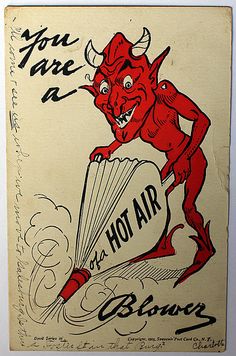
vintage postcard via flickr
A guest post from a Lutheran Sick Pilgrim, Joel Westerholm
I’m in what I hope is the final stage of writing a book, and I’m getting more and more aware of the fact that the book will not change its readers’ lives.
At least, not substantially.
I say this from experience: my experience as a reader of books written by people wiser than myself. I just finished two books by people I heard at the Festival of Faith and Writing: Norman Wirzba’s Food and Faith: A Theology of Eating and James K. A. Smith’s You Are What You Love. Both are immensely wise books, and in important ways, they have led me to shape what I do.
Wirzba’s book affirmed that my gardening and my buying local food are theologically sound, and I have begun saying grace in much more meaningful ways. Smith affirmed me in my attention to my church’s liturgy, in my appreciation for the bodily nature of the faith; I shall teach differently because I realize more fully that my students are not, in his phrase, brains on sticks.
But I won’t be a better person.
The books seem to assume (I’m pretty sure neither man would actually claim this) that if I do what the books instruct, I will be a better person. In fact, they even hold out hope for my influencing the world around me. They’re calling me to a kind of evangelical conversion: I have been blind, but thanks to these books, I see.
But if I see and do some things better, I won’t do them much better, or better for very long. Luther’s phrase for my condition is so common that even in Latin it is nearly cliché: simil justus et peccatur. I am at once a sinner and justified, never not a sinner, never not justified by Jesus. Whatever I do better, I will still be in the thrall of the world in inescapable ways. I’m capable of sustaining the frame of mind Wirzba describes, which I have thought necessary and right for more than a decade, for approximately 9 seconds. I then immediately revert to being a self-centered, consumerist wretch indistinguishable from your nearest middle schooler at the mall.
Good principles; some good practices. Pathetic performance.
(Case in point: I just checked the spelling of an author’s name on the internet, and I saw an ad for hiking shoes, no doubt produced by my online search last night. You see, I need new hiking shoes. Now I’m slowly dragging my attention back to what I’m doing . . .)

from Jess’s old catechism
My pathetic performance as a Christian who attends to the world and other people as Wirzba and Smith describe worries me partly because in the book I’m writing, I tell many personal stories, which would seem to imply that I’m good at what I describe. The title of the book is Attending to God (followed by the inevitable academic colon), so I suppose people will think that I usually do attend to God. The book explains that God is everywhere, and sometimes, after the fact, I can realize that I’ve been in God’s presence. Various forms of contemplating works of art are for me the most frequent occasions of recognizing God’s presence.
I ought to have had many more of these experiences than I’ve had. One of the wonderful features of the life God has given me is that I’ve had plenty of opportunities to enjoy, even to inhabit, works of art. I’ve spent my life in aesthetic production and contemplation. I am by avocation a maker of music (the amazingly clichéd singer-songwriter-guitarist; I’m guessing Twitter has reduced this to SSG?), and by vocation a professor of literature. As both a maker of music and a professor of literature, my heart has ached with beauty and pain, my eyes filled with tears of various kinds.
The experiences of works of art have spilled over into my experiences of nature; I have gone looking for windhovers in north Wales at Gerard Manley Hopkins’s inspiration, and prayed, according to Mary Oliver, by attending to terns. Art has taught me to be familiar with human suffering: contemplating a Pieta has taught me how to sit quietly by the bedside of hospice patients. In the book, I tell of how paying attention to works of art allows me to recognize afterwards that I have been in the presence of God.
The attention I describe is part of the larger wisdom of many Christian writers and books, like those of Wirzba and Smith. These writers have identified what I believe to be the essential error in the thinking of what Paul Gilroy has called the overdeveloped world (I can’t come up with a better term), thinking that has taught what is called “individualism”: that we should think of ourselves, for ourselves, with our self-interest paramount. Individualism, we’re told in essays, stories, songs, movies, and especially advertisements, is good and proper and will create the best social order we can hope for.
Many Christian writers are skeptical. Wirzba is particularly good at showing that out of individualism grows many of the ills that afflict the modern world: consumerism and all its dissatisfactions; pollutions and global warming; the horrors of industrial farming; the exploitation of child labor. Individualism is the spider at the center of this web of woes, teaching people to use the worlds (both natural and human) instrumentally, as tools for one’s own purposes and satisfactions. We pay attention to things, not as they are, but for how we can use them.
So I’m trying to explain how learning to pay attention to works of art can teach us how to pay attention to the rest of the world. But I’m not good at it myself.
Individualism is not new, of course.
Wirzba points out that individualism lies at the root of Adam’s decision to use the fruit of the Tree of the Knowledge of Good and Evil instrumentally, as tasty food and as material to produce a desirable effect on himself. While individualism has always been around, the thinking of the overdeveloped world has taught us not to call it what it is: sin.
In biblical terms, individualism is sin.
In fact, at least as early as St. Augustine, sin was defined as being bent in on oneself; the Latin phrase was homo incurvatus in es.
The Christian way of being, in stark contrast to individualism, is to have the mind of Christ, as Paul says in Philippians 2, not being curved in on oneself, looking to one’s own interests, but in imitating Jesus to look to the interests of others. The Trinity itself is the model, say these Christian writers: the Three who are not three but One. The writers use the term perichoresis to describe this way of being, making room in oneself for the other–hospitality not simply in one’s home, but in oneself. Taking the other into oneself, not to consume, but to make that other at home there.
Surely, then, to be open to the other, to see oneself as part of the Body of Christ, to recognize that we are the product of a great cloud of witnesses: that is what acting as a Christian truly means. In what follows, I offer my own small contribution to this chorus of wise voices in saying that the arts can teach us how to appreciate things for their own sakes, so we can learn from them to attend to the other for the other’s sake, and not our own. For us to thus imitate Jesus is to experience God in his love. For to see or hear or touch a work of art is, well, to lose oneself in contemplation, to make room within oneself for the artistic work, whether it is music, or painting, or poetry, or story. When we learn self-forgetful appreciation of art, we can come to experience self-forgetfulness in our daily lives, in many different situations.
So I have learned that art becomes the practice that prepares us to know the presence of God.
Unfortunately, though, such moments of attending to God remain rare for me. (Yes, I am still thinking about those hiking shoes.) I am sure that what I write is true; I have even occasionally seen it work. But the experiences are brief, and I am inconsistent in applying them.
God forgive me.
I think that’s the point of this meditation: God does forgive me for all my solipsism and narcissism, all those times I am bent in on myself. My ego doesn’t want to admit that I don’t do what I know to be right and good, but the Holy Spirit won’t allow me to do otherwise. I suppose that my writing about what would be good if I could do it consistently is based on solid precedent, since Paul bemoaned his failures in Romans 7, and St. Augustine called one of his great books Confessions. If even Augustine had at least a few things that he’d gotten wrong that he needed to bring to light, I shouldn’t be too ashamed to admit to my failures.
Luther described this simil justus et peccatur condition–my condition—well. He also described the usefulness of knowing what would be good to do, even though we can’t do it. He taught that the point of knowing the Law is to recognize how far short we fall. Once the Law has shown us how much we need grace, we are prepared to receive that grace, to hear the Gospel. So I’m hoping my readers will imitate God, and be merciful to me, a sinner (with a nice new pair of hiking shoes).
Actually, my hope is a little stronger than that. It’s really based on Paul’s experience that he describes in 2 Corinthians 11, of having God tell him that God’s strength is made perfect in Paul’s weakness. This sick pilgrim is hoping that my weakness in failing to do what I say would be good to do will be an occasion for God to show his strength.
Especially since I don’t have any of my own.
Joel Westerholm is an SSG, a professor of English/instructor of music at Northwestern College in Iowa, and the author of the forthcoming book Attending to God.

Next Post
September 21, 2016 I took a crash course in Gregorian chant. Literally.
Browse Our Archives
Select a Category Advent Approaching Mystery art Book Reviews Catholic Ghost Story Catholicism community Confession Current Events Dark Devotional Deconstruction Deconstruction Fellow Travelers I Want To Believe Interview Laudato Si Lent Mary Matthew's Letters Movie Reviews Music Reviews Our Charism Personal Essay Pilgrims Pope Francis Popular Piety Prayer Publishing Richard Beck Saints Satan Sheed and Ward Sick Pilgrim Charism Sick Pilgrim Chats Sick Pilgrim Events Sick Pilgrim Travelin' Medicine Show Sick Pilgrimage to The West Sick Pilgrims Small Joys Spiritual Autobiography Spooky Files of Ave Maria Magazine Spooky October Spooky Pilgrim Spooky Pilgrimage Strange Journey The Inklings Things Keeping Us Going Trying to Say God TV Reviews Uncategorized women in the Catholic Church Wonder Podcast Write the Vision
Select a Month February 2022 January 2022 December 2021 November 2021 October 2021 September 2021 August 2021 July 2021 June 2021 May 2021 April 2021 March 2021 February 2021 January 2021 December 2020 April 2020 March 2020 February 2020 January 2020 December 2019 October 2019 September 2019 July 2019 June 2019 May 2019 April 2019 March 2019 February 2019 January 2019 December 2018 November 2018 October 2018 September 2018 August 2018 July 2018 June 2018 May 2018 April 2018 March 2018 February 2018 January 2018 December 2017 November 2017 October 2017 September 2017 August 2017 July 2017 June 2017 May 2017 April 2017 March 2017 February 2017 January 2017 December 2016 November 2016 October 2016 September 2016 August 2016 July 2016 June 2016 May 2016 April 2016 March 2016 February 2016 January 2016 December 2015
Follow Us!
TAKE THE
Religious Wisdom Quiz
What is the effect of the Red Horse's arrival in revelations?
Select your answer to see how you score.
The sun turns black Peace is taken from the earth People fall into a deep sleep Plagues spread across the land
Related posts from Sick Pilgrim



TRENDING AT PATHEOS Catholic

Rejecting Doom: Christian Hope And Human Action
Christianity is a religion of hope. We are to have hope and...

It’s What Comes From Within Which Matters
One of the most difficult things for us to understand is why...

Why I Choose the Eucharist Over the Sermon
Choose the Eucharist, Not the Sermon What are we supposed to get...

5 Design Elements Found in Spiritually Rooted Homes
Putting Spirituality Into Home Decor Our homes are more than our living...

Credo: A Story of God Told with the...
About 10 years ago, I began to imagine a personal "Credo" that...

The Anatomy of Divine Revelation in Catholic Thought
The claim that God has made Himself known to human beings is...
view all Catholic blogs
Ad-Free & Subscriber Log-In Subscription Support
- About Us
- 2026 Calendar
- Videos
- Podcasts
- Library of World Religions
- Faith In Media Tracker
- Advertise With Us
- Write for Us
- Privacy Policy
- Terms of Service
- Do Not Sell My Data
- Contact Us
- Radiant Digital
- Manage Newsletter Subscriptions
- Unsubscribe From Notifications
- Sitemap
Copyright 2008-2026, Patheos. All rights reserved.
Subscription Support Ad-Free & Subscriber Log-In
Follow Patheos