
BuddhistCatholicContemplativeEvangelicalGeneral ChristianHinduJewishLatter-day SaintMuslimNew VisionsProgressive Christian
Beliefs
- Buddhist
- Catholic
- Contemplative
- Evangelical
- General Christian
- Hindu
- Jewish
- Latter-day Saint
- More Voices
- Muslim
- New Visions
- Pagan
- Progressive Christian
Topics
- Religion News
- Food and Religion
- Sports and Religion
- Religious Art
- Religious Music and Entertainment
- Religious Events
- History and Religion
- Style and Religion
- Politics and Religion
- Women in Religion
- Recreation Outdoors and Religion
- Business Finance and Religion
- Careers Workplace and Religion
- Education and Religion
- Family Parenting and Religion
- Health Fitness and Religion
- Home and Religion
- Relationships and Religion
- Technology and Religion
- Travel and Religion
Columnists
- Buddhist Columnists
- Business Finance and Religion Columnists
- Careers Workplace and Religion Columnists
- Catholic Columnists
- Contemplative Columnists
- Education and Religion Columnists
- Evangelists Columnists
- Family Parenting and Religion Columnists
- General Christian Columnists
- Health Fitness and Religion Columnists
- Hindu Columnists
- History and Religion Columnists
- Home and Religion Columnists
- Jewish Columnists
- More Voices Columnists
- Latter Day Columnists
- Muslim Columnists
- New Visions Columnists
- Nonreligious Columnists
- Pagan Columnists
- Politics and Religion Columnists
- Progressive Columnists
- Recreation Outdoors and Religion Columnists
- Relationships and Religion Columnists
- Religion News Columnists
- Religious Art Columnists
- Religious Events Columnists
- Religious Music and Entertainment Columnists
- Sports and Religion Columnists
- Style and Religion Columnists
- Technology and Religion Columnists
- Travel and Religion Columnists
- Women in Religion Columnists
Resource Library
- 2026 Calendar
- Library of World Religions
- The 100 Most Holy Places on Earth
- Patheos Answers
- Podcasts
- Videos
- Faith Leaders Database
- Anglican Episcopalian
- Bahai
- Baptist
- Buddhism
- Christianity
- Confucianism
- Eastern Orthodoxy
- Hinduism
- Holiness and Pentecostal
- ISKCON
- Islam
- Judaism
- Lutheran
- Methodist
- The Church of Jesus Christ of Latter-day Saints
- New Age
- Paganism
- Presbytarian and Reformed
- Protestantism
- Religion Behind the Scenes
- Roman Catholic
- Scientology
- Shia Islam
- Sikhism
- Sufism
- Sunni Islam
- Taoism
- Zen
- See all religions
Research Tools
 Ad-Free & Subscriber Log-In Subscription Support
Ad-Free & Subscriber Log-In Subscription Support
Follow Patheos 

- Trending:
- Forgiveness
- |
- Marriage
- |
- Consciousness
- |
- Death Penalty
- |
- Election
- |
- Halloween
 Sick Pilgrim
- Home
- Catholic
- Richard Beck Would Like to Introduce You to the Devil
Richard Beck Would Like to Introduce You to the Devil
Last updated on: February 12, 2020 at 11:43 am by Jessica Mesman Griffith
Richard Beck Would Like to Introduce You to the Devil 2020-02-12T11:43:11-05:00 Jessica Mesman Griffith
Patheos Explore the world's faith through different perspectives on religion and spirituality! Patheos has the views of the prevalent religions and spiritualities of the world.
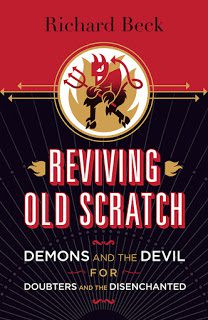 In his new book, Reviving Old Scratch: Demons and the Devil for Doubters and the Disenchanted, psychologist and professor Richard Beck describes a personal encounter with the devil:
“I didn’t smell brimstone or see a horned shadow on the floor. But I do recall, in a way that haunts me to this day, love crashing into a wall…I’d run into something. And that something knocked me off my spiritual feet.”
Beck had been leading Bible study in a prison, but when he tried to preach on the Beatitudes and the blessedness of the meek, he’d been told “you can’t do that stuff in here.” You can’t preach meekness as the path of blessedness to inmates. In prison, meekness is weakness, and weakness will get you killed.
“Who was I to insist that these men become ‘weak’ in such a dangerous place?” he writes. This was the night Richard Beck started believing in the reality of the devil and his minions–“forces adversarial to meekness, to all the Beatitudes, making the Way of Jesus risky, costly, and even dangerous.” Prison isn’t the only place that meekness is dangerous. It’s the way of the cross.
Beck argues for the existence of an actual, literal Satan–an evil spirit out for souls–mostly to the liberal Christian intelligentsia who make up his readership. These are the “disenchanted” of his subtitle–Christians who have have mostly done away with the supernatural dimensions of Christianity, who shy away from terminology like “spiritual warfare” because those words sound old-fashioned and superstitious and have been wielded as a weapon against the wrong people for too long. I hated the vocabulary too, after growing up for a time in a fundamentalist Christian home where I was perceived to be in the hands of the horned guy with the pitchfork rather than suffering from natural and even holy grief for my dead mother.
I believe in the devil, but I dismissed the whole idea of “spiritual warfare” as a way for fundamentalist Christians to demonize the other–those who don’t share their beliefs–and to deny their own capacity for evil, and Beck agrees that it has been deployed in such ways. But not just by fundamentalists who fear their “rebellious” children are demon-possessed. Liberal and progressive Christians, he says, are just as guilty of giving evil a human face and and using it as an excuse to vilify their neighbors–but they tend to do so in the name of “social justice.” They limit evil to a social and political realm. The problem with that sort of thinking is that, just like their conservative counterparts, liberals ultimately demonize those who don’t agree. In what he calls the “Scooby Dooification” of evil, there’s always a human behind the curtain, causing all the problems, which means we can eradicate it by changing the minds and actions of wrong-headed humans. For the “disenchanted” Christian, there is no supernatural explanation, there’s just bad politics. But Beck thinks that Christianity without the supernatural is not Christianity at all. Until we recognize that we’re all living in a spiritual war zone, we’ll underestimate evil and the power we have to fight it.
That’s why I love Beck’s description of love crashing into a wall. I’ve felt it–an almost physical force–and maybe you have too, at a moment in your life when love just didn’t win. Stillbirth. Illness. Betrayal or abandonment by one who was supposed to love and protect you. Suddenly, evil gets personal. I think this is why deep personal grief so often feels like fear. Because even if a mass shooting breaks our hearts, unless it’s your child in the classroom or in the gay club, your husband in the tower, we’ll usually find a human face, or a whole group of them, to blame. “Spiritual warfare isn’t just about a political struggle with the principalities and powers,” writes Beck, and he offers a list of scriptures that describe our struggle with the devil as personal. And I’d say, yes, when it gets personal, it’s easier to believe in the existence of supernatural evil–a force that is totally inhuman, that distorts and resists and even hates love. A force that wants to destroy what is good. A force that doesn’t fight fair and strikes at the weakest spot.
That’s why the counterforce, according to Beck, is not human love. Or it’s not merely human love. Human love is too easily distorted by evil. That’s the devil’s favorite trick. Take away the object of my love–swiftly and cruelly–and see what happens. Often it’s despair and a loss of faith. (And as we learned in The Exorcist, the devil wants us to despair.) No, the counterforce to evil, Beck thinks (and he credits the Catholic tradition here, on page 128) is that other unpopular Christian word: Holiness. His thoughts on the recovery of desire for holiness are some of the most interesting in the book.
If few of us believe in the devil, even fewer would desire to strive for holiness. That would be embarrassing, because we equate holiness with puritanical piety, when really, Beck argues, it “is the discipline needed to protect our love in a world that is satanically antagonistic to love.”
Beck doesn’t really concern himself with why God allows the devil to exist. He dispenses with theodicy in an early chapter, resigning himself to the fact that evil is real and we need to mount a resistance instead of spending all our lives wondering why: “A theology of revolt trades in philosophical bafflement for boots on the ground.”
“Pat Benatar got it right,” he writes. “Love is a battlefield.” It’s where God is at war, Beck says, and it’s time to get off our theological asses and get in the game.
Previous Post

July 4, 2016
Interview with a Drunk Ex-Pastor
Next Post

July 7, 2016 When White People Worship Death, Black People Die.
Browse Our Archives
Select a Category Advent Approaching Mystery art Book Reviews Catholic Ghost Story Catholicism community Confession Current Events Dark Devotional Deconstruction Deconstruction Fellow Travelers I Want To Believe Interview Laudato Si Lent Mary Matthew's Letters Movie Reviews Music Reviews Our Charism Personal Essay Pilgrims Pope Francis Popular Piety Prayer Publishing Richard Beck Saints Satan Sheed and Ward Sick Pilgrim Charism Sick Pilgrim Chats Sick Pilgrim Events Sick Pilgrim Travelin' Medicine Show Sick Pilgrimage to The West Sick Pilgrims Small Joys Spiritual Autobiography Spooky Files of Ave Maria Magazine Spooky October Spooky Pilgrim Spooky Pilgrimage Strange Journey The Inklings Things Keeping Us Going Trying to Say God TV Reviews Uncategorized women in the Catholic Church Wonder Podcast Write the Vision
Select a Month February 2022 January 2022 December 2021 November 2021 October 2021 September 2021 August 2021 July 2021 June 2021 May 2021 April 2021 March 2021 February 2021 January 2021 December 2020 April 2020 March 2020 February 2020 January 2020 December 2019 October 2019 September 2019 July 2019 June 2019 May 2019 April 2019 March 2019 February 2019 January 2019 December 2018 November 2018 October 2018 September 2018 August 2018 July 2018 June 2018 May 2018 April 2018 March 2018 February 2018 January 2018 December 2017 November 2017 October 2017 September 2017 August 2017 July 2017 June 2017 May 2017 April 2017 March 2017 February 2017 January 2017 December 2016 November 2016 October 2016 September 2016 August 2016 July 2016 June 2016 May 2016 April 2016 March 2016 February 2016 January 2016 December 2015
Follow Us!
TAKE THE
Religious Wisdom Quiz
Which Christian symbol looks like a fish and spells "ichthys" in Greek?
Select your answer to see how you score.
The dove The triangle The anchor The Jesus Fish
Related posts from Sick Pilgrim

Dark Devotional: Let Me Smite Him

Dark Devotional: You Want It Darker?
Dark Devotional: I Have Questions
Book Recommendation: Meditations on the Way of the...
TRENDING AT PATHEOS Catholic

Rejecting Doom: Christian Hope And Human Action
Christianity is a religion of hope. We are to have hope and...

It’s What Comes From Within Which Matters
One of the most difficult things for us to understand is why...

Why I Choose the Eucharist Over the Sermon
Choose the Eucharist, Not the Sermon What are we supposed to get...

5 Design Elements Found in Spiritually Rooted Homes
Putting Spirituality Into Home Decor Our homes are more than our living...

Credo: A Story of God Told with the...
About 10 years ago, I began to imagine a personal "Credo" that...

The Anatomy of Divine Revelation in Catholic Thought
The claim that God has made Himself known to human beings is...
view all Catholic blogs
Ad-Free & Subscriber Log-In Subscription Support
- About Us
- 2026 Calendar
- Videos
- Podcasts
- Library of World Religions
- Faith In Media Tracker
- Advertise With Us
- Write for Us
- Privacy Policy
- Terms of Service
- Do Not Sell My Data
- Contact Us
- Radiant Digital
- Manage Newsletter Subscriptions
- Unsubscribe From Notifications
- Sitemap
Copyright 2008-2026, Patheos. All rights reserved.
Subscription Support Ad-Free & Subscriber Log-In
Follow Patheos