
BuddhistCatholicContemplativeEvangelicalGeneral ChristianHinduJewishLatter-day SaintMuslimNew VisionsProgressive Christian
Beliefs
- Buddhist
- Catholic
- Contemplative
- Evangelical
- General Christian
- Hindu
- Jewish
- Latter-day Saint
- More Voices
- Muslim
- New Visions
- Pagan
- Progressive Christian
Topics
- Religion News
- Food and Religion
- Sports and Religion
- Religious Art
- Religious Music and Entertainment
- Religious Events
- History and Religion
- Style and Religion
- Politics and Religion
- Women in Religion
- Recreation Outdoors and Religion
- Business Finance and Religion
- Careers Workplace and Religion
- Education and Religion
- Family Parenting and Religion
- Health Fitness and Religion
- Home and Religion
- Relationships and Religion
- Technology and Religion
- Travel and Religion
Columnists
- Buddhist Columnists
- Business Finance and Religion Columnists
- Careers Workplace and Religion Columnists
- Catholic Columnists
- Contemplative Columnists
- Education and Religion Columnists
- Evangelists Columnists
- Family Parenting and Religion Columnists
- General Christian Columnists
- Health Fitness and Religion Columnists
- Hindu Columnists
- History and Religion Columnists
- Home and Religion Columnists
- Jewish Columnists
- More Voices Columnists
- Latter Day Columnists
- Muslim Columnists
- New Visions Columnists
- Nonreligious Columnists
- Pagan Columnists
- Politics and Religion Columnists
- Progressive Columnists
- Recreation Outdoors and Religion Columnists
- Relationships and Religion Columnists
- Religion News Columnists
- Religious Art Columnists
- Religious Events Columnists
- Religious Music and Entertainment Columnists
- Sports and Religion Columnists
- Style and Religion Columnists
- Technology and Religion Columnists
- Travel and Religion Columnists
- Women in Religion Columnists
Resource Library
- 2026 Calendar
- Library of World Religions
- The 100 Most Holy Places on Earth
- Patheos Answers
- Podcasts
- Videos
- Faith Leaders Database
- Anglican Episcopalian
- Bahai
- Baptist
- Buddhism
- Christianity
- Confucianism
- Eastern Orthodoxy
- Hinduism
- Holiness and Pentecostal
- ISKCON
- Islam
- Judaism
- Lutheran
- Methodist
- The Church of Jesus Christ of Latter-day Saints
- New Age
- Paganism
- Presbytarian and Reformed
- Protestantism
- Religion Behind the Scenes
- Roman Catholic
- Scientology
- Shia Islam
- Sikhism
- Sufism
- Sunni Islam
- Taoism
- Zen
- See all religions
Research Tools
 Ad-Free & Subscriber Log-In Subscription Support
Ad-Free & Subscriber Log-In Subscription Support
Follow Patheos 

- Trending:
- Forgiveness
- |
- Marriage
- |
- Consciousness
- |
- Death Penalty
- |
- Election
- |
- Halloween
 Sick Pilgrim
- Home
- Catholic
- Dark Devotional: Murder Mysteries, Dead Bodies and Raising the Dead
Dark Devotional: Murder Mysteries, Dead Bodies and Raising the Dead
Last updated on: June 3, 2016 at 8:11 am by Jonathan Ryan
Dark Devotional: Murder Mysteries, Dead Bodies and Raising the Dead 2016-06-03T08:11:03-05:00 Jonathan Ryan
Patheos Explore the world's faith through different perspectives on religion and spirituality! Patheos has the views of the prevalent religions and spiritualities of the world.
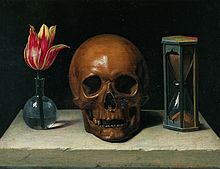
As a paranormal mystery writer, I’m often ask why my books are so bloody and scary. Why, they wonder, am I so fascinated and seemingly obsessed with dead bodies? Can’t I write about something more cheery and happy? Indeed, many people think that my book shelves are lined with horror novels and stories of the macabre.
The reality is, my literary fascination for dead bodies comes from reading murder mysteries and not horror books. If I’m pressed, I would say it’s my favorite type of genre fiction. My favorite form of binge entertainment is to find a series of murder mysteries and devour them. I’m constantly looking for new detectives, new writers and new variations on the basic murder story themes. This summer, I discovered the Longmire series, centered on a Wyoming sheriff who solves murders in his county. Bonus: It’s also a tv series on Netflix.
Why do I love murder mysteries and fictional dead bodies? There are many reasons, but mostly because the genre makes us take moral issues seriously. When someone is killed in a murder novel, the subsequent investigation exposes the complicated passageways of the human heart. As the great mystery novelist P.D. James wrote through her legendary character Adam Dalgliesh, murder doesn’t allow for any privacy. Or, to put it another way, you can’t ignore a dead body. It must be explained. It demands to be dealt with and understood. Why and how did it get there? Who, if anyone, is to blame? And even more important, what are the consequences for everyone involved? What about the questions of fairness, God’s role and the unimaginable grief of those left behind?
A dead body tells plenty of tales in the reactions of people still alive.
In the Old Testament and Gospel readings for Sunday, the Bible shoves two dead bodies in our faces to makes us pay attention. The prophet Elijah gets the full brunt of the widow’s anger and grief. She can’t understand why the man of God would allow such a thing. How could he repay her sheltering of him with this horrific tragedy? Elijah turns and vents to God, giving the Lord a full blast of prophetic anger.
When Jesus and his apostles approach Nain, they run into a funeral procession. This wasn’t your sanitized, Grim Reaper and Sons funeral home memorial service. People wept openly, men and women ripped their clothes, and the grief could be heard for miles.
In both cases, the women faced serious consequences from the deaths of their only sons. In those days, if a woman didn’t have men to take care of them, it wasn’t as easy as going back into the work force. Women were usually at the mercy of family. And if they didn’t have family, they would often be forced into slavery, prostitution, or some other form of forced situation. And, believe it or not, that was the best they might hope for, as death by starvation was a very real possibility. There is a real terror and sadness in these deaths. They faced the implications of a dead body and didn’t shy away from it.
We sanitize death in our culture. Many people think that we’ve come desensitized to death because we see so much violence in the media. But in reality, we’ve become jaded because we sanitize death. The dead are lain to rest in funeral homes with terrible grandma furniture and the bodies are painted in unnatural ways. Many of us forego looking at the body all together and have “life celebrations.”
We do this, many psychologists feel, to protect ourselves from thinking about our own deaths. This, I think, is only partially true. But, maybe not for the reasons we think. The reality is, deep down, we hope that death is the hardest thing we have to face. If we really thought about it, if death is all there is, if we were really destined to be a piece of rotting meat, then really, what’s all the fuss? Why avoid? Oddly, if death is the end, it should be very comforting. No more suffering. No more worrying about God. No more worrying about life. Just nothing. The end.
But, Elijah and Jesus don’t allow for this sort of comfort. And this should unsettle us more than just an ordinary dead body. They raise the dead. And when they do, they disrupt everything. As the Misfit says in Flannery O’Connor’s story,
(Jesus) He shouldn’t have done it. He thrown everything off balance. If He did what He said, then it’s nothing for you to do but throw away everything and follow Him, and if He didn’t, then it’s nothing for you to do but enjoy the few minutes you got left the best way you can by killing somebody or burning down his house or doing some other meanness to him. No pleasure but meanness,” he said and his voice had become almost a snarl.
See, dead bodies are “natural.” Dead bodies that are alive indicate something else is beyond what we can see. They force us to see our naturalistic world isn’t all there is. Indeed, it means something else is, and it’s more powerful. That it might be a person who created the world, and He might demand something from us.
This, then, is the real reason we avoid death. It’s not the end, and we’d rather not think about that.
Previous Post

June 1, 2016
Death of a Gorilla: A Sentimental Holocaust
Next Post

June 5, 2016 Standing on My Head
Browse Our Archives
Select a Category Advent Approaching Mystery art Book Reviews Catholic Ghost Story Catholicism community Confession Current Events Dark Devotional Deconstruction Deconstruction Fellow Travelers I Want To Believe Interview Laudato Si Lent Mary Matthew's Letters Movie Reviews Music Reviews Our Charism Personal Essay Pilgrims Pope Francis Popular Piety Prayer Publishing Richard Beck Saints Satan Sheed and Ward Sick Pilgrim Charism Sick Pilgrim Chats Sick Pilgrim Events Sick Pilgrim Travelin' Medicine Show Sick Pilgrimage to The West Sick Pilgrims Small Joys Spiritual Autobiography Spooky Files of Ave Maria Magazine Spooky October Spooky Pilgrim Spooky Pilgrimage Strange Journey The Inklings Things Keeping Us Going Trying to Say God TV Reviews Uncategorized women in the Catholic Church Wonder Podcast Write the Vision
Select a Month February 2022 January 2022 December 2021 November 2021 October 2021 September 2021 August 2021 July 2021 June 2021 May 2021 April 2021 March 2021 February 2021 January 2021 December 2020 April 2020 March 2020 February 2020 January 2020 December 2019 October 2019 September 2019 July 2019 June 2019 May 2019 April 2019 March 2019 February 2019 January 2019 December 2018 November 2018 October 2018 September 2018 August 2018 July 2018 June 2018 May 2018 April 2018 March 2018 February 2018 January 2018 December 2017 November 2017 October 2017 September 2017 August 2017 July 2017 June 2017 May 2017 April 2017 March 2017 February 2017 January 2017 December 2016 November 2016 October 2016 September 2016 August 2016 July 2016 June 2016 May 2016 April 2016 March 2016 February 2016 January 2016 December 2015
Follow Us!
TAKE THE
Religious Wisdom Quiz
Who was the mother of John Mark, whose house was a place of prayer in Jerusalem?
Select your answer to see how you score.
Mary Priscilla Lydia Tabitha
Related posts from Sick Pilgrim

Dark Devotional: The Firelight of Life

Dark Devotional: Let Me Smite Him

Dark Devotional: Woe to Me, for I Have...

TRENDING AT PATHEOS Catholic

Rejecting Doom: Christian Hope And Human Action
Christianity is a religion of hope. We are to have hope and...

It’s What Comes From Within Which Matters
One of the most difficult things for us to understand is why...

Why I Choose the Eucharist Over the Sermon
Choose the Eucharist, Not the Sermon What are we supposed to get...

5 Design Elements Found in Spiritually Rooted Homes
Putting Spirituality Into Home Decor Our homes are more than our living...

Credo: A Story of God Told with the...
About 10 years ago, I began to imagine a personal "Credo" that...

The Anatomy of Divine Revelation in Catholic Thought
The claim that God has made Himself known to human beings is...
view all Catholic blogs
Ad-Free & Subscriber Log-In Subscription Support
- About Us
- 2026 Calendar
- Videos
- Podcasts
- Library of World Religions
- Faith In Media Tracker
- Advertise With Us
- Write for Us
- Privacy Policy
- Terms of Service
- Do Not Sell My Data
- Contact Us
- Radiant Digital
- Manage Newsletter Subscriptions
- Unsubscribe From Notifications
- Sitemap
Copyright 2008-2026, Patheos. All rights reserved.
Subscription Support Ad-Free & Subscriber Log-In
Follow Patheos