
BuddhistCatholicContemplativeEvangelicalGeneral ChristianHinduJewishLatter-day SaintMuslimNew VisionsProgressive Christian
Beliefs
- Buddhist
- Catholic
- Contemplative
- Evangelical
- General Christian
- Hindu
- Jewish
- Latter-day Saint
- More Voices
- Muslim
- New Visions
- Pagan
- Progressive Christian
Topics
- Religion News
- Food and Religion
- Sports and Religion
- Religious Art
- Religious Music and Entertainment
- Religious Events
- History and Religion
- Style and Religion
- Politics and Religion
- Women in Religion
- Recreation Outdoors and Religion
- Business Finance and Religion
- Careers Workplace and Religion
- Education and Religion
- Family Parenting and Religion
- Health Fitness and Religion
- Home and Religion
- Relationships and Religion
- Technology and Religion
- Travel and Religion
Columnists
- Buddhist Columnists
- Business Finance and Religion Columnists
- Careers Workplace and Religion Columnists
- Catholic Columnists
- Contemplative Columnists
- Education and Religion Columnists
- Evangelists Columnists
- Family Parenting and Religion Columnists
- General Christian Columnists
- Health Fitness and Religion Columnists
- Hindu Columnists
- History and Religion Columnists
- Home and Religion Columnists
- Jewish Columnists
- More Voices Columnists
- Latter Day Columnists
- Muslim Columnists
- New Visions Columnists
- Nonreligious Columnists
- Pagan Columnists
- Politics and Religion Columnists
- Progressive Columnists
- Recreation Outdoors and Religion Columnists
- Relationships and Religion Columnists
- Religion News Columnists
- Religious Art Columnists
- Religious Events Columnists
- Religious Music and Entertainment Columnists
- Sports and Religion Columnists
- Style and Religion Columnists
- Technology and Religion Columnists
- Travel and Religion Columnists
- Women in Religion Columnists
Resource Library
- 2026 Calendar
- Library of World Religions
- The 100 Most Holy Places on Earth
- Patheos Answers
- Podcasts
- Videos
- Faith Leaders Database
- Anglican Episcopalian
- Bahai
- Baptist
- Buddhism
- Christianity
- Confucianism
- Eastern Orthodoxy
- Hinduism
- Holiness and Pentecostal
- ISKCON
- Islam
- Judaism
- Lutheran
- Methodist
- The Church of Jesus Christ of Latter-day Saints
- New Age
- Paganism
- Presbytarian and Reformed
- Protestantism
- Religion Behind the Scenes
- Roman Catholic
- Scientology
- Shia Islam
- Sikhism
- Sufism
- Sunni Islam
- Taoism
- Zen
- See all religions
Research Tools
 Ad-Free & Subscriber Log-In Subscription Support
Ad-Free & Subscriber Log-In Subscription Support
Follow Patheos 

- Trending:
- Forgiveness
- |
- Marriage
- |
- Consciousness
- |
- Death Penalty
- |
- Election
- |
- Halloween
 Sick Pilgrim
- Home
- Catholic
- Scapegoats for Each Other
Scapegoats for Each Other
Last updated on: April 13, 2016 at 1:58 pm by Jonathan Ryan
Scapegoats for Each Other 2016-04-13T13:58:50-05:00 Jonathan Ryan
Patheos Explore the world's faith through different perspectives on religion and spirituality! Patheos has the views of the prevalent religions and spiritualities of the world.
Editors’ Note: This article is part of the Patheos Public Square on Sacrifice: Religions and the Role of the Scapegoat. Read other perspectives here.
“If you want to live in pride and division and anger, you can. But if you will be a part of the best of us, and live and laugh and be ashamed with us, then you must be content to be helped. You must give your burden up to someone else and you must carry someone else’s burden. I haven’t made the universe and its not my fault.”
The above passage is from the novel Descent into Hell by Charles Williams, the “third member” of the famed writers group, the Inklings. In this particular conversation, Williams is using the wise mentor character, the playwright Stanhope, to teach his pupil Pauline that sacrificing for others is built into the law of the universe.
Williams believed that we could literally bear someone else’s burden. He would scornfully reject the idea that it is just a metaphor. He believed that we can and must carry a burden for those who are suffering. But even more interesting, he believed that we must be humble and allow others to sacrifice themselves for us. In other words, we must willfully choose to be each other’s scapegoats.
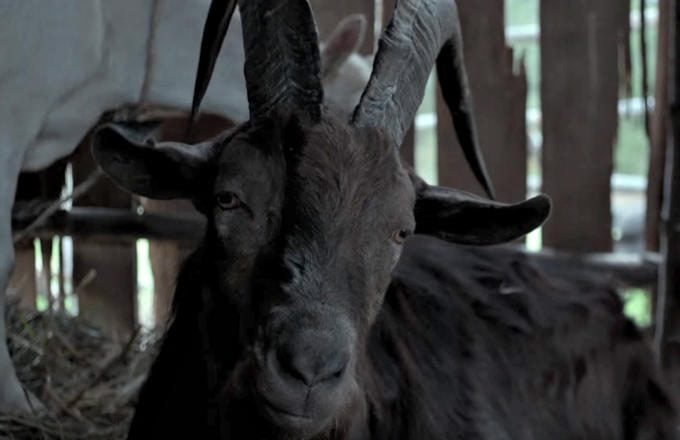
The common idea of the scapegoat is that we pick something or someone to blame for everything that has gone wrong. But, that’s not quite the idea we find in the Old Testament. Every year, the High Priest would lay his hands on a goat, transfer the sins of the people to it and send it off in the wilderness.
Christians throughout the centuries have scapegoated heretics, women, and other weirdos. This is because they’ve bought into the common idea of what the scapegoat is to do and they certainly didn’t want to take the role on themselves. Or ask someone to do it for them. But that’s exactly what Christ calls us to do.
Williams called this “co-inherence” and it’s an idea that has intrigued me since I started reading his novels and works of lay theology. At first, it didn’t seem right to me, but then I came across a curious phrase in Colossians, in which St. Paul tells the church that he is suffering for them, filling up what is lacking in Christ’s work. Odd idea, as he always went on about the complete work of Christ. Yet, if you see how obsessed the bald saint was with the idea of Union with Christ and with each other, it begins to make sense. He meant that he could be a scapegoat for the Colossians and suffer for them. He could bear their burdens, and it wasn’t just a pretty way to express sympathy. He literally meant it. He expected that all Christians should do the same.
I started to find this idea throughout Scripture. The Prophet Isaiah talks about the people of Israel suffering for the sins of everyone (a prefiguring of Christ). The Jews are called to be a priesthood for the world and bear their sufferings. Jesus talks about the disciples being one in the Gospel of John, and the rest of the New Testament focuses on God’s people united in Christ’s flesh as a living being.
If all that’s true, then we can choose to be a scapegoat for someone, through Christ. We can actually bear their burdens and the emotional reality of their suffering, if they choose to give it up. While we can’t bear sin (only Christ can do that), we can bear the consequences for someone, if we are brave and loving enough. But it has to be chosen willingly and given up willingly.
Christians believe that suffering alone is not an option. The call of bearing one another’s burdens requires that we not only reach out to the hurting, but that we allow ourselves to be reached when we suffer. That is probably the hardest call of all. We have to admit we need help, that we need a scapegoat. We need it because we are the scapegoat for our lives and very often, the burdens are too great to bear.
Williams knew what a powerful idea this could be and how it challenged our basic idea of human autonomy. As a Protestant, I was urged to focus on my personal relationship with Jesus. I liked being alone. It was only as a Catholic that I found that community was essential to my faith. I need them to be the scapegoat of all my worries, the consequences of my sin and my fears, and I’m not ashamed to admit it. But I must also learn to bear others, to be their scapegoat in the time of need.
Previous Post

April 12, 2016
Popular Piety: An Interview with a Traiteur
Next Post

April 13, 2016 I had a Dream about Amoris Laetitia (A Divorced Dad's Thoughts)
Browse Our Archives
Select a Category Advent Approaching Mystery art Book Reviews Catholic Ghost Story Catholicism community Confession Current Events Dark Devotional Deconstruction Deconstruction Fellow Travelers I Want To Believe Interview Laudato Si Lent Mary Matthew's Letters Movie Reviews Music Reviews Our Charism Personal Essay Pilgrims Pope Francis Popular Piety Prayer Publishing Richard Beck Saints Satan Sheed and Ward Sick Pilgrim Charism Sick Pilgrim Chats Sick Pilgrim Events Sick Pilgrim Travelin' Medicine Show Sick Pilgrimage to The West Sick Pilgrims Small Joys Spiritual Autobiography Spooky Files of Ave Maria Magazine Spooky October Spooky Pilgrim Spooky Pilgrimage Strange Journey The Inklings Things Keeping Us Going Trying to Say God TV Reviews Uncategorized women in the Catholic Church Wonder Podcast Write the Vision
Select a Month February 2022 January 2022 December 2021 November 2021 October 2021 September 2021 August 2021 July 2021 June 2021 May 2021 April 2021 March 2021 February 2021 January 2021 December 2020 April 2020 March 2020 February 2020 January 2020 December 2019 October 2019 September 2019 July 2019 June 2019 May 2019 April 2019 March 2019 February 2019 January 2019 December 2018 November 2018 October 2018 September 2018 August 2018 July 2018 June 2018 May 2018 April 2018 March 2018 February 2018 January 2018 December 2017 November 2017 October 2017 September 2017 August 2017 July 2017 June 2017 May 2017 April 2017 March 2017 February 2017 January 2017 December 2016 November 2016 October 2016 September 2016 August 2016 July 2016 June 2016 May 2016 April 2016 March 2016 February 2016 January 2016 December 2015
Follow Us!
TAKE THE
Religious Wisdom Quiz
What was Barnabas' original name?
Select your answer to see how you score.
Silas Timothy Joseph Mark
Related posts from Sick Pilgrim



Things Keeping Us Going: Winter Weather Edition

TRENDING AT PATHEOS Catholic

Rejecting Doom: Christian Hope And Human Action
Christianity is a religion of hope. We are to have hope and...

It’s What Comes From Within Which Matters
One of the most difficult things for us to understand is why...

Why I Choose the Eucharist Over the Sermon
Choose the Eucharist, Not the Sermon What are we supposed to get...

5 Design Elements Found in Spiritually Rooted Homes
Putting Spirituality Into Home Decor Our homes are more than our living...

Credo: A Story of God Told with the...
About 10 years ago, I began to imagine a personal "Credo" that...

The Anatomy of Divine Revelation in Catholic Thought
The claim that God has made Himself known to human beings is...
view all Catholic blogs
Ad-Free & Subscriber Log-In Subscription Support
- About Us
- 2026 Calendar
- Videos
- Podcasts
- Library of World Religions
- Faith In Media Tracker
- Advertise With Us
- Write for Us
- Privacy Policy
- Terms of Service
- Do Not Sell My Data
- Contact Us
- Radiant Digital
- Manage Newsletter Subscriptions
- Unsubscribe From Notifications
- Sitemap
Copyright 2008-2026, Patheos. All rights reserved.
Subscription Support Ad-Free & Subscriber Log-In
Follow Patheos