
BuddhistCatholicContemplativeEvangelicalGeneral ChristianHinduJewishLatter-day SaintMuslimNew VisionsProgressive Christian
Beliefs
- Buddhist
- Catholic
- Contemplative
- Evangelical
- General Christian
- Hindu
- Jewish
- Latter-day Saint
- More Voices
- Muslim
- New Visions
- Pagan
- Progressive Christian
Topics
- Religion News
- Food and Religion
- Sports and Religion
- Religious Art
- Religious Music and Entertainment
- Religious Events
- History and Religion
- Style and Religion
- Politics and Religion
- Women in Religion
- Recreation Outdoors and Religion
- Business Finance and Religion
- Careers Workplace and Religion
- Education and Religion
- Family Parenting and Religion
- Health Fitness and Religion
- Home and Religion
- Relationships and Religion
- Technology and Religion
- Travel and Religion
Columnists
- Buddhist Columnists
- Business Finance and Religion Columnists
- Careers Workplace and Religion Columnists
- Catholic Columnists
- Contemplative Columnists
- Education and Religion Columnists
- Evangelists Columnists
- Family Parenting and Religion Columnists
- General Christian Columnists
- Health Fitness and Religion Columnists
- Hindu Columnists
- History and Religion Columnists
- Home and Religion Columnists
- Jewish Columnists
- More Voices Columnists
- Latter Day Columnists
- Muslim Columnists
- New Visions Columnists
- Nonreligious Columnists
- Pagan Columnists
- Politics and Religion Columnists
- Progressive Columnists
- Recreation Outdoors and Religion Columnists
- Relationships and Religion Columnists
- Religion News Columnists
- Religious Art Columnists
- Religious Events Columnists
- Religious Music and Entertainment Columnists
- Sports and Religion Columnists
- Style and Religion Columnists
- Technology and Religion Columnists
- Travel and Religion Columnists
- Women in Religion Columnists
Resource Library
- 2026 Calendar
- Library of World Religions
- The 100 Most Holy Places on Earth
- Patheos Answers
- Podcasts
- Videos
- Faith Leaders Database
- Anglican Episcopalian
- Bahai
- Baptist
- Buddhism
- Christianity
- Confucianism
- Eastern Orthodoxy
- Hinduism
- Holiness and Pentecostal
- ISKCON
- Islam
- Judaism
- Lutheran
- Methodist
- The Church of Jesus Christ of Latter-day Saints
- New Age
- Paganism
- Presbytarian and Reformed
- Protestantism
- Religion Behind the Scenes
- Roman Catholic
- Scientology
- Shia Islam
- Sikhism
- Sufism
- Sunni Islam
- Taoism
- Zen
- See all religions
Research Tools
 Ad-Free & Subscriber Log-In Subscription Support
Ad-Free & Subscriber Log-In Subscription Support
Follow Patheos 

- Trending:
- Forgiveness
- |
- Marriage
- |
- Consciousness
- |
- Death Penalty
- |
- Election
- |
- Halloween
 Sick Pilgrim
- Home
- Catholic
- The Dark Devotional: St. Thomas Didymus: A Heart Made Double by Breaking
The Dark Devotional: St. Thomas Didymus: A Heart Made Double by Breaking
Last updated on: March 31, 2016 at 11:43 am by Guest Contributor
The Dark Devotional: St. Thomas Didymus: A Heart Made Double by Breaking 2016-03-31T10:46:11-05:00 Guest Contributor
Patheos Explore the world's faith through different perspectives on religion and spirituality! Patheos has the views of the prevalent religions and spiritualities of the world.
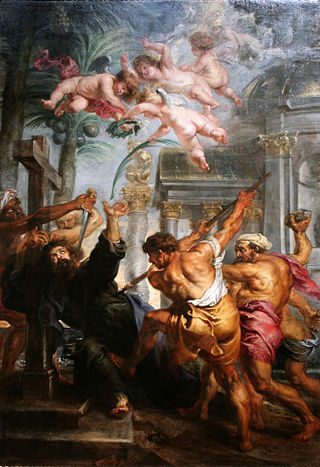
Martyrdom of St. Thomas, Peter Paul Rubens (image source: Wikipedia)
Thomas, called Didymus, one of the Twelve, was not with them when Jesus came. So the other disciples said to him, “We have seen the Lord.” But he said to them, “Unless I see the mark of the nails in his hands and put my finger into the nail marks and put my hand into his side, I will not believe.” Now a week later his disciples were again inside and Thomas was with them. Jesus came, although the doors were locked, and stood in their midst and said, “Peace be with you.” Then he said to Thomas, “Put your finger here and see my hands, and bring your hand and put it into my side, and do not be unbelieving, but believe.” Thomas answered and said to him, “My Lord and my God!” Jesus said to him, “Have you come to believe because you have seen me? Blessed are those who have not seen and have believed.” (John 20:24-29 )
You’d have difficulty picking him out of the crowd. He isn’t the big fisherman standing out abruptly, always just a little out of place–nor is he James with thunder in his eyes. He isn’t the one with an air of confident world-weariness–Nathaniel and his experience–nor is he John with his easy public displays of affection.
But for his part, he isn’t aware of these things–all he knows is that he isn’t her. And there is pain, and envy, and longing in his eyes as he looks at her awkwardness and shame and love more suffocating than her perfume, the woman in such an unladylike posture kneeling at Christ’s feet and wiping them with her hair–or, some are thinking, an all too ladylike posture, this allegedly tender-hearted penitent with a fetish for feet and exhibitionism.
But from his unnoticed place in the half-shadows, Thomas understands, and his heart burns. He understands what it is to read a passage of the Song, Solomon’s, one too many times and do a double take, not because it’s talking about sex–what could be more plain?–but because something about it unsettles you until you realize it’s also talking about God. He knows what it is to have that uncanny desire for Him that you can’t quite name, dangerous and shameful and white hot and in love. And one other thing he knows: he can never be her, because he is practical, reasonable–and scared. He could die for Him. That’s easy. But his heart would never dare burst into flame.
I suspect there are Christians who would not like what I’m experimenting with here, but when I think of emending it, I simply can’t bring myself to believe other than that our loves and responses get confused and wild and strange in the presence of Christ. I have been to Eucharistic Adoration. And where many interpret Thomas’s doubt as a kind of modern skepticism or empiricism–an icon for rational scientific types–I see it as something else. His is the response of a brokenhearted lover.
As someone with Obsessive Compulsive Disorder–the doubting disease–I know a little about doubt. I know the suffocation of contexts where one can never ask questions, yes. But I also know the annoyance of those just a little too eager to embrace and romanticize doubt. If you’re okay with doubt, you probably haven’t really experienced it, the shaking of the foundations and the ripping of the temple curtain from top to bottom. Doubt shatters a person–and those who flirt with it as a religious or anti-religious accessory mock us.
But to return to the matter of the passage, one of the things you learn quickly with OCD is that doubt strikes most deeply where there is love–if there were no love, there would be no obsessions and compulsions, nothing to doubt. There is a story about a man who was hospitalized for OCD–his obsession was a fear of fires, and his compulsion was to set off fire alarms and warn people “just in case” there might be a fire and others might get hurt. And initially when he was hospitalized, his condition improved. However, after a few days it started happening again and he started setting off fire alarms. When staff asked him why, he told them it was because when he first came, he had no particular investment in the hospital, so the matter didn’t concern him–but as he made friends and connected with others on the ward, he began to care; he began to love. And as soon as he loved, the doubts came back and he was setting off fire alarms because he couldn’t bear the thought of his new friends dying in a fire.
And it is a version of this–this doubt and love commingled–that I hear in Thomas’s story. When he says he will not believe “unless I see the mark of the nails etc.,” it’s not because he’s a cool empiricist played in the film version by Benedict Cumberbatch. Rather, it’s because he can’t bear to hope and be disappointed again. His heart had opened once to hope–and was shattered on the cross on Good Friday. Can we blame him if he refuses to believe, not because he thinks it untrue, but because he so desperately hopes it is? Surely no more than we can blame Mary for her grief-touched refusal to meet Christ when he initially visits at the death of Lazarus; surely no more than her meeting Him risen and flubbing it when her wrought emotions mistake Him for the gardener. Where other disciples may be comparatively practical, Thomas, like Mary, gets it–Christ’s love and its loss is what devastated our hearts, and He’d damn well better have a bloody good answer if He’s going to show up again. And he does. And it is bloody. He offers us his wounds and the intimacy of handling them.
“Blessed are those who have not seen me and have believed.”
It is a prophecy rather than a rebuke, concerning what St. John of the Cross would later call the dark night of the soul – the devastation of experiential means of meeting God–the cover of undifferentiable darkness–the miraculous ability that some have to still believe in the dark. But for the moment let us stay with St. Thomas, who has hungered and thirsted and been filled. Let us be answered by Christ’s wounds. Let us find we no longer need envy Mary because we too have her gift. Let us be intimate with Christ:
They said that day it might have fed the poor;
But all I could was envy – not what hates
And wishes to destroy – they called her whore;
But that which, yearning, watches, wants, and waits.
Her alabaster broken at the well
Gave forth its nard; she touched him with her hair;
I darkling wished what tongues but poorly tell:
My heart burst, love and shame suffusing air,
And grace. But silent, shrunk from hope, I stood
And watched – and later doubted his return,
Though not the facts; my soul fled from good
Frustrated; once betrayed, love feared to burn.
Yet what I dared not hope, for this he died;
Tender, I touched him, felt his hands and side.
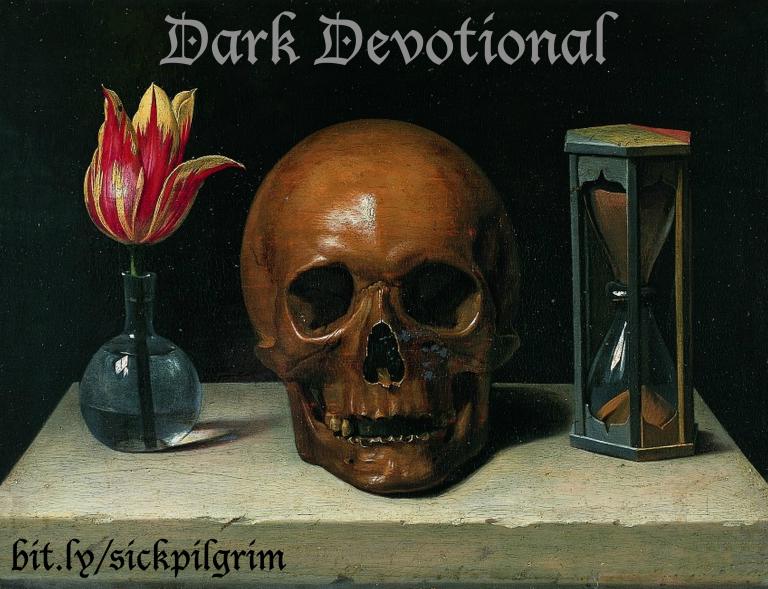
Life, death, time. That about covers it.
Karl Persson is a scholar of premodern literature and theology, and is a professor in the Literature and Language Departments at Signum University. In his spare time, he enjoys creative and freelance writing, and is a regular contributor to the Patheos Catholic Channel’s Inner Room, a blog focused on contemplative spirituality and the recovery of ancient Christian practices and social imaginaries. Together with his wife, Meg, and his son, Andrew, he spends his winters surviving the polar vortices that descend on Winnipeg, Manitoba, from the Canadian North; his steadfast endurance has led to the deep wisdom that can only be bought through the patient suffering of many winters. Well…perhaps the bits about wisdom and patience and steadfastness aren’t quite true. But the suffering is real.
Previous Post
March 30, 2016
Light One Candle
Next Post

April 3, 2016 Is this Heaven? An Ode to the Sacramental Beauty of Baseball
Browse Our Archives
Select a Category Advent Approaching Mystery art Book Reviews Catholic Ghost Story Catholicism community Confession Current Events Dark Devotional Deconstruction Deconstruction Fellow Travelers I Want To Believe Interview Laudato Si Lent Mary Matthew's Letters Movie Reviews Music Reviews Our Charism Personal Essay Pilgrims Pope Francis Popular Piety Prayer Publishing Richard Beck Saints Satan Sheed and Ward Sick Pilgrim Charism Sick Pilgrim Chats Sick Pilgrim Events Sick Pilgrim Travelin' Medicine Show Sick Pilgrimage to The West Sick Pilgrims Small Joys Spiritual Autobiography Spooky Files of Ave Maria Magazine Spooky October Spooky Pilgrim Spooky Pilgrimage Strange Journey The Inklings Things Keeping Us Going Trying to Say God TV Reviews Uncategorized women in the Catholic Church Wonder Podcast Write the Vision
Select a Month February 2022 January 2022 December 2021 November 2021 October 2021 September 2021 August 2021 July 2021 June 2021 May 2021 April 2021 March 2021 February 2021 January 2021 December 2020 April 2020 March 2020 February 2020 January 2020 December 2019 October 2019 September 2019 July 2019 June 2019 May 2019 April 2019 March 2019 February 2019 January 2019 December 2018 November 2018 October 2018 September 2018 August 2018 July 2018 June 2018 May 2018 April 2018 March 2018 February 2018 January 2018 December 2017 November 2017 October 2017 September 2017 August 2017 July 2017 June 2017 May 2017 April 2017 March 2017 February 2017 January 2017 December 2016 November 2016 October 2016 September 2016 August 2016 July 2016 June 2016 May 2016 April 2016 March 2016 February 2016 January 2016 December 2015
Follow Us!
TAKE THE
Religious Wisdom Quiz
What famous prayer did Jesus teach His followers?
Select your answer to see how you score.
The Lord’s Prayer Psalm 23 The Shema The Prayer of Jabez
Related posts from Sick Pilgrim

Dark Devotional: The Firelight of Life

Dark Devotional: Let Me Smite Him

Dark Devotional: Woe to Me, for I Have...

TRENDING AT PATHEOS Catholic

Rejecting Doom: Christian Hope And Human Action
Christianity is a religion of hope. We are to have hope and...

It’s What Comes From Within Which Matters
One of the most difficult things for us to understand is why...

Why I Choose the Eucharist Over the Sermon
Choose the Eucharist, Not the Sermon What are we supposed to get...

5 Design Elements Found in Spiritually Rooted Homes
Putting Spirituality Into Home Decor Our homes are more than our living...

Credo: A Story of God Told with the...
About 10 years ago, I began to imagine a personal "Credo" that...

The Anatomy of Divine Revelation in Catholic Thought
The claim that God has made Himself known to human beings is...
view all Catholic blogs
Ad-Free & Subscriber Log-In Subscription Support
- About Us
- 2026 Calendar
- Videos
- Podcasts
- Library of World Religions
- Faith In Media Tracker
- Advertise With Us
- Write for Us
- Privacy Policy
- Terms of Service
- Do Not Sell My Data
- Contact Us
- Radiant Digital
- Manage Newsletter Subscriptions
- Unsubscribe From Notifications
- Sitemap
Copyright 2008-2026, Patheos. All rights reserved.
Subscription Support Ad-Free & Subscriber Log-In
Follow Patheos