
BuddhistCatholicContemplativeEvangelicalGeneral ChristianHinduJewishLatter-day SaintMuslimNew VisionsProgressive Christian
Beliefs
- Buddhist
- Catholic
- Contemplative
- Evangelical
- General Christian
- Hindu
- Jewish
- Latter-day Saint
- More Voices
- Muslim
- New Visions
- Pagan
- Progressive Christian
Topics
- Religion News
- Food and Religion
- Sports and Religion
- Religious Art
- Religious Music and Entertainment
- Religious Events
- History and Religion
- Style and Religion
- Politics and Religion
- Women in Religion
- Recreation Outdoors and Religion
- Business Finance and Religion
- Careers Workplace and Religion
- Education and Religion
- Family Parenting and Religion
- Health Fitness and Religion
- Home and Religion
- Relationships and Religion
- Technology and Religion
- Travel and Religion
Columnists
- Buddhist Columnists
- Business Finance and Religion Columnists
- Careers Workplace and Religion Columnists
- Catholic Columnists
- Contemplative Columnists
- Education and Religion Columnists
- Evangelists Columnists
- Family Parenting and Religion Columnists
- General Christian Columnists
- Health Fitness and Religion Columnists
- Hindu Columnists
- History and Religion Columnists
- Home and Religion Columnists
- Jewish Columnists
- More Voices Columnists
- Latter Day Columnists
- Muslim Columnists
- New Visions Columnists
- Nonreligious Columnists
- Pagan Columnists
- Politics and Religion Columnists
- Progressive Columnists
- Recreation Outdoors and Religion Columnists
- Relationships and Religion Columnists
- Religion News Columnists
- Religious Art Columnists
- Religious Events Columnists
- Religious Music and Entertainment Columnists
- Sports and Religion Columnists
- Style and Religion Columnists
- Technology and Religion Columnists
- Travel and Religion Columnists
- Women in Religion Columnists
Resource Library
- 2026 Calendar
- Library of World Religions
- The 100 Most Holy Places on Earth
- Patheos Answers
- Podcasts
- Videos
- Faith Leaders Database
- Anglican Episcopalian
- Bahai
- Baptist
- Buddhism
- Christianity
- Confucianism
- Eastern Orthodoxy
- Hinduism
- Holiness and Pentecostal
- ISKCON
- Islam
- Judaism
- Lutheran
- Methodist
- The Church of Jesus Christ of Latter-day Saints
- New Age
- Paganism
- Presbytarian and Reformed
- Protestantism
- Religion Behind the Scenes
- Roman Catholic
- Scientology
- Shia Islam
- Sikhism
- Sufism
- Sunni Islam
- Taoism
- Zen
- See all religions
Research Tools
 Ad-Free & Subscriber Log-In Subscription Support
Ad-Free & Subscriber Log-In Subscription Support
Follow Patheos 

- Trending:
- Forgiveness
- |
- Marriage
- |
- Consciousness
- |
- Death Penalty
- |
- Election
- |
- Halloween
 Sick Pilgrim
- Home
- Catholic
- Catholic Books Even a Protestant Could Love
Catholic Books Even a Protestant Could Love
Last updated on: March 10, 2016 at 12:30 am by Tammy Perlmutter
Catholic Books Even a Protestant Could Love 2016-03-10T00:30:41-05:00 Tammy Perlmutter
Patheos Explore the world's faith through different perspectives on religion and spirituality! Patheos has the views of the prevalent religions and spiritualities of the world.
I’m not Catholic, but some of my favorite books are.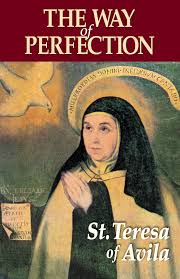
I came of age during the 80s, the heyday of evangelical youth group culture. By the time I was 17, I’d descended into a Christian subculture of punks, skaters, metal heads, and goths. That felt more like home to me. We had an understanding and appreciation of the darker side of life and asked more questions than we answered. My peers understood what real temptation and real falling looked like, because they were experiencing it themselves and were willing to talk about it.
I was disillusioned with evangelical culture, overwhelmed by the lights and lasers of worship, suspicious of the clever maxims about gratefulness and joy. I needed something deeper, darker. I needed mystery and unapologetic awe, exquisite art on every surface imaginable, the constant reminder that confession is not a fearsome command, but an invitation.
The Way of Perfection by Teresa of Avila
When Teresa of Avila was a little girl, she and her brother used to run away “in hopes of attaining martyrdom,” and she would build little hermitages. A few years later, during an illness, Teresa read the Letters of Jerome, the monk who translated the Bible into Latin (the Vulgate), and decided she should be a nun. But after she entered the Carmelite convent in Avila, it took 20 years for Teresa to experience inner conversion. At this point in her life, she’d been taught by Augustinian nuns, entered the Carmelite order, left due to another illness, and returned once more. I love this about Teresa. I trust a woman who requires that many tries to find her spiritual home. She eventually tired of the worldliness that had crept into the monasteries, so she struck out on her own to build a convent, St. Joseph’s, founded on the two characteristics she believed were essential in a spiritual mature religious order: poverty and solitude. Her reforms inspired her pupil, St. John of the Cross, to push for similar reforms among the Carmelite friars.
In 1565-1566 Teresa wrote The Way of Perfection to provide instruction for the sisters. Who wouldn’t want to read a book with chapter titles like: Why we must avoid our families and how we can find our true spiritual friends?
“I do not know why anyone is in a convent if she is willing to bear only those crosses she thinks she has a right to expect.”
*Drops mic.*
The Long Loneliness by Dorothy Day
“I think the trouble and the long loneliness you hear me speak of is not far from me . . . The pain is great, but very endurable, because He who lays on the burden also carries it.”
Mary Ward, an English nun born not long after St. Teresa established her rule, wrote this. Those three words pack a punch, reminding us of our own long loneliness. At the beginning of her autobiography is a small section called, “Confession,” where she writes, “When one writes the story of his life and the work he has been engaged in, it is a confession too, in a way.”
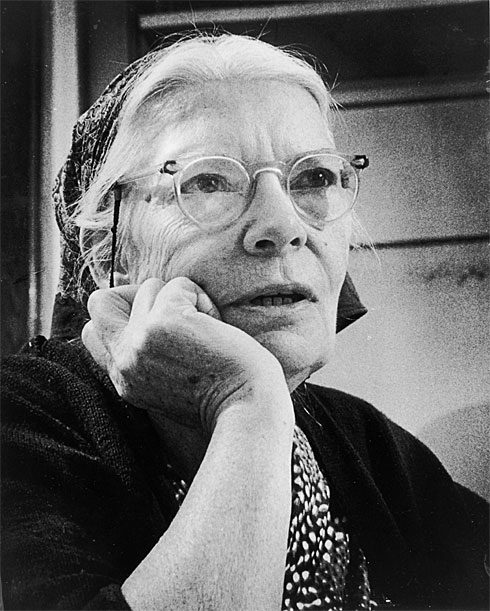
Dorothy Day
Dorothy Day was a nonviolent social activist, journalist, Benedictine Oblate, and founder of the Catholic Worker Movement. She loved, served, and defended the poor, and also lived with them in New York City. Dorothy Day was hardcore. Her last imprisonment was a 10 day stint for protesting against the Teamsters Union with Cesar Chavez on behalf of the Farm Workers Union. She was 76.
“There was a great question in my mind. Why was so much done in remedying social evils instead of avoiding them in the first place? There were day nurseries for children, for instance, but why didn’t fathers get money enough to take care of the mothers so they would not have to go out to work? There were hospitals to take care of the sick and infirm, but what of occupational diseases. and the diseases which came from not enough food for the mother and children? What of the disabled workers who received no compensation but only charity for the remainder of their lives? Where were the saints to try to change the social order, not just to minister to the slaves but to do away with slavery?”
Rilke’s Book of Hours: Love Poems to God
Rainer Maria Rilke was born in Prague in 1875 and endured what he referred to as “an anxious and heavy childhood.” His father insisted he got to military school, “one single terrible damnation,” which left him ill and made him a constant presence in the infirmary, providing sanctuary from the cruel bullying and brutal teasing he experienced. Soon after, at 19, he wrote the letters that would be published as Letters to a Young Poet in 1929.
Rilke visited a monastery in Russia in his early twenties. The landscape, common worship, and deep spirituality he encountered became a source of powerful inspiration, and he wrote Love Poems to God during that time. His poems express a deep longing to know God, love him, and comprehend what it means to be loved by a present and living God. He divided the book into three parts, which will greatly appeal to all of us Sick Pilgrims:
Part I: The Book of Monastic Life
Ich habe viele Bruder in Sutanen
“But when I lean over the chasm of myself–
it seems
My God is dark
and like a web: a hundred roots
silently drinking.
This is the ferment I grow out of.”
Part II: The Book of Pilgrimage
Ich bete wieder, du Erlauchter
“I’ve been scattered in pieces,
torn by conflict,
mocked by laughter,
washed down in drink.
In alleyways I sweep myself up
out of garbage and broken glass.
With my half-mouth I stammer you,
who are eternal in your symmetry,
…
It’s here in all the pieces of my shame
that I now find myself again
I yearn to be held
in the great hands of your heart–
Into them I place these fragments of my life,
and you, God, spend them however you want.
Part III: The Book of Poverty and Death
Vielleicht, das ich durch schwere Berge gehe
Since I still don’t know enough about pain,
this terrible darkness makes me small.
If it’s you , though–
press down hard on me, break in
that I may know the weight of your hand,
and you,. the fullness of my cry.

Next Post
March 10, 2016 The Dark Devotional: Fifth Sunday in Lent: The Dust on Her Lips
Browse Our Archives
Select a Category Advent Approaching Mystery art Book Reviews Catholic Ghost Story Catholicism community Confession Current Events Dark Devotional Deconstruction Deconstruction Fellow Travelers I Want To Believe Interview Laudato Si Lent Mary Matthew's Letters Movie Reviews Music Reviews Our Charism Personal Essay Pilgrims Pope Francis Popular Piety Prayer Publishing Richard Beck Saints Satan Sheed and Ward Sick Pilgrim Charism Sick Pilgrim Chats Sick Pilgrim Events Sick Pilgrim Travelin' Medicine Show Sick Pilgrimage to The West Sick Pilgrims Small Joys Spiritual Autobiography Spooky Files of Ave Maria Magazine Spooky October Spooky Pilgrim Spooky Pilgrimage Strange Journey The Inklings Things Keeping Us Going Trying to Say God TV Reviews Uncategorized women in the Catholic Church Wonder Podcast Write the Vision
Select a Month February 2022 January 2022 December 2021 November 2021 October 2021 September 2021 August 2021 July 2021 June 2021 May 2021 April 2021 March 2021 February 2021 January 2021 December 2020 April 2020 March 2020 February 2020 January 2020 December 2019 October 2019 September 2019 July 2019 June 2019 May 2019 April 2019 March 2019 February 2019 January 2019 December 2018 November 2018 October 2018 September 2018 August 2018 July 2018 June 2018 May 2018 April 2018 March 2018 February 2018 January 2018 December 2017 November 2017 October 2017 September 2017 August 2017 July 2017 June 2017 May 2017 April 2017 March 2017 February 2017 January 2017 December 2016 November 2016 October 2016 September 2016 August 2016 July 2016 June 2016 May 2016 April 2016 March 2016 February 2016 January 2016 December 2015
Follow Us!
TAKE THE
Religious Wisdom Quiz
What symbol is most commonly associated with Christianity worldwide?
Select your answer to see how you score.
The lamb The dove The fish The cross
Related posts from Sick Pilgrim

Things Keeping Us Going: All Saints Edition


TRENDING AT PATHEOS Catholic

Rejecting Doom: Christian Hope And Human Action
Christianity is a religion of hope. We are to have hope and...

It’s What Comes From Within Which Matters
One of the most difficult things for us to understand is why...

Why I Choose the Eucharist Over the Sermon
Choose the Eucharist, Not the Sermon What are we supposed to get...

5 Design Elements Found in Spiritually Rooted Homes
Putting Spirituality Into Home Decor Our homes are more than our living...

Credo: A Story of God Told with the...
About 10 years ago, I began to imagine a personal "Credo" that...

The Anatomy of Divine Revelation in Catholic Thought
The claim that God has made Himself known to human beings is...
view all Catholic blogs
Ad-Free & Subscriber Log-In Subscription Support
- About Us
- 2026 Calendar
- Videos
- Podcasts
- Library of World Religions
- Faith In Media Tracker
- Advertise With Us
- Write for Us
- Privacy Policy
- Terms of Service
- Do Not Sell My Data
- Contact Us
- Radiant Digital
- Manage Newsletter Subscriptions
- Unsubscribe From Notifications
- Sitemap
Copyright 2008-2026, Patheos. All rights reserved.
Subscription Support Ad-Free & Subscriber Log-In
Follow Patheos