
BuddhistCatholicContemplativeEvangelicalGeneral ChristianHinduJewishLatter-day SaintMuslimNew VisionsProgressive Christian
Beliefs
- Buddhist
- Catholic
- Contemplative
- Evangelical
- General Christian
- Hindu
- Jewish
- Latter-day Saint
- More Voices
- Muslim
- New Visions
- Pagan
- Progressive Christian
Topics
- Religion News
- Food and Religion
- Sports and Religion
- Religious Art
- Religious Music and Entertainment
- Religious Events
- History and Religion
- Style and Religion
- Politics and Religion
- Women in Religion
- Recreation Outdoors and Religion
- Business Finance and Religion
- Careers Workplace and Religion
- Education and Religion
- Family Parenting and Religion
- Health Fitness and Religion
- Home and Religion
- Relationships and Religion
- Technology and Religion
- Travel and Religion
Columnists
- Buddhist Columnists
- Business Finance and Religion Columnists
- Careers Workplace and Religion Columnists
- Catholic Columnists
- Contemplative Columnists
- Education and Religion Columnists
- Evangelists Columnists
- Family Parenting and Religion Columnists
- General Christian Columnists
- Health Fitness and Religion Columnists
- Hindu Columnists
- History and Religion Columnists
- Home and Religion Columnists
- Jewish Columnists
- More Voices Columnists
- Latter Day Columnists
- Muslim Columnists
- New Visions Columnists
- Nonreligious Columnists
- Pagan Columnists
- Politics and Religion Columnists
- Progressive Columnists
- Recreation Outdoors and Religion Columnists
- Relationships and Religion Columnists
- Religion News Columnists
- Religious Art Columnists
- Religious Events Columnists
- Religious Music and Entertainment Columnists
- Sports and Religion Columnists
- Style and Religion Columnists
- Technology and Religion Columnists
- Travel and Religion Columnists
- Women in Religion Columnists
Resource Library
- 2026 Calendar
- Library of World Religions
- The 100 Most Holy Places on Earth
- Patheos Answers
- Podcasts
- Videos
- Faith Leaders Database
- Anglican Episcopalian
- Bahai
- Baptist
- Buddhism
- Christianity
- Confucianism
- Eastern Orthodoxy
- Hinduism
- Holiness and Pentecostal
- ISKCON
- Islam
- Judaism
- Lutheran
- Methodist
- The Church of Jesus Christ of Latter-day Saints
- New Age
- Paganism
- Presbytarian and Reformed
- Protestantism
- Religion Behind the Scenes
- Roman Catholic
- Scientology
- Shia Islam
- Sikhism
- Sufism
- Sunni Islam
- Taoism
- Zen
- See all religions
Research Tools
 Ad-Free & Subscriber Log-In Subscription Support
Ad-Free & Subscriber Log-In Subscription Support
Follow Patheos 

- Trending:
- Forgiveness
- |
- Marriage
- |
- Consciousness
- |
- Death Penalty
- |
- Election
- |
- Halloween
 Sick Pilgrim
- Home
- Catholic
- The Revenant: Meditations on Redemptive Suffering
The Revenant: Meditations on Redemptive Suffering
Last updated on: January 11, 2016 at 5:23 pm by Jonathan Ryan
The Revenant: Meditations on Redemptive Suffering 2016-01-11T17:23:29-05:00 Jonathan Ryan
Patheos Explore the world's faith through different perspectives on religion and spirituality! Patheos has the views of the prevalent religions and spiritualities of the world.
*Spoilers ahead*
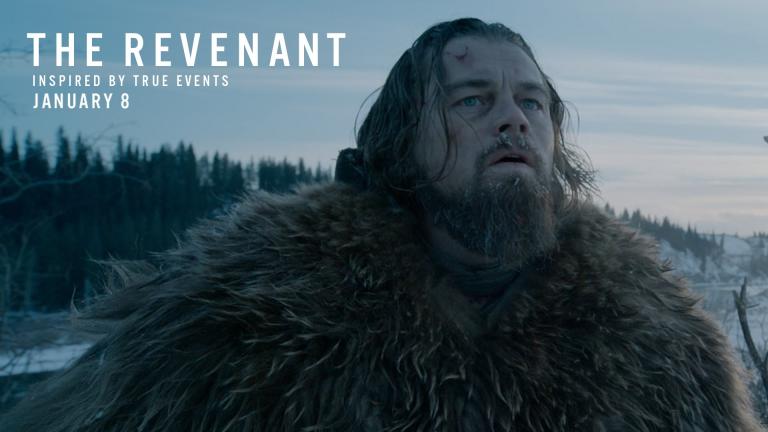
To be honest, I wasn’t prepared for what I saw. From what I’d read, it seemed as if The Revenant was just another Western revenge movie, of which there are Legion, including The Hateful Eight, the newest film by Quentin Tarantino. But if it’s a Western, it’s a Western as meditation on redemptive suffering. How those reviews and articles missed that most basic part of the story is beyond me, but The Revenant is one of the most Catholic and sacramental films I’ve seen in a long time.
The main character, Hugh Glass (Leonardo Dicaprio), suffers more than any movie character that I can remember. He’s mauled by a grizzly bear in one of the most horrific scenes I’ve ever squirmed through. But that’s just the beginning. As he lays dying, he watches his son murdered at the hand of his antagonist, John Fitzgerald (disappearing into the role, Tom Hardy). Glass crawls from the shallow grave where he’s been left for dead to cross the frozen Montana landscape, battling a near fatal infection. He’s then shot, thrown over cliffs, and desperate for warmth, sleeps in a disemboweled horse.
Why? What powers his will through the suffering? For half of the movie, we believe it’s good old ordinary revenge, the desire to kill Fitzgerald for the murder of his son. Further, Iñárritu seems to enforce this idea by showing us scenes of nature, “red in tooth and claw.”
But in the visions Glass has of his dead son and wife, Inarritu shows us that nature isn’t just brutal, it’s also beautiful. We can feast on it, nourished by it even as it threatens our lives. In other words, nature is sacramental, pointing us to a deeper truth. Even in death, Inarritu shows us that resurrection and life can come.
This is the beauty of the film, as it turns on its head the accepted trope that when we confront the supposed brutality of nature, we somehow see “reality,” and any possible deeper meaning is a figment of human imagination. This nihilistic point of view has been with us for over a century. No wonder we treat nature as disposable and exploitable. The Revenant offers a different point of view, similar to what you’ll find in Pope Francis’s encyclical on the care of the earth, Laudato Si.
A sacramental understanding of nature begins to teach Glass lessons in redemptive suffering. The lessons reach a zenith when he finds a wandering Pawnee Indian who tells him “revenge is in the hands of the Creator.” The Indian then builds a sweat lodge to help him recover from a raging infection. While there, he has a vision of an abandoned church full of Icons of suffering saints. As he walks through the church, he looks up to see an Icon of Christ Crucified (we only see the nails in the feet), the ultimate picture of redemptive suffering. His son appears and embraces him, planting a lesson that will come to fruition.
Finally, Glass tracks down Fitzgerald and they have a raw, bloody fight near a creek. Glass overcomes his enemy and is about to kill him. The villain taunts him, telling Glass that he’s come all this way just to kill him and that it won’t bring his son back. In other words, his revenge and suffering will be meaningless, providing no comfort. Glass looks up and sees something startling (I won’t give it away) that brings to mind his vision in the old abandoned church. Glass has mercy on Fitzgerald and turns him over to God’s justice. He has been redeemed by his suffering.
Iñárritu understands sacramental suffering. Indeed, he understands it better than most American Christians. In interviews, Iñárritu discusses how his childhood Catholicism informs his work. It’s blatantly obvious in The Revenant. That worldview has produced a stunning piece of art and film.
Modern Catholics have shied away from a theology of suffering as an almost embarrassing relic of the past. And yet, it’s the most powerful answer to the problem of evil. The suffering of Christ tells us that God has indeed become fully human; he suffered and does suffer, just like us. This is a profound mystery of the church that we often try to sweep under the rug. But we’re doing the world a fatal disservice by not helping humans to understand the nature of suffering and how it can lead to redemption. And, even more, that God’s very plan and being contain suffering for Himself.
Previous Post

December 10, 2015
Welcome, Sick Pilgrims
Next Post

January 12, 2016 Sick Pilgrim: The Catholic Church is a Hot Mess...and I love Her
Browse Our Archives
Select a Category Advent Approaching Mystery art Book Reviews Catholic Ghost Story Catholicism community Confession Current Events Dark Devotional Deconstruction Deconstruction Fellow Travelers I Want To Believe Interview Laudato Si Lent Mary Matthew's Letters Movie Reviews Music Reviews Our Charism Personal Essay Pilgrims Pope Francis Popular Piety Prayer Publishing Richard Beck Saints Satan Sheed and Ward Sick Pilgrim Charism Sick Pilgrim Chats Sick Pilgrim Events Sick Pilgrim Travelin' Medicine Show Sick Pilgrimage to The West Sick Pilgrims Small Joys Spiritual Autobiography Spooky Files of Ave Maria Magazine Spooky October Spooky Pilgrim Spooky Pilgrimage Strange Journey The Inklings Things Keeping Us Going Trying to Say God TV Reviews Uncategorized women in the Catholic Church Wonder Podcast Write the Vision
Select a Month February 2022 January 2022 December 2021 November 2021 October 2021 September 2021 August 2021 July 2021 June 2021 May 2021 April 2021 March 2021 February 2021 January 2021 December 2020 April 2020 March 2020 February 2020 January 2020 December 2019 October 2019 September 2019 July 2019 June 2019 May 2019 April 2019 March 2019 February 2019 January 2019 December 2018 November 2018 October 2018 September 2018 August 2018 July 2018 June 2018 May 2018 April 2018 March 2018 February 2018 January 2018 December 2017 November 2017 October 2017 September 2017 August 2017 July 2017 June 2017 May 2017 April 2017 March 2017 February 2017 January 2017 December 2016 November 2016 October 2016 September 2016 August 2016 July 2016 June 2016 May 2016 April 2016 March 2016 February 2016 January 2016 December 2015
Follow Us!
TAKE THE
Religious Wisdom Quiz
I mocked a prophet for his baldness and was mauled by bears for my disrespect. Who are we?
Select your answer to see how you score.
Boys from Bethel Children of Israel Philistines Youths
Related posts from Sick Pilgrim


Dark Devotional: The Petulant Winds of Elation

Dark Devotional: After the Fire

TRENDING AT PATHEOS Catholic

Rejecting Doom: Christian Hope And Human Action
Christianity is a religion of hope. We are to have hope and...

It’s What Comes From Within Which Matters
One of the most difficult things for us to understand is why...

Why I Choose the Eucharist Over the Sermon
Choose the Eucharist, Not the Sermon What are we supposed to get...

5 Design Elements Found in Spiritually Rooted Homes
Putting Spirituality Into Home Decor Our homes are more than our living...

Credo: A Story of God Told with the...
About 10 years ago, I began to imagine a personal "Credo" that...

The Anatomy of Divine Revelation in Catholic Thought
The claim that God has made Himself known to human beings is...
view all Catholic blogs
Ad-Free & Subscriber Log-In Subscription Support
- About Us
- 2026 Calendar
- Videos
- Podcasts
- Library of World Religions
- Faith In Media Tracker
- Advertise With Us
- Write for Us
- Privacy Policy
- Terms of Service
- Do Not Sell My Data
- Contact Us
- Radiant Digital
- Manage Newsletter Subscriptions
- Unsubscribe From Notifications
- Sitemap
Copyright 2008-2026, Patheos. All rights reserved.
Subscription Support Ad-Free & Subscriber Log-In
Follow Patheos