
BuddhistCatholicContemplativeEvangelicalGeneral ChristianHinduJewishLatter-day SaintMuslimNew VisionsProgressive Christian
Beliefs
- Buddhist
- Catholic
- Contemplative
- Evangelical
- General Christian
- Hindu
- Jewish
- Latter-day Saint
- More Voices
- Muslim
- New Visions
- Pagan
- Progressive Christian
Topics
- Religion News
- Food and Religion
- Sports and Religion
- Religious Art
- Religious Music and Entertainment
- Religious Events
- History and Religion
- Style and Religion
- Politics and Religion
- Women in Religion
- Recreation Outdoors and Religion
- Business Finance and Religion
- Careers Workplace and Religion
- Education and Religion
- Family Parenting and Religion
- Health Fitness and Religion
- Home and Religion
- Relationships and Religion
- Technology and Religion
- Travel and Religion
Columnists
- Buddhist Columnists
- Business Finance and Religion Columnists
- Careers Workplace and Religion Columnists
- Catholic Columnists
- Contemplative Columnists
- Education and Religion Columnists
- Evangelists Columnists
- Family Parenting and Religion Columnists
- General Christian Columnists
- Health Fitness and Religion Columnists
- Hindu Columnists
- History and Religion Columnists
- Home and Religion Columnists
- Jewish Columnists
- More Voices Columnists
- Latter Day Columnists
- Muslim Columnists
- New Visions Columnists
- Nonreligious Columnists
- Pagan Columnists
- Politics and Religion Columnists
- Progressive Columnists
- Recreation Outdoors and Religion Columnists
- Relationships and Religion Columnists
- Religion News Columnists
- Religious Art Columnists
- Religious Events Columnists
- Religious Music and Entertainment Columnists
- Sports and Religion Columnists
- Style and Religion Columnists
- Technology and Religion Columnists
- Travel and Religion Columnists
- Women in Religion Columnists
Resource Library
- 2026 Calendar
- Library of World Religions
- The 100 Most Holy Places on Earth
- Patheos Answers
- Podcasts
- Videos
- Faith Leaders Database
- Anglican Episcopalian
- Bahai
- Baptist
- Buddhism
- Christianity
- Confucianism
- Eastern Orthodoxy
- Hinduism
- Holiness and Pentecostal
- ISKCON
- Islam
- Judaism
- Lutheran
- Methodist
- The Church of Jesus Christ of Latter-day Saints
- New Age
- Paganism
- Presbytarian and Reformed
- Protestantism
- Religion Behind the Scenes
- Roman Catholic
- Scientology
- Shia Islam
- Sikhism
- Sufism
- Sunni Islam
- Taoism
- Zen
- See all religions
Research Tools
 Ad-Free & Subscriber Log-In Subscription Support
Ad-Free & Subscriber Log-In Subscription Support
Follow Patheos 

- Trending:
- Forgiveness
- |
- Marriage
- |
- Consciousness
- |
- Death Penalty
- |
- Election
- |
- Halloween
 Sheri Faye Rosendahl
- Home
- Progressive Christian
- Ableism, Chronic Illness and Being Invisible – Guest Post by Trista Ann Marie Eazell
Ableism, Chronic Illness and Being Invisible – Guest Post by Trista Ann Marie Eazell
Last updated on: September 30, 2019 at 1:13 pm by Sheri Faye Rosendahl
Ableism, Chronic Illness and Being Invisible – Guest Post by Trista Ann Marie Eazell 2019-09-30T13:13:31-05:00 Sheri Faye Rosendahl
Patheos Explore the world's faith through different perspectives on religion and spirituality! Patheos has the views of the prevalent religions and spiritualities of the world.
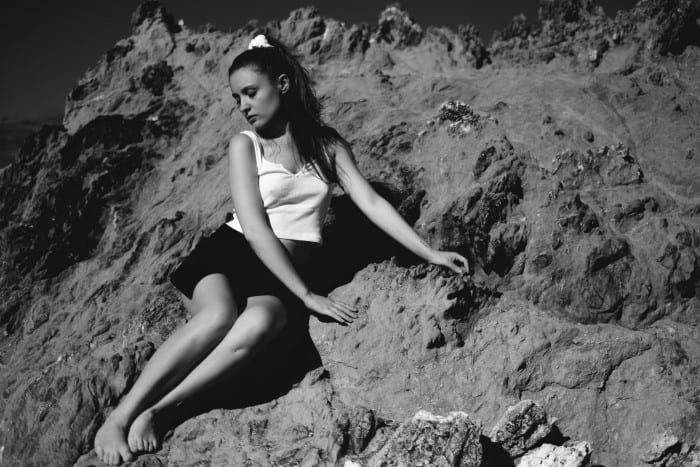
The following is a guest piece by Trista Ann Marie Eazell.
I do not remember a time where my body wasn’t screaming in pain.
At eleven years old I – a child who had never once complained of pain before – began crying because my body hurt so bad.
My mother took me to multiple doctors, but they didn’t believe me and told her I was making things up. That the pain in my body wasn’t real.
My mother refused to listen, and thousands of dollars were spent on me being poked, prodded, attempting every treatment we could get our hands-on.
Eventually, I was diagnosed with fibromyalgia, a disease of widespread chronic pain that has mystified the medical world for decades.
My parents are of the born-again persuasion of Christianity and many Christians who heard of my disease would speak words of “prophecy” that I would be “healed in the name of Jesus,” and at first I believed them.
I believed that if I had enough faith and enough people prayed, I would be free from the constant and unending pain.
But the healing never came.
Fibromyalgia is considered an incurable disease, only a few have recovered fully, and even then the reasons why are unknown.
Because of my fibromyalgia, I didn’t have the energy other kids my age did. I couldn’t play sports, I ate weird healthy food, and was constantly getting sick. I had friends, but I felt isolated.
At 22, I was diagnosed with another incurable disease: endometriosis, a disease that grows skin cells that shed throughout your body creating excruciating pain and leave scar tissue behind.
Through the painful battles my body had to fight daily, I also found myself being discriminated against in the workplace for not having as much energy as my coworkers, for not smiling as much, for having a hard time moving heavy things, and for needing to call in sick occasionally.
When I explain my illnesses to people I often get “well you don’t look sick!” or “you’re too young to be tired, have kids than talk to me.”
It is assumed because I am small and thin, I must be healthy and comfortable in my body.
The reality is, I am so small because of my illnesses, struggling with the wellness diet culture, and I am not comfortable in my body at all.
Living in a chronically ill and chronically painful body is like living in a house that is closing in around you and in need of constant repair.
I have experienced only a handful of pleasurable embodied experiences, most of the time I am just trying to distract myself from the pain.
I often feel that my struggles are invisible to the world around me, and when I do not live up to the standard expected of someone who visibly looks healthy, I am looked down upon. I have to go to four different doctors regularly and am on about 10 medications. I have been yelled at by roommates who didn’t understand why I wasn’t as active as them in cleaning the house or why I seemed so forgetful.
I and others with both invisible and visible illness/disability have learned to be tough and to deal with the fact that people will be insensitive and prejudice towards us, refuse to listen to us, and refuse to ask questions about disability.
I am a part of a lot of social justice conversations and consistently ableism has been the topic folks are least comfortable talking about, least willing to do the work to be empathetic to our plight and forget to list us among the marginalized groups.
When the Holocaust is discussed it’s never brought up that the first hundreds of thousands of victims were disabled and sick people.
When we learn about U.S. History we do not hear about Buck V. Bell where “imbeciles” (i.e. disabled and chronically ill folk) were forced to be sterilized, and how in many states those with visible diseases weren’t legally allowed to be seen in public.
This is an uncomfortable conversation to have because people still are not ready to face the fact that humans are naturally prone to fear what they do not understand.
Those with chronic illness and chronic pain often represent the fear most people have of facing their invisible emotional pain: it’s easier to dismiss those with invisible pain than to acknowledge that everyone has invisible demons. Those with visible disabilities often represent the fear people have of the “other”, it is easier to vilify people with visible disabilities than to do the hard work of understanding their needs, of making space for them and being patient enough to let their voices be heard.
In religion, people with disabilities and illnesses were often thought to be “unclean”, “sinful”, and even “demon-possessed”.
Often churches and other religions will look at disability and illness as something spiritual that needs to be fixed by God or a charity case to earn heavenly rewards from. The questions that those with disability and illness ask about God are hard. Is God all-powerful? Does God care about my pain? Is God there? And at these questions the church stares blankly at and then tries to meet with earnest but helpless anecdotes. The voices and questions of the disabled and ill are silenced in the spiritual places they look for answers in.
I cannot tell you what the remedy is, but I do not that all who are healthy and able-bodied do have ableism that needs to be worked through. Do research, listen to the voices of the disabled and ill, invite them to sit at the table beside you, ask them what they want and need, and be humble when someone points out ways you are being ableist.
Trista is a pastoral intern at New Abbey North Hollywood, a graduate student at Fuller Theological Seminary, a writer, a poet, and desires to help bring healing. For more of Trista, follow her on Instagram.
For more of Sheri Faye Rosendahl’s work, go to www.SheriFayeRosendahl.com, check out her book Not Your White Jesus, or follow her on Facebook, Twitter, or Instagram.
Previous Post

September 26, 2019
Conservative Christian America, I Hope It's Ignorance
Next Post

October 15, 2019 Pastor Exploits the Death of a Child for a Sermon Without Apology
Browse Our Archives
Select a Category Uncategorized
Select a Month January 2020 November 2019 October 2019 September 2019 August 2019 July 2019
Follow Us!
TAKE THE
Religious Wisdom Quiz
Jesus was baptized in the water of which river?
Select your answer to see how you score.
Gihon Euphrates Jordan Nile
Related posts from Sheri Faye Rosendahl

You Are Not What They Taught You
In Memory of Rick Love, the Peacemaker Whose...
The Real Threat to America's Freedom Comes From...
Pastor Exploits the Death of a Child for...
TRENDING AT PATHEOS Progressive Christian

Why Christians Have a Sacred Duty to Vote:...
The Bible offers strong support for the sacred duty to vote. Here...

What Being a Modern-Day Apostle Means to Me
In my last column, I discussed the ins and outs of modern-day...

Did Ancient China Once Worship the God of...
Across human history, a common thread weaves through the origins of the...

Love Your Neighbor – Including Earth-Kin: Lev. 19,...
God’s command to love your neighbor means acting in an ethical and...

Lead a Church Study of “Jesus and Lao...
Guest writer Jack Thomas (The Irreverent Reverend) reflects on leading his church...

Principles for Understanding the Apostolic Ministry Today
Whenever people discover that my formal ministry title is "apostle," as in...
view all Progressive Christian blogs
Ad-Free & Subscriber Log-In Subscription Support
- About Us
- 2026 Calendar
- Videos
- Podcasts
- Library of World Religions
- Faith In Media Tracker
- Advertise With Us
- Write for Us
- Privacy Policy
- Terms of Service
- Do Not Sell My Data
- Contact Us
- Radiant Digital
- Manage Newsletter Subscriptions
- Unsubscribe From Notifications
- Sitemap
Copyright 2008-2026, Patheos. All rights reserved.
Subscription Support Ad-Free & Subscriber Log-In
Follow Patheos