
BuddhistCatholicContemplativeEvangelicalGeneral ChristianHinduJewishLatter-day SaintMuslimNew VisionsProgressive Christian
Beliefs
- Buddhist
- Catholic
- Contemplative
- Evangelical
- General Christian
- Hindu
- Jewish
- Latter-day Saint
- More Voices
- Muslim
- New Visions
- Pagan
- Progressive Christian
Topics
- Religion News
- Food and Religion
- Sports and Religion
- Religious Art
- Religious Music and Entertainment
- Religious Events
- History and Religion
- Style and Religion
- Politics and Religion
- Women in Religion
- Recreation Outdoors and Religion
- Business Finance and Religion
- Careers Workplace and Religion
- Education and Religion
- Family Parenting and Religion
- Health Fitness and Religion
- Home and Religion
- Relationships and Religion
- Technology and Religion
- Travel and Religion
Columnists
- Buddhist Columnists
- Business Finance and Religion Columnists
- Careers Workplace and Religion Columnists
- Catholic Columnists
- Contemplative Columnists
- Education and Religion Columnists
- Evangelists Columnists
- Family Parenting and Religion Columnists
- General Christian Columnists
- Health Fitness and Religion Columnists
- Hindu Columnists
- History and Religion Columnists
- Home and Religion Columnists
- Jewish Columnists
- More Voices Columnists
- Latter Day Columnists
- Muslim Columnists
- New Visions Columnists
- Nonreligious Columnists
- Pagan Columnists
- Politics and Religion Columnists
- Progressive Columnists
- Recreation Outdoors and Religion Columnists
- Relationships and Religion Columnists
- Religion News Columnists
- Religious Art Columnists
- Religious Events Columnists
- Religious Music and Entertainment Columnists
- Sports and Religion Columnists
- Style and Religion Columnists
- Technology and Religion Columnists
- Travel and Religion Columnists
- Women in Religion Columnists
Resource Library
- 2026 Calendar
- Library of World Religions
- The 100 Most Holy Places on Earth
- Patheos Answers
- Podcasts
- Videos
- Faith Leaders Database
- Anglican Episcopalian
- Bahai
- Baptist
- Buddhism
- Christianity
- Confucianism
- Eastern Orthodoxy
- Hinduism
- Holiness and Pentecostal
- ISKCON
- Islam
- Judaism
- Lutheran
- Methodist
- The Church of Jesus Christ of Latter-day Saints
- New Age
- Paganism
- Presbytarian and Reformed
- Protestantism
- Religion Behind the Scenes
- Roman Catholic
- Scientology
- Shia Islam
- Sikhism
- Sufism
- Sunni Islam
- Taoism
- Zen
- See all religions
Research Tools
 Ad-Free & Subscriber Log-In Subscription Support
Follow Patheos 

- Trending:
- Advent
- |
- Forgiveness
- |
- Thanksgiving
- |
- Election
- |
- Seasonal Holidays
- |
- Marriage
 Shattering Paradigms
- Home
- Evangelical
- Politics and Religion
- Is the Fight for Kaepernick Worth It?
Is the Fight for Kaepernick Worth It?
Last updated on: July 15, 2020 at 8:58 pm by George Yancey
Is the Fight for Kaepernick Worth It? 2020-07-15T20:58:24+06:00 George Yancey
Patheos Explore the world's faith through different perspectives on religion and spirituality! Patheos has the views of the prevalent religions and spiritualities of the world.
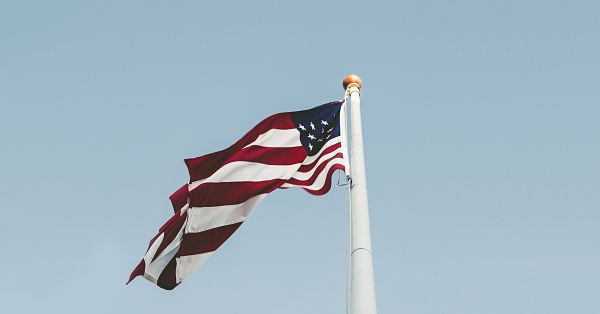
I have made it clear that fighting for the right of Colin Kaepernick to take a knee for the national anthem is not a high priority for me. A big part of my apathy is the hypocrisy of progressives who only seem to fight for the jobs of those who share their political ideals. I think a case can be made for supporting Kaepernick, particularly in light of the stupidity coming out of our president’s mouth, but I will not be doing so under these circumstances.
But during my informal sabbatical I thought more about the Kaepernick situation. The ongoing NFL controversy can provide further insight into some of our social conflict. I also think it supports my contention from the last blog that we need to engage in meaningful intergroup conversation if we are going to deal with issues of social justice in our society.
So let us summarize what has happened. Kaepernick decided to use the national anthem as an opportunity to provide attention to the some of the racial problems blacks face today. I think it is fair to say that due to the backlash against his anthem protest, he no longer has an NFL job. It is also fair to say that the NFL ratings are slumping in part due to the controversy which resulted in new rules this year intended to restrict the protest. However, during the preseason we have seen NFL players still engage in some forms of protest, in part as a reaction to President Trump’s interference in this controversy.
This controversy has created another opportunity for individuals to argue about what is proper and right in our society. Many conservatives feel that the national anthem is not an appropriate venue for such a protest. Many progressives feel that this is yet another example of white Americans unwilling to deal with racism.
If we can agree on this basic set of facts, then I would like to focus on one particularly interesting angle to this situation. The original intention of the protest was to bring attention to racial injustice in the United States. The hope would be that this attention would make it easier to make the social alterations so that those injustices can be addressed. With that in mind I find myself asking a basic question. Is there anyone in society who will become more predisposed to fight racial injustice due to the Kaepernick controversy?
Of course no one can answer this question with certainty. It is possible, and perhaps even likely, that there is someone somewhere who has become more “woke” due to the activism of Kaepernick and his defenders. But I seriously doubt that there are very many such individuals. In fact, I suspect that this entire controversy has generally made majority group individuals less likely to confront racial injustice rather than more likely to do so.
It is not merely the rhetoric coming across my facebook feed that leads me to the conclusion that the Kaepernick controversy has hardened, rather than softened, the attitudes of moderate and conservative whites towards issues of racial justice. I have also spent time listening to those moderate and conservative whites talk about racial issues. I have a general idea of how they approach those issues, and my understanding of their approach has helped me to learn how to reach out to them. I have had decent success speaking at conferences to help moderate and conservative whites rethink their previous perspectives on racial issues and attempt to understand the perspectives of people of color.
But perhaps I am wrong. Perhaps you know a lot of people who previously were insensitive towards people of color or even racist toward them and were inspired by Kaepernick. Do you know many such people? Or is it the case that this entire controversy has made your moderate and conservative friends less open to dealing with racial issues? Has it merely reinforced their propensity to blow off the concerns of people of color? If you answer those questions honestly can you say that the Kaepernick controversy and NFL protests are improving race relations?
I suspect that if you carefully think about it that you will come to the same conclusion that I have, which is that the NFL controversy has made whites less, not more, likely to deal with racial injustice. Yet activists have rallied around the NFL players and are determined to fight heartily for their right to engage in this type of protest. In a strictly pragmatic manner this is a bad allocation of limited resources. Time and energy that could be used in more productive ways are being wasted fighting for a type of protest that will not generate any movement towards meaningful change. The natural question is why such activists are so invested in the protest of Kaepernick and the other NFL players. I have two possible answers to that question.
First, and I think the most likely answer, is that such activists are clueless about the effects of these protests. Somehow in their minds they believe that these protests will set off a wave of social energy that will result in the type of social reforms they want. The protests do excite those already committed to such reforms, and so these individuals cannot see that these protests are making it harder, and not easier, for moderate and conservative whites to support them.
I know that many activists do not care about attaining the support of those whites. They believe themselves to be on the side of the angels and assert that whites need to just support them in what they want to do. This type of belief flies in the face of what we know about human nature. Individuals are highly unlikely to support a social movement that merely dictates to them what they should believe and offers no attempt at offering contextualized legitimation. To put it plainly, nobody likes to be told what to do and be expected to do it without being even offered an explanation that they can understand. The NFL protests does not offer that type of contextualized explanation and are doomed to fail in their stated purpose, which is to promote social change.
I see this as a failure to actually listen to moderate and conservative whites and thus the use of techniques that will fail to persuade them. I have had some success speaking at Christian conferences towards moving moderate and conservative whites to a better understanding about our racialized society because I have listened to them in the past and know what works. The failure to craft a message that actually reaches individuals who disagree or are indifferent to the concerns of race activists leads to the type of misallocation of resources that has so many of them fighting to engage in a protest that hurts, rather than helps, their chosen causes.
When I talk about active listening, I sometimes get pushback from progressives that they have nothing to learn from unwoke whites. Beyond the arrogance of insisting that one cannot learn from the perspectives of others, there is clearly a key lesson they are missing. Even if these activists are 100 percent right about what our society needs and the whites are 100 percent wrong, they can still learn how to communicate with those whites to gain their support. We only learn how to communicate to others in ways they can hear if we have listened to what they have to say and how we can reach them. The debacle that is the NFL protests is simply another example of why active listening is so important in dealing with conflicts surrounding social justice issues.
There is a second possible reason why such activists persist in a strategy that will not advance the social changes they desire. Perhaps supporting these protests is not about producing social change, but about creating social power for selected social groups. If the protesters can force the powerful NFL to back down, then it indicates that they have a great deal of social power. Demonstrating power may be about ego or may be so that they hope to defend marginalized groups in the future. However, it is not about using these protests to create current social reforms. While we have little reason to believe that such displays of protest will lead to those reforms, they may help to underscore the social power of these activists.
In the end my analysis strengthens my apathy about the NFL protests. I have little interest in fighting for the power of the woke folks and do not want to engage in activity that has almost no chance of creating productive social changes. But perhaps in the aftermath of such protests, some individuals will begin to realize the importance of learning to engage in active listening so that they can create a more productive outreach to majority group members. Perhaps, but if history is any indicator, I would not hold my breath waiting for such activists to come to that conclusion.
Update: Folks. I am not going to allow excessive name-calling. If you have an argument then make it. But do not be insulting to me or others. I was just going to show my contempt for such comments but I decided that I am not going down into the mudpit. So I deleted some comments and my response to them. And I will delete any other name-calling comments as well.
Update 2: Sorry but I do not buy the King comparisons. You have to look at context. King made an effort to reach out to whites of his day in a way they would understand him. This was part of the basis of his philosophy of non-violent protest. You have to read King in the original or you will miss how much he also cared about the souls of whites. It was not merely about dictating to them what they should believe and do. He had contemporaries who did not show such a concern such as Carmichael and Malcolm X. I am not saying that King precisely adopted my ideas of active listening because he was in a different era. But if we are looking at intergroup communication then King is more of the model for what I am arguing if we were talking about the 1960s. Finally, the idea that my idea is that we do not work towards change indicates a lack of understanding of how we can make enduring change. If you do not reach those whites then you cannot get the legitimacy you need to have that enduring change. Anybody who as seen the sort of conversations that come out of active listening would not make the mistake of thinking that those working those conversations do not want to see change. We just want to see change that will last.
Previous Post

August 29, 2018
Kids are the Bomb
Next Post

September 11, 2018 Where does the Threat to Academic Freedom Come From?
Recent Comments
Browse Our Archives
Select a Category Uncategorized
Select a Month November 2022 June 2022 May 2022 January 2022 December 2021 September 2021 April 2021 December 2020 October 2020 September 2020 August 2020 July 2020 June 2020 May 2020 April 2020 March 2020 February 2020 January 2020 December 2019 November 2019 October 2019 September 2019 August 2019 July 2019 June 2019 May 2019 April 2019 March 2019 February 2019 January 2019 December 2018 November 2018 October 2018 September 2018 August 2018 July 2018 June 2018 May 2018 April 2018 March 2018 February 2018 January 2018 December 2017 November 2017 October 2017 September 2017 August 2017 July 2017
Follow Us!
TAKE THE
Religious Wisdom Quiz
What Christian group believes in continuing revelation from prophets?
Select your answer to see how you score.
Latter-day Saints Lutherans Baptists Presbyterians
Books by This Author Books by George Yancey
Related posts from Shattering Paradigms

What the New NFL Policy Tells Us about...

A Few Random Thoughts about the NFL

The Problem with False Equivalency Claims

Religious Liberty and the Supreme Court
TRENDING AT PATHEOS Evangelical

When you hear the word riches, what comes to mind? For most...

Don’t Miss the Parents: A Creative Christmas Meditation
As we enter the Advent Season, I see many people trying to...

Making Stones Into Bread: Choosing the “Right” Work
I was on my online arts ministry Zoom meeting with the International...

Ukraine’s exhausted Christians face fifth winter of war
By Julian Lukins The full-scale war in Ukraine is taking “a serious...

Russell Brand's Conviction is not anti-Christian Persecution
How do we shed the reputation that the Church is OK with...

Have you ever caught yourself saying, “I’ll do it tomorrow,” or “Now...
view all Evangelical blogs
Ad-Free & Subscriber Log-In Subscription Support
- About Us
- 2026 Calendar
- Videos
- Podcasts
- Library of World Religions
- Faith In Media Tracker
- Advertise With Us
- Write for Us
- Privacy Policy
- Terms of Service
- Do Not Sell My Data
- Contact Us
- Radiant Digital
- Manage Newsletter Subscriptions
- Unsubscribe From Notifications
- Sitemap
Copyright 2008-2026, Patheos, part of the Radiant Digital network of media brands. All rights reserved.
Subscription Support Ad-Free & Subscriber Log-In
Follow Patheos