
BuddhistCatholicContemplativeEvangelicalGeneral ChristianHinduJewishLatter-day SaintMuslimNew VisionsProgressive Christian
Beliefs
- Buddhist
- Catholic
- Contemplative
- Evangelical
- General Christian
- Hindu
- Jewish
- Latter-day Saint
- More Voices
- Muslim
- New Visions
- Pagan
- Progressive Christian
Topics
- Religion News
- Food and Religion
- Sports and Religion
- Religious Art
- Religious Music and Entertainment
- Religious Events
- History and Religion
- Style and Religion
- Politics and Religion
- Women in Religion
- Recreation Outdoors and Religion
- Business Finance and Religion
- Careers Workplace and Religion
- Education and Religion
- Family Parenting and Religion
- Health Fitness and Religion
- Home and Religion
- Relationships and Religion
- Technology and Religion
- Travel and Religion
Columnists
- Buddhist Columnists
- Business Finance and Religion Columnists
- Careers Workplace and Religion Columnists
- Catholic Columnists
- Contemplative Columnists
- Education and Religion Columnists
- Evangelists Columnists
- Family Parenting and Religion Columnists
- General Christian Columnists
- Health Fitness and Religion Columnists
- Hindu Columnists
- History and Religion Columnists
- Home and Religion Columnists
- Jewish Columnists
- More Voices Columnists
- Latter Day Columnists
- Muslim Columnists
- New Visions Columnists
- Nonreligious Columnists
- Pagan Columnists
- Politics and Religion Columnists
- Progressive Columnists
- Recreation Outdoors and Religion Columnists
- Relationships and Religion Columnists
- Religion News Columnists
- Religious Art Columnists
- Religious Events Columnists
- Religious Music and Entertainment Columnists
- Sports and Religion Columnists
- Style and Religion Columnists
- Technology and Religion Columnists
- Travel and Religion Columnists
- Women in Religion Columnists
Resource Library
- 2026 Calendar
- Library of World Religions
- The 100 Most Holy Places on Earth
- Patheos Answers
- Podcasts
- Videos
- Faith Leaders Database
- Anglican Episcopalian
- Bahai
- Baptist
- Buddhism
- Christianity
- Confucianism
- Eastern Orthodoxy
- Hinduism
- Holiness and Pentecostal
- ISKCON
- Islam
- Judaism
- Lutheran
- Methodist
- The Church of Jesus Christ of Latter-day Saints
- New Age
- Paganism
- Presbytarian and Reformed
- Protestantism
- Religion Behind the Scenes
- Roman Catholic
- Scientology
- Shia Islam
- Sikhism
- Sufism
- Sunni Islam
- Taoism
- Zen
- See all religions
Research Tools
 Ad-Free & Subscriber Log-In Subscription Support
Ad-Free & Subscriber Log-In Subscription Support
Follow Patheos 

- Trending:
- Forgiveness
- |
- Marriage
- |
- Consciousness
- |
- Death Penalty
- |
- Election
- |
- Halloween
 Empathy Mining
- Home
- Progressive Christian
- Lessons for Christians from Non-Christian, Ben Franklin
Lessons for Christians from Non-Christian, Ben Franklin
Last updated on: April 15, 2022 at 2:37 pm by Shane Phipps
Lessons for Christians from Non-Christian, Ben Franklin 2022-04-15T14:37:05-04:00 Shane Phipps
Patheos Explore the world's faith through different perspectives on religion and spirituality! Patheos has the views of the prevalent religions and spiritualities of the world.
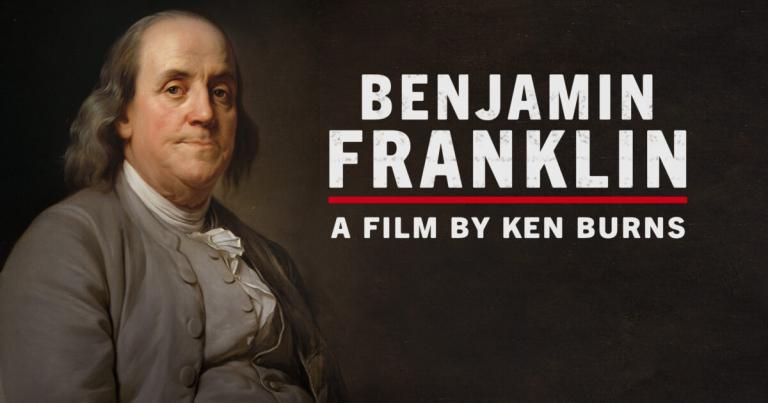
I just finished watching Ken Burns’ latest work, a brilliant two-part documentary about Benjamin Franklin. As a long-time teacher and student of American history, Franklin’s life falls right into my wheelhouse of interest, so I went into this new retrospective armed with substantial prior knowledge about the subject. But as with all of Ken Burns’ films, this masterpiece got me to think about Franklin in ways I had never experienced before. It also opened doors for me to make direct correlations between Franklin’s life and perspectives with different aspects of the modern-day nation he was so instrumental in helping to create; topics ranging from humanitarianism, self-introspection, personal growth, party politics, to religion. If you’d be so kind to read further, I’d like to try to stitch my thoughts together into a reasonably cogent written response to what I got out of the documentary.
Franklin the Humanitarian Deist
Benjamin Franklin could be astoundingly selfless and generous when it came to his contributions to society. Anyone with even an elementary-level knowledge of Ben Franklin knows that he had a brilliant scientific mind and was the inventor of many things that made the world a better place—and continue to do so. His experiments with electricity and lightning led to his development of the lightening rod. This simple but crucial invention has saved untold thousands of lives and structures in the centuries since Franklin came up with the idea. He also developed a new kind of fireplace insert stove (the Franklin Stove) which was much more efficient than anything that had preceded it—versions of it are still in use. He, quite famously, invented bifocal glasses. Franklin even invented a new musical instrument he called the “armonica,” based on the idea of playing glass bowls filled to varying degrees with water by rubbing the rims with dampened fingertips. Franklin designed this concept into a spinning instrument that could be played like a piano keyboard, and it caught on and became quite popular. Any one of these popular and useful inventions could have made Benjamin Franklin a personal fortune. But Franklin, despite the urging of his friends, refused to take out a patent for any of his inventions. He didn’t feel that inventions designed to improve the quality of life for humanity should be used as a method of profiteering. He saw them as gifts for the common good of society. That’s unthinkable in today’s world! Benjamin Franklin was not by any traditional definition a Christian; he was a deist. He believed in a higher power—a creator—but did not ascribe his belief to any particular religious sect or doctrine.
“Here is my creed: I believe in one God, creator of the Universe, that he governs it by his providence, that he ought to be worshiped, that the most acceptable service we render to him is doing good to his other children, that the soul of man is immortal and will be treated with justice in another life respecting its conduct in this. These I take to be the fundamental principles of all sound religion and I regard them in whatever sect I meet with them.”
–Benjamin Franklin
That creed would completely exclude him from the membership of most churches affiliated with Christianity in today’s world, without a doubt. But his views about serving mankind without using it as a means to acquire great personal wealth would certainly appeal to Jesus, I believe. That’s not to say that Franklin wasn’t a wealthy man, he was, but he could have been exponentially wealthier.
Franklin the Self-Reflective Sinner
One of my favorite Benjamin Franklin quotes is this: “Search others for their virtues and yourself for your vices.”
I teach that quote to my students in my history classes. It’s a good one—and it has an indirect biblical connotation with Matthew 7:3: Why do you look at the speck in your brother’s eye, but ignore the plank in your own eye?
Benjamin Franklin was far from a saint. He had the same predilection for all of the vices of the world as any one of us has. But Franklin went out of his way to be his own harshest critic when it came to this. As a young man, Franklin developed a list of virtues to hold himself accountable to. At first the list contained 12 items as follows:
- Temperance: Eat not to dullness, drink not to elevation.
- Silence: Speak not but what may benefit others or yourself; avoid trifling conversation.
- Order: Let all your things have their places; let each part of your business have its time.
- Resolution: Resolve to perform what you ought; perform without fail what you resolve.
- Frugality: Make no expense but to do good to others or yourself, i.e., waste nothing.
- Industry: Lose no time; be always employed in something useful.
- Sincerity: Use no hurtful deceit; think innocently and justly, and, if you speak, speak accordingly.
- Justice: Wrong none by doing injuries, or omitting the benefits that are your duty.
- Moderation: Avoid extremes; forbear resenting injuries so much as you think they deserve.
- Cleanliness: Tolerate no uncleanliness in body, clothes, or habitation.
- Tranquility: Be not disturbed at trifles, or at accidents common or unavoidable.
- Chastity: Rarely use venery (sexual indulgence) but for health or offspring, never to dullness, weakness, or the injury of your own or another’s reputation.
That was Franklin’s original list of virtues. He didn’t just list them, he made a chart and scored himself on each one, point for point, each day. One day, he had done so well with meeting his self-prescribed virtuous expectations that he felt proud and boasted to a friend. The friend looked over the list and suggested that Ben had left one virtue, in particular, off the list. The next day, Franklin had added a thirteenth virtue.
- Humility: Imitate Jesus and Socrates
Franklin’s penchant for self-reflection and self-improvement was a crucial part of what allowed him to evolve over his lifetime. which leads us to the next category.
Franklin the Work in Progress (Personal Growth)
As stated earlier, Franklin was no saint. He was also, like all of us are, a product of his times. But Franklin, unlike many of us, did not choose to remain a product of his times. He sought to learn, to empathize, to evolve, and progress. The most glaring example of this part of Benjamin Franklin’s story is his remarkable evolution when it came to the topic of slavery and race relations. As a young man, Franklin did not value or respect black people very highly. You need only read some of what he wrote in his younger years on the topic to get a very clear picture. He also was a slave owner for much of his early and middle years, not nearly on the order of plantation owners like George Washington or Thomas Jefferson, but a slave owner, nonetheless. By the end of his life, Benjamin Franklin was an outspoken opponent of slavery and a leading abolitionist. What changed? He did. He took the trouble to investigate the matter with an open mind throughout his later years. One moment in particular helped open his eyes and changed his thinking. He visited a school for black children in Philadelphia at the behest of his wife. During his visit, he was extremely impressed with what he saw, writing later that he saw black children learning, performing, and acting no less successfully than white children. It convinced him that he had been wrong in his impressions of racial differences, and, like any good scientist, he began to change his hypothesis, so much so that, in his last year of life, he drafted a letter to Congress urging them to consider abolishing slavery. This was in 1790—the first time the subject had been broached before the newly established government—it was an idea, like so many of Franklin’s, decades ahead of its time. Of course, Congress did not vote to approve Franklin’s suggestion, but it opened the door wide enough for the elephant to stroll into the room where it continues to reside to this very day.
This is the quality I admire most in Franklin. He had every right to let his enormous talent, intellect, and accomplishments—he was revered around the world in an era where Americans were seen as slack-jawed hill jacks—go to his head and make him think that he was all but infallible. Instead, he allowed empathy acquired through life experiences to move him to change. I wish that more of us in this country today would adopt that virtue. Here is what Franklin had to say about the topic:
“The hardest thing for a man to do is to change long-standing prejudices of belief, but to succeed in doing it is a test of one’s humanity.”
–Benjamin Franklin
This leads us directly into the next category.
Franklin the Politician
Benjamin Franklin came to the game of politics later in life. He had already established himself as a successful printer, writer, and a renowned scientist and inventor before he found himself embroiled in the politics of a revolution. But there was a world of difference between politics of colonial America and the politics of today. In the first place, there were no formal political parties. The first two political parties in the U.S. didn’t form until Thomas Jefferson and Alexander Hamilton continually butted heads as part of George Washington’s first cabinet. By that time, Franklin was dead—or dying anyhow. So, in Franklin’s time, compromise was still an art that could be practiced with some success. Were it not so, we’d most certainly never have been able to achieve the monumental accomplishment that was the United States Constitution, another event during which Franklin played a vital role. Although, even then, two distinct schools of thought had already begun to separate themselves, the Federalists and the Antifederalists, the idea of being completely beholden to a rigid political platform had not yet fully taken hold. Franklin was greatly skilled at building bridges instead of walls when it came to politics. Alas, that’s a dying art now.
Today, we have Republicans and Democrats—conservatives and progressives—and neither one seems willing to move an inch toward the center. At least is seems that way at times. In the centuries since the Constitution was written, our country has made great strides forward in so many areas—and we’ve taken great steps backwards in others. Just being able to come to the table with an open mind and empathetic disposition to discuss issues cordially has been replaced by both sides pointing at the other and calling each other pure evil. We have a Republican Party which loves to reminisce about returning to the “good old days,” which never existed in the first place and a Democratic Party that dreams about a future that can likely never be. And lost in the middle of all that is the “right now.” Benjamin Franklin understood that in order to progress into the future, you must be willing to work on the “right now.” That’s what he was getting at when he famously replied to a woman who’d asked him what kind of government they’d come up with in the Constitutional Convention. “A Republic, madam, if you can keep it,” Franklin answered.
We have a Republic for right now, but for how much longer?
Franklin helped get the extremely unlikely compromises done in order to ratify the Constitution so that they could begin to address the problems of “right now.” He understood it wasn’t perfect, but he accepted that it was as close as it was going to get at that point. That’s progress. That’s moving forward. And that seems to be a thing of the past.
Franklin the Religious Guru
As stated earlier, by no stretch of the imagination was Benjamin Franklin what we would call a Christian. He was a somewhere between a deist and a humanist. He could be a very virtuous person but also had all the faults and frailties all humans share. But, in some ways, Benjamin Franklin might well have been one of the most Christ-like of our Founding Fathers. Upon close examination, I think we can find Jesus reflected in Benjamin Franklin much more readily than we can find it in many of our leaders today—both political and religious leaders.
Thanks to Ken Burns for allowing me to see some sides of Ben that I’d never seen before.
It sure makes me wish we had him around today.

Next Post

April 27, 2022 Jesus and Elon Musk: America's Income Inequality Problem
Browse Our Archives
Select a Category 150 word story 2nd Amendment AARP abortion addiction aging alcoholism Anderson Wigwam Andrew Jackson Appalachia Basketball bias bigotry Black Lives Matter Christianity Christmas, Constitution, Bill of Rights Civil War Clinton cloning confirmation bias Conservation Constitution Controversial Creationism Creepy tales David Bowie depression Dogs Education Election Electoral College Empathy Environmental Evolution exvangelical faith Family Family History Fantasy Genealogy Genesis George Washington Ghetto Global Warming Gun Control health care High School Basketball Hillary History Hockey homosexuality Hoosier Hysteria Hoosiers Hunting immigration income inequality Interview ISTEP Jurassic Park Kaepernick Ken Hamm Kids say the Darndest things LGBTQ Love MAGA Manifest Destiny Merit Pay Mike Pence Muhammad Ali Multiple Perspectives Music Music Review Nashville News media NHL No Child Left Behind NRA Paradox Parenting Pence Perspective Politics POTUS Poverty Predators Race Religion religious freedom Sci Fi Science Secret of Life sexual harrassment Short Stories Slavery Small Town Indiana Smashville Social Commentary social media sports Stress technology Terrorism Thomas Jefferson Trauma Trump Turning 50 Uncategorized war Washington DC White Privilege wooly mammoths words in red Writing Writing Process Writing, Writing Process Young Earth
Select a Month June 2022 May 2022 April 2022 March 2022 February 2022 August 2021 May 2021 March 2021 February 2021 January 2021 November 2020 October 2020 September 2020 August 2020 July 2020 June 2020 April 2020 March 2020 February 2020 January 2020 December 2019 November 2019 October 2019 September 2019 August 2019 July 2019 June 2019 May 2019 April 2019 March 2019 February 2019 January 2019 December 2018 November 2018 October 2018 September 2018 August 2018 July 2018 June 2018 May 2018 April 2018 March 2018 February 2018 January 2018 December 2017 November 2017 October 2017 September 2017 August 2017 July 2017 June 2017 May 2017 April 2017 March 2017 February 2017 January 2017 December 2016 November 2016 October 2016 September 2016 August 2016 July 2016 June 2016 May 2016 March 2016 February 2016 January 2016 December 2015
Follow Us!
TAKE THE
Religious Wisdom Quiz
True or False: The mystery hidden for ages is Christ in us, the hope of glory.
Select your answer to see how you score.
FALSE TRUE
Support this
Column


Related posts from Empathy Mining

Gun Rights Advocates are Focusing on the Wrong...

It's Time for Pro-Lifers to Be Pro-Life

Can a Democrat Be a Christian?

Don't let Dissociation Keep You from Standing for...
TRENDING AT PATHEOS Progressive Christian

What Being a Modern-Day Apostle Means to Me
In my last column, I discussed the ins and outs of modern-day...

Did Ancient China Once Worship the God of...
Across human history, a common thread weaves through the origins of the...

Love Your Neighbor – Including Earth-Kin: Lev. 19,...
God’s command to love your neighbor means acting in an ethical and...

Lead a Church Study of “Jesus and Lao...
Guest writer Jack Thomas (The Irreverent Reverend) reflects on leading his church...

Pastoral Wisdom for Responding to Sermon Pushback
Getting sermon pushback on your social justice sermon? Learn practical, Proverbs-based strategies...

Principles for Understanding the Apostolic Ministry Today
Whenever people discover that my formal ministry title is "apostle," as in...
view all Progressive Christian blogs
Ad-Free & Subscriber Log-In Subscription Support
- About Us
- 2026 Calendar
- Videos
- Podcasts
- Library of World Religions
- Faith In Media Tracker
- Advertise With Us
- Write for Us
- Privacy Policy
- Terms of Service
- Do Not Sell My Data
- Contact Us
- Radiant Digital
- Manage Newsletter Subscriptions
- Unsubscribe From Notifications
- Sitemap
Copyright 2008-2026, Patheos. All rights reserved.
Subscription Support Ad-Free & Subscriber Log-In
Follow Patheos