
BuddhistCatholicContemplativeEvangelicalGeneral ChristianHinduJewishLatter-day SaintMuslimNew VisionsProgressive Christian
Beliefs
- Buddhist
- Catholic
- Contemplative
- Evangelical
- General Christian
- Hindu
- Jewish
- Latter-day Saint
- More Voices
- Muslim
- New Visions
- Pagan
- Progressive Christian
Topics
- Religion News
- Food and Religion
- Sports and Religion
- Religious Art
- Religious Music and Entertainment
- Religious Events
- History and Religion
- Style and Religion
- Politics and Religion
- Women in Religion
- Recreation Outdoors and Religion
- Business Finance and Religion
- Careers Workplace and Religion
- Education and Religion
- Family Parenting and Religion
- Health Fitness and Religion
- Home and Religion
- Relationships and Religion
- Technology and Religion
- Travel and Religion
Columnists
- Buddhist Columnists
- Business Finance and Religion Columnists
- Careers Workplace and Religion Columnists
- Catholic Columnists
- Contemplative Columnists
- Education and Religion Columnists
- Evangelists Columnists
- Family Parenting and Religion Columnists
- General Christian Columnists
- Health Fitness and Religion Columnists
- Hindu Columnists
- History and Religion Columnists
- Home and Religion Columnists
- Jewish Columnists
- More Voices Columnists
- Latter Day Columnists
- Muslim Columnists
- New Visions Columnists
- Nonreligious Columnists
- Pagan Columnists
- Politics and Religion Columnists
- Progressive Columnists
- Recreation Outdoors and Religion Columnists
- Relationships and Religion Columnists
- Religion News Columnists
- Religious Art Columnists
- Religious Events Columnists
- Religious Music and Entertainment Columnists
- Sports and Religion Columnists
- Style and Religion Columnists
- Technology and Religion Columnists
- Travel and Religion Columnists
- Women in Religion Columnists
Resource Library
- 2026 Calendar
- Library of World Religions
- The 100 Most Holy Places on Earth
- Patheos Answers
- Podcasts
- Videos
- Faith Leaders Database
- Anglican Episcopalian
- Bahai
- Baptist
- Buddhism
- Christianity
- Confucianism
- Eastern Orthodoxy
- Hinduism
- Holiness and Pentecostal
- ISKCON
- Islam
- Judaism
- Lutheran
- Methodist
- The Church of Jesus Christ of Latter-day Saints
- New Age
- Paganism
- Presbytarian and Reformed
- Protestantism
- Religion Behind the Scenes
- Roman Catholic
- Scientology
- Shia Islam
- Sikhism
- Sufism
- Sunni Islam
- Taoism
- Zen
- See all religions
Research Tools
 Ad-Free & Subscriber Log-In Subscription Support
Ad-Free & Subscriber Log-In Subscription Support
Follow Patheos 

- Trending:
- Forgiveness
- |
- Marriage
- |
- Consciousness
- |
- Death Penalty
- |
- Election
- |
- Halloween
 Empathy Mining
- Home
- Progressive Christian
- Public Education is in a Critical Crisis and the Solution Could Be So Simple
Public Education is in a Critical Crisis and the Solution Could Be So Simple
Last updated on: October 30, 2019 at 2:06 pm by Shane Phipps
Public Education is in a Critical Crisis and the Solution Could Be So Simple 2019-10-30T14:06:48-04:00 Shane Phipps
Patheos Explore the world's faith through different perspectives on religion and spirituality! Patheos has the views of the prevalent religions and spiritualities of the world.
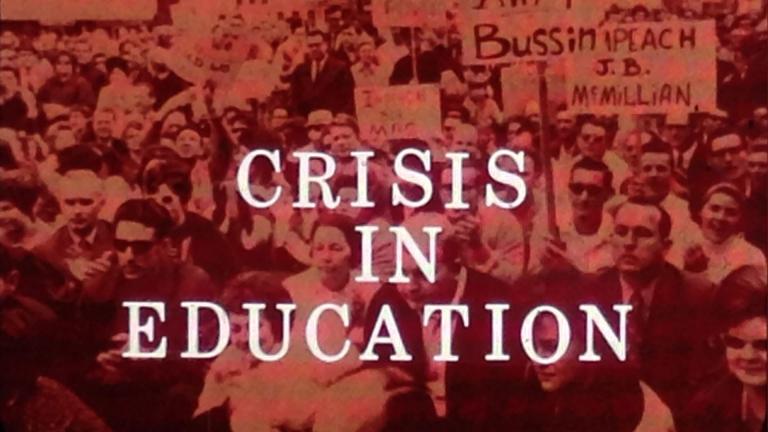
The current state of public education in America is an extremely serious crisis. The vast majority of school districts around the nation are having terrible difficulty in filling their ever-increasing teacher vacancies. Millions of teachers are leaving the profession and schools of education in universities around the nation are reporting ever-dwindling enrollments. Teachers are being worn down by the increasingly heavy load that comes with the job; overcrowded classrooms, dealing with discipline issues they should never have to put up with on a daily basis, having their pay determined by a horribly unfair, convoluted formula tied to their students’ performance on inequitable and subjective standardized tests, being asked to be psychologists by identifying and mediating the troubling issues that come with the increasing numbers of students affected by trauma and, in turn, becoming the victims of trauma themselves in the process. All of these things take away from the already limited time teachers have to do what it is they were trained and love to do; TEACH. It is going to get worse–much worse–unless someone is willing to do what is necessary to fix it. The good news is, the solution could be quite simple. The bad news is, nobody with any power to change things seems the least bit interested in doing what it takes. This has long caused me to wonder if all of this isn’t being intentionally orchestrated by some very misguided powers-that-be in the highest levels of government. I’m having a hard time seeing any other reason. Let’s dig further into the roots of the problems before I lay out a simple solution, one for which there are many proven models of success around the world from which to draw inspiration.
The roots of the current crisis in public education can be traced back to the sweeping piece of legislation known as No Child Left Behind (NCLB), signed into law in 2001 by President George Bush. Most of the issues that have caused so many teachers to leave the profession and have so few preparing to enter it can be tied directly or indirectly to NCLB. Over the years, I’ve vacillated back and forth as to whether or not I considered NCLB well-intentioned. The title sounds nice…who would want to see any child left behind? Yet, in practicality, NCLB set up a format bound for miserable failure from the word go. NCLB, by it’s very nature, ignores the natural bell curve which, whether you believe it or not, truly exists within the natural order of the human species. No matter the required task at hand, some will excel, most will manage to get by, and some will fail. This is played out every day in the real world. Schools are no different. For some reason, it’s become taboo in education to even think this, let alone say it out loud or, God forbid, write it (insert audible gasp). But let’s just face it, this is the way it has always been and this is the way it always will be. Yes, all children can learn, but not all children can, will, or even want to learn the same things at the same pace. Everyone has certain things that come naturally to them that they can easily master, some things that they can with a lot of hard work, manage to become competent at, and things that, no matter what, they will never come close to mastering. By way of a personal example: I’ve always had a good ear for music. As a child, I was told by a music teacher that I have perfect pitch. I can hold my own as a singer and harmonies come naturally and easily for me. Given a computer program, I can write and produce songs (I have written and recorded over a hundred in the last year). But at various times in my life, I have tried to pick up a guitar to learn to play chords and I simply cannot do it. I just can’t properly manipulate my fingers into the required positions to play even the most basic chords–I’ve tried over and over, it’s not going to happen. This vexes and frustrates me. Yet, I’ve heard many people who can’t carry a tune in a bucket but can play the guitar beautifully. Such is the way with education. Just imagine if mastering the guitar was part of a test I had to pass in order to be judged to have any talent for music. That frustration is lived out every day by millions of students all over this nation. Despite these undeniable and obvious facts of life, NCLB created a system by which teachers are evaluated and whole school systems are judged by a formula tied to the results of standardized tests. There is nothing standardized about students, yet we are expected to get all of them to clear the same bar. The result, for teachers, is tantamount to being given a plastic toy hammer and being asked to pound large round steel pegs into square holes. The tragic irony in this system is that NCLB glossed over the fact that there is a natural bell curve for students and then created a system which forces them into a bell curve result by which teachers are held accountable–and paid, or not paid, accordingly. Although NCLB was officially repealed in 2015, the worst aspects of its legacy still cast a dark pall over public education.
I stepped into teaching in the same year NCLB was enacted. In the 19 years that have followed, I’ve seen enough changes in the teaching profession to make my head spin. But more troubling still are the changes I’ve seen in students. When the NCLB and I started, there were no such things as smart phones or social media. I’m convinced that those developments have helped fuel a wildfire of dire consequences for students. Teenage suicide numbers have climbed steadily over these years. Anxiety and depression are endemic among today’s young people. There exists a growing crisis of student trauma born of their home lives, exacerbating a mental health problem that is a growing threat to our nation’s future. This is a major contributor to the education crisis, as well, as classrooms become ever more full of trauma-affected students who tend to, sometimes perhaps by no fault of their own, cause many unwanted distractions, disruptions, and discipline issues. This problem is often greatly magnified in low-income districts in large urban areas and in more isolated rural areas, while the higher income suburban areas appear blessed with “good schools” by cursory surface comparisons. Yet, those cursory surface comparisons are exactly how school districts and teachers are evaluated and funded. Mirroring society at large with its ever-growing income gap, schools suffer under this unfair system and its resulting achievement gap. This achievement gap compounds the problems that have driven so many teachers out of the game. With less teachers available, class sizes become too large to be feasible, adding further to this vicious cycle. In a word, NCLB created a complete mess.
At this point of the story, I have to start looking into sinister intentions. I first saw the writing on the wall in my home state of Indiana during the administration of Mitch Daniels, Mike Pence’s immediate predecessor as governor. During Daniels’ administration (and carried further by that of Pence) it became obvious that there was an organized effort to weaken public schools in favor of charter schools and private schools. Indiana led (and still leads) the way in the use of public tax monies in the form of school choice vouchers to fund charter and private schools. What this actually does is defund public schools. I wrote in much greater detail about the now infamous scandals associated with the early years of this dark era in Indiana here. For now, suffice to say that it became painfully obvious that the powers-that-be in my own state had an agenda to undermine public education and to create a new form of social segregation of the haves and have nots. In the years that followed, with the arrival of Betsy DeVos, it has become even more clear that this agenda is a national plot and that one of the key motivations behind it is to force Christianity into education.
So, now that we have built a foundation of what has led to this crisis, what of the solution? I believe the solution is already out there. To find it, we need to examine models already showing success in parts of Europe and Asia. As America continues to beat a dead horse by forcing all students, regardless of aptitude, ability, or interest, to show mastery of the same standardized educational pathway, many nations have a system that avoids the pitfalls of such a system. It’s no coincidence that those countries tend to be the same ones which often show up ahead of the U.S. on lists comparing the results of standardized tests–you know, those very lists that cause so many Americans to point the finger of blame at public education and its teachers as they tout the virtues of school choice vouchers. In an ironic twist, the solution I’m proposing actually is pro-school choice, just not by the definition we use in the United States.
Now for the big reveal…
The forced blended inclusion model that America is stuck in is not working. It has created classroom environments that bog down progress, not advancing those kids who struggle and holding back those kids who should be pushed harder to excel. The solution, in my opinion, is tracking. There, I said it. Somewhere along the line in America, tracking got a bad rap. When I refer to tracking, I’m talking about funneling students into different educational paths based upon their aptitudes, ability, and interests. Granted, there are controversies surrounding tracking in the countries where it is done, but most of those debates involve the structures of tracking, not the concept. Study after study shows that tracking works in the best interest of everyone involved. The key questions up for debate are things like at what point in a child’s education should the tracking process begin and how frequently their placement in a particular track should be reevaluated in case they would be better served moving to another track. Those are valid questions and they can and should be carefully examined. As one who has taught his entire career in the middle school level, I can tell you that I believe the tracking process should start in the late elementary years. By this, I don’t mean that I think 5th or 6th graders should be placed into an alternative track, I just mean that they should begin to be evaluated to determine a possible alternative track in their future. By the time they reach the 7th, 8th, and 9th grade years, they should begin to be funneled into at least a partial schedule of alternative education geared towards their personal aptitudes. Let’s be honest, every public school classroom has at least a few kids who’d be far better served in an alternative placement, some classrooms are overflowing with them. As all of this is going on, the American skilled trades unions are screaming for help. Millions of high paying skilled trades jobs are going unfilled. This is a problem that doesn’t need to exist.
My proposal is that we start (yesterday, if not sooner) to track students so that by the time they reach the middle grades, they can begin to be trained in the specialty areas that fit them best. Before you let that scare you, let me add that I believe the tracking system needs to be carefully vetted and remain fluid. Frequent opportunities (perhaps annually or bi-annually) should be provided for students who are naturally growing out of their current track to be placed in another one. In my city, Indianapolis, we do have a couple of great state of the art trade-school settings available to students who seek them out, but they are not available until the last two years of high school. These opportunities are far too limited and it can be a competitive process to make it into these schools. Plus, by the time a lot of kids reach that age, they are already so far behind the curve that they’ve completely given up on education.
In reality, by force of human nature, once people are out of school, we automatically track ourselves. Most of us eventually find the track we look for. Why don’t we intervene early on and help students get on those tracks while they are still in school? If we would do this, I believe the result would be a win for all the stakeholders. The college track classrooms into which we currently force all students would be trimmed down to the point where real rigor could be implemented and students could be challenged to a level of mastery that wouldn’t be afforded them in our out-dated current model. Those students who haven’t the aptitude nor interest in the college-track content could identify their natural track at a much earlier point so that their schooling would actually mean something to them and they could excel and be already prepared for a career by the time they finished high school. Standardized test scores would suddenly mean something because we’d only be testing the sort of students for whom those tests are designed. By the way, that’s the reason America lags behind some other countries on those educational comparison lists; most of those countries ranked above us have some kind of tracking system and they only test their college-track level students. I guarantee you, if we did that, we’d be right there with those countries if not atop the list. Our best and brightest scholars stack up with anyone’s. There is a reason why America is still the world’s leading innovator.
So there it is. It’s not difficult, is it? In this coming election year, if you value public education (the system that educates more than 90% of America’s students) then consider making the issue of education policy a top priority. You can be a part of the solution if you’ll consider doing your part to drain the current educational swamp.
Previous Post

October 28, 2019
Sometimes it Can Take Decades Before God's Plan Makes Sense
Next Post
October 31, 2019 Just Look What's Become of Us
Browse Our Archives
Select a Category 150 word story 2nd Amendment AARP abortion addiction aging alcoholism Anderson Wigwam Andrew Jackson Appalachia Basketball bias bigotry Black Lives Matter Christianity Christmas, Constitution, Bill of Rights Civil War Clinton cloning confirmation bias Conservation Constitution Controversial Creationism Creepy tales David Bowie depression Dogs Education Election Electoral College Empathy Environmental Evolution exvangelical faith Family Family History Fantasy Genealogy Genesis George Washington Ghetto Global Warming Gun Control health care High School Basketball Hillary History Hockey homosexuality Hoosier Hysteria Hoosiers Hunting immigration income inequality Interview ISTEP Jurassic Park Kaepernick Ken Hamm Kids say the Darndest things LGBTQ Love MAGA Manifest Destiny Merit Pay Mike Pence Muhammad Ali Multiple Perspectives Music Music Review Nashville News media NHL No Child Left Behind NRA Paradox Parenting Pence Perspective Politics POTUS Poverty Predators Race Religion religious freedom Sci Fi Science Secret of Life sexual harrassment Short Stories Slavery Small Town Indiana Smashville Social Commentary social media sports Stress technology Terrorism Thomas Jefferson Trauma Trump Turning 50 Uncategorized war Washington DC White Privilege wooly mammoths words in red Writing Writing Process Writing, Writing Process Young Earth
Select a Month June 2022 May 2022 April 2022 March 2022 February 2022 August 2021 May 2021 March 2021 February 2021 January 2021 November 2020 October 2020 September 2020 August 2020 July 2020 June 2020 April 2020 March 2020 February 2020 January 2020 December 2019 November 2019 October 2019 September 2019 August 2019 July 2019 June 2019 May 2019 April 2019 March 2019 February 2019 January 2019 December 2018 November 2018 October 2018 September 2018 August 2018 July 2018 June 2018 May 2018 April 2018 March 2018 February 2018 January 2018 December 2017 November 2017 October 2017 September 2017 August 2017 July 2017 June 2017 May 2017 April 2017 March 2017 February 2017 January 2017 December 2016 November 2016 October 2016 September 2016 August 2016 July 2016 June 2016 May 2016 March 2016 February 2016 January 2016 December 2015
Follow Us!
TAKE THE
Religious Wisdom Quiz
What city was known as the City of David?
Select your answer to see how you score.
Bethlehem Jerusalem Nazareth Jericho
Support this
Column


Related posts from Empathy Mining
Don't let Dissociation Keep You from Standing for...

Abortion Ban Questions Christians Should Ask Themselves

Jesus and Elon Musk: America's Income Inequality Problem
Dear Christians, Relax, Schools Are NOT Grooming Your...
TRENDING AT PATHEOS Progressive Christian

What Being a Modern-Day Apostle Means to Me
In my last column, I discussed the ins and outs of modern-day...

Did Ancient China Once Worship the God of...
Across human history, a common thread weaves through the origins of the...

Love Your Neighbor – Including Earth-Kin: Lev. 19,...
God’s command to love your neighbor means acting in an ethical and...

Lead a Church Study of “Jesus and Lao...
Guest writer Jack Thomas (The Irreverent Reverend) reflects on leading his church...

Pastoral Wisdom for Responding to Sermon Pushback
Getting sermon pushback on your social justice sermon? Learn practical, Proverbs-based strategies...

Principles for Understanding the Apostolic Ministry Today
Whenever people discover that my formal ministry title is "apostle," as in...
view all Progressive Christian blogs
Ad-Free & Subscriber Log-In Subscription Support
- About Us
- 2026 Calendar
- Videos
- Podcasts
- Library of World Religions
- Faith In Media Tracker
- Advertise With Us
- Write for Us
- Privacy Policy
- Terms of Service
- Do Not Sell My Data
- Contact Us
- Radiant Digital
- Manage Newsletter Subscriptions
- Unsubscribe From Notifications
- Sitemap
Copyright 2008-2026, Patheos. All rights reserved.
Subscription Support Ad-Free & Subscriber Log-In
Follow Patheos