
BuddhistCatholicContemplativeEvangelicalGeneral ChristianHinduJewishLatter-day SaintMuslimNew VisionsProgressive Christian
Beliefs
- Buddhist
- Catholic
- Contemplative
- Evangelical
- General Christian
- Hindu
- Jewish
- Latter-day Saint
- More Voices
- Muslim
- New Visions
- Pagan
- Progressive Christian
Topics
- Religion News
- Food and Religion
- Sports and Religion
- Religious Art
- Religious Music and Entertainment
- Religious Events
- History and Religion
- Style and Religion
- Politics and Religion
- Women in Religion
- Recreation Outdoors and Religion
- Business Finance and Religion
- Careers Workplace and Religion
- Education and Religion
- Family Parenting and Religion
- Health Fitness and Religion
- Home and Religion
- Relationships and Religion
- Technology and Religion
- Travel and Religion
Columnists
- Buddhist Columnists
- Business Finance and Religion Columnists
- Careers Workplace and Religion Columnists
- Catholic Columnists
- Contemplative Columnists
- Education and Religion Columnists
- Evangelists Columnists
- Family Parenting and Religion Columnists
- General Christian Columnists
- Health Fitness and Religion Columnists
- Hindu Columnists
- History and Religion Columnists
- Home and Religion Columnists
- Jewish Columnists
- More Voices Columnists
- Latter Day Columnists
- Muslim Columnists
- New Visions Columnists
- Nonreligious Columnists
- Pagan Columnists
- Politics and Religion Columnists
- Progressive Columnists
- Recreation Outdoors and Religion Columnists
- Relationships and Religion Columnists
- Religion News Columnists
- Religious Art Columnists
- Religious Events Columnists
- Religious Music and Entertainment Columnists
- Sports and Religion Columnists
- Style and Religion Columnists
- Technology and Religion Columnists
- Travel and Religion Columnists
- Women in Religion Columnists
Resource Library
- 2026 Calendar
- Library of World Religions
- The 100 Most Holy Places on Earth
- Patheos Answers
- Podcasts
- Videos
- Faith Leaders Database
- Anglican Episcopalian
- Bahai
- Baptist
- Buddhism
- Christianity
- Confucianism
- Eastern Orthodoxy
- Hinduism
- Holiness and Pentecostal
- ISKCON
- Islam
- Judaism
- Lutheran
- Methodist
- The Church of Jesus Christ of Latter-day Saints
- New Age
- Paganism
- Presbytarian and Reformed
- Protestantism
- Religion Behind the Scenes
- Roman Catholic
- Scientology
- Shia Islam
- Sikhism
- Sufism
- Sunni Islam
- Taoism
- Zen
- See all religions
Research Tools
 Ad-Free & Subscriber Log-In Subscription Support
Ad-Free & Subscriber Log-In Subscription Support
Follow Patheos 

- Trending:
- Forgiveness
- |
- Marriage
- |
- Consciousness
- |
- Death Penalty
- |
- Election
- |
- Halloween
 Empathy Mining
- Home
- Progressive Christian
- Should we take down Confederate monuments? It may be more complex than it seems.
Should we take down Confederate monuments? It may be more complex than it seems.
Last updated on: June 15, 2017 at 3:20 pm by Shane Phipps
Should we take down Confederate monuments? It may be more complex than it seems. 2017-06-15T15:20:05-04:00 Shane Phipps
Patheos Explore the world's faith through different perspectives on religion and spirituality! Patheos has the views of the prevalent religions and spiritualities of the world.
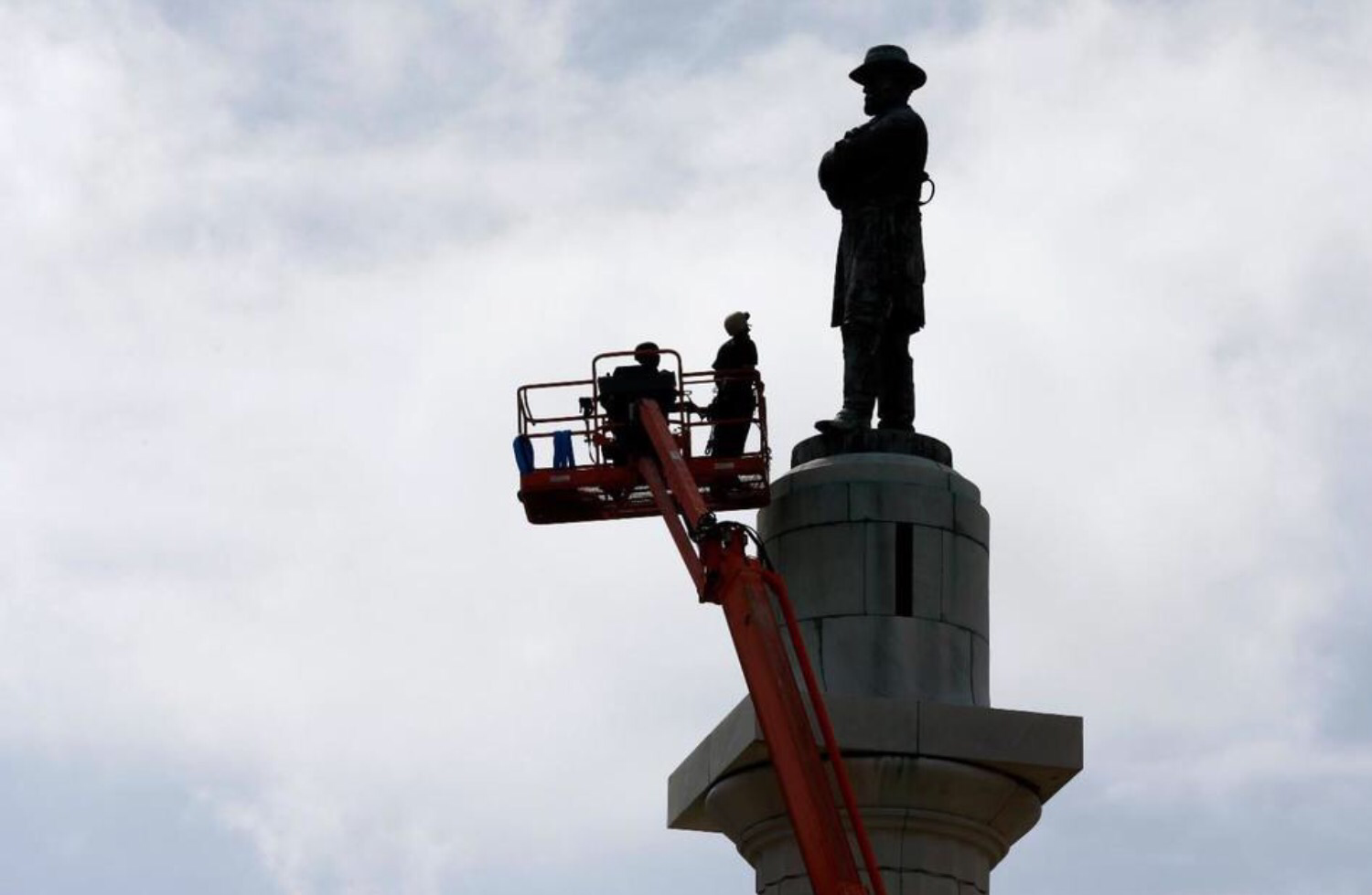 Recently, New Orleans has been in the news for the controversial efforts, led by Mayor Mitch Landrieu, to remove monuments to Confederate leaders found around the city. Several long standing memorials and statues have been taken down. This past week, the last one came down, a monument to Robert E. Lee which proudly towered more than 100 feet into the Cajun skies. With each of the removals, there were protests from both extremes, those who were adamantly against the removal and those who were enthusiastically supportive of the decision. Those who are up in arms about the policy raise some interesting and, perhaps, valid arguments, as do those who have been waiting a lifetime to see these icons come down.
This controversy hits us all at some emotional level.
As one with deep running southern roots, I have long struggled with this topic. I wrote about my process of coming to grips with the specter of slavery within my own family tree in an article found here. (I also wrote on the topic of the Confederate Flag here.) When Southerners speak of preserving their heritage, I can relate to that. But I also feel the unmistakable sting of shame when I consider the other perspective of erecting monuments to men who fought and died to protect the right to own human beings. There are complex and conflicting emotions at play within me and, I’m sure, millions of other Americans.
I guess, when all is said and done, I am not sorry to see the monuments come down from their prominent public locations. In that respect, my empathetic human emotions ultimately win out. However, there are other perspectives to consider in this debate.
We must realize that when we take down one monument, all others become suspect.
Taking down a monument to Robert E. Lee may seem like a logical thing to do. He owned slaves. He made the choice to fight against the Union and lost. But before we write off the decision to remove his monument as a no brainer, we had better ask some difficult questions about some other much more famous and revered monuments that nobody, it would seem, is demanding to be taken down. There is a 555 foot tall obelisk in the center of our National Mall in the nation’s capital that everyone instantly recognizes as the Washington Monument. George Washington, father of our country, owned over 300 slaves. Not far away from the Washington Monument is a beautiful spot on the Tidal Basin where the impressive Jefferson Memorial is nestled. The man immortalized therein wrote the words that became the creed of our nation;
We hold these truths to be self-evident, that all men are created equal, that they are endowed by their creator with certain unalienable rights, that among these are life, liberty, and the pursuit of happiness.
Thomas Jefferson, author of those words, our third president, and the man honored by that awe-inspiring monument on the Tidal Basin, owned more than 600 slaves. (Read more on Jefferson and his slaves in articles I wrote here and here.)
In fact, of the 55 men who signed the Declaration of Independence–all of whom have at least some sort of honorary statue or memorial–41 owned slaves.
There is no great clammoring to tear down the Washington Monument or the Jefferson Memorial. What, then, is the difference between them and Robert E. Lee? Is it just that Lee chose the wrong side in the war? If that is the case, then is it racism that we are protesting or treason? Something to think about.
What are our options short of tearing down these monuments?
One thing that we have done a better job with in more recent years is dealing with the issue of our revered founders’ troubling association with slavery head on in the bright light of day. We now examine our nation’s heroes warts and all. That’s a very good thing because the other option is unrealistic idol worship. For instance, when you visit Monticello, Jefferson’s home, you can learn as much as you want about his slaves. Slavery has become a focal point when studying Jefferson and that is also the case at his own home. Everywhere you look at Monticello, you are confronted with his relationship with slavery and, indeed, his relationship with his slaves, human beings–people with a story to tell, each and every one. I just visited George Washington’s home, Mt. Vernon, and the same is true there. Slavery is front and center in a new exhibit at the visitor center there.
Slaves are now being researched as much as their famed masters. We know many of their names and what they did each day. When we go to the trouble to put a name and a face to the people owned by the people we commemorate with grand monuments, we take a great step in the right direction. We are beginning to humanize the formally dehumanized.
It also helps us understand that many of our founders, including Washington and Jefferson, were personally convicted by their own relationship with slavery. In many cases we find that our founders didn’t like slavery but got caught up in it through circumstances of their birth and station in life.
As an example, I learned on my recent visit to Mt. Vernon that at least some of the reasons Washington didn’t free many slaves were seated more in benevolence than selfishness. It seems George had too many slaves to make financial sense. He wrote that he would be able to double his profits if he could cut the amount of slaves he owned in half, but he kept them for reasons that may surprise you. For one, he was very much morally against dealing directly with trading in human beings on the open market, so he didn’t want to do so. Also, most of his slaves were parts of familial units and he refused to split up families, so he kept a great deal more slaves than he needed and took the financial loss.
The more one digs into the American slavery story, the more muddied and complex it gets.
So, what if letting these monuments to Conferates stand would offer a chance to educate about and empathize with their forgotten human property? What if, instead of removing the reminders of the losing side of the war to end slavery, we added to them monuments and information to help put names, faces, and stories with their slaves?
To humanize the formally dehumanized seems worthy of a memorial to me. Also, if we did that and people still complained, there would be no mistaking the message they were sending in their complaints.
Exposing that wouldn’t be a bad thing either.

Previous Post

May 15, 2017
This Little Light of Mine
Next Post
May 24, 2017 To Catch a Predator (Fan)
Browse Our Archives
Select a Category 150 word story 2nd Amendment AARP abortion addiction aging alcoholism Anderson Wigwam Andrew Jackson Appalachia Basketball bias bigotry Black Lives Matter Christianity Christmas, Constitution, Bill of Rights Civil War Clinton cloning confirmation bias Conservation Constitution Controversial Creationism Creepy tales David Bowie depression Dogs Education Election Electoral College Empathy Environmental Evolution exvangelical faith Family Family History Fantasy Genealogy Genesis George Washington Ghetto Global Warming Gun Control health care High School Basketball Hillary History Hockey homosexuality Hoosier Hysteria Hoosiers Hunting immigration income inequality Interview ISTEP Jurassic Park Kaepernick Ken Hamm Kids say the Darndest things LGBTQ Love MAGA Manifest Destiny Merit Pay Mike Pence Muhammad Ali Multiple Perspectives Music Music Review Nashville News media NHL No Child Left Behind NRA Paradox Parenting Pence Perspective Politics POTUS Poverty Predators Race Religion religious freedom Sci Fi Science Secret of Life sexual harrassment Short Stories Slavery Small Town Indiana Smashville Social Commentary social media sports Stress technology Terrorism Thomas Jefferson Trauma Trump Turning 50 Uncategorized war Washington DC White Privilege wooly mammoths words in red Writing Writing Process Writing, Writing Process Young Earth
Select a Month June 2022 May 2022 April 2022 March 2022 February 2022 August 2021 May 2021 March 2021 February 2021 January 2021 November 2020 October 2020 September 2020 August 2020 July 2020 June 2020 April 2020 March 2020 February 2020 January 2020 December 2019 November 2019 October 2019 September 2019 August 2019 July 2019 June 2019 May 2019 April 2019 March 2019 February 2019 January 2019 December 2018 November 2018 October 2018 September 2018 August 2018 July 2018 June 2018 May 2018 April 2018 March 2018 February 2018 January 2018 December 2017 November 2017 October 2017 September 2017 August 2017 July 2017 June 2017 May 2017 April 2017 March 2017 February 2017 January 2017 December 2016 November 2016 October 2016 September 2016 August 2016 July 2016 June 2016 May 2016 March 2016 February 2016 January 2016 December 2015
Follow Us!
TAKE THE
Religious Wisdom Quiz
What did God use to speak to Moses in the wilderness?
Select your answer to see how you score.
A thunderstorm A pillar of fire A mighty wind A burning bush
Support this
Column


Related posts from Empathy Mining
Don't let Dissociation Keep You from Standing for...

Abortion Ban Questions Christians Should Ask Themselves
Jesus and Elon Musk: America's Income Inequality Problem
Lessons for Christians from Non-Christian, Ben Franklin
TRENDING AT PATHEOS Progressive Christian

What Being a Modern-Day Apostle Means to Me
In my last column, I discussed the ins and outs of modern-day...

Did Ancient China Once Worship the God of...
Across human history, a common thread weaves through the origins of the...

Love Your Neighbor – Including Earth-Kin: Lev. 19,...
God’s command to love your neighbor means acting in an ethical and...

Lead a Church Study of “Jesus and Lao...
Guest writer Jack Thomas (The Irreverent Reverend) reflects on leading his church...

Pastoral Wisdom for Responding to Sermon Pushback
Getting sermon pushback on your social justice sermon? Learn practical, Proverbs-based strategies...

Principles for Understanding the Apostolic Ministry Today
Whenever people discover that my formal ministry title is "apostle," as in...
view all Progressive Christian blogs
Ad-Free & Subscriber Log-In Subscription Support
- About Us
- 2026 Calendar
- Videos
- Podcasts
- Library of World Religions
- Faith In Media Tracker
- Advertise With Us
- Write for Us
- Privacy Policy
- Terms of Service
- Do Not Sell My Data
- Contact Us
- Radiant Digital
- Manage Newsletter Subscriptions
- Unsubscribe From Notifications
- Sitemap
Copyright 2008-2026, Patheos. All rights reserved.
Subscription Support Ad-Free & Subscriber Log-In
Follow Patheos