
BuddhistCatholicContemplativeEvangelicalGeneral ChristianHinduJewishLatter-day SaintMuslimNew VisionsProgressive Christian
Beliefs
- Buddhist
- Catholic
- Contemplative
- Evangelical
- General Christian
- Hindu
- Jewish
- Latter-day Saint
- More Voices
- Muslim
- New Visions
- Pagan
- Progressive Christian
Topics
- Religion News
- Food and Religion
- Sports and Religion
- Religious Art
- Religious Music and Entertainment
- Religious Events
- History and Religion
- Style and Religion
- Politics and Religion
- Women in Religion
- Recreation Outdoors and Religion
- Business Finance and Religion
- Careers Workplace and Religion
- Education and Religion
- Family Parenting and Religion
- Health Fitness and Religion
- Home and Religion
- Relationships and Religion
- Technology and Religion
- Travel and Religion
Columnists
- Buddhist Columnists
- Business Finance and Religion Columnists
- Careers Workplace and Religion Columnists
- Catholic Columnists
- Contemplative Columnists
- Education and Religion Columnists
- Evangelists Columnists
- Family Parenting and Religion Columnists
- General Christian Columnists
- Health Fitness and Religion Columnists
- Hindu Columnists
- History and Religion Columnists
- Home and Religion Columnists
- Jewish Columnists
- More Voices Columnists
- Latter Day Columnists
- Muslim Columnists
- New Visions Columnists
- Nonreligious Columnists
- Pagan Columnists
- Politics and Religion Columnists
- Progressive Columnists
- Recreation Outdoors and Religion Columnists
- Relationships and Religion Columnists
- Religion News Columnists
- Religious Art Columnists
- Religious Events Columnists
- Religious Music and Entertainment Columnists
- Sports and Religion Columnists
- Style and Religion Columnists
- Technology and Religion Columnists
- Travel and Religion Columnists
- Women in Religion Columnists
Resource Library
- 2026 Calendar
- Library of World Religions
- The 100 Most Holy Places on Earth
- Patheos Answers
- Podcasts
- Videos
- Faith Leaders Database
- Anglican Episcopalian
- Bahai
- Baptist
- Buddhism
- Christianity
- Confucianism
- Eastern Orthodoxy
- Hinduism
- Holiness and Pentecostal
- ISKCON
- Islam
- Judaism
- Lutheran
- Methodist
- The Church of Jesus Christ of Latter-day Saints
- New Age
- Paganism
- Presbytarian and Reformed
- Protestantism
- Religion Behind the Scenes
- Roman Catholic
- Scientology
- Shia Islam
- Sikhism
- Sufism
- Sunni Islam
- Taoism
- Zen
- See all religions
Research Tools
 Ad-Free & Subscriber Log-In Subscription Support
Ad-Free & Subscriber Log-In Subscription Support
Follow Patheos 

- Trending:
- Forgiveness
- |
- Marriage
- |
- Consciousness
- |
- Death Penalty
- |
- Election
- |
- Halloween
 Shadows On The Road
- Home
- Catholic
- What Isn’t Optional: Healing the Church and Saving the West
What Isn’t Optional: Healing the Church and Saving the West
Last updated on: September 4, 2014 at 3:51 pm by Ben Conroy
What Isn’t Optional: Healing the Church and Saving the West 2014-09-04T15:51:28+01:00 Ben Conroy
Patheos Explore the world's faith through different perspectives on religion and spirituality! Patheos has the views of the prevalent religions and spiritualities of the world.
Editors’ Note: This article is part of the Public Square 2014 Summer Series: Conversations on Religious Trends. Read other perspectives from the Patheos community here.
There’s a fascinating conversation that’s been happening in slow motion in various corners of the internet about what Rod Dreher calls ‘the Benedict Option’, for Christians in the modern West. It’s based on Alisdair McIntyre’s famous words: “We are waiting not for a Godot, but for another—doubtless very different—St. Benedict.” McIntyre urges the formation of “local forms of community within which civility and the intellectual and moral life can be sustained through the new dark ages which are already upon us.”
Different writers have offered their own thoughts on the Benedict Option, and some of the most interesting have been those who’ve proposed alternatives: Pascal-Emmanuel Gobry’s Francis Option places a greater emphasis on the common ground between Christianity and modernity, and on the need for Christians to be active participants shaping the broader culture. Samuel Goldman’s Jeremiah Option is somewhere in between, wondering if modern day Christians can learn from the experience of the Jews in Babylon, exiles who nonetheless “plant roots within and work for the improvement of the society in which they live, even if they never fully join it.”
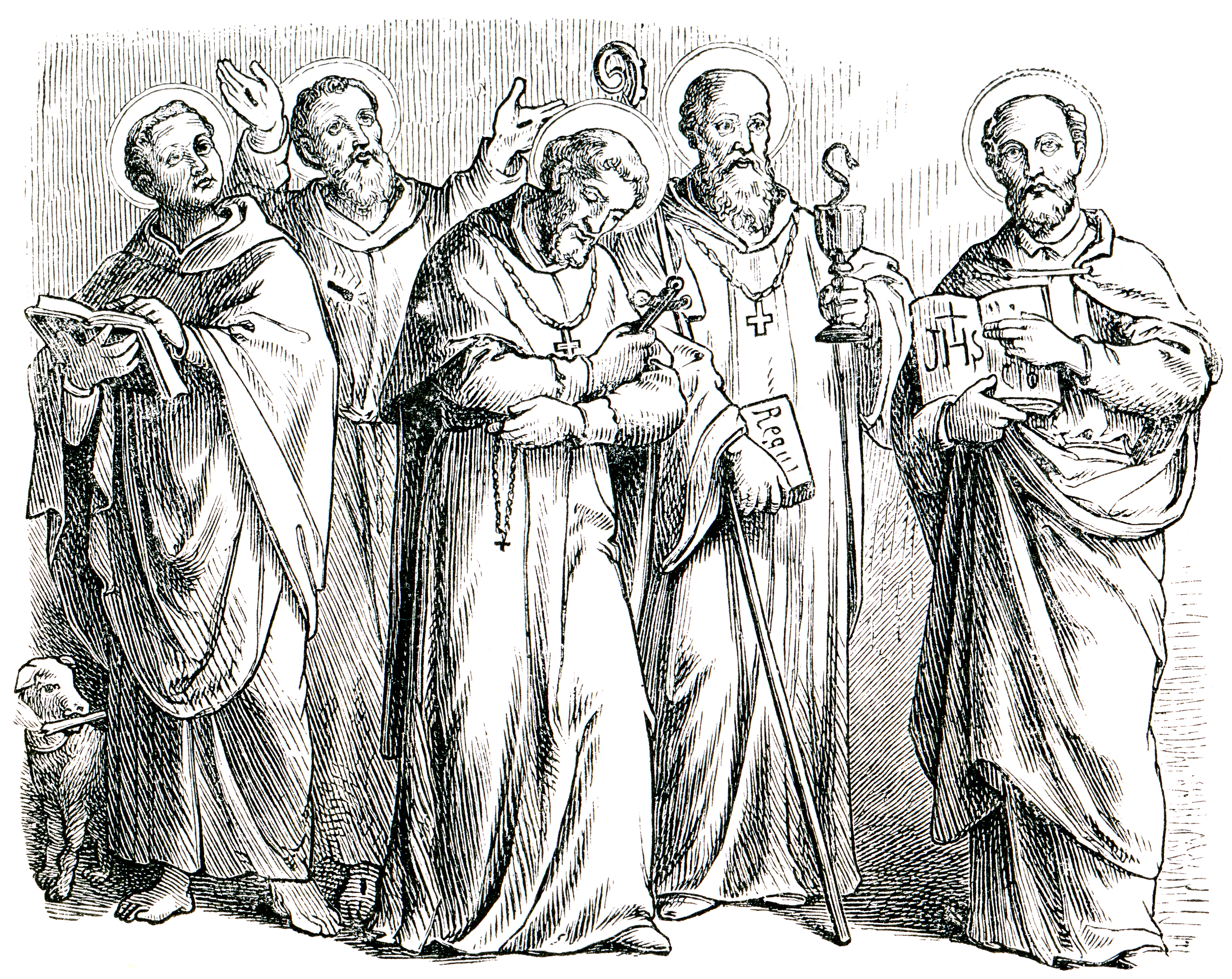
Still waiting for the Dominic Option, the Alphonsus Option, and the Ignatius of Antioch Option, or as I call it, Rise of the Planet of the Leopards.
Rod, PEG and Goldman all agree that we need places of retreat. All of them agree that we need to be a leaven in society. It’s a question of finding the right balance – I would say the right version of the great Catholic both/and.
I think the pieces are worth reading – not just because these are great writers, but because these questions of integration and separation, preservation and renewal, are the most important questions facing the Catholic Church, and Christianity more broadly, in the modern Western world. Because here’s the thing: nobody has really figured out how to effectively preach the Gospel to the affluent, post-capitalist West. The New Evangelisation is very much a work in progress.
This is not just a thought experiment. It’s a survival strategy. Finding the perfect synthesis between retreat and engagement is a balance that will have to be found and re-found, over and over again, in large and small decisions made by Ordinary Decent Catholics, be they bishops or high-school students.
It’s worth knowing what exactly we want to achieve, and it’s essential never to forget what victory looks like: “Every knee shall bow, every tongue confess.” That’s not a goal we can or should expect to achieve any time soon, but as Christians we simply don’t have the right to stop trying. As Penn Jillette puts it, if we really believe this stuff, it’s inexcusable not to tell everyone about it, and do what we can to show them the truth of it. If we think that to live life as a Catholic is to live it to the full, that Jesus really is God and man, the ground of all being and a carpenter of indeterminate skill, we can do many things about that, but we cannot stay silent.
But again – that’s easy to say. Doing it is a different matter. To what extent should we evangelise with words, and to what extent by the lives we lead? “Preach at all times, and when necessary, use words” as St. Francis probably didn’t say – but words are almost always necessary, eventually. What does the Catholic kid in the drama group say when everyone around her sees her faith and her Church as out-of-touch, bigoted, and – worst of all – on the wrong side of history? Will the computer science graduate who believes in a traditional sexual ethic spend his life holding his tongue, or risk being quietly frozen out of the tech industry – Brendan Eich without the publicity? If these people have Benedict Option communities to retreat to, what is the Franciscan strategy for taking the faith that those communties steward back out into the street?
We have to find a way – or a new version of the old way – of being in the world but not of it.
The simple answer is “we must all be saints”. And that’s profoundly true, and no less so for being simple. But as Pascal-Emmanuel Gobry writes, we need methods.
The rosary is a method. The Liturgy of the Hours is a method. The Spiritual Exercises are a method. The liturgy itself is a method. The liturgical calendar is a method. The sacraments are a method. Growth in virtue and holiness is (or, rather, should be) a method. The Rule of Benedict is a method.
We’re going to have to make some more. That’s not going to be easy.
Take the question of homosexuality – perhaps the point of greatest tension between the Church and the modern West. I’ve got a pretty good working theory for what the Church should do here, which runs something like this:
1. Go on an archive binge at SpiritualFriendship.org
2. Internalise and implement
Doing that, though, will be an immense challenge. What will we do in parishes so that gay Catholics are truly visible, truly welcome, truly equal? How will we make the Church home for them? On the flip side, how do we convince a massgoing public that is in the process of abandoning the Church’s teaching on marriage that a third way is even worth pursuing?
What does the Bishop of Galway do when the Society of St. Vincent De Paul gives €45,000 to the gay-marriage-supporting group Amach! to set up an LGBT resource centre in Galway City? How does the church speak about marriage when many of its words have become literally incomprehensible to many in the modern West? How will the Church’s words on political and legal issues around marriage impact its ministry to individual gay people? Should we de-emphasise the former to focus on the latter?
I’ve asked a bunch of questions in this post. I don’t have very many answers (though I have some thoughts – this is not the last post this blog). We live, as the not-actually-Chinese curse goes, in interesting times (though which times aren’t?).
There’ll be a lot of trial and error, a lot of winging it, and lot of praying to God that we don’t screw things up too disastrously.
But we wouldn’t be the first Christians to have found ourselves is such a situation. Yes – the modern world brings particular challenges that the Church hasn’t faced before. But being in the two thousand and fourteenth year of this voyage comes with advantages too – not least that we have Benedict, and Francis, and Jeremiah (and a whole lot of other saints besides) to argue about, and to inspire us in the days ahead.
I, for one, am looking forward to them.
Previous Post

August 29, 2014
Can We Live With Arbitrary Laws?
Next Post
September 8, 2014 "Nice Guys" - How Deep Is Your Love?
Browse Our Archives
Select a Category Uncategorized
Select a Month December 2015 September 2015 August 2015 June 2015 May 2015 February 2015 January 2015 November 2014 October 2014 September 2014 August 2014
Follow Us!
TAKE THE
Religious Wisdom Quiz
What did Jesus say would happen if you build your house on the rock?
Select your answer to see how you score.
It would sink It would stand through storms It would be fancy It would get destroyed
Related posts from Shadows On The Road
Irish Catholicism After Gay Marriage

Stephen Fry and the Straw Man Theodicy
Loving People In Their Particularity: Making it Easier...

We Need Spiritual Directors, and We Need Them...
TRENDING AT PATHEOS Catholic

Creation, Preservation, and Teleology in Catholic Theology
As I write this, it is very early Monday morning. Like millions...

The Parable Of The Sower And The Word...
One of Christ’s most famous parables is that of the sower who...

Rejecting Doom: Christian Hope And Human Action
Christianity is a religion of hope. We are to have hope and...

Why I Choose the Eucharist Over the Sermon
Choose the Eucharist, Not the Sermon What are we supposed to get...

5 Design Elements Found in Spiritually Rooted Homes
Putting Spirituality Into Home Decor Our homes are more than our living...

Credo: A Story of God Told with the...
About 10 years ago, I began to imagine a personal "Credo" that...
view all Catholic blogs
Ad-Free & Subscriber Log-In Subscription Support
- About Us
- 2026 Calendar
- Videos
- Podcasts
- Library of World Religions
- Faith In Media Tracker
- Advertise With Us
- Write for Us
- Privacy Policy
- Terms of Service
- Do Not Sell My Data
- Contact Us
- Radiant Digital
- Manage Newsletter Subscriptions
- Unsubscribe From Notifications
- Sitemap
Copyright 2008-2026, Patheos. All rights reserved.
Subscription Support Ad-Free & Subscriber Log-In
Follow Patheos