
BuddhistCatholicContemplativeEvangelicalGeneral ChristianHinduJewishLatter-day SaintMuslimNew VisionsProgressive Christian
Beliefs
- Buddhist
- Catholic
- Contemplative
- Evangelical
- General Christian
- Hindu
- Jewish
- Latter-day Saint
- More Voices
- Muslim
- New Visions
- Pagan
- Progressive Christian
Topics
- Religion News
- Food and Religion
- Sports and Religion
- Religious Art
- Religious Music and Entertainment
- Religious Events
- History and Religion
- Style and Religion
- Politics and Religion
- Women in Religion
- Recreation Outdoors and Religion
- Business Finance and Religion
- Careers Workplace and Religion
- Education and Religion
- Family Parenting and Religion
- Health Fitness and Religion
- Home and Religion
- Relationships and Religion
- Technology and Religion
- Travel and Religion
Columnists
- Buddhist Columnists
- Business Finance and Religion Columnists
- Careers Workplace and Religion Columnists
- Catholic Columnists
- Contemplative Columnists
- Education and Religion Columnists
- Evangelists Columnists
- Family Parenting and Religion Columnists
- General Christian Columnists
- Health Fitness and Religion Columnists
- Hindu Columnists
- History and Religion Columnists
- Home and Religion Columnists
- Jewish Columnists
- More Voices Columnists
- Latter Day Columnists
- Muslim Columnists
- New Visions Columnists
- Nonreligious Columnists
- Pagan Columnists
- Politics and Religion Columnists
- Progressive Columnists
- Recreation Outdoors and Religion Columnists
- Relationships and Religion Columnists
- Religion News Columnists
- Religious Art Columnists
- Religious Events Columnists
- Religious Music and Entertainment Columnists
- Sports and Religion Columnists
- Style and Religion Columnists
- Technology and Religion Columnists
- Travel and Religion Columnists
- Women in Religion Columnists
Resource Library
- 2026 Calendar
- Library of World Religions
- The 100 Most Holy Places on Earth
- Patheos Answers
- Podcasts
- Videos
- Faith Leaders Database
- Anglican Episcopalian
- Bahai
- Baptist
- Buddhism
- Christianity
- Confucianism
- Eastern Orthodoxy
- Hinduism
- Holiness and Pentecostal
- ISKCON
- Islam
- Judaism
- Lutheran
- Methodist
- The Church of Jesus Christ of Latter-day Saints
- New Age
- Paganism
- Presbytarian and Reformed
- Protestantism
- Religion Behind the Scenes
- Roman Catholic
- Scientology
- Shia Islam
- Sikhism
- Sufism
- Sunni Islam
- Taoism
- Zen
- See all religions
Research Tools
 Ad-Free & Subscriber Log-In Subscription Support
Ad-Free & Subscriber Log-In Subscription Support
Follow Patheos 

- Trending:
- Forgiveness
- |
- Marriage
- |
- Consciousness
- |
- Death Penalty
- |
- Election
- |
- Halloween
 Shadows On The Road
- Home
- Catholic
- “Nice Guys” – How Deep Is Your Love?
“Nice Guys” – How Deep Is Your Love?
Last updated on: September 8, 2014 at 12:27 am by Ben Conroy
“Nice Guys” – How Deep Is Your Love? 2014-09-08T00:27:32+01:00 Ben Conroy
Patheos Explore the world's faith through different perspectives on religion and spirituality! Patheos has the views of the prevalent religions and spiritualities of the world.
Leah Libresco had two really great posts recently on the “Nice Guy problem” and the “Friendzone” (shudder). In the second one, she wondered if our romance-based relationship culture was partially to blame for a sense of frustration when our affections go unreciprocated. I’m going to quote at length here, but the post should really be read in full:
… I find the “unfair” rhetoric around Nice Guy problems kind of off-putting. I don’t mind “hard,” “sad,” or “frustrating.” Those seem like pretty reasonable responses to striking out (and, as someone without any gentleman callers on the horizon, they’re certainly feelings I’ve had). But “unfair” suggests a rigged game where people aren’t giving you the information you need to be in the running.
It reminds me of a bit a drama (that for the purposes of anonymity, I may have witnessed or may have heard about thirdhand) between Alice, Bob, and Eve.
Both of the girls were interested in Bob, and he was interested in both, but seemed to be trending Alice-wards. Eve was frustrated, and said that Bob was being unfair, since he hadn’t given her a straight answer to why he was preferring Alice or told her what she could do to come “first” and trump Alice in his affections.
I had the same feeling about that question as I do about guys who have asked me, “Well, what’s the way to ask a girl out so that she will say yes?” Bob isn’t obliged to have a “fair” race between Alice and Eve, and girls, generally, aren’t required to have some kind of transparent application process that people can study. I don’t just mean that they’re not required to disclose their “cheat codes” but that they just aren’t known in the first place.
If you build the ideals of relationships primarily around passion and chemistry, rather than shared circumstances, compatible dispositions, and shared goals, then you might be able to boost your chances generally (personal grooming, bringing up your interesting interests, etc) but there isn’t a reliable way to generate ineffable sparks.
We’re not stuck in the world of randomly assigned soulmates (that xkcd illustrated), but the more that successful romances are judged to be driven by intangibles, the harder it is to pursue or search strategically. And the more frustrating it feels to have people misunderstand you as concealing the rulebook.
I think Leah’s link between an “ineffable spark” based relationship culture and the “Nice Guy” problem is a compelling one, but I wonder if the problem isn’t often a lot simpler.
I wonder how well some of these Nice Guys could answer the Bee Gees’ immortal question: “How Deep Is Your Love”?
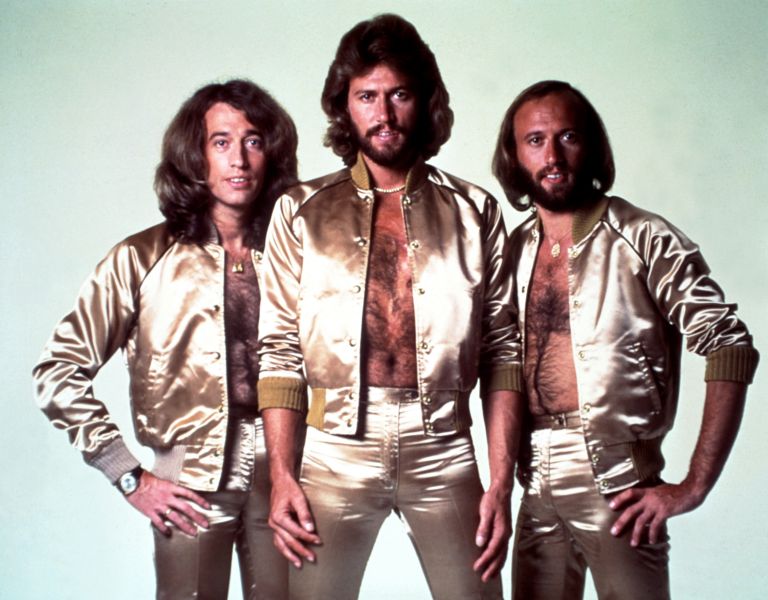
Today’s team of Grand Inquisitors.
See, if you’re told by the person you’ve fallen for that they’re not interested in you romantically, but would be glad to be your friend, and your first response is “how unfair you’re being!” then, buddy, I question the quality of your affection.
That’s the problem, for me, with many so-called Nice Guys. They just don’t seem all that nice – more interested in “getting a girlfriend” than in loving a person. Even when their affections are towards a particular person, they often seem to act like they’re only interested in them insofar as they fulfil a particular need – be it for sex, romantic partnership, or a soul-mate.
As Marc Barnes over at Bad Catholic wrote in his classic post “Why I Am Not a Heterosexual”:
Heterosexuality, understood as a sexual attraction for the opposite sex (as an attraction for women or men in general) makes the object of my attraction unreal. Woman as such does not exist outside of my mind. In reality, there are only particular women, just as there are only particular men, and every instance of sexual attraction is attraction to a particular person. There is no such thing as heterosexual marriage, for we marry a person, not an idea. I cannot wrap my arms around the opposite sex and ask if she could pitch in for the cost of the date. The idea of an attraction to “women in general” trades the particular person for the thought-construct of “woman in general,” a thought-construct that has no existence outside of your mind, a generalized group of the objective sexual attributes that we see in particular women, abstracted into a general idea.
I sometimes wonder if these Nice Guys are actually in love at all. What about the specific woman actually stole their heart? And why would whatever that is vanish because she’s not romantically interested in them?
I have, by the way, no objection whatsoever to romantic attraction. That “ineffable spark” that Leah writes about gets a lot of flack in Catholic writing about relationships (not least from Leah). We’re always admonished not to make feelings the basis of relationships and realise that passions can be fleeting. We’re called to build marriages on a firmer foundation.
This is all good, sage advice. But I don’t think it by any means requires a renunciation or a minimization of eros (romantic love). In the words of CS Lewis:
“There are no ordinary people. You have never talked to a mere mortal. Nations, cultures, arts, civilizations – these are mortal, and their life is to ours as the life of a gnat. But it is immortals whom we joke with, work with, marry, snub and exploit – immortal horrors or everlasting splendors.
I think what we call ‘falling in love’, can, at its best, be the lifting of a veil – the falling of scales from our eyes. We see another more like they truly are: a being of majesty, beauty and endless wonder.
This sort of ‘falling in love’ isn’t necessary to build a successful marriage. But I don’t think it hurts either, or that it’s necessarily shallow.
But that kind of love is a seeing, an experience of being overwhelmed by your loved one as a person, by their unique subjectivity. Yes, it’s mysterious, yes, it’s impossible to reduce down to aspects (“I love her because she’s clever” or “because she’s beautiful”, or “because we share a sense of humour”, or “because we build great trebuchets together”).
But when we’re dealing with an “ineffable spark” but you don’t really appreciate any specific qualities about the individual person other than their attractiveness or their potential to be your girlfriend, well, that might be many things, but it sure ain’t love.
Many of the things that can be appreciated in a romantic partner can also be appreciated in a friend. In fact, I submit that if you truly love someone, the idea of being their friend should be, in itself, pretty appealing. I completely understand the complicating factors! (Believe me, I do). I understand the sadness, the frustration, the hurt. I understand if it’s too painful to continue seeing them. But, I must confess, I don’t understand blaming them, or feeling like they’re not treating you well.
You’ve presumably fallen in love with them because they are who they are. If they get to know you well through friendship, but they don’t return your love in the way you’d like them to, that’s not because you’ve done something wrong or because they’re being difficult. It’s because they respond to the person you are with a kind of love that’s platonic rather than romantic. Would it really be better if they pretended otherwise?
***
Not having the one you love return your affections is tough. It’s one of the toughest things. It is very, very OK to be sad about it. I think, actually, that it’s OK to beat your fists on the ground and howl laments to the moon about it.
But if you start feeling wronged, or hard done-by, or unjustly treated by the person who you claim to treasure, simply because they want to be your friend but won’t go out with you, then it’s time to bring yourself up short and ask yourself some very hard questions. And the first of those should be “who do I really love here? Whose good am I wiling? Is it this woman’s? Or my own?”
Take it away, commenters.
Previous Post

September 3, 2014
What Isn't Optional: Healing the Church and Saving the West
Next Post

September 12, 2014 Does Civility Matter?
Browse Our Archives
Select a Category Uncategorized
Select a Month December 2015 September 2015 August 2015 June 2015 May 2015 February 2015 January 2015 November 2014 October 2014 September 2014 August 2014
Follow Us!
TAKE THE
Religious Wisdom Quiz
What king sought Isaiah's prayers when facing Assyrian invasion?
Select your answer to see how you score.
Josiah Manasseh Rehoboam Hezekiah
Related posts from Shadows On The Road

Do we need Philosophy when we have Science?

Understanding Pro-Lifers: An Open Letter to Una Mullally

Are pro-lifers sadder than pro-choicers?

Abolishing Abortion: Why I fear the European Equilibrium
TRENDING AT PATHEOS Catholic

The Parable Of The Sower And The Word...
One of Christ’s most famous parables is that of the sower who...

Rejecting Doom: Christian Hope And Human Action
Christianity is a religion of hope. We are to have hope and...

Why I Choose the Eucharist Over the Sermon
Choose the Eucharist, Not the Sermon What are we supposed to get...

5 Design Elements Found in Spiritually Rooted Homes
Putting Spirituality Into Home Decor Our homes are more than our living...

Credo: A Story of God Told with the...
About 10 years ago, I began to imagine a personal "Credo" that...

The Anatomy of Divine Revelation in Catholic Thought
The claim that God has made Himself known to human beings is...
view all Catholic blogs
Ad-Free & Subscriber Log-In Subscription Support
- About Us
- 2026 Calendar
- Videos
- Podcasts
- Library of World Religions
- Faith In Media Tracker
- Advertise With Us
- Write for Us
- Privacy Policy
- Terms of Service
- Do Not Sell My Data
- Contact Us
- Radiant Digital
- Manage Newsletter Subscriptions
- Unsubscribe From Notifications
- Sitemap
Copyright 2008-2026, Patheos. All rights reserved.
Subscription Support Ad-Free & Subscriber Log-In
Follow Patheos