
BuddhistCatholicContemplativeEvangelicalGeneral ChristianHinduJewishLatter-day SaintMuslimNew VisionsProgressive Christian
Beliefs
- Buddhist
- Catholic
- Contemplative
- Evangelical
- General Christian
- Hindu
- Jewish
- Latter-day Saint
- More Voices
- Muslim
- New Visions
- Pagan
- Progressive Christian
Topics
- Religion News
- Food and Religion
- Sports and Religion
- Religious Art
- Religious Music and Entertainment
- Religious Events
- History and Religion
- Style and Religion
- Politics and Religion
- Women in Religion
- Recreation Outdoors and Religion
- Business Finance and Religion
- Careers Workplace and Religion
- Education and Religion
- Family Parenting and Religion
- Health Fitness and Religion
- Home and Religion
- Relationships and Religion
- Technology and Religion
- Travel and Religion
Columnists
- Buddhist Columnists
- Business Finance and Religion Columnists
- Careers Workplace and Religion Columnists
- Catholic Columnists
- Contemplative Columnists
- Education and Religion Columnists
- Evangelists Columnists
- Family Parenting and Religion Columnists
- General Christian Columnists
- Health Fitness and Religion Columnists
- Hindu Columnists
- History and Religion Columnists
- Home and Religion Columnists
- Jewish Columnists
- More Voices Columnists
- Latter Day Columnists
- Muslim Columnists
- New Visions Columnists
- Nonreligious Columnists
- Pagan Columnists
- Politics and Religion Columnists
- Progressive Columnists
- Recreation Outdoors and Religion Columnists
- Relationships and Religion Columnists
- Religion News Columnists
- Religious Art Columnists
- Religious Events Columnists
- Religious Music and Entertainment Columnists
- Sports and Religion Columnists
- Style and Religion Columnists
- Technology and Religion Columnists
- Travel and Religion Columnists
- Women in Religion Columnists
Resource Library
- 2026 Calendar
- Library of World Religions
- The 100 Most Holy Places on Earth
- Patheos Answers
- Podcasts
- Videos
- Faith Leaders Database
- Anglican Episcopalian
- Bahai
- Baptist
- Buddhism
- Christianity
- Confucianism
- Eastern Orthodoxy
- Hinduism
- Holiness and Pentecostal
- ISKCON
- Islam
- Judaism
- Lutheran
- Methodist
- The Church of Jesus Christ of Latter-day Saints
- New Age
- Paganism
- Presbytarian and Reformed
- Protestantism
- Religion Behind the Scenes
- Roman Catholic
- Scientology
- Shia Islam
- Sikhism
- Sufism
- Sunni Islam
- Taoism
- Zen
- See all religions
Research Tools
 Ad-Free & Subscriber Log-In Subscription Support
Follow Patheos 

- Trending:
- Advent
- |
- Forgiveness
- |
- Thanksgiving
- |
- Election
- |
- Seasonal Holidays
- |
- Marriage

- Home
- About Hebrew College
- The Rabbinical School of Hebrew College
- The Book of Psalms
- FREE NEWSLETTER
- Home
- Jewish
- The Gift of Darkness
The Gift of Darkness
Last updated on: September 20, 2023 at 9:03 am by Hebrew College
The Gift of Darkness 2023-09-20T09:03:42-04:00 Hebrew College
Patheos Explore the world's faith through different perspectives on religion and spirituality! Patheos has the views of the prevalent religions and spiritualities of the world.
By Heather Renetzky
Parashat Ha’azinu (Deuteronomy 32:1-52)
In his final reminder to the Israelites about their covenant with God, Moshe, embodying the voice of God, says the following:
See, then, that I, I am the One;
There is no god beside Me.
I deal death and give life;
I wounded and I will heal:
None can deliver from My hand.
How does Moshe have so much trust, confidence, and acceptance of God that he can face the people and affirm God’s role as Giver and Taker of Life, while his own life hangs in the balance? The Promised Land is in sight, his last moments are numbered, and yet Moshe finds the words to say, in the voice of God, “None can deliver from My hand”!?¹
Reading this pasuk (verse), I was unnerved by Moshe’s seeming nonchalance in the face of death; he delivers this line in the context of a longer warning to the Israelites, without so much as a pause between discussing God’s disdain for idol worship and God’s ability to determine people’s lifespans. Although I am a person who can be found regularly discussing mortality over matza balls at dinner, who literally has a mortality-reminder app² on my phone, and who relishes the opportunity to advocate for advance care directives, I still couldn’t fathom how Moshe could have such brazenness.
I turned to the Talmud for answers. What I found was not an answer, but a depiction of Moshe that was completely different from my own vision³:
Rabbi Shimon said: … Until [the point of Moshe’s Death], the Holy One, Blessed be God, dictated and Moshe repeated after God and wrote the text. From this point forward, the Holy One, Blessed be God, dictated and Moshe wrote with tears.
According to Rabbi Shimon, Moshe is not stoic and confident in his last moments. He is an emotional, raw human being! Moshe did not pretend to be at peace with dying. He did not numb himself to reality. He sobbed. He let his tears flow.
Perhaps because I was studying this parasha from my high holiday working “nest”—a tangle of machzorim, sticky notes, and high holiday kavvanot—this image of Moshe stayed with me as I entered into my yearly confrontation with the jarring words of Unetaneh Tokef:
“Who shall live and who shall die,
Who shall reach the end of his days and who shall not,
Who shall perish by water and who by fire…”
Each year, I struggle to affirm God’s power to, “decree the length of [people’s] days.” Often, the words, “who by earthquake and who by plague,” land a little too raw and I try not to think too hard about their meaning. While this works well enough, I want to be in better relationship with these words. When I have recited U’netaneh Tokef in the past, I have either completely separated myself from the words, or been stuck in what Dr. Joel Hoffman describes as a childhood-inspired, “It’s not fair!” refrain about the reward and punishment model it suggests.4 It has felt easier to get angry with the words, to insist that they’re not true, than it has been to admit that the thought of fires and floods and too-early deaths is just plain sad. It has felt easier to dismiss this prayer as too much, than to actually allow myself to shed tears over those who have been tormented, and those who inevitably will be.
Rabbi Shimon’s version of Moshe offered me a new way to engage with U’netaneh Tokef this year. In a mirror image of Moshe turning tears into words, we can turn words into tears, using the words of this prayer to sink into the grief and pain of inevitable loss rather than avoiding it.
Mary Oliver writes:5
That time
I thought I could not
go any closer to grief
without dying
I went closer,
and I did not die.
Surely God had his hand in this,
as well as friends
If we are willing to approach Unetaneh Tokef like Moshe—feeling our sorrow, and embracing our tears, perhaps this prayer can be a way to get close to grief without being consumed by it, to rehearse for loss rather than hiding from it. Perhaps it can allow us to acknowledge the harsh realities of the world, to voice our fears out loud, to lament that, “It’s not fair,” without letting our own lack of control overcome us. We may not control what will happen in the year to come, but we can allow ourselves the freedom to respond to that uncertainty with the honest emotion that it demands.
- Deuteronomy 32:39 (JPS translation)
- The app, called “WeCroak,” is inspired by a Bhutanese folk saying: “To be a happy person, one must contemplate death five times daily.” “WeCroak” serves one purpose and one purpose only: It sends you five mortality-related quotes at random times each day, inviting you into contemplating mortality.
- https://www.sefaria.org/Bava_Batra.15a.5?lang=bi
- “How was Your Flight” by Dr. Joel M. Hoffman in “Who By Water Who by Fire” edited by Rabbi Lawrence Hoffman
- https://readalittlepoetry.com/2021/03/15/heavy-by-mary-oliver/
Heather Renetzky is a Shana Heh rabbinical student at Hebrew College. She is a firm believer in the healing power of deep listening, trees, and homemade chocolate chip cookies.
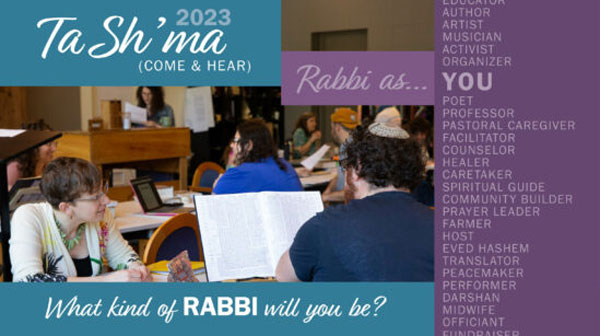
Learn more about Hebrew College’s rabbinical and cantorial programs at Ta Sh’ma (Come & Hear), our November Open Houses (in-person & virtual options).
Previous Post

September 12, 2023
A Message for Rosh Hashana: Welcoming Tishrei
Next Post

September 26, 2023 Abodes of Possibility: Sukkot 5784
Recent Comments
"Did God call in Genesis chapter 1 also small Aleph?"
""Maybe this is the year to take the Yovel seriously even if we can’t take ..."
Proclaiming Release: Why We Need a ..."
"very nice!"
""
Browse Our Archives
Select a Category Uncategorized
Select a Month April 2026 March 2026 December 2025 November 2025 October 2025 September 2025 August 2025 July 2025 June 2025 May 2025 April 2025 March 2025 February 2025 January 2025 December 2024 November 2024 October 2024 September 2024 August 2024 July 2024 June 2024 May 2024 April 2024 March 2024 February 2024 January 2024 December 2023 November 2023 October 2023 September 2023 August 2023 July 2023 June 2023 May 2023 April 2023 March 2023 February 2023 January 2023 December 2022 November 2022 October 2022 September 2022 August 2022 July 2022 June 2022 May 2022 April 2022 March 2022 February 2022 January 2022 December 2021 November 2021 October 2021 September 2021 August 2021 July 2021 June 2021 May 2021 April 2021 March 2021 February 2021 January 2021 December 2020 November 2020 October 2020 September 2020 August 2020 July 2020 June 2020 May 2020 April 2020 March 2020 February 2020 January 2020 December 2019 November 2019 October 2019 September 2019 August 2019 July 2019 June 2019 May 2019 April 2019 March 2019 February 2019 January 2019 December 2018 November 2018 October 2018 September 2018 August 2018 July 2018 June 2018 May 2018 April 2018 March 2018 February 2018 January 2018 December 2017 November 2017 October 2017 September 2017 August 2017 July 2017 June 2017
Follow Us!
TAKE THE
Religious Wisdom Quiz
What was a biblical talent's weight?
Select your answer to see how you score.
50 pounds 40 pounds 75 pounds 60 pounds
Related posts from Seventy Faces of Torah

The Holy Art of World Building

Parashat Tzav: Keeping the Sacred Fire Burning
Color Theory: What Joseph’s Coat Reveals
TRENDING AT PATHEOS Jewish

Building a Little Ark in a Frightening World
This past Shabbat, we read about Noah. I love this story. The...

Yom Kippur : Is There Always Room for...
Making Room for Forgiveness Every year as Yom Kippur approaches, I find...

This Rosh Hashanah: Can I Find New Meaning?
A Sunrise, a New Year, and a Question On our way to...
Killing Amalek: The Torah’s Most Misunderstood Commandment
Few passages of the Torah have provoked more confusion, polemic, and misuse...

I have never trusted a first draft. I don’t mean that...

Back to School, Back to Reality—and a New...
A New School Year Begins… Back to Reality A new school year...
view all Jewish blogs
What Are Your Thoughts?leave a comment
Ad-Free & Subscriber Log-In Subscription Support
- About Us
- 2026 Calendar
- Videos
- Podcasts
- Library of World Religions
- Faith In Media Tracker
- Advertise With Us
- Write for Us
- Privacy Policy
- Terms of Service
- Do Not Sell My Data
- Contact Us
- Radiant Digital
- Manage Newsletter Subscriptions
- Unsubscribe From Notifications
- Sitemap
Copyright 2008-2026, Patheos, part of the Radiant Digital network of media brands. All rights reserved.
Subscription Support Ad-Free & Subscriber Log-In
Follow Patheos