
BuddhistCatholicContemplativeEvangelicalGeneral ChristianHinduJewishLatter-day SaintMuslimNew VisionsProgressive Christian
Beliefs
- Buddhist
- Catholic
- Contemplative
- Evangelical
- General Christian
- Hindu
- Jewish
- Latter-day Saint
- More Voices
- Muslim
- New Visions
- Pagan
- Progressive Christian
Topics
- Religion News
- Food and Religion
- Sports and Religion
- Religious Art
- Religious Music and Entertainment
- Religious Events
- History and Religion
- Style and Religion
- Politics and Religion
- Women in Religion
- Recreation Outdoors and Religion
- Business Finance and Religion
- Careers Workplace and Religion
- Education and Religion
- Family Parenting and Religion
- Health Fitness and Religion
- Home and Religion
- Relationships and Religion
- Technology and Religion
- Travel and Religion
Columnists
- Buddhist Columnists
- Business Finance and Religion Columnists
- Careers Workplace and Religion Columnists
- Catholic Columnists
- Contemplative Columnists
- Education and Religion Columnists
- Evangelists Columnists
- Family Parenting and Religion Columnists
- General Christian Columnists
- Health Fitness and Religion Columnists
- Hindu Columnists
- History and Religion Columnists
- Home and Religion Columnists
- Jewish Columnists
- More Voices Columnists
- Latter Day Columnists
- Muslim Columnists
- New Visions Columnists
- Nonreligious Columnists
- Pagan Columnists
- Politics and Religion Columnists
- Progressive Columnists
- Recreation Outdoors and Religion Columnists
- Relationships and Religion Columnists
- Religion News Columnists
- Religious Art Columnists
- Religious Events Columnists
- Religious Music and Entertainment Columnists
- Sports and Religion Columnists
- Style and Religion Columnists
- Technology and Religion Columnists
- Travel and Religion Columnists
- Women in Religion Columnists
Resource Library
- 2026 Calendar
- Library of World Religions
- The 100 Most Holy Places on Earth
- Patheos Answers
- Podcasts
- Videos
- Faith Leaders Database
- Anglican Episcopalian
- Bahai
- Baptist
- Buddhism
- Christianity
- Confucianism
- Eastern Orthodoxy
- Hinduism
- Holiness and Pentecostal
- ISKCON
- Islam
- Judaism
- Lutheran
- Methodist
- The Church of Jesus Christ of Latter-day Saints
- New Age
- Paganism
- Presbytarian and Reformed
- Protestantism
- Religion Behind the Scenes
- Roman Catholic
- Scientology
- Shia Islam
- Sikhism
- Sufism
- Sunni Islam
- Taoism
- Zen
- See all religions
Research Tools
 Ad-Free & Subscriber Log-In Subscription Support
Ad-Free & Subscriber Log-In Subscription Support
Follow Patheos 

- Trending:
- Forgiveness
- |
- Marriage
- |
- Consciousness
- |
- Death Penalty
- |
- Election
- |
- Halloween

- Home
- About Hebrew College
- The Rabbinical School of Hebrew College
- The Book of Psalms
- FREE NEWSLETTER
- Home
- Jewish
- Examining the Judges in Our Souls
Examining the Judges in Our Souls
Last updated on: August 14, 2023 at 10:35 pm by Hebrew College
Examining the Judges in Our Souls 2023-08-14T22:35:39-04:00 Hebrew College
Patheos Explore the world's faith through different perspectives on religion and spirituality! Patheos has the views of the prevalent religions and spiritualities of the world.
By Rabbi Frankie Sandmel
Parashat Shoftim (Deuteronomy 16:18-21:9)
שֹׁפְטִים וְשֹׁטְרִים תִּתֶּן־לְךָ בְּכׇל־שְׁעָרֶיךָ אֲשֶׁר יְהֹוָה אֱלֹהֶיךָ נֹתֵן לְךָ לִשְׁבָטֶיךָ וְשָׁפְטוּ אֶת־הָעָם מִשְׁפַּט־צֶדֶק׃
You shall appoint judges and officials for your tribes, in all the settlements that the LORD your God is giving you, and they shall govern the people with due justice (Deut. 16:18).
These opening lines to our parashah feel like an all too easy opportunity to wax poetic about the failings of our current judicial system, both in the US and in Israel. They push us to question whether the systems we call “just” actually live up to our standards of justice.
But reading these words in this season, as Av turns into Elul, they also call for a more internal examination. Our Chassidic masters perceive this line to be less about our communal justice and more about our own hearts and souls. In the Mei HaShiloach, a 19th century work by Reb Mordechai Leiner, also known as the Ishbitzer Rebbe, we read:
שעריך היינו לעשות שופטים בכלל ובפרט, בכל המדינה ובכל עיר, וכן הוא בכל נפש. שעריך הן ז’ שערים שבנפש שבהן האדם מקבל טובה והן ב’ עינים ב’ אזנים ב’ נקבי האף (כי באף ג”כ האדם מקבל כי מריח איזה דבר השייך לו) ופה, ובכל שער שאדם מקבל טובה צריך חשבון גדול.
“Your gates” means to make judges in general and in particular, in every state and every city, and in every person’s soul. “Your gates” are the seven gates of the soul by which a person receives goodness: the two eyes, the two ears, the two nostrils (for a person receives some sort of messaging even through smell), and the mouth. A person must make a great reckoning for every gate through which he receives goodness.
That is to say, it is our job to ensure that we have judges stationed between us and our experience of the world, analyzing all of the sensory input we encounter. And our work in this season of reflection and repentance is to ask ourselves, what is the state of the judicial system we set up internally? How do we respond to the changing landscape around us? How are we integrating new ideas or information? How have we grown? Where have we been misinformed?
Much of the conversation about this kind of self-appraisal is about what we keep out—are we being led astray? Are we letting false influences take root within our gates? But we must be equally concerned with what we let in. Our sources state unequivocally that a necessary quality for a judge is to be open to all the possibilities of the case before them—not to come in with a case already decided, not to shy away from rulings that may be unpopular or challenge the status quo.
So, too, with our internal judges.
There have been a few moments in the course of my life where I’ve had massive changes in my sense of self. Beliefs that I held dearly, identities I felt rooted in, were uprooted and replaced. Thinking about them, I feel a pang in my chest remembering the confusing days that preceded these changes, when my internal judges and guards were off base, trying to keep out the inclinations that, ultimately, were true and just.
For just one example, I’m thinking about the years upon years I spent denying the possibility that the feelings I had were queer crushes, or that my yearning to dress like the boys at the school dances stemmed from a deeper truth about my own queerness. It took years for my internal judges to finally allow the fullness of my identity to take root within my gates, for rightness and balance be permitted, despite the fact that it shook my foundation.
And this is just one such moment. I’ve had others: political stances I held dear, perceptions of people around me I clung to, and ideas about what my future held guided my actions far past their time. In each of these moments, truths that sought to make their way from the world, through my senses, and into my heart were thwarted by an internal justice system that needed reworking. In retrospect, I can see how this denial was often active, conscious, and sometimes painful. Only after deep, honest accounting of my soul was I able to internalize the messages I was getting from the world and allow justice to prevail.
So often, experiences, ideas, and stories approach us, seeking to settle in our hearts and become a part of us. Some of those ideas are certainly wrong or dangerous and deserve the rough hand of a guard and the harsh decree of our inner judge. But many of them contain more truth than is easy to admit. Many of them are pointing us towards living with more integrity, towards enacting more righteousness in the world, but are met with a harsh judge—one who comes to the case with the decision already made, the response already formulated, the talking points already drafted.
This Elul, I wish for us all the opportunity to examine the judges and guards that protect our hearts and ask, what are the truths that we’re refusing to allow in? Have our judgements been aligned with the reality we witness and experience, or are they turning away from witnesses and relying on preconceptions? May we greet 5784 having honestly reckoned with the world around us and with hearts open to the many possibilities for justice, righteousness and liberation that we encounter.
Please contact the author if you would like to share feedback.
Rabbi Frankie Sandmel (they/them), Hebrew College ‘22, runs Base Bay where, together with their partner Elaina, they are building a vibrant, rooted, and resonant Jewish community out of their home in Oakland. In their free time, Frankie is a fellow with SVARA: A Traditionally Radical Yeshiva and they bake a lot of cookies.
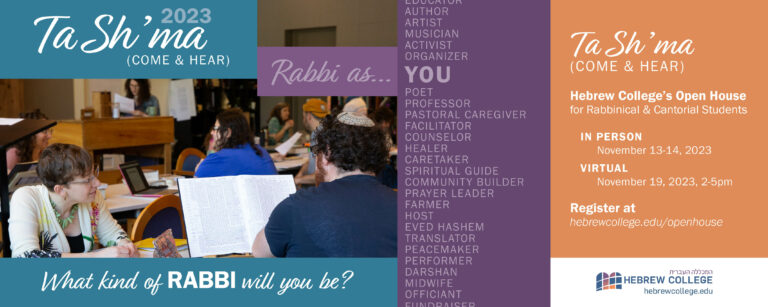
Learn more about Hebrew College’s rabbinical and cantorial programs at Ta Sh’ma (Come & Hear), our November Open Houses (in-person & virtual options).
Previous Post

August 8, 2023
Child of God, Holy and Treasured
Next Post

August 22, 2023 From Enemy Aliens to a Free People
Recent Comments
"Did God call in Genesis chapter 1 also small Aleph?"
""Maybe this is the year to take the Yovel seriously even if we can’t take ..."
Proclaiming Release: Why We Need a ..."
"very nice!"
""
Browse Our Archives
Select a Category Uncategorized
Select a Month April 2026 March 2026 December 2025 November 2025 October 2025 September 2025 August 2025 July 2025 June 2025 May 2025 April 2025 March 2025 February 2025 January 2025 December 2024 November 2024 October 2024 September 2024 August 2024 July 2024 June 2024 May 2024 April 2024 March 2024 February 2024 January 2024 December 2023 November 2023 October 2023 September 2023 August 2023 July 2023 June 2023 May 2023 April 2023 March 2023 February 2023 January 2023 December 2022 November 2022 October 2022 September 2022 August 2022 July 2022 June 2022 May 2022 April 2022 March 2022 February 2022 January 2022 December 2021 November 2021 October 2021 September 2021 August 2021 July 2021 June 2021 May 2021 April 2021 March 2021 February 2021 January 2021 December 2020 November 2020 October 2020 September 2020 August 2020 July 2020 June 2020 May 2020 April 2020 March 2020 February 2020 January 2020 December 2019 November 2019 October 2019 September 2019 August 2019 July 2019 June 2019 May 2019 April 2019 March 2019 February 2019 January 2019 December 2018 November 2018 October 2018 September 2018 August 2018 July 2018 June 2018 May 2018 April 2018 March 2018 February 2018 January 2018 December 2017 November 2017 October 2017 September 2017 August 2017 July 2017 June 2017
Follow Us!
TAKE THE
Religious Wisdom Quiz
How many total plagues did God send on Egypt?
Select your answer to see how you score.
Ten Five Twelve Seven
Related posts from Seventy Faces of Torah

The Holy Art of World Building

Parashat Tzav: Keeping the Sacred Fire Burning

Color Theory: What Joseph’s Coat Reveals
TRENDING AT PATHEOS Jewish

Yom Kippur : Is There Always Room for...
Making Room for Forgiveness Every year as Yom Kippur approaches, I find...

This Rosh Hashanah: Can I Find New Meaning?
A Sunrise, a New Year, and a Question On our way to...

Killing Amalek: The Torah’s Most Misunderstood Commandment
Few passages of the Torah have provoked more confusion, polemic, and misuse...

I have never trusted a first draft. I don’t mean that...

Back to School, Back to Reality—and a New...
A New School Year Begins… Back to Reality A new school year...

Out-Crowleying Crowley: The Emptiness of the O9A
O9A Neo-Crowley Racial Cosplay and Edgelord Atrocitism Aleister Crowley did not create...
view all Jewish blogs
What Are Your Thoughts?leave a comment
Ad-Free & Subscriber Log-In Subscription Support
- About Us
- 2026 Calendar
- Videos
- Podcasts
- Library of World Religions
- Faith In Media Tracker
- Advertise With Us
- Write for Us
- Privacy Policy
- Terms of Service
- Do Not Sell My Data
- Contact Us
- Radiant Digital
- Manage Newsletter Subscriptions
- Unsubscribe From Notifications
- Sitemap
Copyright 2008-2026, Patheos. All rights reserved.
Subscription Support Ad-Free & Subscriber Log-In
Follow Patheos