
BuddhistCatholicContemplativeEvangelicalGeneral ChristianHinduJewishLatter-day SaintMuslimNew VisionsProgressive Christian
Beliefs
- Buddhist
- Catholic
- Contemplative
- Evangelical
- General Christian
- Hindu
- Jewish
- Latter-day Saint
- More Voices
- Muslim
- New Visions
- Pagan
- Progressive Christian
Topics
- Religion News
- Food and Religion
- Sports and Religion
- Religious Art
- Religious Music and Entertainment
- Religious Events
- History and Religion
- Style and Religion
- Politics and Religion
- Women in Religion
- Recreation Outdoors and Religion
- Business Finance and Religion
- Careers Workplace and Religion
- Education and Religion
- Family Parenting and Religion
- Health Fitness and Religion
- Home and Religion
- Relationships and Religion
- Technology and Religion
- Travel and Religion
Columnists
- Buddhist Columnists
- Business Finance and Religion Columnists
- Careers Workplace and Religion Columnists
- Catholic Columnists
- Contemplative Columnists
- Education and Religion Columnists
- Evangelists Columnists
- Family Parenting and Religion Columnists
- General Christian Columnists
- Health Fitness and Religion Columnists
- Hindu Columnists
- History and Religion Columnists
- Home and Religion Columnists
- Jewish Columnists
- More Voices Columnists
- Latter Day Columnists
- Muslim Columnists
- New Visions Columnists
- Nonreligious Columnists
- Pagan Columnists
- Politics and Religion Columnists
- Progressive Columnists
- Recreation Outdoors and Religion Columnists
- Relationships and Religion Columnists
- Religion News Columnists
- Religious Art Columnists
- Religious Events Columnists
- Religious Music and Entertainment Columnists
- Sports and Religion Columnists
- Style and Religion Columnists
- Technology and Religion Columnists
- Travel and Religion Columnists
- Women in Religion Columnists
Resource Library
- 2026 Calendar
- Library of World Religions
- The 100 Most Holy Places on Earth
- Patheos Answers
- Podcasts
- Videos
- Faith Leaders Database
- Anglican Episcopalian
- Bahai
- Baptist
- Buddhism
- Christianity
- Confucianism
- Eastern Orthodoxy
- Hinduism
- Holiness and Pentecostal
- ISKCON
- Islam
- Judaism
- Lutheran
- Methodist
- The Church of Jesus Christ of Latter-day Saints
- New Age
- Paganism
- Presbytarian and Reformed
- Protestantism
- Religion Behind the Scenes
- Roman Catholic
- Scientology
- Shia Islam
- Sikhism
- Sufism
- Sunni Islam
- Taoism
- Zen
- See all religions
Research Tools
 Ad-Free & Subscriber Log-In Subscription Support
Ad-Free & Subscriber Log-In Subscription Support
Follow Patheos 

- Trending:
- Forgiveness
- |
- Marriage
- |
- Consciousness
- |
- Death Penalty
- |
- Election
- |
- Halloween

- Home
- About Hebrew College
- The Rabbinical School of Hebrew College
- The Book of Psalms
- FREE NEWSLETTER
- Home
- Jewish
- Listening on the Edge of a New Future
Listening on the Edge of a New Future
Last updated on: July 18, 2023 at 9:03 am by Hebrew College
Listening on the Edge of a New Future 2023-07-18T09:03:53-04:00 Hebrew College
Patheos Explore the world's faith through different perspectives on religion and spirituality! Patheos has the views of the prevalent religions and spiritualities of the world.
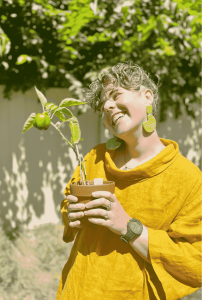 By Jayce Koester
Parashat Devarim (Deuteronomy 1:1-3:22)
It is the first day of the eleventh month of the fortieth year in the desert. We have stopped on the edge of the river, and on the other side is the land G!d has promised us. Instead of shouldering our packs and making bittersweet goodbyes between those who will stay and those who will go, we stop. We gather around Moshe and he begins to tell us a story. It’s familiar in many ways, often a direct account of what we’ve experienced together. In other moments, he tells it differently this time. Things we learned the hard way are reintegrated into the story. After all this time, on the edge of a new future, we sit together and we listen.
Moshe, I can imagine, is exhausted and heartbroken. He will be one of the many who does not pass across the river, and he knows that his death is approaching soon. But still, amidst everything he is holding, his story starts from the beginning with intention, the narrative voice saying:
הוֹאִיל מֹשֶׁה בֵּאֵר אֶת־הַתּוֹרָה הַזֹּאת
Moshe [took] it upon [himself] to understand this Torah completely (Deuteronomy 1:5).
We’re struck immediately, that this word תּוֹרָה Torah, often translated as, “The Five Books of Moses,” or more generally as, “instruction,” seems out of place. Which instruction? What Torah? Everett Fox notes in his commentary that the word Torah here, “has broader significance, and seems to refer to a good part of the book of Deuteronomy.” Before Moshe begins to speak, we see the verb בֵּאֵר be’er, and while often translated as, “explain,” it can also mean, “to make clear to oneself or to understand completely.” To integrate both meanings, the act of explaining to the Israelite people is simultaneously an act of understanding the journey. For Moshe, the process of sharing with others helps him understand more completely within himself. In this moment of massive transition and change Moshe pauses. Perhaps, taking a deep breath. He gathers himself and his story up in his hands and then begins to make sense of it by speaking it. This act of understanding becomes tied to the story, the Torah, that is to come.
The process of telling stories and interpreting our own lives and experiences often means we tell things a little differently than how they happened. The story is not just the facts, it’s the way it has transformed us: the lessons we’ve learned and how we respond to the world differently as a result. Here too, we see Moshe’s interpretive voice as he makes sense of what he’s learned, by telling it a little bit differently than what we saw a few books ago. Moshe says, in Deuteronomy 1:9:
וָאֹמַר אֲלֵכֶם בָּעֵת הַהִוא לֵאמֹר לֹא־אוּכַל לְבַדִּי שְׂאֵת אֶתְכֶם׃
And I spoke to you at that time [implied from previous verses, the time they were at Sinai] saying, “I am not able to carry you by myself.”
You, like Rambam, may be looking around a little confused, because Moshe did not say that at Mount Sinai. Flipping back in your TaNaKh will not reveal Moshe coming, by himself, to the realization that he cannot do this alone. So, Rambam goes looking for where Moshe got that line from, and directs our attention to a conversation had with his father-in-law Jethro, who says in Exodus 8:18:
נָבֹל תִּבֹּל גַּם־אַתָּה גַּם־הָעָם הַזֶּה אֲשֶׁר עִמָּךְ כִּֽי־כָבֵד מִמְּךָ הַדָּבָר לֹא־תוּכַל עֲשֹׂהוּ לְבַדֶּךָ׃
“You, and this community that is with you, will surely be worn out because this thing is too heavy for you, and you are not able to do it by yourself.”
Moshe has integrated his father-in-law’s advice, and now recounts a similar message coming from himself. He has fully understood Jethro’s Torah, and through rearticulating his story he is able to say it in his own words. He is able to admit I can’t do this alone. This message is reflected in the unfolding of the storytelling. His process of complete understanding implicates the audience of the community; this act of Torah-telling cannot be a solo experience.
A series of memories welled up as I read Moshe’s reflections, transforming the story he has lived into a text rich with meaning. I remember sitting on the floor of an old living room with a group of activists debriefing a challenging action the night before. We passed out lemonade, went around the circle, and began to recount—each of us—what happened. Each person that night told the story slightly differently, even people who were standing next to each other. Our learning refracted back through our recollections of the event, and by listening we each understood more deeply what had happened, and what it meant for us. As a result, we become closer. Loneliness and worry transformed into connection and mutual support. When we walked out, we felt different.
Another memory, a moment of sustained crisis in a community organizing project during the Covid-19 pandemic. We got on the phone and eschewed the millions of logistics that we could have been talking about and simply went around, each person retelling their whole history with the collective. It took a lot of time, but each time someone new spoke we softened further. Arguments began to ring hollow, we turned to appreciate one another. The logistical struggles remained, but when storytelling came first, new possibilities were able to show themselves, and what came afterwards was easier.
Moshe invites us into a radical order of operations when faced with grief and change. Instead of charging across the river with hurried urgency, we stop and tell a story. We make it clear that it takes all of us and there is something to be learned by slowing down and listening. It is not the act of wading across the river, but rather the story we tell about it, that matters.
Jayce Koester (they/them) is a teacher, chaplain-in-progress, and Hebrew College rabbinical student currently living on Wampanoag and Massachusetts land. Jayce loves learning Torah with all ages and is an enthusiastic niggun singer, text nerd, and lover of all things that grow (people included). They’re always excited to talk about Jewish ritual, science fiction, what they’re cooking this week, and how cute their two cats are.
Previous Post
July 13, 2023
In Praise of Unrealized Dreams
Next Post

July 25, 2023 What If?
Recent Comments
"Did God call in Genesis chapter 1 also small Aleph?"
""Maybe this is the year to take the Yovel seriously even if we can’t take ..."
Proclaiming Release: Why We Need a ..."
"very nice!"
""
Browse Our Archives
Select a Category Uncategorized
Select a Month April 2026 March 2026 December 2025 November 2025 October 2025 September 2025 August 2025 July 2025 June 2025 May 2025 April 2025 March 2025 February 2025 January 2025 December 2024 November 2024 October 2024 September 2024 August 2024 July 2024 June 2024 May 2024 April 2024 March 2024 February 2024 January 2024 December 2023 November 2023 October 2023 September 2023 August 2023 July 2023 June 2023 May 2023 April 2023 March 2023 February 2023 January 2023 December 2022 November 2022 October 2022 September 2022 August 2022 July 2022 June 2022 May 2022 April 2022 March 2022 February 2022 January 2022 December 2021 November 2021 October 2021 September 2021 August 2021 July 2021 June 2021 May 2021 April 2021 March 2021 February 2021 January 2021 December 2020 November 2020 October 2020 September 2020 August 2020 July 2020 June 2020 May 2020 April 2020 March 2020 February 2020 January 2020 December 2019 November 2019 October 2019 September 2019 August 2019 July 2019 June 2019 May 2019 April 2019 March 2019 February 2019 January 2019 December 2018 November 2018 October 2018 September 2018 August 2018 July 2018 June 2018 May 2018 April 2018 March 2018 February 2018 January 2018 December 2017 November 2017 October 2017 September 2017 August 2017 July 2017 June 2017
Follow Us!
TAKE THE
Religious Wisdom Quiz
Which book comes directly after Job?
Select your answer to see how you score.
Proverbs Psalms Ecclesiastes Isaiah
Related posts from Seventy Faces of Torah

The Holy Art of World Building

Parashat Tzav: Keeping the Sacred Fire Burning

Color Theory: What Joseph’s Coat Reveals
TRENDING AT PATHEOS Jewish

Building a Little Ark in a Frightening World
This past Shabbat, we read about Noah. I love this story. The...

Yom Kippur : Is There Always Room for...
Making Room for Forgiveness Every year as Yom Kippur approaches, I find...

This Rosh Hashanah: Can I Find New Meaning?
A Sunrise, a New Year, and a Question On our way to...

Killing Amalek: The Torah’s Most Misunderstood Commandment
Few passages of the Torah have provoked more confusion, polemic, and misuse...

I have never trusted a first draft. I don’t mean that...

Back to School, Back to Reality—and a New...
A New School Year Begins… Back to Reality A new school year...
view all Jewish blogs
What Are Your Thoughts?leave a comment
Ad-Free & Subscriber Log-In Subscription Support
- About Us
- 2026 Calendar
- Videos
- Podcasts
- Library of World Religions
- Faith In Media Tracker
- Advertise With Us
- Write for Us
- Privacy Policy
- Terms of Service
- Do Not Sell My Data
- Contact Us
- Radiant Digital
- Manage Newsletter Subscriptions
- Unsubscribe From Notifications
- Sitemap
Copyright 2008-2026, Patheos. All rights reserved.
Subscription Support Ad-Free & Subscriber Log-In
Follow Patheos